Unearthing Ancient Wisdom: A Time-Travelling Herbal Journey with Amanda Edmiston
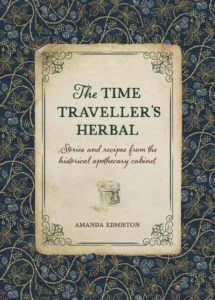
SCOTLAND – In an increasingly fast-paced world, where connection to nature and ancestral knowledge often feels distant, an extraordinary journey back through time is beckoning. Herbal storyteller Amanda Edmiston, the creative force behind Botanica Fabula, invites readers to step into a meticulously researched and beautifully narrated past with her new book, The Time Traveller’s Herbal: Stories and recipes from the historical apothecary cabinet. More than just a collection of remedies, Edmiston’s work serves as a vital bridge between the forgotten wisdom of our forebears and the pressing needs of contemporary life, reminding us that the answers to many modern ailments and disconnects might just lie rooted in the earth beneath our feet.
At the heart of Edmiston’s philosophy is the profound understanding that the figures we once labelled "cunning women," "wise women," or even "witches" were, in truth, the early pioneers of science. These individuals were the custodians of traditional knowledge, the observant healers who meticulously catalogued the properties of plants, their interactions, and their profound impact on human well-being. The Time Traveller’s Herbal is not merely a compendium; it is an immersive invitation to traverse the spiral of history, unearthing the compelling stories, rich folklore, and potent herbal remedies that are inextricably woven into the very fabric of our shared world.
The Ancient Roots of Healing: Herbalists as Pioneers
For centuries, the role of the herbalist has been shrouded in a mist of both reverence and suspicion. Often operating on the fringes of society, these practitioners held a unique position as both healers and spiritual guides. Their understanding of the natural world was not based on abstract theory but on generations of empirical observation, trial, and error. They knew which plants could soothe a fever, staunch a wound, or calm a troubled mind. This intimate knowledge, passed down orally and through practical apprenticeship, formed the bedrock of early medicine.
What Edmiston so eloquently highlights is the sophisticated, albeit unquantified, scientific method these wise individuals employed. They observed the seasonal cycles, the specific habitats of plants, their reactions when consumed or applied, and the subtle shifts in human health. They were epidemiologists tracking patterns of illness, pharmacologists experimenting with dosages, and botanists classifying flora long before these disciplines were formally recognized. Their "apothecary cabinets" were the meadows, forests, and riverbanks, brimming with remedies awaiting discovery.
Yet, alongside their practical skills, these figures were also deeply embedded in the spiritual and mythological landscape of their communities. Their understanding of healing extended beyond the physical, encompassing the emotional and spiritual well-being of their patients. They interpreted dreams, offered counsel, and understood the power of belief in the healing process. This holistic approach, often dismissed as superstition by later generations, is now finding renewed appreciation in modern integrative medicine. Edmiston’s work champions this forgotten legacy, presenting it not as quaint historical footnote but as a testament to human ingenuity and a valuable resource for contemporary living.
A Journey Through Time: Unveiling the Scottish Meadow (200 AD)
Edmiston’s narrative methodology is as captivating as the stories she tells. Her inspiration often stems directly from the landscapes she traverses. "Many of my stories, the recipes and tastes that accompany them, originate in the places I walk," she explains. "I stop, take a moment, sit and look around me, I start to notice the plants and the changes afforded by time, both seasonal change and historical. I think about the history of the place, the changes that have occurred and the folklore associated with the plants that grow there." This deep, contemplative engagement with the land allows her to peel back the layers of time, revealing the historical narratives embedded within the flora and fauna.
To illustrate this immersive approach, Edmiston invites us on a vivid mental journey back to 200 AD, to a specific wild floodplain meadow near her home in Scotland. This ecologically rich site, nestled behind a future castle and at the confluence of two rivers, serves as a portal. As we "travel" through this ancient landscape, the familiar features of our modern world – the castle, the well-trodden paths – dissolve. The tree line shifts; where modern larch might dominate, ancient oak trees stand sentinel. The dense tunnel of blackthorn, a constant through the ages, now stretches further, populated by young saplings, their branches untamed by mechanical pruning.
Despite these dramatic ecological and architectural transformations, certain elements remain steadfast. The enduring arc and curve of the rivers, the immutable contours of the hills and mountains, offer a reassuring sense of geographical certainty. These ancient waterways and geological formations, moving at a pace far beyond human comprehension, become anchors in our temporal displacement.
Our imagined journey brings us to a rocky outcrop overlooking the meeting of the two rivers. The shadow of the future castle lies behind us, but across the opposite bank, a bustling Pictish village thrives – a vibrant testament to a people deeply connected to this land long before written history. From this vantage point, we descend towards the flower-strewn field, the air alive with the promise of ancient wisdom.
Meadowsweet: The Queen of the Watery Realms
As we approach the meadow, a distinct, almost ethereal scent greets us: the faintly medicinal, partially sweet, partially antiseptic aroma of salicylates. This captivating fragrance intensifies as we reach a dip towards the river, where creamy clouds of flowers seem to blur the very view of the bank. The visual effect is enchanting, almost as if an "ethereal queen" were deliberately concealing herself, reluctant to be caught in her natural form.
Intrigued, the narrator steps closer, brushing past the abundant blooms, scattering petals in a quest to glimpse the imagined being. Yet, there is nothing tangible. Only the river ripples, a silvery tremor slipping downstream, perhaps hinting at unseen eyes watching from the nearby woods. A young bullock grazes serenely on clover across the water, a stark contrast to the shimmering regal figure that had momentarily captivated the imagination. The mind, seduced by the intoxicating allure of the "Queen of the Meadows," has conjured phantoms from the very air.
A moment of self-reflection follows, a check for fever, a pragmatic thought. Then, instinctively, a few heads of the creamy blossoms are added to a flask of hot water – a simple, immediate act of herbal wisdom. As the warm tisane is sipped, a memory stirs, a whispered story from the mists of time. The "penny drops": we are in the presence of the Morrigan, the formidable phantom queen of Celtic mythology.
Myth and Medicine: The Legend of the Morrigan and Cu Chulainn
The legend of the Morrigan, a powerful and complex figure in Irish mythology, perfectly intertwines with the presence of Meadowsweet. She is often depicted as a goddess associated with war, fate, sovereignty, and death, a shapeshifter capable of immense transformation. The story that unfolds, connecting her to the legendary warrior Cu Chulainn, is a testament to the intricate relationship between nature, myth, and human experience.
The tale recounts how Cu Chulainn, sent to the warrior-maid Sgathaich in Skye to master the art of combat, became betrothed to her daughter, Uathach. However, Cu Chulainn’s life was one of relentless violence and frequent battles. During one such encounter at a ford, he met the mighty Morrigan, who had assumed the form of a beautiful young woman. She offered him her aid in battle in exchange for his love.
Cu Chulainn, bound by his betrothal and perhaps exhibiting his characteristic fiery temper, rebuffed her advances. Angered by his rejection, the Morrigan transformed. First, she became an eel, attempting to ensnare his ankles as he crossed the water. But the warrior, quick and strong, wrenched her off, inflicting an injury. Undeterred, she next took the terrifying form of a huge grey wolf, stampeding a herd of cattle towards him. Cu Chulainn, ever resourceful, used his slingshot to strike her hard, wounding her leg. Finally, she appeared as a white heifer, leading the charge directly at him. With a spear, he injured her one last time, and she vanished, "haar-like," into the river’s mist.
As the battle subsided, a weary, cut, and bruised Cu Chulainn made his way along the riverbank. His mind, no doubt, was filled with apprehension, praying he would not encounter the Bean nighe (the washerwoman of the ford, foretelling death) or hear the mournful cry of the folkloric Caointeach (a wailing woman, predicting demise).
Eventually, he encountered an old woman, not washing shrouds or armour, but milking a deer. Her body bore familiar marks – injuries mirroring those he had inflicted upon the eel, the wolf, and the heifer. Sore and thirsty, he requested a drink. With each cup she offered, he blessed her, and with each blessing, her mysterious injuries healed. As the words of blessing left his lips for the third time, the warrior’s realization dawned: this was the Morrigan.
In a gesture of reconciliation, or perhaps as a subtle reminder of her power, she bestowed upon him a gift: Meadowsweet. Though some legends suggest Cu Chulainn regretted healing her, the story insists he carried the plant on his belt from that day forward. He learned to rely on its soothing properties, using a handful of fresh blossoms or a palmful of dried flower heads encased in a muslin bag, added to his bath, to heal his wounds, reduce his fevers, and cool his legendary temper when it flared.
This ancient tale beautifully illustrates the plant’s traditional uses. Meadowsweet, known in Gaelic as crios Chu-chulainn (Cu Chulainn’s belt), was also affectionately called "bride-wort" due to its historical popularity as floral confetti. It is a plant steeped in both practical application and deep mythological significance.
Beyond Folklore: Meadowsweet’s Historical and Modern Significance
The story of Meadowsweet is far from confined to the realm of myth. Its properties, understood intuitively by ancient herbalists, have a remarkable resonance with modern scientific discovery. The "salicylates" detected in the air by our time-travelling narrator are the very compounds responsible for Meadowsweet’s therapeutic effects.
Historically, Meadowsweet has been revered for its anti-inflammatory, analgesic (pain-relieving), and antipyretic (fever-reducing) properties. Its Latin name, Filipendula ulmaria, hints at its delicate, thread-like roots and its resemblance to the elm tree. The plant contains salicylic acid, the precursor to acetylsalicylic acid – the active ingredient in aspirin. Indeed, Meadowsweet was one of the key plants from which salicylic acid was first isolated in the 19th century, paving the way for the development of modern aspirin. This connection highlights the sophisticated understanding held by ancient herbalists, who, without laboratories, effectively harnessed compounds that would later revolutionize medicine.
Beyond its pain-relieving qualities, Meadowsweet is also highly regarded for its digestive benefits. It is known to soothe indigestion, heartburn, and stomach ulcers, offering a gentle yet effective remedy for gastrointestinal discomfort. Its astringent properties can also be beneficial for diarrhea. This broad spectrum of action made it an indispensable plant in the historical apothecary’s cabinet.
Crafting Ancient Wisdom: Recipes for Modern Living
Inspired by the Morrigan and Cu Chulainn’s encounter, Edmiston provides accessible recipes that allow us to incorporate the ancient wisdom of Meadowsweet into our contemporary lives. These preparations are not only effective but also offer a tangible connection to the past, transforming simple acts of self-care into meaningful rituals.
Soothing Bath: Cu Chulainn’s Relief
"Meadowsweet blossoms can be added to a bath as the water runs, in a muslin (or similar) bag, to help reduce fevers," Edmiston advises. For an added soothing effect, "oats can also be added to help soothe irritated or inflamed skin." This simple practice, mirroring Cu Chulainn’s own use, is a gentle way to harness the plant’s anti-inflammatory and fever-reducing properties.
- Ingredients: Three or four fresh or dried Meadowsweet flower heads. (Optional: A handful of rolled oats for skin soothing.)
- Method: Place the Meadowsweet (and oats, if using) into a muslin bag or similar porous pouch. Tie securely. Add the bag to your bath as the water runs, allowing the beneficial compounds to infuse into the water. Relax and allow the gentle properties to work their magic.
Herbal Tisane: A Gentle Digestive Aid
Meadowsweet also makes an excellent herbal tea, or tisane, offering a mild pain-relieving effect and proving particularly effective at soothing indigestion.
- Ingredients: A few fresh or dried Meadowsweet flower heads (about 1-2 teaspoons dried).
- Method: Place the Meadowsweet in a cup. Pour freshly boiled water over the flowers. Steep for three to four minutes. Strain and enjoy. This simple infusion can be a comforting remedy for digestive upset or mild aches.
A Cordial for a Phantom Queen: Easing Tempers, Fevers, and Heartburn
This cordial recipe is a testament to the plant’s versatility, offering a delicious and potent way to ease discomforts, much like the Morrigan’s gift to Cu Chulainn.
-
Ingredients:
- 30 heads of Meadowsweet blossoms, in full flower.
- Juice of one unwaxed, freshly squeezed lemon and a little grated rind.
- 300 grams of blossom honey (locally produced honey often carries additional beneficial enzymes and pollen).
- 1 litre of filtered water.
-
Method:
- Bring the water to a boil in a saucepan.
- Dissolve half of the honey into the boiling water, stirring until fully incorporated.
- Once the honey has dispersed, add the Meadowsweet blossoms, lemon juice, and grated rind.
- Allow the mixture to simmer gently for a further three minutes.
- Remove from the heat and let it rest overnight (or for at least one to two hours) to allow the Meadowsweet to fully infuse its essence into the liquid.
- Strain the mixture thoroughly to remove all plant material.
- Return the strained liquid to the saucepan. Add the remaining honey.
- Bring back to a gentle boil and simmer for a further five minutes or so, allowing it to reduce and thicken slightly. The mixture should take on the consistency of a cordial. More honey can be added at this stage if a sweeter, thicker cordial is desired.
- Carefully bottle the cordial in sterile glass jars or Kilner-style bottles.
- Store in a cool place; it should last for up to three months.
-
Serving Suggestion: Mix the cordial with still or sparkling water for a refreshing and soothing drink. For a special occasion, it can even be blended with sparkling wine to "feel the heat dissipate."
The Enduring Legacy: Why Ancient Wisdom Matters Today
Amanda Edmiston’s The Time Traveller’s Herbal is more than a book; it’s a profound act of cultural preservation. In an era where traditional knowledge often risks being overshadowed by pharmaceutical solutions, Edmiston reminds us of the enduring value of connecting with our natural environment. The implications of her work are far-reaching:
- Cultural Preservation: By meticulously documenting and narrating these stories, Edmiston helps to safeguard a rich tapestry of folklore and healing practices that might otherwise be lost. She empowers readers to become stewards of this heritage.
- Reconnecting with Nature: The book encourages a deeper, more mindful engagement with the natural world. It transforms a simple walk in a meadow into an opportunity for historical and botanical discovery, fostering a sense of wonder and connection.
- Holistic Health: By intertwining the physical, emotional, and spiritual aspects of healing, Edmiston advocates for a holistic approach to well-being. She reminds us that health is not merely the absence of disease but a harmonious balance with our environment and our inner selves.
- Ethnobotanical Education: For those interested in the historical use of plants, the book offers an accessible yet authoritative entry point into ethnobotany, showcasing how human cultures have interacted with and utilized plant life throughout history.
- Inspiration for Self-Sufficiency: The practical recipes and guidance inspire readers to explore simple, natural remedies for everyday ailments, fostering a sense of self-reliance and empowerment in their health journey.
Edmiston’s work serves as a powerful reminder that the distinction between "science" and "folklore" is often blurred. What was once considered ancient wisdom is frequently validated by modern scientific understanding, revealing a continuous thread of human inquiry and discovery. Her narrative invites us to acknowledge the ingenuity of our ancestors and to appreciate the profound lessons still held within the natural world.
Embark on Your Own Herbal Odyssey
As the mists of 200 AD dissipate and the early morning sun lifts higher in our modern sky, we carry with us not just an armful of imagined Meadowsweet, but a deeper appreciation for the intricate dance between history, nature, and healing. The "twist in time," the feeling of being pulled into a tide of years ebbing and flowing, is visceral, leaving an indelible mark.
The Time Traveller’s Herbal is an essential addition to any bookshelf, offering both profound historical insights and practical, enriching experiences. If you are ready to continue your journey with Amanda Edmiston, to explore more historical apothecary secrets and immerse yourself in the enchanting world of herbal storytelling, the book is available in all good bookshops and directly through the Botanica Fabula website. Let this be the remedy with which to start your own historical apothecary’s cabinet, inspiring you to join the rest of this remarkable herbal storytelling journey through time.
Important Disclaimer: FolkloreThursday takes no responsibility for folklore practices listed on the website, and information is provided for entertainment only. FolkloreThursday does not offer medical advice, and recommends that you consult a medical professional before trying out any remedies or practices listed on the website.