The Micro-Budget Marvel: How "Cosmos" Redefined Sci-Fi Filmmaking from a Garage
Birmingham, UK – In an era where Hollywood’s idea of “low budget” can still mean tens of millions of dollars, a quiet revolution is brewing in the independent film world. Spearheaded by the astonishing success of recent breakout hits like Backrooms ($10 million budget) and Obsession ($750,000 budget), the conversation around the true cost of filmmaking, the power of genre, and the allocation of resources has never been more vibrant. Yet, even these figures pale in comparison to the truly micro-budget productions that represent the bleeding edge of cinematic ingenuity.
Among these resourceful trailblazers stand Elliot and Zander Weaver, two brothers from Birmingham, England, whose 2019 science fiction film, Cosmos, has become a compelling case study in doing more with less. Written, directed, and meticulously crafted almost entirely by the Weavers themselves, and starring Tom England, Joshua Ford, and Arjun Singh Panam, Cosmos is a testament to the unyielding spirit of independent filmmaking, proving that vision, dedication, and a dad’s station wagon can, indeed, launch a compelling narrative into the cinematic cosmos.
This article delves into the fascinating journey of Cosmos, from its humble origins and ambitious production to its critical reception and its broader implications for the future of cinema.
Cosmos (2019): A Deep Dive into Indie Sci-Fi Ambition
Main Facts: Stargazing into the Unknown on a Shoestring
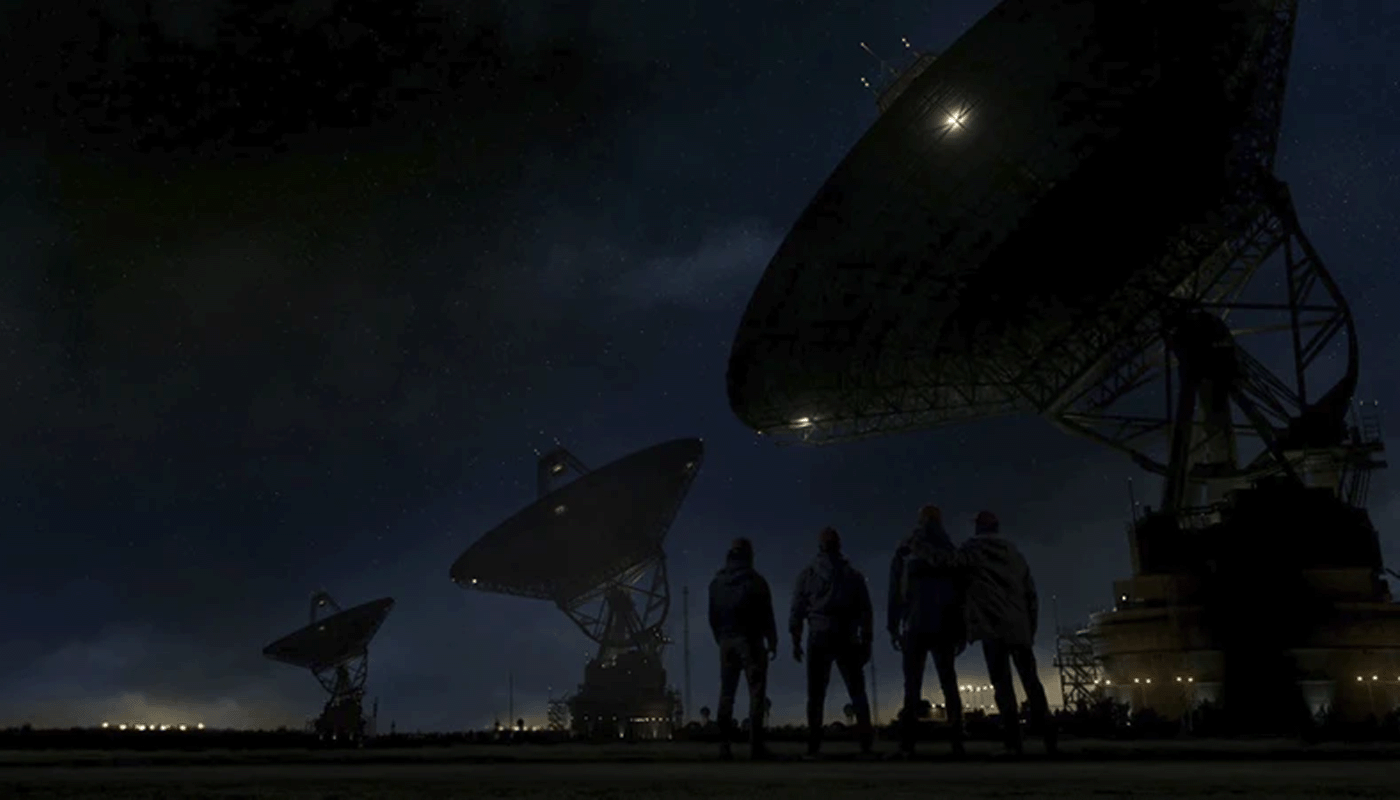
Cosmos is a science fiction drama that unfolds over a single, fateful night in the English countryside. The film centers on three amateur astronomers – Harry (Joshua Ford), Roy (Arjun Singh Panam), and Mike (Tom England) – who venture into the woods for a routine stargazing session. All three protagonists are colleagues in the aerospace industry, with Mike desperately hoping his data processing system for radio telescopes will secure extended funding for his project. What begins as a night of scientific observation and friendly banter soon takes an extraordinary turn when Mike’s umbrella-sized radio telescope picks up an inexplicable signal.
The film’s core premise taps into a universal fascination with the unknown, exploring themes of discovery, isolation, and humanity’s place in the vast universe. What makes Cosmos particularly remarkable is its ability to evoke a sense of professional polish and atmospheric tension despite its almost impossibly small budget. The visual quality, sound design, and overall aesthetic defy expectations, leading many viewers, including this reviewer, to initially watch the film without any preconceptions of its shoestring origins. It is this deceptive quality that elevates Cosmos beyond a mere technical curiosity, positioning it as a significant achievement in the realm of independent science fiction.
The film’s initial setup is its strength: a contained mystery that unfolds in a claustrophobic setting, focusing on character reactions and the slow burn of discovery. This minimalist approach forces the narrative to rely heavily on its actors’ performances and the escalating tension of the unknown, rather than expensive visual effects. This choice, born of necessity, ultimately serves to highlight the raw talent and resourcefulness of the Weaver brothers, who managed to craft an engaging cinematic experience against all odds.
A Filmmaking Odyssey: The Weavers’ Chronology of Creation
The story of Cosmos is inextricably linked to the personal journey of its creators, Elliot and Zander Weaver. Hailing from Birmingham, England, the brothers nurtured a passion for filmmaking from a young age, spending their childhood making movies. Their early influences gravitated towards big, earnest science fiction films, with Steven Spielberg’s iconic E.T. the Extra-Terrestrial (1982) cited as a formative inspiration. This love for grand, imaginative storytelling, however, presented a formidable challenge when they decided to pursue filmmaking professionally after secondary school. Traditional sci-fi epics demand multi-million-dollar budgets, a stark contrast to the realities facing unknown, aspiring filmmakers.
Their first major project, a script titled Encounter, languished for years as they navigated the notoriously difficult landscape of film financing. The industry’s Catch-22 became painfully clear: nobody wanted to risk millions of pounds on unproven talent, yet they needed to "prove" themselves by making a feature film first. Undeterred, the brothers established a small production company, turning to more accessible work by making science and history documentaries for television. This period, while not directly related to their sci-fi ambitions, proved invaluable, allowing them to hone their craft, understand production workflows, and gain practical experience.
The turning point arrived with a dose of inspiration from the legendary independent filmmaker Robert Rodriguez. His story of making El Mariachi (1992) for a mere few thousand dollars with an amateur cast resonated deeply. If Rodriguez could achieve cinematic success with such limited resources, why couldn’t they? This question sparked a new approach: instead of chasing a budget to fit their script, they would brainstorm a script to fit their available resources.
The inventory of their production capabilities was modest: a Blackmagic Pocket Camera (the original 1080p model, a revolutionary tool for indie filmmakers at the time), a mother (Lesley Weaver) with invaluable experience in TV hair and makeup, a collection of personal computer equipment, and crucially, their dad’s station wagon. A friend’s garage was secured as a makeshift soundstage. This meager list of assets formed the bedrock of Cosmos’s production.
The crew was astonishingly lean, consisting of just five individuals: Elliot and Zander Weaver, their mother Lesley, composer Chris Davey, and two credited production assistants. A poignant note in the film’s history is the passing of their father before filming began; he had intended to assist, underscoring the deeply personal and familial commitment behind the project.
The Weavers themselves became the production’s backbone, taking on an exhaustive list of roles. From writing and storyboarding to set building, directing, filming, editing, color grading, sound design, and visual effects – they handled everything. What began as a necessity due to a lack of funds to hire professionals evolved into an intensive, hands-on masterclass in every facet of filmmaking. This comprehensive immersion, while incredibly demanding, provided them with an unparalleled understanding of the entire cinematic process.
This multi-hat approach, however, inevitably led to certain production inefficiencies. The majority of Cosmos takes place inside a car parked in the woods at night. Filming outdoors in the actual woods for these scenes would have been logistically complex and inconvenient. Their solution: converting a friend’s garage into a daytime soundstage for the car interior shots. The irony was that the very car used in the film was their family vehicle, necessitating a daily ritual of driving it to the garage, meticulously setting up the interior set, filming, and then breaking it all down again. This repetitive process, though tedious, highlights the sheer dedication and problem-solving ingenuity required for micro-budget filmmaking.
Behind the Scenes: Supporting Data and Technical Prowess
To fully appreciate Cosmos, it’s essential to contextualize its financial footprint within the broader filmmaking landscape. While films like Backrooms ($10 million) and Obsession ($750,000) are celebrated for their "low budgets" in Hollywood terms, Cosmos exists in an entirely different league. Its budget, while not explicitly stated, is understood to be in the realm of "a few hundred bucks" – a figure comparable to Curry Barker’s earlier slasher film before his Obsession success, and far removed from even Obsession‘s seven-figure sum. This places Cosmos firmly in the "micro-budget" or even "no-budget" category, a testament to pure passion and resourcefulness.
The choice of the Blackmagic Pocket Camera (OG) was pivotal. Released in 2013, this camera quickly became a darling of independent filmmakers due to its relatively affordable price point and its ability to capture high-quality 1080p video with a cinematic aesthetic. It offered a dynamic range and color science previously unattainable at its price, empowering filmmakers like the Weavers to achieve a professional look without Hollywood-grade equipment. Paired with readily available editing software, this camera formed the technical backbone of their ambitious project.
Resourcefulness extended to every aspect of the production. A notable example is Mike’s umbrella-sized radio telescope, which, upon closer inspection, appears to be an actual umbrella cleverly repurposed. Such ingenious prop usage is a hallmark of micro-budget films, where creativity trumps expenditure. The Weavers’ handling of color grading and sound design further demonstrates their technical acumen. These elements, often overlooked but crucial for immersion, were meticulously crafted by them, contributing significantly to the film’s polished feel. The soundscape, in particular, plays a vital role in building tension and conveying the vastness of space from a confined setting.
Sci-fi, as a genre, presents unique challenges for micro-budget filmmakers. Unlike horror, which can often thrive on found footage, jump scares, and minimal special effects, sci-fi typically demands world-building, advanced technology, and often, extensive visual effects. The Weavers smartly contained their narrative, focusing on a character-driven mystery rather than large-scale spectacle. What limited visual effects were necessary were painstakingly created by them, highlighting their burgeoning skill set.
The film also demonstrates a commendable commitment to scientific realism, at least in its initial setup. Mike detects the curious signal within the "water hole" of radio frequencies (between 1420 MHz and 1666 MHz), a specific band where cosmic noise is minimal, making it a theoretically ideal frequency for interstellar communication. This detail, alongside the later discovery of a binary signal responding to the real-world Arecibo message (a binary signal broadcast from the Arecibo Observatory in 1974), grounds the fantastical elements in plausible scientific concepts, enhancing the film’s credibility and appeal for sci-fi aficionados.
Critical Resonance: Official and Unofficial Responses
The initial critical reception of Cosmos, particularly from this reviewer’s perspective, highlights a fascinating dichotomy: immense respect for its technical execution on a micro-budget, yet notable reservations regarding its narrative choices. The film successfully builds a palpable sense of unease and mystery in its early stages. The escalating strangeness – an amateur setup picking up what a major radio array cannot, a satellite vanishing, a distorted return message, and damage to Mike’s equipment – effectively draws the audience into a creeping sense of the uncanny. The sequence where Roy and Harry venture into the dark woods to get a better signal is deliberately filmed to be creepy, promising a spooky, perhaps even alien, encounter.
However, a significant point of criticism revolves around the film’s failure to deliver on this carefully constructed tension. What felt like a classic "Chekhov’s gun" moment – hinting at a localized, personal alien encounter – ultimately remained unfired. The narrative pivots away from the initial eerie intimacy towards a more generalized, global discovery. This shift leads to a climax described as "extremely silly and wholly unnecessary," devolving into a frantic, ill-conceived race against time to preserve their discovery before power runs out. The stakes feel incongruous; the urgency of proving they heard the signal first pales in comparison to the entire world now knowing about alien existence. This narrative fumble, particularly at the climax, significantly dampened the reviewer’s engagement and satisfaction.
From the Weavers’ own reflections, gleaned from interviews, Cosmos was explicitly understood as a "proof-of-concept" project. This context, while not excusing narrative flaws, illuminates many of the creative choices made. It was an intensive learning experience, a hands-on film school where they mastered every aspect of production. This perspective helps frame the film’s imperfections not as outright failures, but as understandable elements within a larger educational and experimental endeavor.
Despite these narrative criticisms, the film garnered significant unofficial praise within the independent film community. It was often cited for its incredible production value relative to its cost, a testament to the Weavers’ technical skill and dedication. Indie film enthusiasts and aspiring filmmakers frequently celebrate Cosmos as an inspiring example of what can be achieved with minimal resources, solidifying its status as a cult favorite within the micro-budget sci-fi niche. Its clean, professional look and immersive atmosphere often impressed audiences unaware of its humble origins.
Looking Beyond: Implications for the Future of Indie Cinema
The emergence of films like Cosmos, alongside the higher-profile successes of Backrooms and Obsession, signals a profound shift in the filmmaking landscape. It underscores the ongoing democratization of cinema, where accessible technology—from affordable high-quality cameras like the Blackmagic Pocket Camera to sophisticated yet user-friendly editing and VFX software—empowers a new generation of filmmakers. Platforms like YouTube, where talents like Kane Parsons honed their craft before Hollywood came calling, serve as powerful incubators and distribution channels for nascent creators.
This shift presents both challenges and opportunities. While it’s easier than ever to make a film, it’s arguably harder than ever to make one that stands out amidst the sheer volume of content. However, for films like Cosmos, the opportunity lies in connecting directly with niche audiences who appreciate authentic, passionate storytelling over blockbuster spectacle. Digital distribution channels and streaming services have become vital avenues for these micro-budget gems to find their viewers, bypassing traditional gatekeepers and expensive marketing campaigns.
Cosmos exemplifies the power of vision and persistence over vast capital. It reinforces the idea that compelling narratives and artistic integrity are not solely the preserve of big studios. Genre films, particularly horror and sci-fi, often find success in the micro-budget realm because they can leverage atmosphere, psychological tension, and clever storytelling devices to compensate for a lack of expensive effects.
For Elliot and Zander Weaver, Cosmos was more than just a film; it was a foundational stepping stone. Poking around online reveals that they are continuing their micro-budget sci-fi journey with new projects, including Nightstone. This upcoming film, reportedly a blend of folk legends and UFO visitation shot on 16mm film (an interesting artistic choice, harkening back to older filmmaking techniques), showcases their evolving craft and willingness to experiment. The anticipation for their future work is high, as audiences and critics alike are curious to see how their filmmaking style and narrative sophistication will develop, building upon the invaluable lessons learned from Cosmos.
Ultimately, Cosmos forces a broader conversation for film enthusiasts and industry insiders alike: What truly constitutes "value" in cinema? Is it measured by budget, box office, or the sheer audacity of creation and the passion embedded in every frame? The enduring appeal of films like Cosmos lies in their ability to strip away the financial spectacle and remind us of the raw, human desire to tell stories, to explore the unknown, and to bring imaginative worlds to life, even if it’s from a friend’s garage with a station wagon and a handful of dedicated individuals. It’s a powerful reminder that sometimes, the biggest ideas come from the smallest beginnings.
The Indie Film Club’s Continuing Exploration
Cosmos serves as a poignant reminder of the incredible dedication and creativity thriving in the independent film world. It encourages us to look beyond the numbers and appreciate the sheer will that drives these projects. It also sparks a vital discussion on the economics of filmmaking and the opportunities available for those with more passion than capital.
What are your thoughts on Cosmos? And what do you make of this particular brand of sci-fi filmmaking born from a couple of passionate individuals with a camera and little else? Share your insights!
Next week, our film club continues its journey around the globe, exploring another fascinating facet of micro-budget filmmaking: the Japanese "nagamawashi" style, characterized by films edited to appear as a single, long shot. Join us as we watch Beyond the Infinite Two Minutes online.