Silent Hill: Townfall’s Retro Charm – A Psychological Minefield of Nostalgia
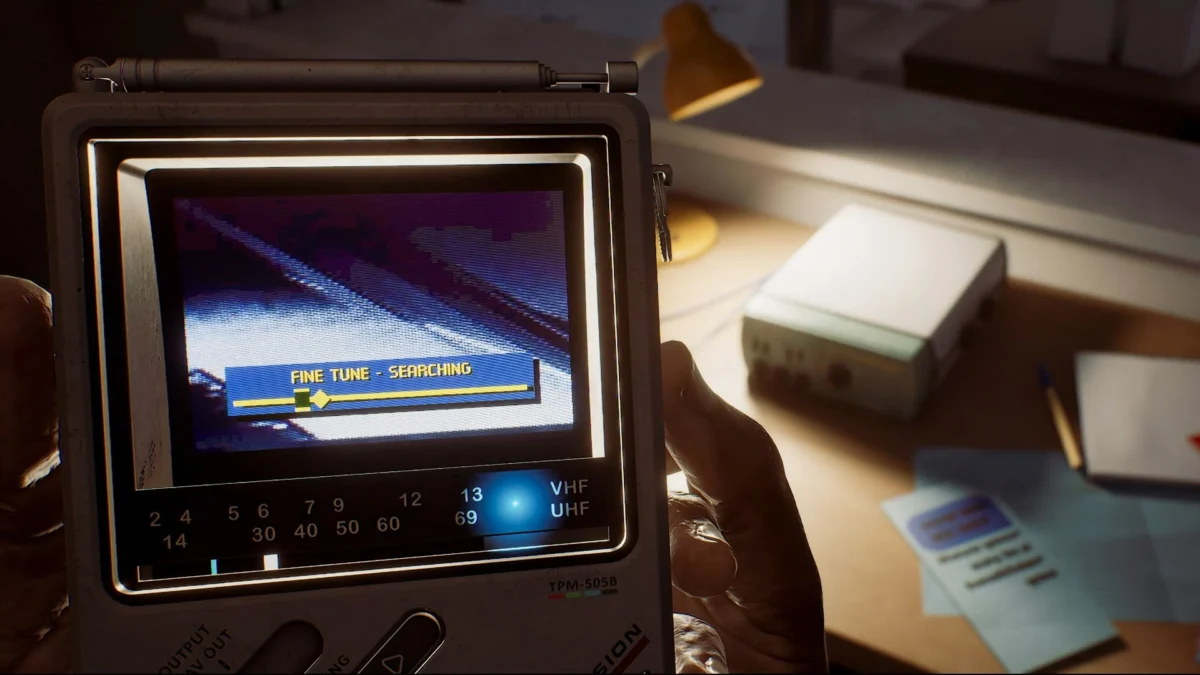
The upcoming survival horror title, Silent Hill: Townfall, is poised to leverage the pervasive allure of ’90s technology to craft a uniquely unsettling player experience, according to its development team.
The Enduring Echo of Analog in a Digital Age
In the ever-evolving landscape of video games, where technological advancements often dictate the visual fidelity and interactive possibilities, a curious counter-trend is emerging. Developers are increasingly looking backward, not just for narrative inspiration, but for the very tools that shape the player’s interaction with the game world. This is particularly true in the survival horror genre, where a sense of vulnerability and unease is paramount. The forthcoming title, Silent Hill: Townfall, is a prime example of this phenomenon, deliberately eschewing contemporary digital interfaces for the tactile, often temperamental, charm of ’90s analog technology.
The decision to ground Townfall in the 1990s, a departure from the more ambiguous, contemporary settings of some recent Silent Hill entries, is a calculated move. As highlighted by the game’s creative leads, this temporal anchoring allows for a deliberate manipulation of player psychology. The iconic, static-laced crackle of a Silent Hill radio, a staple of the series, is being replaced by a portable CRT television. This seemingly minor substitution is, in fact, a cornerstone of the game’s design philosophy, aiming to turn a source of comfort and familiarity into a tool of dread.
A Look Back: The Genesis of a Nostalgic Nightmare
The original Silent Hill games, released during the late 1990s and early 2000s, were intrinsically tied to the technology of their era. The clunky, often unreliable nature of analog devices contributed significantly to the pervasive sense of isolation and fear. In contrast, the introduction of a faux iPhone in Silent Hill: The Short Message felt jarring to some, a temporal dissonance that pulled players out of the intended atmosphere. Townfall seeks to rectify this by embracing its chosen decade wholeheartedly.
The development team, including series producer Motoi Okamoto and Townfall writer and director Jon McKellan, have openly discussed their motivations. In a recent interview on the PlayStation blog, McKellan articulated a deep-seated affection for older analog technologies. "Older analog tech and gadgets mean a lot to us, and we have a real fondness for them," he stated. "Nostalgic elements like these are things that not just us, but players everywhere have touched and experienced, evoking a sense of familiarity. We deliberately designed moments that play against those nostalgic feelings."
This sentiment underscores a critical design principle: to weaponize nostalgia. By presenting players with devices that may evoke fond memories or a sense of comfort, the developers aim to create a subtle yet potent psychological paradox. The familiarity of these objects is intended to lull players into a false sense of security, only to be exploited by the game’s inherent horrors.
The Unreliable Companion: Analog Tech as a Source of Anxiety
McKellan further elaborated on the inherent characteristics of analog technology that make it ripe for exploitation in a horror context. "At this point in time, analog technology can feel ‘unstable, unreliable, or hard to trust completely’," he explained. This inherent fallibility is precisely what Townfall intends to amplify. Players will be forced to rely on these devices for survival, navigating the oppressive atmosphere of Silent Hill with tools that are inherently prone to glitches, static, and unpredictable behavior.
"We wanted to create a situation where players have to rely on this device to survive, even while feeling uneasy about relying on it too much," McKellan added. This creates a delicate balancing act, a constant undercurrent of tension. The player’s reliance on a device that might fail them at any moment, or worse, actively mislead them, is a powerful psychological tool. It mirrors the fragmented and untrustworthy nature of the Silent Hill universe itself, where perception and reality are constantly blurred.
The implications of this design choice are profound. Unlike the often-predictable functionality of modern digital devices, analog technology carries with it an inherent unpredictability. A dropped signal, a distorted image on a CRT screen, or the persistent hiss of static can all be amplified by the game’s oppressive sound design and visual direction to create genuine moments of terror. The player is not just facing external threats; they are also battling the very tools they are meant to depend on.
Generational Divides and the Shifting Sands of Nostalgia
The article’s author, a self-proclaimed "tail-end of the ’90s" kid who experienced the early 2000s, reflects on how this nostalgia might influence their personal experience with Townfall. They acknowledge that while not a "true ’90s kid," the lingering presence of analog technology in their formative years means they still find value in older devices, even admitting to enjoying games and movies on CRT screens. This personal connection raises an interesting question: will their familiarity with these devices make them less susceptible to the intended unease, or perhaps even more so?
The article posits a compelling thought experiment regarding generational divides and their impact on how Townfall will be received. How will someone whose first mobile phone was a sleek iPhone react to a game that centers around the clunky interface of a Nokia or a Motorola flip phone, compared to someone who remembers the tactile satisfaction of tuning an old television? Will the older generation find a comforting familiarity in the ’90s setting, while the younger generation experiences it as an alien, almost primitive, landscape?
This generational perspective is crucial. For those who lived through the ’90s, the analog technology will evoke a direct sense of lived experience. For younger players, it might be a more curated, perhaps even romanticized, glimpse into a past they never directly experienced. The developers’ intention to "play against those nostalgic feelings" suggests they are aiming for a universal unsettling effect, regardless of individual generational ties to the technology.
Supporting Data and Official Responses: A Deep Dive into the Design Philosophy
The insights from Jon McKellan are not mere anecdotal observations; they represent a deliberate and considered approach to game design. His articulation of the "unstable, unreliable, or hard to trust completely" nature of analog tech is supported by the historical context of these devices. Early mobile phones were known for their spotty reception and limited functionality. Portable televisions, while offering entertainment, were often plagued by fuzzy reception and the need for manual tuning.
This inherent "flakiness" can be translated into gameplay mechanics. Imagine needing to tune a portable TV to receive crucial information, only for the signal to be interrupted by static or ghost images, mirroring the terrifying apparitions that haunt Silent Hill. Or picture a walkie-talkie that cuts out at critical moments, leaving the player isolated and vulnerable. These are not abstract concepts; they are tangible ways in which the game can leverage analog technology to amplify psychological distress.
Producer Motoi Okamoto’s involvement further lends weight to the strategic direction of Townfall. While the PlayStation blog post focuses heavily on McKellan’s insights into the retro technology, Okamoto’s presence as a series producer signifies a broader commitment to revitalizing the Silent Hill franchise. His endorsement of the team’s vision, particularly the creative use of the game’s setting and technology, suggests a unified strategy to deliver a compelling new Silent Hill experience.
The decision to set the game in the ’90s also allows for a specific aesthetic and thematic resonance. The ’90s were a transitional period, a bridge between the analog past and the digital future. This liminality can be expertly woven into the fabric of Silent Hill, a town already defined by its ambiguous and shifting realities. The technology of the era, with its tangible buttons, whirring tapes, and cathode-ray tubes, offers a stark contrast to the sleek, intangible interfaces of today, making the player’s interaction feel more grounded, yet paradoxically, more susceptible to the surreal.
Implications: The Future of Horror and the Power of the Past
The implications of Silent Hill: Townfall‘s approach extend beyond the immediate anticipation for the game. It suggests a growing trend in the horror genre to explore the psychological impact of technology, both past and present. By embracing analog, Townfall is not simply being retro; it is actively employing the inherent characteristics of older technology to create a unique brand of fear.
The success of this strategy could pave the way for other developers to explore similar avenues. Imagine a horror game set in the 1970s, utilizing rotary phones and reel-to-reel tape recorders as central gameplay elements. Or a game set in the early days of computing, where players must contend with the limitations and quirks of early PCs and dial-up modems. The possibilities are vast, and Townfall is likely to be a significant case study in how effective this approach can be.
Furthermore, the game’s potential to resonate across different generations is a testament to the enduring power of well-crafted atmosphere and psychological horror. While the specific technological touchstones may differ, the fundamental human experience of unease, isolation, and the fear of the unknown remains constant. Townfall has the potential to tap into these universal emotions by using the familiar, yet flawed, artifacts of the past to create a terrifyingly immersive present.
As the release date approaches, the gaming community will be watching with keen interest. Will the ’90s analog charm of Silent Hill: Townfall effectively weaponize nostalgia into a potent tool of terror? Or will the author’s personal affinity for these devices render them less susceptible to the intended psychological manipulation? The answer lies in the hands of the developers, and the players who dare to venture into the townfall. The anticipated release date for Silent Hill: Townfall is September 24th, a date that promises to usher in a new, and perhaps unsettlingly familiar, era of survival horror.