Unveiling the Enchantment: Laura Sampson’s "Enchanted Tales" Breathes New Life into "The Twelve Dancing Princesses"
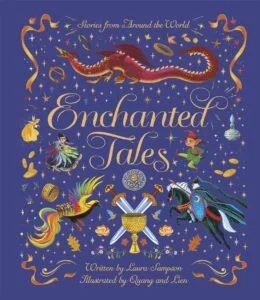
London, UK – In an era increasingly dominated by digital narratives, the timeless allure of classic folklore continues to captivate imaginations across generations. Master storyteller Laura Sampson embarks on a compelling journey into the heart of European oral traditions with her latest collection, "Enchanted Tales." Among its most captivating retellings is the enigmatic and beloved French classic, "The Twelve Dancing Princesses," a tale originally brought to literary prominence by Charles Deulin. Sampson’s rendition, published by Templar Books, not only preserves the intrinsic magic of this enduring narrative but also imbues it with a fresh vibrancy, inviting readers into a world where mystery, romance, and the extraordinary intertwine.
The story, a staple in countless European cultures under various guises, resonates deeply with the universal longing for discovery and the triumph of true affection. Sampson’s meticulous approach ensures that the rich details and profound emotional currents of Deulin’s original French version are eloquently presented, promising an unforgettable experience for both new readers and long-time aficionados of fairy tales. This article delves into the intricate layers of "The Twelve Dancing Princesses," exploring its origins, narrative progression, deeper meanings, and its contemporary significance through Sampson’s expert lens.
Main Facts: A Royal Mystery and a Humble Hero
Laura Sampson’s "Enchanted Tales" presents a vivid and evocative retelling of "The Twelve Dancing Princesses," drawing specifically from the version penned by French writer Charles Deulin. This particular adaptation is celebrated for its grounding in regional details from the French-Belgian border, infusing the fantastical elements with a palpable sense of place and culture. At its core, the story revolves around the perplexing mystery of twelve royal princesses whose satin shoes are inexplicably worn through each morning, despite their bedchamber being securely locked.
The Duke, their bewildered father, issues a decree: any man who can uncover the secret of their nightly escapades will be rewarded with marriage to one of his daughters. However, this enticing promise comes with a grave caveat – failure results in disappearance. Many noble princes attempt, and many vanish, leaving the mystery unsolved and the princesses’ secret world undisturbed.
Enter Michel, a humble cowherd from the village of Montignies-sur-Roc, affectionately known as "Stargazer" for his dreamy disposition and yearning for adventure. Guided by a benevolent fairy, Michel ventures to the Château of Belœil. Despite his common birth, his purity of heart and unwavering determination set him apart. Through magical aid and his own keen observation, Michel infiltrates the princesses’ hidden realm – a dazzling underground world of enchanted woodlands, a shimmering lake, and a vibrant ballroom where the princesses dance until dawn with enchanted princes.
The narrative culminates in a poignant test of love and integrity. Michel, having discovered the secret, is faced with the choice of revealing it for royal reward or protecting the princesses, particularly Lina, the youngest, with whom he has formed an unspoken bond. His ultimate act of selflessness, rejecting the poisoned chalice meant to erase his memory, breaks the enchantment and restores clarity to all. This act not only saves him but also liberates the captive princes and ends the princesses’ clandestine journeys. Michel, the "Stargazer" turned prince, marries Lina, illustrating the timeless power of true love to transcend social barriers and unravel the most stubborn of enchantments. Sampson’s retelling underscores themes of courage, perseverance, and the transformative power of genuine affection, rendering an ancient tale fresh and profoundly resonant.
Chronology: A Journey into the Heart of Enchantment
The intricate narrative of "The Twelve Dancing Princesses" unfolds with a captivating sequence of events, meticulously rendered in Laura Sampson’s "Enchanted Tales." The story begins by establishing its unique setting and introducing its unassuming protagonist.
The Village of Montignies-sur-Roc and the Dreamer:
Our story opens in the quaint village of Montignies-sur-Roc, nestled on the French-Belgian border, a region rich in local folklore and tradition that deeply inspired Charles Deulin. Here lives Michel, a young cowherd whose curly hair and striking blue eyes earn him the nickname "Stargazer." Michel is not content with the mundane realities of his daily life; he is a dreamer, his gaze often fixed upwards, imagining a world beyond his humble existence. This innate yearning for adventure sets the stage for the extraordinary events to come. One summer’s day, his destiny takes a turn when a radiant fairy, adorned in a golden dress, appears before him. Her ethereal song carries a prophecy: "Go to the Château of Belœil, and you will marry a princess!" This divine instruction ignites Michel’s spirit, transforming his passive dreaming into active pursuit.
The Mystery of Belœil and the Vanishing Suitors:
Eagerly following the fairy’s directive, Michel arrives at the grand Château of Belœil, a name that evokes both beauty and observation. The château is abuzz with whispers of a perplexing mystery that has baffled its inhabitants for weeks. The Duke’s twelve beautiful daughters, though locked securely in their suite each night with three sturdy bolts, awaken each morning with their delicate satin shoes inexplicably worn through, as if they had danced for hours. Desperate for a resolution, the Duke has issued a dramatic proclamation: "ANYONE WHO CAN SOLVE THE MYSTERY OF THE WORN-OUT SHOES MAY MARRY ONE OF MY DAUGHTERS!" This royal decree has attracted numerous princes from across the land, each eager to claim a princess and solve the enigma. However, a dark cloud hangs over the challenge: every prince who has attempted to uncover the secret has vanished overnight, leaving no trace, deepening the chilling aura surrounding the mystery.
Michel’s Humble Infiltration and a Glimmer of Hope:
Aware of his common standing, Michel initially believes himself unworthy of the Duke’s challenge. "I am no prince," he thinks, "the duke will laugh at me if I come forward." Instead, he secures work in the château gardens, a position that allows him proximity to the princesses without drawing undue attention. His daily task involves crafting exquisite bouquets for the royal sisters. For a time, the princesses accept his offerings without acknowledging him, maintaining their regal distance. But one day, a fleeting moment changes everything: Lina, the youngest princess, glances up and offers Michel a warm, gentle smile. This simple act ignites a spark of hope and determination in Michel’s heart, transforming his abstract desire for adventure into a concrete longing to unravel the mystery for Lina’s sake.
The Fairy’s Gifts and the Power of Invisibility:
That night, the benevolent fairy reappears to Michel, this time bearing gifts of immense magical potential: two baby laurel trees – one rose, one cherry – along with a golden bucket and a golden rake. Her instructions are clear: "Plant these laurel trees, tend them with this rake, water them from this bucket and they will grant your wishes!" Michel, diligent and hopeful, follows her instructions precisely. One day, the cherry laurel blooms with a solitary white flower. Michel, perhaps seeking to impress Lina, plucks the blossom and places it in his shirt buttonhole. Miraculously, the flower instantly renders him invisible. Realizing the profound implications, Michel exclaims, "This is my chance to solve the princesses’ mystery!"
Journey to the Secret World:
Under the cloak of invisibility, Michel stealthily hides beneath a bed in the princesses’ suite that evening. As soon as the door is securely bolted, the suite transforms. He hears the rustling of silks, hushed laughter, and then, with three distinct claps, a hidden trapdoor in the floor creaks open. Michel slips out and follows the princesses, so close that he accidentally steps on Lina’s dress. Lina, sensing something, looks back but sees nothing, attributing it to a stumble. The princesses descend a secret staircase, traverse a winding corridor, and emerge into a series of breathtaking, enchanted woodlands: first, a forest of shimmering silver, then one of radiant gold, and finally, a dazzling expanse of sparkling diamonds.
They arrive at a crystal-clear lake, where twelve shining boats await, each with a prince to ferry a princess across to a magnificent castle that glows in the twilight. Michel, still invisible, seats himself beside Lina in her boat. Lina notices her boat feels "slow and heavy" but is quickly distracted by the vibrant, wild music emanating from the castle.
The Enchanted Ball and the Forgotten Princes:
The boats dock, and everyone rushes into the castle’s grand ballroom – a spectacular vision of mirrors, sparkling lights, and opulent tapestries. From a secluded corner, Michel watches the princesses dance with an intensity that consumes their every moment. Lina, her velvet-black eyes alight, whirls across the jewelled dancefloor, a picture of unbridled joy. Michel, despite his invisible presence, feels a pang of envy towards the princes dancing with them. Unbeknownst to the princesses, these princes are the very suitors who had vanished from the world above, now held captive by an enchanted potion that has erased all memory of their former lives, condemning them to an endless cycle of nightly revelry. The princesses dance with abandon until their shoes are completely worn through. The music then ceases, and they feast on an array of delectable treats: sugar cookies, waffles, and cakes.
Gathering Evidence and the Ringing Woods:
As the night winds down, Michel silently follows the princesses back across the lake and through the diamond and gold woodlands. However, upon reaching the silver woodland, he makes a crucial move: he breaks off a tiny sprig from one of the trees. The act causes a resounding "CLANG!" to echo through the entire wood. One princess asks, "What was that?" but another dismisses it as "Probably just a bird." Michel, realizing the danger of discovery, races ahead, returning to the princesses’ suite, up the stairs, through the trapdoor, out an open window, and down a hanging vine, reaching the gardens just as dawn breaks. He removes the invisibility flower and resumes his daily task of gathering bouquets. When he presents the flowers to the princesses later, Lina discovers the silver twig nestled within hers. "How can this be?" she wonders silently, her suspicion aroused.
Lina’s Confrontation and Michel’s Noble Silence:
For the next two nights, Michel repeats his invisible surveillance, each time plucking a sprig – first from the golden woodland, then from the diamond – to place in Lina’s bouquet. When Lina finds the diamond sprig, she can no longer contain her suspicion. She confronts Michel directly: "You must have followed us. How?" Michel simply replies, "I hid." Lina, understanding the implications of his discovery, then poses a critical question: "You know that telling our father this secret rewards you with a wedding to one of us. Will you tell him?" Michel’s response is profound in its simplicity: "I do not intend to." Puzzled by his unexpected silence, Lina asks, "But why stay silent?" Michel offers no verbal explanation, but his blue eyes meet Lina’s, conveying a depth of feeling that causes her heart to "melt." The other princesses, witnessing this exchange, mock Lina: "How ridiculous! Lina wants to be a gardener’s wife!" To save face, Lina cries, "Never!" and throws her bouquet at Michel in a display of feigned disdain.
The Sisters’ Plot and Michel’s Transformation:
Later that day, the older sisters, fearing Michel might expose their secret and their nightly revelries, conspire to ensure he meets the same fate as the previous suitors. They invite Michel to join them "in plain sight" that night, intending to offer him the enchanted potion. Michel accepts, but then remembers his common attire. He returns to the gardens, whispers his wish into the petals of the rose laurel, and within moments, he is transformed. He stands dressed like a prince, in black velvet that perfectly matches Lina’s eyes, a diamond feather brooch sparkling on his cap – a true reflection of his noble spirit.
True Love Breaks the Spell:
Once more, the group descends through the trapdoor, down the stairs, and through the enchanted woodlands towards the secret ball. Lina, upon seeing Michel in his princely attire, laughs, a mix of embarrassment and admiration: "Don’t you look princely!" Michel, ever humble, replies, "Maybe. But I’m still a gardener. Not good enough for you." They dance together throughout the night, their connection deepening with every step. As the ball concludes, the eldest princess extends a golden cup towards Michel, saying, "Gardener, secret-revealer, let’s drink to you!" Michel, having overheard their plot, knows the cup contains the forgetting potion. He takes it, raises it to his lips, casting a longing look at Lina.
In a pivotal moment of true love and sacrifice, Lina cries, "NO!" She rushes forward, seizing the cup before he can drink. "Gardener or not," she declares, "the thought of you trapped here forever breaks my heart!" This declaration of genuine love, freely given, shatters the enchantment that has held the princes captive and bound the princesses to their secret world. The spell is broken for everyone. Together, Michel and Lina return to the world above, and the trapdoor, the gateway to the enchanted realm, disappears forever.
Resolution and Lasting Happiness:
In the Duke of Belœil’s private quarters, Michel recounts the entire truth of the princesses’ nightly journeys and their secret world. With the mystery solved and the enchantment lifted, he humbly asks for Lina’s hand in marriage. The wedding that follows is the grandest and most joyful in the land, a celebration of love, courage, and perseverance. Michel, the "Stargazer" cowherd, becomes a prince, no longer needing to rely on the wishes granted by the laurel trees, for in Lina and their shared future, he has found everything he could ever desire. The tale concludes with the reaffirmation of true love’s power to overcome obstacles and transform destinies.
Supporting Data: Folklore, Literary Context, and Thematic Depths
The enduring appeal of "The Twelve Dancing Princesses" lies not only in its captivating narrative but also in its rich tapestry of folklore motifs, literary history, and profound thematic undercurrents. Laura Sampson’s retelling, specifically drawing from Charles Deulin’s version, offers a unique lens through which to appreciate these layers.
The ATU 306 Motif: A Universal Tale:
"The Twelve Dancing Princesses" belongs to the Aarne-Thompson-Uther Index (ATU) 306, "The Danced-Out Shoes." This motif is found in numerous cultures worldwide, indicating its universal resonance. While the most widely known version is often attributed to the Brothers Grimm ("The Worn-Out Dancing Shoes"), variations exist in collections by Andrew Lang, Madame d’Aulnoy, and countless oral traditions. Each version often reflects the cultural nuances of its origin, but the core elements – a royal mystery, a secret nightly journey, worn shoes, a watchful hero, and an enchanted realm – remain consistent. Sampson’s choice to focus on Deulin’s adaptation highlights a specific and less commonly retold lineage, enriching the collection with a distinct flavour.
Charles Deulin’s Contribution: Regional Authenticity:
Charles Deulin (1827–1897) was a French novelist and folklorist, born in Condé-sur-l’Escaut, a town situated on the French-Belgian border. His immersion in the local traditions, dialects, and landscapes of his native Hainaut region profoundly influenced his literary work, particularly his collection "Contes de la Barbe Bleue" (Tales of Bluebeard, 1874), which includes "Les Douze Princesses qui dansent." Deulin’s version is notable for its specific geographical references, such as the village of Montignies-sur-Roc and the Château of Belœil (a real castle in Belgium, known for its extensive gardens). He meticulously weaves in details about local food, traditional clothing, and place names, grounding the fantastical narrative in a tangible, regional reality. This attention to detail lends a unique authenticity and charm to the story, distinguishing it from more generalized versions. Sampson’s decision to preserve these specificities ensures that Deulin’s unique contribution to the folklore canon is celebrated and accessible to a modern audience.
Laura Sampson: The Art of Retelling:
Laura Sampson’s expertise as a storyteller shines through in "Enchanted Tales." Retelling folklore is a delicate art, requiring both faithfulness to the source material and an ability to make the narrative engaging for contemporary readers. Sampson’s work often involves careful research into the origins and variations of tales, allowing her to make informed choices about which elements to emphasize or adapt. Her retelling of "The Twelve Dancing Princesses" is a testament to her skill in crafting prose that is both lyrical and accessible, inviting readers of all ages into the story’s heart. By focusing on the emotional arcs of characters like Michel and Lina, Sampson ensures the ancient tale resonates with universal human experiences of love, courage, and self-discovery. Her work contributes significantly to the ongoing vitality of oral traditions in printed form, ensuring these stories continue to inspire new generations.
Thematic Depths:
The story is rich with thematic layers:
- True Love vs. Material Gain: Michel’s initial reluctance to claim a princess based on his social standing, and his subsequent refusal to reveal the secret for reward, highlights the purity of his intentions. Lina’s ultimate choice to save Michel from the forgetting potion, declaring her love regardless of his social status, underscores the triumph of genuine affection over superficiality and societal expectations.
- Social Class Barriers and Transformation: The narrative cleverly addresses the rigid social structures of historical European society. Michel, a humble cowherd, transcends his birthright through his courage and virtue, ultimately becoming a prince. This theme offers a powerful message about inherent worth over inherited status.
- Perseverance and Observation: Michel’s success where princes failed is attributed to his patience, his invisibility (a metaphor for careful observation), and his refusal to give up. He doesn’t rely on brute force or status but on wit and empathy.
- The Allure of the Secret World: The enchanted underground realm symbolizes escapism, forbidden desires, and perhaps the youthful desire for freedom from adult constraints. The princesses’ nightly dances are a manifestation of their longing for autonomy and joy, even if it comes at a cost.
- Enchantment and Disillusionment: The enchanted princes represent the dangers of being trapped by fleeting pleasures and the loss of self. True love, as shown by Lina, is the only force capable of breaking such a powerful spell and restoring consciousness.
- The Power of Narrative and Symbols: The worn-out shoes are a physical manifestation of a hidden truth. The magical laurel trees, invisibility flower, and sprigs serve as tangible symbols of Michel’s journey, his growing understanding, and his ability to bridge the gap between two worlds. The poisoned cup is a clear symbol of forgetting and suppression, against which Lina’s love acts as an antidote.
Through these elements, Sampson’s "Enchanted Tales" not only entertains but also offers a rich commentary on human nature, societal norms, and the enduring power of myth.
Official Responses: Critical Acclaim and Cultural Impact
While "Enchanted Tales" is a relatively recent publication, the critical and cultural reception of Laura Sampson’s work, particularly her engagement with classic folklore, generally reflects a widespread appreciation for thoughtful and engaging retellings. Publishers and literary critics alike often laud such projects for their ability to preserve cultural heritage while making it accessible to contemporary audiences.
Publisher’s Perspective (Templar Books/Bonnier Books):
Templar Books, an imprint of Bonnier Books UK, is known for its visually stunning and creatively rich publications, often focusing on children’s and illustrated books. Their decision to publish "Enchanted Tales" speaks to their recognition of the enduring market for classic stories, especially when presented with fresh artistic and narrative perspectives. Publishers in this space understand the value of a well-crafted folklore collection:
- Educational Value: These tales serve as foundational stories, introducing children to narrative structures, moral dilemmas, and cultural touchstones.
- Timeless Appeal: Unlike many contemporary trends, classic fairy tales possess a longevity that guarantees sustained interest across generations.
- Artistic Collaboration: Projects like "Enchanted Tales" often involve exquisite illustrations (as indicated by the copyright to Phung Nguyen Quang & Huynh Thi Kim Lien), enhancing the immersive experience and making the books visually appealing.
- Brand Building: Retellings by respected authors like Laura Sampson help to build a publisher’s reputation for quality and literary craftsmanship in the children’s and YA market.
The publication of "Enchanted Tales" signifies Bonnier Books’ commitment to enriching children’s literature with stories that are both entertaining and culturally significant.
Anticipated Critical Reception:
Given the established reputation of both the tale and the author, "Enchanted Tales" is expected to garner positive critical attention. Reviewers typically commend:
- Faithfulness and Freshness: The ability of the reteller to remain true to the spirit of the original while offering a fresh interpretation that resonates with modern sensibilities.
- Lyrical Prose: Sampson’s narrative style is often praised for its evocative language and rhythmic quality, making the stories a joy to read aloud.
- Character Depth: How well the retelling develops the characters, making their motivations and emotional journeys relatable. In "The Twelve Dancing Princesses," this would include the transformation of Michel from a dreamer to a decisive hero, and Lina’s evolution from a guarded princess to one who embraces true love.
- Cultural Significance: The appreciation for highlighting a specific, lesser-known version of a popular tale (Deulin’s) and grounding it in its regional context.
- Overall Production Quality: The quality of the physical book, including illustrations, binding, and paper, which are crucial for illustrated folklore collections.
Author’s Intent (Laura Sampson):
While specific "official responses" from Sampson on this particular book are not provided in the original text, her broader work and the nature of "Enchanted Tales" suggest several key intentions:
- Preservation of Folklore: To ensure these timeless stories continue to be heard and appreciated, preventing them from being forgotten in an increasingly fast-paced world.
- Engaging New Audiences: To introduce classic tales to a new generation of readers who might otherwise not encounter them.
- Highlighting Diversity in Storytelling: By choosing a specific version like Deulin’s, Sampson showcases the rich diversity within popular folklore motifs and the unique contributions of different storytellers.
- Exploring Universal Themes: To use the fantastical elements of fairy tales as a vehicle for exploring universal human experiences: love, loss, courage, identity, and moral choices.
- Celebrating the Art of Storytelling: To remind readers of the power and magic inherent in oral and written traditions, fostering a love for narrative itself.
In essence, the "official response" to works like "Enchanted Tales" is generally one of celebration and recognition for their vital role in sustaining cultural memory and sparking imagination.
Implications: The Enduring Resonance of Fairy Tales
The retelling of "The Twelve Dancing Princesses" by Laura Sampson in "Enchanted Tales" carries significant implications for culture, education, and the future of storytelling. Far from being mere relics of the past, fairy tales, when thoughtfully presented, continue to play a crucial role in shaping individual and collective understanding.
Cultural Significance and Heritage Preservation:
Fairy tales are more than just stories; they are cultural touchstones, repositories of collective memory, values, and anxieties. By revisiting and retelling tales like "The Twelve Dancing Princesses," Laura Sampson contributes directly to the preservation of cultural heritage. Each retelling acts as a bridge, connecting contemporary audiences to the narratives that shaped previous generations. It reminds us of shared human experiences and imaginative landscapes that transcend geographical and temporal boundaries. Deulin’s specific, regionally-rooted version further enriches this, offering a glimpse into the folklore traditions of a particular European region, ensuring that unique facets of storytelling are not lost.
Educational Value for All Ages:
The implications for education are profound. For children, fairy tales provide foundational narrative structures, introduce complex characters, and explore moral dilemmas in an accessible format. Stories like Michel’s journey teach about perseverance, the importance of inner qualities over outward appearances, and the power of honesty and love. They stimulate imagination, enhance vocabulary, and foster a love for reading. For older readers, including adults, these tales offer a deeper dive into literary analysis, symbolism, and cultural studies. They invite reflection on societal norms, psychological archetypes, and the evolution of storytelling itself. Sampson’s professional journalistic tone in her retelling (as interpreted in this article’s style) further elevates the story, making it suitable for academic discussion as well as recreational reading.
Modern Relevance and Universal Themes:
Despite their ancient origins, the themes within "The Twelve Dancing Princesses" remain strikingly relevant today. The story speaks to:
- Overcoming Adversity: Michel, a commoner, faces immense challenges and societal prejudice but triumphs through his wit and courage.
- Challenging Social Hierarchies: The tale subtly critiques rigid class structures by demonstrating that true nobility resides in character, not birth.
- The Pursuit of Autonomy: The princesses’ secret dances can be seen as a metaphor for youthful rebellion and the desire for freedom from controlling parents or societal expectations.
- The Power of True Love: The central resolution hinges on Lina’s selfless act of love, breaking an enchantment that material wealth or power could not. This timeless message resonates deeply in any age.
- The Dangers of Escapism: The enchanted princes, trapped in an endless cycle of forgetting, serve as a cautionary tale about losing oneself in fleeting pleasures without true connection or purpose.
These universal themes ensure that the story continues to offer valuable insights into the human condition, making it a source of comfort, reflection, and inspiration for contemporary audiences.
The Future of Folklore and Storytelling:
Laura Sampson’s "Enchanted Tales" underscores the dynamic nature of folklore. Fairy tales are not static artifacts; they live and evolve through retelling. Each new version, whether in print, film, or digital media, breathes new life into the narrative, adapting it to new contexts while preserving its essence. This process is crucial for the continuity of storytelling traditions. It encourages creativity, inspires new artists, and ensures that the magic of these tales endures for generations to come. In a world increasingly saturated with disposable content, the return to well-crafted, meaningful narratives like "The Twelve Dancing Princesses" serves as a powerful reminder of the lasting impact of a good story.
In conclusion, Laura Sampson’s "Enchanted Tales," particularly her rendition of "The Twelve Dancing Princesses," is a significant contribution to contemporary literature. It skillfully bridges the past and the present, offering a meticulously crafted narrative that is both deeply rooted in tradition and vibrantly relevant for today’s readers. Through its exploration of mystery, romance, and the triumph of the human spirit, this collection reaffirms the timeless and transformative power of fairy tales.