Speculative Fiction’s Autumn Awakening: A Comprehensive Analysis of September 2026’s Major Book Releases
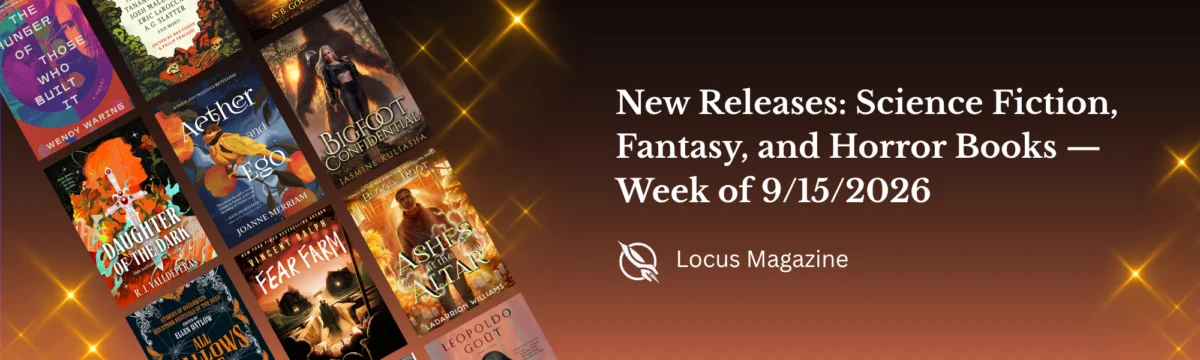
The landscape of speculative fiction is undergoing a seismic shift this autumn. As the publishing industry moves into the third quarter of 2026, the week of September 15 marks one of the most significant release windows of the decade. From the long-awaited return of literary titans to the emergence of bold new voices in "solarpunk" and "dark academia," the current slate of releases reflects a genre that is increasingly comfortable blurring the lines between high literature and pulp horror.

At the forefront of this movement is the release of Leigh Bardugo’s Dead Beat, the third installment in her seminal Ninth House series, and China Miéville’s massive new opus, The Rouse. These titles, alongside a surge in mythic reimaginings and environmental fables, suggest a market that is leaning heavily into "shadow-work"—narratives that explore the darker, more complex corners of the human (and post-human) condition.

Main Facts: The Heavyweights and the Trendsetters
The mid-September release cycle is anchored by several high-profile titles that are expected to dominate bestseller lists and award shortlists alike.

The Return of Alex Stern
Leigh Bardugo’s Dead Beat (Macmillan/Flatiron) arrives as perhaps the most anticipated "dark academia" release of the year. Following the events of Hell Bent, protagonist Alex Stern continues her precarious navigation of Yale’s secret societies. The novel represents a maturing of the "Romantasy" and "Dark Fantasy" crossover, moving beyond the tropes of young adult fiction into a visceral, horror-inflected exploration of power and trauma.

Miéville’s Magnum Opus
In a move that has sent shockwaves through the "New Weird" community, China Miéville returns with The Rouse (Del Rey). Clocking in at a staggering 1,260 pages, the novel is being described as an "uncanny" horror epic. Miéville, known for his linguistic dexterity and genre-defying world-building, appears to be tackling themes of generational loss and the haunting nature of the military past. The sheer scale of the book indicates a significant investment from Del Rey in long-form, challenging speculative fiction.

The Rise of Mythic AI
A fascinating sub-trend this week is the "House of Atreus" phenomenon. Both Guy Astic and Frank Lafond’s The Art and Craft of Stephen King and A.B. Goodman’s House of Atreus: Trial & Consequences explore a world where ancient Greek gods are reimagined as corrupted, ancient artificial intelligences. This synthesis of classical mythology and hard science fiction points to a growing interest in "techno-mythology," where the deities of the past are used as metaphors for the uncontrollable algorithms of the future.

Chronology of the September Release Cycle
While the bulk of the major releases are concentrated on September 15, 2026, the month began with a strong foundation in the Young Adult sector.

- September 1, 2026: Kalynn Bayron’s Tell the Ghosts I’m Gone (Bloomsbury) set the tone for the month. Bayron, a powerhouse in YA fantasy, introduced a narrative centered on emotional manipulation as a supernatural power, grounding the magical in the psychological struggles of adolescence.
- September 15, 2026: The "Super Tuesday" of speculative fiction. This date saw the simultaneous release of over twenty major titles, including the aforementioned Bardugo and Miéville books, as well as significant anthologies edited by Ellen Datlow (All Hallows Eve) and Dan Coxon (Unearthed).
- September 17, 2026: The release of Wendy Waring’s The Hunger of Those Who Built It (Stelliform Press), a pivotal work of solarpunk that offers a vision of ecological collapse and community resilience in a future Paris.
Supporting Data: Market Segmentation and Format Diversity
The data from this week’s releases reveals a highly diversified publishing strategy. Of the 33 major titles tracked by Locus Magazine:

-
Genre Distribution:

- Horror: 36% (Reflecting the seasonal lead-up to Halloween).
- Fantasy/Dark Fantasy: 30%.
- Science Fiction: 18%.
- YA/Poetry/Non-Fiction: 16%.
-
Format Trends:

- Hardcover dominance: Nearly 65% of the week’s releases debuted in hardcover, a sign of strong collector interest in the speculative market.
- Audiobook Integration: 80% of titles launched with a simultaneous audiobook release, highlighting the essential nature of the "commuter listener" demographic for genre fiction.
- Transatlantic Launches: Titles like Freya Marske’s Bodies of Magic and Nikita Gill’s Styx: The River saw simultaneous US and UK releases, indicating a more integrated global market for "Romantasy" and mythic retellings.
-
The "First Novel" Surge:

- A notable 15% of the releases are debut novels, including Emily Zinnikas’s I Am the Monster Under the Bed and Joanne Merriam’s Aether and Ego. This suggests that despite the presence of "Big Five" titans, there is still significant room for new voices in the mid-list.
Official Responses and Industry Sentiment
The industry reaction to this week’s slate has been one of cautious optimism. Editors at major imprints like Tor, Del Rey, and Harper Voyager have noted that the "Post-Pandemic Pivot" is now complete; readers are no longer looking for escapism alone, but for "confrontational fiction"—stories that tackle climate change, AI ethics, and social collapse head-on.

On Dark Academia:
Literary critics have noted that Freya Marske’s Bodies of Magic and Auden Patrick’s Thoughts Be Bloody (a Hamlet retelling at a magical college) represent a shift in "Dark Academia." No longer just about aesthetic, the subgenre is moving toward a critique of institutional power and the "cost of knowledge."

On Horror Anthologies:
Ellen Datlow, often called the "Queen of Horror Editing," commented on the release of All Hallows Eve, stating that the goal was to "globalize the ghost story." The inclusion of authors like Chikodili Emelumadu and Linda D. Addison signals a concerted effort by Titan Books to move horror away from Western-centric tropes.

On Environmental Fables:
Nina Schuyler’s Open the Floodgates, which deals with a river being granted legal personhood, has already drawn comparisons to real-world legal movements in New Zealand and South America. Industry analysts suggest that "Eco-Fiction" is transitioning from a niche subgenre to a central pillar of the speculative market.

Implications for the Future of the Genre
The sheer variety and depth of the September 15 releases suggest several long-term implications for the publishing world:

1. The Erasure of the "YA/Adult" Divide
The release of books like We Run the Night by Peace Mbengei (Soho Teen) and Ashes at the Altar by LaDarrion Williams (Labyrinth Road) shows that the line between Young Adult and Adult fiction is thinner than ever. Both books deal with heavy themes of death, systemic racism, and demonic possession with a level of sophistication previously reserved for adult imprints.

2. The Dominance of the "Retelling"
From Aether and Ego (Pride & Prejudice in space) to A Thousand Monstrous Forms (a Bluebeard reimagining), the "retelling" has become the dominant narrative structure of 2026. This suggests a cultural moment where readers find comfort in familiar skeletons while demanding new, often more inclusive or technologically advanced, "skin" for their stories.

3. The "Solarpunk" vs. "Grimdark" Tension
We are seeing a fascinating tension between the hopeful, community-focused narratives of Solarpunk (Waring’s The Hunger of Those Who Built It) and the nihilistic, visceral horror of Miéville and Bardugo. This duality reflects a fractured public consciousness—half-searching for a way to build a better future, and half-obsessed with the monsters lurking in the ruins of the present.

4. Non-Fiction as Genre Support
The inclusion of The Art and Craft of Stephen King and Sheree Renée Thomas’s The Tongue I Dream In indicates that the speculative fiction community is becoming more academic and self-reflective. Readers are no longer just consuming stories; they are consuming the history and theory of those stories.

As these books hit the shelves, the narrative for the rest of 2026 becomes clear: speculative fiction is no longer a "niche" category. It is the primary lens through which modern society is processing its anxieties about technology, the environment, and the enduring ghosts of the past. Whether through the 1,200-page epics of established masters or the sharp, 200-page fables of newcomers, the genre is proving itself to be more vital—and more haunting—than ever.