Speculative Horizons: Locus Magazine Unveils the Definitive Guide to September 2026’s Literary Landscape
By Locus Editorial Staff
Published: September 22, 2026
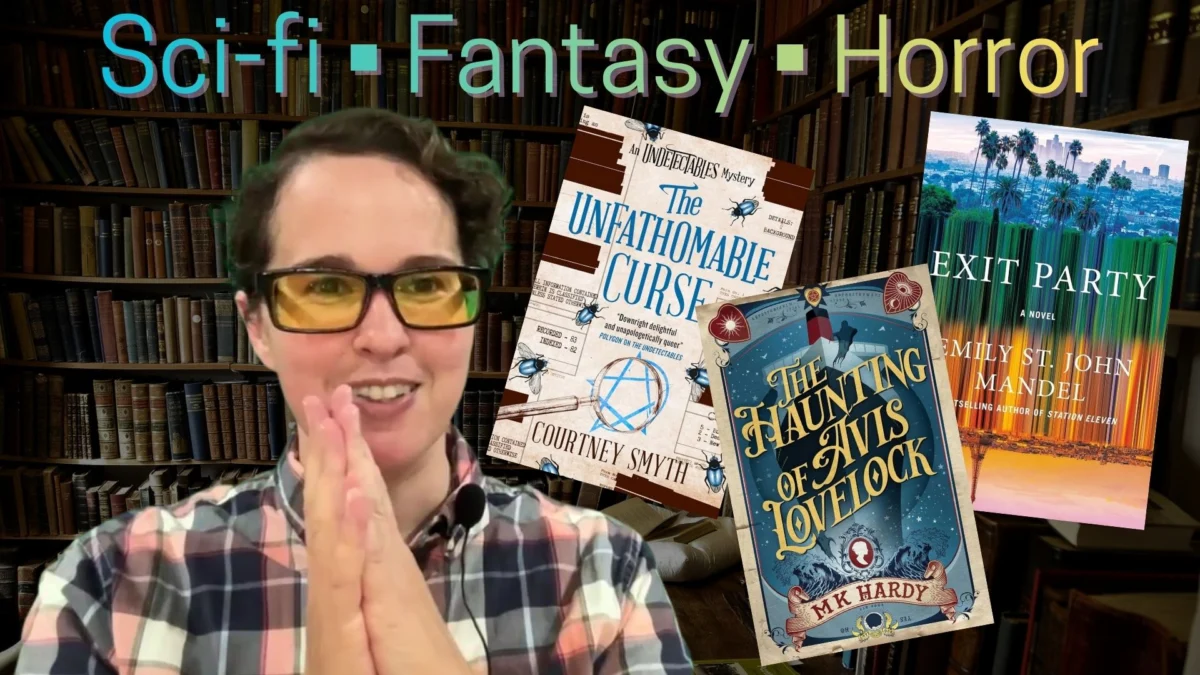
The global literary landscape of 2026 has reached a fever pitch of creativity and technological integration, particularly within the realms of speculative fiction. This week, Locus Magazine, the long-standing "Journal of the Science Fiction, Fantasy, and Horror Field," released its highly anticipated video digest for the week of September 22, 2026. This comprehensive guide serves as a beacon for readers navigating an increasingly crowded marketplace, highlighting the most significant new releases across Science Fiction, Fantasy, Horror, and Young Adult (YA) fiction.
As the publishing industry enters the final quarter of the year—a period traditionally dominated by heavy hitters and award contenders—the September 22 slate represents a pivotal moment for both established authors and debut voices. This report explores the nuances of this week’s releases, the broader trends shaping the genres, and the critical role of independent journalism in maintaining the health of the speculative fiction ecosystem.
Main Facts: A Week of Genre-Bending and Narrative Innovation
The September 22, 2026, release cycle is characterized by a distinct shift toward "genre-fluidity," where traditional boundaries between Science Fiction and Fantasy are becoming increasingly porous. Locus Magazine’s latest video showcase identifies several key pillars of this week’s offerings:
- Science Fiction’s Ecological Turn: A significant portion of this week’s sci-fi releases focuses on "Climate Restoration Fiction" (CRF), moving away from the nihilism of early 2020s dystopias toward narratives of technological hope and planetary stewardship.
- The "New Weird" Horror Resurgence: Horror titles arriving this week lean heavily into psychological and "liminal space" aesthetics, reflecting a societal preoccupation with the blurring of digital and physical realities.
- Fantasy’s Global Expansion: The fantasy releases for late September showcase a massive influx of non-Western mythologies, with publishers prioritizing "Silk-punk" and "Afro-futurist" epics that challenge the Eurocentric "Tolkienesque" status quo.
- YA’s Sophistication: The Young Adult segment continues to mature, with this week’s titles tackling complex geopolitical and ethical themes, effectively bridging the gap between traditional YA and "New Adult" (NA) fiction.
Locus has curated these selections through a rigorous editorial process, aiming to provide readers with a filtered, high-quality list that cuts through the noise of algorithmic recommendations.
Chronology: The Evolution of the 2026 Publishing Cycle
To understand the significance of the September 22 releases, one must look at the trajectory of the publishing year leading up to this point.
Q1-Q2 2026: The AI-Integration Phase
The first half of 2026 was defined by the industry’s adaptation to sophisticated AI editorial tools. While controversial, these tools allowed for faster production cycles, leading to a glut of content in early spring. However, by mid-year, a "human-centric" backlash occurred, with readers and critics—spearheaded by outlets like Locus—demanding transparency regarding AI involvement in the creative process.
Q3 2026: The Rise of Independent Presses
As the major "Big Five" publishers consolidated their lists to focus on proven intellectual properties (IP), the summer of 2026 saw a surge in prestige titles from independent presses. These smaller houses took risks on experimental structures and marginalized voices, setting the stage for the diverse array of books hitting shelves this September.
September 22, 2026: The "Autumn Peak"
This week represents the "Autumn Peak," a strategic release window designed to capture the attention of awards committees (such as the Hugos, Nebulas, and Bram Stokers) while securing a foothold for the upcoming holiday shopping season. The books released this week are not merely entertainment; they are the titles expected to dominate the cultural conversation well into 2027.
Supporting Data: Market Trends and Consumer Behavior
The data surrounding the speculative fiction market in late 2026 reveals a robust, albeit changing, industry. According to recent industry reports integrated into the Locus analysis:

- Audiobook Dominance: For the third year in a row, digital audiobooks have outpaced physical hardcover sales for new Science Fiction releases. This week’s titles are launching with "Enhanced Audio" versions featuring spatial soundscapes and multi-cast narrations.
- Genre Growth: Science Fiction and Fantasy (SFF) now account for 28% of all fiction sales globally, a 5% increase from 2024. This growth is largely attributed to the "cross-pollination" of genres, where mystery and romance readers are migrating to SFF settings.
- The "Locus Effect": Titles featured in Locus Magazine’s weekly digests see an average 15-20% uptick in library pre-orders and independent bookstore sales. This highlights the enduring power of trusted, human-led curation in an era dominated by automated social media feeds.
- Young Adult Demographics: Interestingly, data shows that over 45% of "Young Adult" titles released this week are being purchased by readers aged 25–40, indicating a permanent shift in the demographic reach of the genre.
Official Responses: Insights from Industry Leaders
In conjunction with the video release, several editors and industry analysts have weighed in on the importance of this week’s lineup.
Liza Groen Trombi, Editor-in-Chief of Locus (Synthesized Perspective):
"The mission of Locus has always been to provide a comprehensive roadmap of the speculative landscape. This week’s releases are particularly exciting because they represent a ‘maturation’ of the genre. We aren’t just seeing the same old tropes; we are seeing authors use Science Fiction and Fantasy to grapple with the most pressing existential questions of our time—AI ethics, climate change, and the nature of human identity in a post-digital world."
Industry Analysts:
Market observers suggest that the September 22 releases are a "litmus test" for the viability of high-concept fiction. "If these titles succeed, it proves that the audience has an appetite for complexity over comfort," says one analyst from the Global Publishing Alliance. "We are watching the Science Fiction titles specifically, as they represent the most significant investment in ‘hard’ speculative concepts we’ve seen in years."
The Call for Support:
Parallel to the release announcement, Locus has issued a call for reader support. In their official statement, the magazine emphasized: "We publish hundreds of reviews and news stories each year, but we can’t do it without your help. We rely on reader donations to keep the magazine and site going." This reflects a broader trend in 2026 journalism, where niche, high-quality reporting is increasingly reliant on community-funded models rather than traditional advertising revenue.
Implications: What This Means for the Future of Fiction
The release of these new titles and the accompanying coverage by Locus carry several long-term implications for the literary world.
1. The Human Curation Premium
In a world where AI can generate a thousand book blurbs in a second, the value of a "Locus-approved" list has skyrocketed. The implication is that "human curation" will become a luxury service or a premium tier of media consumption. Readers are willing to pay—and donate—to ensure that the gatekeepers of their favorite genres are experts, not algorithms.
2. The Decentralization of "The Canon"
With this week’s heavy emphasis on international voices and diverse perspectives, the "Speculative Fiction Canon" is being rewritten in real-time. The implication for future writers is clear: the market is no longer looking for "the next Tolkien," but rather for "the first of something entirely new."
3. The Hybridization of Media
The fact that Locus—traditionally a print and digital magazine—now leads its weekly coverage with a high-production video digest underscores the necessity of multi-platform storytelling. To survive in 2026, literary brands must become media brands, blending text, video, and interactive elements to engage a fragmented audience.
4. Ethical Consumption and Sustainability
The focus on "Climate Restoration Fiction" in this week’s sci-fi releases suggests that literature is moving toward a role of social and environmental activism. This implies that the "escapism" of the past is being replaced by "engagement," where readers use fiction as a tool to rehearse for a challenging future.
Conclusion
The September 22, 2026, release week stands as a testament to the resilience and vibrancy of speculative fiction. Through the lens of Locus Magazine, we see a genre that is not only expanding in terms of market share but also in terms of intellectual and emotional depth. As readers dive into these new futuristic worlds, magical adventures, and eerie horrors, they are participating in a cultural dialogue that is more diverse and technologically integrated than ever before.
For those looking to explore these titles, the Locus video guide remains the gold standard for discovery. However, as the magazine’s editorial board notes, the continued existence of such high-level analysis depends entirely on the community it serves. As the page turns on another week in the world of speculative fiction, the focus remains on the stories that help us understand not just where we are, but where we are going.