The speculative fiction community finds itself at a unique crossroads this August, balancing the preservation of its storied past with the encroaching, often turbulent realities of the future. From the literal fires threatening the homes of legendary authors to the metaphorical "wildfires" of generative AI sweeping through the publishing industry, the genre is currently grappling with issues of safety, legacy, and the definition of human creativity.
Main Facts: A Convergence of Legacy and Crisis
The first week of August 2024 has brought a flurry of developments across the science fiction and fantasy (SFF) spectrum. At the forefront is the safety of Grand Master C.J. Cherryh, who, along with spouse Jane Fancher, narrowly avoided evacuation as wildfires swept through the Spokane, Washington, area. While their home remains standing, the incident highlights the increasing vulnerability of the community’s elder statespeople to climate-driven disasters.
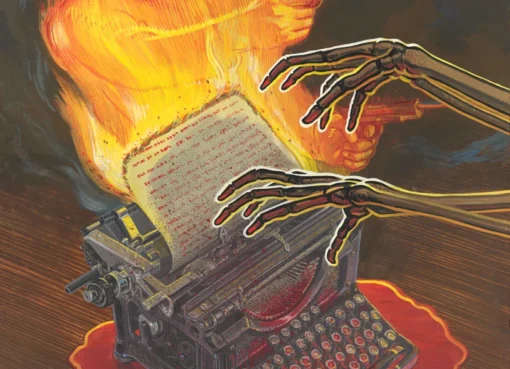
Simultaneously, a philosophical rift is widening regarding the role of Artificial Intelligence in literature. Bestselling author Hugh Howey has declared the "end of an era," suggesting that the "sweet spot" of human-centric publishing is closing. Conversely, activist and author Cory Doctorow continues his crusade against "enshittification," offering a more optimistic, albeit cautious, view on how creators might resist the "AI Overlords."
In the realm of media and awards, the Hugo Award voting deadline looms on August 8, while Netflix prepares to launch The Ribbon Hero, an anime inspired by Osamu Tezuka’s foundational Princess Knight. The week also marks the remembrance of Robert Holdstock, whose seminal work Mythago Wood continues to influence the "mythic" strain of British fantasy.
Chronology: A Week in Speculative Fiction
The events of early August unfolded in a rapid sequence, blending historical anniversaries with urgent modern updates:
August 1–2: Wildfires near Spokane, Washington, intensify. C.J. Cherryh provides updates via social media, confirming that while her neighborhood served as an evacuation route, her home remained safe as 50 mph winds died down.
August 2: The 76th anniversary of Robert Holdstock’s birth. Fans and critics reflect on his 1984 masterpiece Mythago Wood and its enduring influence on writers like Paul Cornell and Jen Williams.
August 3–4: The "Yellowstone Prank" involving authors Brian Keene and Maurice Broaddus reaches a fever pitch at Gen Con, necessitating a formal clarification after social media users mistook a joke for a legitimate production announcement.
August 5: Industry analysts and authors (Howey, Doctorow) release significant commentary on the normalization of AI-generated content, setting a somber tone for the future of the "meat-book" market.
August 8 (Upcoming): The deadline for Hugo Award voting (noon Pacific Time) and the worldwide premiere of The Ribbon Hero on Netflix.
Supporting Data and Industry Analysis
The AI Evolution: "Meat-Books" vs. "Machine-Books"
The most profound shift discussed this week concerns the "normalization" of AI in publishing. Hugh Howey, a pioneer of the self-publishing movement, posits that the window of "writing being hard and publishing being easy"—roughly 2007 to 2024—is over.
Howey predicts a bifurcated future:
Publisher Adoption: Traditional houses will eventually prioritize profits over "meat-written" purity, using internal tools to "roughen up" AI prose to make it indistinguishable from human work.
Reader Indifference: Most readers may eventually care as little about the origin of a story as they do about the specific publishing imprint, prioritizing "viral" narratives over human craft.
Cory Doctorow, speaking on WNYC Studios, offers a counter-perspective. While he acknowledges the "enshittification" of digital platforms, he remains optimistic about statistical inference as a tool for art, provided it serves the creator rather than the "hype machine."
Environmental and Extraterrestrial Risks
The physical world continues to pose threats to both people and infrastructure. The New York Times reported this week that nearly a ton of space junk falls unpredictably to Earth every week.
Risk Metrics: The U.S. Space Force issued 820 re-entry alerts last year, up from 110 a decade ago.
Future Casualty Projections: An FAA study suggests that by 2035, debris from large satellite constellations could cause a casualty every two years.
Archaeological Revisions
Even our understanding of human history is shifting. New analysis of 2.1-million-year-old footprints in Kenya, published in PNAS, suggests that Paranthropus boisei (the "Nutcracker Man") was significantly taller and more social than previously thought—standing up to six feet tall rather than the earlier estimate of four feet.
Official Responses and Creator Statements
C.J. Cherryh on the Spokane Wildfires
In a heartfelt letter shared with her readership, Cherryh described the harrowing atmosphere of the Spokane fires:
"Our street was an evacuation route and a steady stream of traffic… many, many families have lost homes with precious little time to do more than run for it; a 50 mph gale driving a fire like that leaves no time even for packing."
She expressed gratitude to the National Guard and firefighters who worked through the night, while mourning the loss of the "beautiful woods" that define the region.
The Brian Keene/Maurice Broaddus "Yellowstone" Clarification
After a photo of Maurice Broaddus in a cowgirl hat went viral, Brian Keene had to issue a formal statement to quell rumors that Broaddus was writing a Yellowstone spin-off.
"I sometimes forget that Maurice and I have much bigger audiences now… not everyone is aware that we relentlessly prank and mess with each other," Keene noted in his Letters From the Labyrinth.
The Legacy of Robert Holdstock
Critic Paul Weimer emphasized the need for a modern revival of Holdstock’s work, noting that Mythago Wood remains a seminal text for "Britishness" and mythic ties. Weimer called for new audiobook and ebook editions to ensure the "Huxley family saga" is not lost to time as the genre moves further into the digital age.
Implications for the Future of the Genre
The convergence of these events suggests several long-term implications for the SFF community:
1. The Crisis of Authenticity
As Howey suggests, the "post-2026" author will face a world of perpetual doubt. If a writer uses a particularly flowery sentence or a rhythmic iambic pentameter, they may be accused of being a "bot." This "bot-phobia" could lead to a stylistic flattening of the genre, where authors avoid complex structures to prove their "humanity."
2. The Vulnerability of the "Grand Masters"
The close call for C.J. Cherryh highlights a logistical issue for the SFF community: the geographic concentration of many legendary authors in areas increasingly prone to climate-related disasters (wildfires in the West, hurricanes in the South). The loss of personal archives and libraries in these events represents a significant threat to the genre’s history.
3. The Resilience of Print and Legacy Media
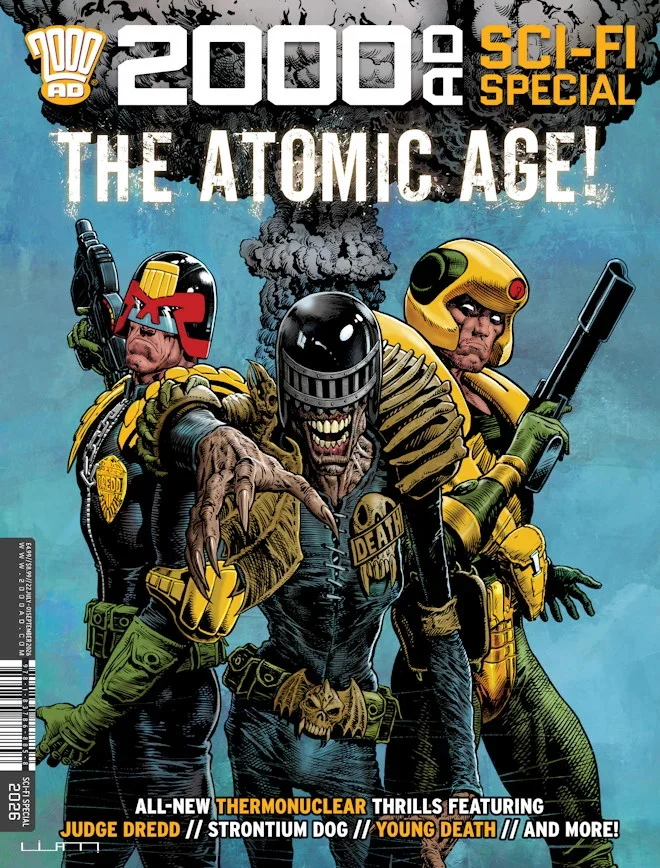
Despite the AI surge, the popularity of the 2000AD Sci-Fi Special and the continued interest in classic aviation (like the DC-3 flights over the Amazon) suggest a persistent hunger for "tactile" and historical storytelling. The 2000AD special, focusing on "body horror," ironically mirrors the current anxiety about the "mutation" of literature by technology.
4. Legal and Ethical Gaps
The reports on space junk and AI both point toward a common problem: "Cold War relic" treaties and non-binding guidelines are insufficient for the 21st century. Whether it is liability for a falling satellite or the copyright of a machine-generated novel, the legal framework of speculative fiction’s reality is lagging far behind its imagination.
As the Hugo voting deadline approaches, the SFF community is reminded that while it looks toward the stars and the "next big thing" in technology, its foundations remain rooted in the safety of its creators and the integrity of the human voice. The coming years will determine if the "machine-book" and the "meat-book" can coexist, or if, as Hugh Howey fears, the era of the human storyteller is entering its twilight.
PITTSBURGH, PA — In a ceremony that celebrated the intersection of vintage aesthetic and modern digital preservation, Chris Kalb was officially named the recipient of the 2026 Munsey Award. The presen
Introduction: A Moment of Feline Whimsy in Science Fiction Fandom In the sprawling, often high-stakes world of science fiction and fantasy (SF/F) journalism, where debates frequently center on Hugo Aw
ATLANTA, GA – In a move that signals the official start of the high season for science fiction and fantasy enthusiasts, Dragon Con—the internationally renowned multi-media pop culture convention—has o