SYFY’s The Ark Season 3 Trailer Promises Dual Threats and Fractured Futures for Humanity
Main Facts: A Divided Humanity Faces New Horizons and Ancient Dangers
The highly anticipated third season of Dean Devlin and Jonathan Glassner’s enthralling science fiction drama, The Ark, is set to premiere on SYFY on Wednesday, July 29, 2026, at 10 p.m. ET/PT. A recently released trailer offers a tantalizing glimpse into a future fraught with unprecedented challenges, where the remnants of humanity aboard the generation ship Ark 1 find themselves literally and figuratively split. This season promises to deepen the narrative complexities that have captivated audiences, exploring themes of survival, leadership, and the very essence of humanity when pushed to its limits.
The core premise of The Ark has always revolved around humanity’s desperate flight from a dying Earth, a mission entrusted to a fleet of generation ships designed to carry survivors in cryosleep to a new habitable world. However, the crew of Ark 1 awoke prematurely to a catastrophic event, leaving them adrift and severely under-resourced. Season 3 dramatically escalates this existential struggle by fracturing the crew into two distinct groups. One faction, aboard the titular Ark 1, continues its arduous voyage through the vast, unforgiving cosmos, clinging to the original mission of finding a distant haven. Meanwhile, the other group has committed to establishing a new home at "Homebase 1," an ambitious settlement on a recently discovered planet.
This bifurcated narrative sets the stage for a season brimming with tension. The trailer vividly illustrates that the planet chosen for Homebase 1 is far from uninhabited, hinting at the presence of indigenous, potentially hostile, life forms. Shots of "monster-like aliens crashing through windows" confirm that external threats will be a significant challenge for the nascent colony. Simultaneously, the crew remaining on Ark 1 faces its own brand of peril: internal strife. Hints of "intra-human conflict," with some members "not wanting to be peaceful at all" and "shots being fired," underscore the fragility of their unity and the ever-present danger of self-destruction.
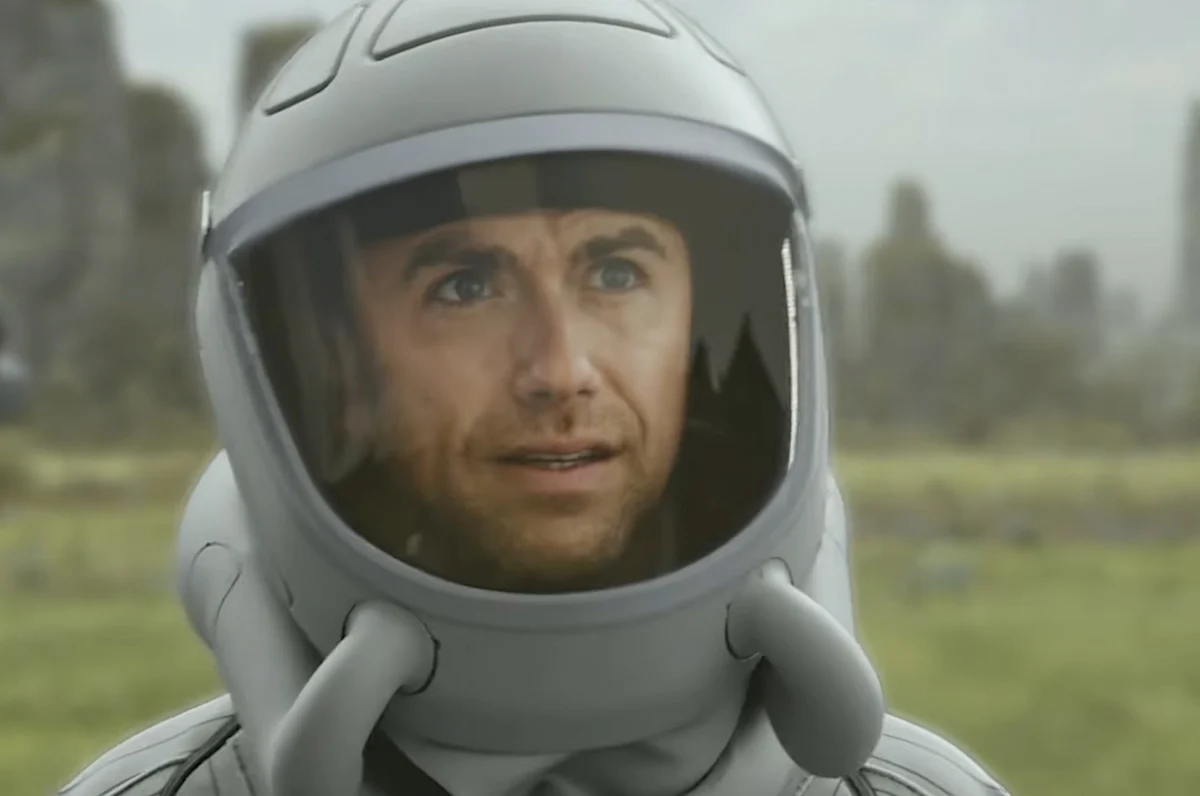
Key characters return to navigate these treacherous new landscapes. Christie Burke reprises her role as Captain Eva Garnet, whose leadership will be tested as she grapples with the weight of command and the difficult choices demanded by survival. Richard Fleeshman’s character, Brice, offers a moment of poignant denial in the trailer, attempting to reassure himself and others that "everything’s totally fine! No monster-like aliens crashing through windows, I promise! Everything’s right as rain! Don’t worry about it!" This seemingly lighthearted moment subtly underscores the immense psychological toll of their ordeal. The ensemble cast for Season 3 also includes Reece Ritchie, Pavle Jerinic, Stacey Read, Ryan Adams, and Tiana Upcheva, with additional appearances by Shalini Peiris, Samantha Glassner, and Diana Bermudez, all of whom will undoubtedly play crucial roles in defining humanity’s fractured future.
Chronology: From Desperate Launch to Fractured Hope
To fully appreciate the gravity of the upcoming season, it’s essential to contextualize the journey of Ark 1 thus far, a narrative meticulously crafted by veteran sci-fi creators Dean Devlin (known for Stargate SG-1, Independence Day) and Jonathan Glassner (Stargate SG-1, The Outer Limits).
Season 1: The Genesis of Despair and Daring Leadership
The inaugural season introduced audiences to humanity’s last-ditch effort for survival: a fleet of generation ships, each carrying thousands of humans in cryosleep, launched from a dying Earth. The premise was simple yet profound – find a new home, or humanity perishes. For Ark 1, this grand mission took a catastrophic turn when the crew was prematurely awakened from cryosleep a year before reaching their target planet. The awakening was not gradual but violent, triggered by a massive explosion that decimated a significant portion of their ship and its vital life support systems.
Suddenly, the surviving crew members, many of whom were junior officers or specialists not originally intended for command, were thrust into leadership roles. Captain Eva Garnet (Christie Burke), initially a relatively inexperienced officer, quickly emerged as a reluctant but resilient leader. The season was a brutal lesson in resource management, engineering improvisation, and moral compromise. Food, water, and oxygen became precious commodities, forcing the crew to make impossible decisions, including rationing supplies and sacrificing some for the greater good. Internal power struggles and ideological clashes began to surface, testing the very fabric of their society. Despite these overwhelming odds, the crew managed to stabilize Ark 1, discover rudimentary navigation capabilities, and cling to the hope of finding a habitable world, learning that other Arks might also be out there, though their fates remained unknown.
Season 2: The Promise of a New World and the Seeds of Division
Building on the precarious achievements of Season 1, the second season saw Ark 1 finally arrive in the proximity of a potentially habitable planet. This arrival, however, was not the end of their struggles but the beginning of new, complex challenges. The crew embarked on reconnaissance missions, cautiously exploring the alien landscape. Initial optimism was soon tempered by the realization that colonizing this world would be far more difficult than anticipated. The planet might be habitable, but it presented its own unique set of environmental hazards and, crucially, signs of indigenous life.
The establishment of an initial foothold, dubbed "Homebase 1," became the central focus. This phase brought renewed hope but also exacerbated existing tensions and created new ones. The harsh realities of pioneering on an alien world, combined with the lingering trauma of their journey, led to disagreements over priorities, resource allocation, and leadership. It was during this period that the decision, or perhaps the necessity, arose to split the crew. Whether it was a tactical move to maximize survival chances, a response to an unforeseen crisis, or the culmination of irreconcilable differences within the command structure, the separation of Ark 1 into two distinct missions marked a pivotal moment. Some elected, or were assigned, to remain on the planet and build Homebase 1, committing to immediate colonization. Others, perhaps more cautious or dedicated to the original mandate of deep-space exploration, chose to continue the voyage aboard Ark 1, searching for an even more ideal planet or perhaps other remnants of humanity. This schism fundamentally alters the trajectory of humanity’s survival, setting the stage for the dramatic conflicts of Season 3.
Lead-up to Season 3: Two Paths, Divergent Dangers
As Season 3 commences, the crew of The Ark is truly at a crossroads, navigating two distinct and perilous paths. For those left behind at Homebase 1, the initial excitement of land has given way to the chilling realization that they are not alone. The trailer clearly indicates that the "other inhabitants" of this new world are not benign. The sight of alien creatures violently breaching their nascent defenses suggests a fight for survival against a powerful, unknown adversary. The challenge here is immediate and visceral: protect their fragile outpost and establish a secure future for humanity against an existential external threat.
Meanwhile, aboard Ark 1, the journey continues, but the challenges are equally daunting, albeit different. The ship, already a testament to human ingenuity and desperation, carries the burden of a fractured crew and a dwindling sense of purpose. The internal strife, hinted at with "intra-human conflict" and "shots fired," implies a breakdown of order and a struggle for power or ideology. This group must contend with the psychological toll of endless space, the isolation, and the very real possibility that their pursuit of a "better" home might lead to their ultimate undoing through internal conflict. The separation, meant to enhance their chances, now presents a double-edged sword, forcing both factions to confront their deepest fears and the very nature of human resilience and frailty.
Supporting Data: Genre, Production, and Trailer Insights
The Ark has carved out a distinct niche within the crowded science fiction landscape, blending elements of hard sci-fi, survival drama, and political intrigue. Its premise of a generation ship carrying humanity’s last hope immediately evokes comparisons to genre classics while offering a fresh take on the challenges of deep-space colonization.
Genre Context: A New Chapter in Generation Ship Lore
The concept of a generation ship—a vessel so vast and slow that multiple generations live and die aboard it before reaching its destination—is a powerful metaphor for humanity’s long-term aspirations and fears. The Ark leans into this tradition, echoing the claustrophobic tension of stories like Battlestar Galactica (though Ark 1 is far less militaristic) and the existential dread of literary works such as Robert Heinlein’s Orphans of the Sky or Frank Herbert’s Destination: Void. Unlike some space operas that focus on grand galactic empires or advanced alien civilizations, The Ark grounds itself in the gritty reality of limited resources, human fallibility, and the desperate struggle to simply exist.
The show differentiates itself by focusing on the immediate aftermath of a disaster, forcing a group of unprepared individuals to adapt and lead. This shifts the emphasis from a pre-planned journey to an improvised quest for survival. Season 3’s introduction of a dual narrative—one group colonizing a new planet while the other continues space travel—allows the series to explore different facets of the human condition in extreme environments. It can delve into the challenges of pioneering and encountering alien life, a la Avatar or classic colonization narratives, while simultaneously examining the psychological and social pressures of prolonged space travel, reminiscent of Voyager or even elements of Raised by Wolves.
Production Insights: Crafting a Universe on SYFY
Dean Devlin and Jonathan Glassner, both architects of successful genre franchises, bring a wealth of experience to The Ark. Their previous work, particularly on Stargate SG-1, demonstrates a keen understanding of serialized storytelling, character development, and world-building within a sci-fi framework. Producing a show of this scope for SYFY, a network known for its commitment to speculative fiction, presents both opportunities and constraints. While SYFY provides a dedicated audience, the show likely operates within a more constrained budget compared to streaming giants, necessitating creative solutions to convey the grandeur of space and the alienness of new worlds.
This often translates into a focus on compelling character drama and inventive plotting, maximizing tension and emotional impact. The show’s success hinges on its ability to make the stakes feel real despite potential visual limitations. The trailer for Season 3 suggests that the production team has risen to this challenge, delivering visceral action sequences and eerie glimpses of alien threats that effectively convey the danger. The choice to split the narrative might also be a clever way to manage production, allowing for distinct sets and storylines that can be developed efficiently.
The Trailer’s Narrative: Dual Threats and Human Frailty
The Season 3 trailer is a masterclass in suspense, effectively outlining the two major conflicts that will drive the narrative.
- External vs. Internal Threats: The most striking revelation is the dual nature of the threats. For Homebase 1, the "monster-like aliens crashing through windows" are a clear, tangible danger. This establishes a classic sci-fi survival horror element, forcing the colonists to defend their foothold against an unknown, powerful force. The visual of the breach is jarring and immediately conveys the urgency of their situation. For Ark 1, the danger is more insidious. "Intra-human strife" and "shots are fired" suggest a breakdown of trust and order, perhaps a mutiny, a power struggle, or an ideological schism. This internal conflict often proves more devastating than external threats in tales of survival, as it chips away at the very foundation of cooperation and shared purpose.
- Character Arcs and Emotional Stakes: Brice’s moment of denial, while darkly humorous, is deeply human. It reflects the psychological coping mechanisms individuals employ when faced with overwhelming terror. His "everything’s fine!" serves as a stark contrast to the chaos unfolding, highlighting the mental fragility of the crew. Captain Garnet’s continued presence at the helm of Ark 1 underscores the immense pressure she faces. Her journey has been one of growth and sacrifice, and Season 3 promises to push her leadership to its breaking point, forcing her to confront not just the dangers of space, but the darkness within her own crew. The trailer skillfully builds anticipation by posing more questions than it answers, leaving viewers to ponder how these two desperate groups will fare and whether humanity, even in its most dire hour, can overcome its own destructive tendencies.
Official Responses: The Visionaries and the Network
While specific quotes from the creators or network executives regarding Season 3 are not provided in the original snippet, we can infer their intentions and the show’s strategic importance based on its trajectory and genre positioning.
Creators’ Vision: Testing the Boundaries of Humanity
Dean Devlin and Jonathan Glassner, with their extensive backgrounds in crafting compelling sci-fi narratives, likely envision Season 3 as a profound exploration of humanity’s resilience and its inherent flaws. Their previous works often delve into themes of heroism, moral ambiguity, and the collective struggle against overwhelming odds. For The Ark, the dual narrative of Season 3 presents a unique opportunity to test different hypotheses about human survival.
On Homebase 1, the vision might be about the primal fight for existence against a hostile environment and alien life, examining whether humanity can adapt, conquer, or coexist. It’s a test of ingenuity, courage, and perhaps the cost of claiming a new world. For Ark 1, the vision likely focuses on the psychological and social decay that can set in during prolonged isolation and internal conflict. This storyline could delve into the dangers of ideological purity, power vacuums, and how desperation can lead to authoritarianism or anarchy. Ultimately, Devlin and Glassner are likely aiming to pose fundamental questions: What kind of future does humanity deserve? Can we overcome our own divisions when faced with extinction? Is the pursuit of a new home worth the sacrifice of our humanity? The trailer’s intensity suggests they are not shying away from uncomfortable answers.
Network’s Perspective: SYFY’s Commitment to Speculative Fiction
SYFY has long been a bastion for science fiction and fantasy storytelling, offering a platform for narratives that challenge perceptions and explore the unknown. The Ark fits perfectly within this remit, providing viewers with a serialized drama that combines adventure, mystery, and philosophical depth. For SYFY, renewing The Ark for a third season signifies confidence in its storytelling, its audience appeal, and its ability to deliver engaging content within the network’s brand.
The network likely sees The Ark as a key component of its programming strategy, appealing to fans of classic space opera and contemporary survival dramas alike. The anticipation generated by the Season 3 trailer indicates a strong viewer base, and SYFY would be keen to capitalize on this momentum. By investing in a show that tackles complex themes of human survival and ethical dilemmas, SYFY reinforces its commitment to thought-provoking speculative fiction, positioning itself as a destination for audiences seeking more than just escapism. The July 29, 2026, premiere date in a prime-time slot (10 p.m. ET/PT) suggests SYFY is giving The Ark a prominent platform to maximize its reach and impact.
Implications: The Future of Humanity and the Series
The narrative split and the escalating threats introduced in Season 3 carry profound implications, not just for the characters within the show, but for the overarching themes of The Ark and its potential future as a series.
The Future of Humanity: Diversification or Dilution?
The decision to split the crew of Ark 1 into two distinct groups—one continuing the voyage, the other establishing Homebase 1—presents a critical turning point for humanity’s survival. On one hand, it could be seen as a strategic diversification, doubling the chances of finding a viable future. If one mission fails, the other might succeed. Homebase 1 represents a tangible, albeit dangerous, foothold, while Ark 1‘s continued journey holds out hope for a truly pristine, ideal planet.
However, this split also carries the risk of dilution. Instead of a united effort, humanity’s last remnants are now fragmented, potentially weakening both endeavors. Resources, expertise, and manpower are divided, making both groups more vulnerable. The internal strife on Ark 1 and the external threat on Homebase 1 highlight this fragility. The implications extend to identity: will these two factions eventually evolve into separate cultures, with divergent goals and even memories of their shared past? The season will undoubtedly explore whether humanity’s future lies in unified strength or in scattered, desperate attempts at survival.
Moral and Ethical Dilemmas: The Price of Survival
The hints of "intra-human strife" and the declaration that some "not wanting to be peaceful" suggest a season rife with moral and ethical quandaries. When survival is paramount, what lines are people willing to cross? Will leaders be forced to make ruthless decisions, sacrificing individual liberties or lives for the perceived greater good? The firing of "shots" indicates that these conflicts are beyond mere disagreement; they are potentially violent and destructive.
This raises questions about justice, governance, and the rule of law in a post-apocalyptic context. Can humanity rebuild its civilization without replicating the very conflicts that plagued Earth? The series will likely delve into the nature of power, the corrupting influence of desperation, and the struggle to maintain ethical standards when basic needs are threatened. The presence of indigenous life on Homebase 1 also introduces an ethical dimension regarding colonization: how will the humans interact with the native inhabitants? Will they seek peaceful coexistence, or will their desperation lead to conflict and exploitation, echoing dark chapters of Earth’s own history?
Fan Engagement and Long-term Outlook for the Series
The Season 3 trailer, with its promise of heightened stakes, dual narratives, and new threats, is sure to ignite fervent discussion among fans. Viewers will be debating which group faces the greater danger, speculating on the nature of the alien inhabitants, and predicting the outcomes of the internal power struggles. The split narrative offers a fresh dynamic, allowing for varied storytelling and the potential for new character introductions or unexpected reunions down the line.
For the long-term outlook of The Ark, Season 3 is crucial. Its success in balancing two complex storylines, developing its ensemble cast, and delivering compelling sci-fi action will determine its future. Should both missions prove successful in their own ways, the series could expand into exploring the development of two distinct human colonies or even the eventual reintegration of the two groups. Conversely, if one or both missions face catastrophic failure, the series could pivot to a more focused narrative of a single, desperate struggle. Ultimately, The Ark continues to position itself as a thought-provoking entry in the sci-fi canon, consistently asking what it truly means to be human when everything is on the line, and Season 3 is poised to deliver its most challenging and thrilling chapter yet.