
The Elusive Mirror: Can Language Truly Capture Reality’s Profundity?
A Deep Dive into Philosophy’s Enduring Quest for Meaning
London, UK – [Insert Date] – In a world saturated with words, from the fleeting intimacy of personal messages to the grand pronouncements of political discourse, a fundamental question gnaws at the core of human communication: can language, with its finite alphabet and combinatorial structures, truly grasp the infinite complexity and profound mysteries of reality? This existential query, posed by an inquisitive individual named William, has ignited a philosophical debate stretching back millennia, challenging the very foundations of our understanding and prompting a re-evaluation of our reliance on language to navigate life’s most significant questions. Geoffrey Klempner, founder member of the International Society for Philosophers (ISFP), delves into this intricate problem, tracing its historical roots and exploring the intellectual giants who have grappled with its implications.
The Paradox of Representation: Words as Windows or Walls?
William’s initial query, delivered with a disarming simplicity, encapsulates a profound philosophical dilemma: "Letters are just lines. The combinations are finite. So why do we fall so heavily onto language to communicate and solve the nature of big philosophical questions? Language will never have the capacity to represent reality, so why try? Why don’t we consider it a lost cause?"
Klempner acknowledges the seeming paradox. "Letters and words are just lines on paper, and spoken words are just sounds," he concedes. Yet, he immediately pivots to the astonishing capacity of these seemingly mundane elements to "represent a reality external to themselves." This inherent ability of language to evoke meaning, to conjure images, and to convey abstract concepts is, in Klempner’s view, "truly something to wonder at." He highlights the crucial element of intention: "I am using words now… And although it is not altogether clear what my words represent – this answer isn’t just a description of some facts about the world – I intend them to be understood in the way I mean and not in some other way." This underscores the pivotal role of "representation, speakers’ intentions, meaning" as fundamental concepts within the philosophy of language.
The very act of communication, Klempner argues, hinges on this delicate interplay between symbolic representation and shared understanding. While the physical manifestation of language—ink on paper or vibrations in the air—is undeniably limited, its power lies in its ability to act as a conduit for thought, emotion, and experience. The challenge, then, is not to dismiss language as inadequate, but to understand the intricate mechanisms by which it achieves this remarkable feat, and to acknowledge its inherent limitations.
A Philosophical Odyssey: Tracing the Roots of the Language Problem
To fully appreciate the depth of William’s question and Klempner’s response, a journey through the history of philosophical inquiry into language is essential. This is not a recent intellectual fad but a perennial concern that has occupied some of history’s most influential thinkers.
The Socratic Roots: Plato and the Shifting Sands of Meaning
Klempner points to Plato, in his seminal dialogue Cratylus, as arguably the first philosopher to explicitly articulate the philosophical problem of how words can represent reality. However, the seeds of this inquiry were sown even earlier by the Presocratic philosopher Heraclitus. Heraclitus, famous for his doctrine of universal flux, famously declared, "No man ever steps in the same river twice, for it’s not the same river and he’s not the same man." This observation posed a fundamental challenge to language: if the world is in constant, ceaseless change, how can we possibly attach stable labels to it? How can a word like "river" retain its meaning when the very object it purports to describe is perpetually different? This paradox of naming a constantly changing entity highlights the inherent tension between the static nature of linguistic symbols and the dynamic reality they aim to represent.
The Empiricist’s Blueprint: Locke’s Theory of Ideas
Centuries later, in the 17th century, John Locke offered a compelling, albeit ultimately debated, theory. Locke proposed that words function as labels attached to "ideas" formed within our minds through sensory experience. For Locke, the ultimate meaning of any statement was reducible to the combination of these sensory-derived ideas. In essence, the lines on paper or spoken sounds acquire their meaning from internal mental states. This "two-stage process"—from external reality to internal ideas, and then from ideas to linguistic expression—provided a framework for understanding how abstract concepts could be grounded in concrete experience.
The Continental Dream: Leibniz’s Universal Calculus
Concurrently, across the channel, Gottfried Wilhelm Leibniz, Locke’s intellectual adversary, harbored a more ambitious vision. Leibniz entertained the concept of a characteristica universalis—a universal symbolic language that would articulate reality with such precision and clarity that all philosophical problems could be resolved through mere calculation. Leibniz, like Locke, recognized that the nature of the language we employ inherently imposes "limits to what can be thought." His pursuit of a perfect language suggested a belief that, with the right tools, language could indeed become a transparent mirror of reality, capable of eradicating ambiguity and resolving disputes through logical deduction.
The Dawn of Modern Logic: Frege and the Quest for Precision
The 19th century witnessed a pivotal figure emerge from the realm of mathematics, an individual whose work would profoundly reshape the landscape of philosophical inquiry: Gottlob Frege. A mathematician by trade, Frege’s fascination with the foundations of arithmetic led him to develop the first truly effective system of symbolic logic, his Begriffsschrift (Concept Script). This groundbreaking work was capable, for the first time, of representing quantifiers—terms like "All x" or "Some x"—in a manner that clearly delineated all possible logical relationships between quantified statements. This was a monumental achievement, one that had eluded the greatest minds, including Aristotle, for centuries. Frege’s logical innovations provided a powerful new tool for analyzing the structure of thought and language, laying the groundwork for future philosophical breakthroughs.
Wittgenstein’s Revolution: The Picture Theory and its Discontents
It was within this fertile intellectual ground, cultivated by Frege’s logical advancements, that Ludwig Wittgenstein made his most revolutionary contributions. In the early 20th century, Wittgenstein, initially drawn to aeronautics at Manchester University, found himself captivated by the underlying mathematics. His inquiries into the nature of numbers and their representation led him to Bertrand Russell at Cambridge, a philosopher who had taken Frege’s ideas about symbolic logic to new heights. Russell, unlike Frege, saw his work not merely as a contribution to mathematics but as a means to understand epistemology and metaphysics, the nature of knowledge and reality. Both he and Locke before him recognized that the logical analysis of language held the key to understanding how words could serve as reliable vehicles for knowledge about the external world.
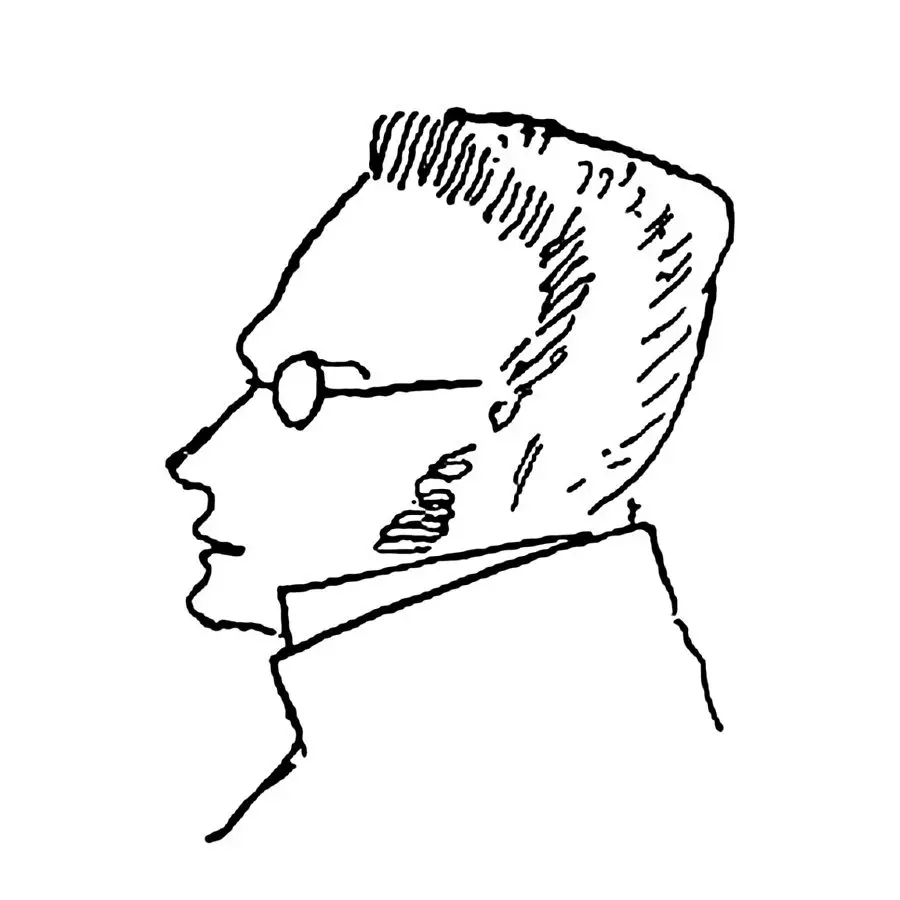
The crucible of the First World War proved to be a period of intense philosophical introspection for Wittgenstein. While serving in the Austrian Army, he penned his 1914-1918 Notebooks, which would form the foundation of his seminal post-war work, the Tractatus Logico-Philosophicus.
Klempner recounts his own profound encounter with the Tractatus as an undergraduate. Wittgenstein’s initial premise, often described as the "picture theory of meaning," posits that words arranged in a sentence form a "picture" of reality. According to this view, any conceivable statement can ultimately be broken down into simple, or "atomic," sentences that correspond to specific "bits of the world." The structure of these atomic sentences, Wittgenstein argued, literally displays the relationships between these constituent parts of reality. An analogy often employed is that of chess notation, where every possible move and game state can be precisely represented algebraically. While the external world may not seem as neatly structured as a chessboard, Wittgenstein suggested that, at its most fundamental level, it operates according to similar logical principles.
This was, indeed, a "mind-blowing idea." It suggested that language, when used correctly and stripped of ambiguity, could function as a perfect mirror, reflecting the logical structure of reality itself. The implications were staggering: if language could truly picture reality, then philosophical problems, often arising from linguistic confusion, could be dissolved through logical analysis.
The Limits of Representation: Where Language Falters
However, the intellectual journey rarely ends with a single, triumphant revelation. In his later philosophy, Wittgenstein himself recognized the profound limitations of his earlier "picture theory of meaning." He came to see that it was not a complete or satisfactory answer to the question of how words acquire meaning.
Within the framework of the Tractatus, Wittgenstein remained adamant that "nothing can be said" that cannot be resolved into "pictures of reality, or representations of plain fact." This led to a stark conclusion: much of what we consider philosophical inquiry, particularly concerning ethics, values, and fundamental existential questions—"Why is there anything at all?" or "Why am I here to experience it?"—falls outside the realm of meaningful discourse. These statements, Wittgenstein argued, might evoke subjective impressions or emotional responses, but "objectively, nothing is being said." They are, in essence, linguistic constructs that lack a direct, factual referent in the world.
This perspective presents a significant challenge to those, like William, who seek to use language to grapple with these profound philosophical questions. If language is fundamentally incapable of representing non-factual domains, then our attempts to discuss morality, beauty, or the meaning of existence are, by definition, destined to fail.
The "Language Games" Conundrum: A Pragmatic, Yet Unsatisfying, Solution
The later Wittgenstein proposed the concept of "language games" as a way to understand the diverse uses of language. He suggested that discourse about God, values, or the ultimate nature of reality could be viewed as specific "games" played with words, legitimate within their own rule-bound contexts, even if they don’t directly represent objective facts.
However, Klempner expresses dissatisfaction with this approach, particularly from the perspective of someone posing existential questions. "When I ask these questions I am not ‘playing’," he asserts. "I mean what I say. I am looking for an objective reality. I want to know." The frustration lies in the perceived inadequacy of the "language games" framework to account for the genuine yearning for understanding and objective truth that drives such inquiries.
The core of the problem, Klempner concludes, is that "any account of how it is possible for words to have meaning falls short of being able to explain exactly what it is that I ‘mean’ to actually mean." This highlights a persistent gap between our conscious intention to convey meaning and the objective capacity of language to fully and unambiguously embody that meaning. The subjective experience of meaning, the deep conviction that our words point to something real and significant, remains stubbornly resistant to complete linguistic explication.
Implications for the Future of Discourse
William’s question, and Klempner’s detailed exploration, have profound implications for how we approach communication, knowledge, and the very nature of human understanding.
- Humility in Language: Recognizing the inherent limitations of language can foster a greater sense of humility in our discourse. Instead of assuming our words perfectly capture reality, we might strive for clarity, acknowledge ambiguity, and remain open to multiple interpretations.
- The Value of Non-Linguistic Understanding: If language has its limits, then perhaps there are other avenues for exploring reality and meaning. Art, music, intuition, and direct experience may offer complementary ways of understanding that transcend linguistic representation.
- The Enduring Quest for Meaning: Despite the challenges, the human drive to ask big philosophical questions and to seek answers through language is unlikely to cease. The ongoing philosophical dialogue, as exemplified by Klempner’s engagement with William’s query, underscores the persistent human need to make sense of our existence.
- The Role of Intent and Context: While language may not be a perfect mirror, the intention of the speaker and the context of communication remain vital. Understanding the speaker’s aims and the surrounding circumstances can help bridge the gap between words and intended meaning.
In conclusion, while William’s skepticism about language’s capacity to represent reality is understandable, Klempner’s historical and philosophical journey reveals that the struggle to bridge this gap is precisely what makes language so fascinating and vital. The quest to understand how mere lines and sounds can evoke the vastness of human experience and the mysteries of the universe is an ongoing testament to our innate drive for knowledge and meaning, a drive that continues to fuel philosophical inquiry and shape our understanding of ourselves and the world around us. The pursuit may be fraught with inherent limitations, but it is precisely within these limitations that the true depth and enduring power of language are revealed.

Leave a Comment