
The Absurdist Return of Anders Thomas Jensen: An Analytical Deep Dive into ‘The Last Viking’
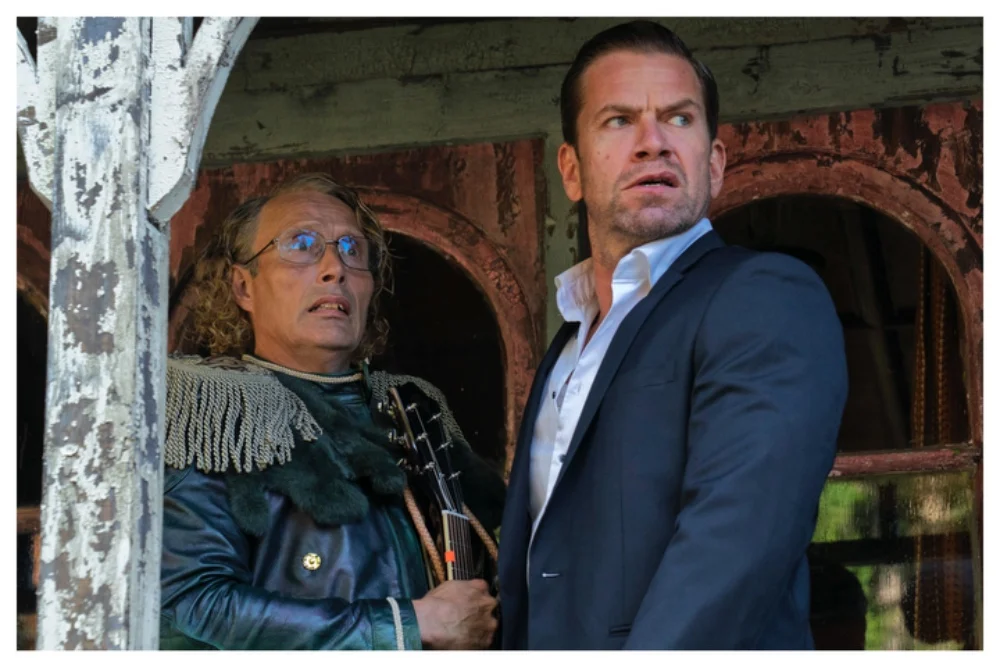
The landscape of contemporary Danish cinema has long been defined by a tension between stark realism and macabre eccentricity. At the heart of this duality stands Anders Thomas Jensen, a filmmaker whose name has become synonymous with a very specific brand of "Nordic Noir" infused with pitch-black comedy. His latest directorial effort, The Last Viking, represents the culmination of a decades-long collaboration with international superstar Mads Mikkelsen. While the film has shattered box office records in its native Denmark, its recent Stateside release has ignited a fierce debate among critics regarding its jarring tonal shifts, its portrayal of mental illness, and its unflinching use of violence.
Main Facts: A Polarizing Cinematic Event
The Last Viking arrives in North American theaters following a high-profile, out-of-competition premiere at the Venice Film Festival. The film marks the fifth directorial collaboration between Jensen and Mikkelsen, a partnership that has previously yielded cult classics such as The Green Butchers (2003), Adam’s Apples (2005), and the more recent international hit Riders of Justice (2020).
The film’s premise is as eccentric as its predecessors: Anker (Nikolaj Lie Kaas), a professional thief, is released from prison after fifteen years. He seeks to recover a stash of stolen money he tasked his brother, Manfred (Mikkelsen), with hiding. However, Manfred has since developed dissociative identity disorder and firmly believes he is the reincarnation of John Lennon. What follows is a chaotic road trip involving a psychiatric nurse, fellow patients forming a Beatles tribute band, and a pair of unsuspecting Airbnb hosts.
Despite its commercial success in Denmark—where it outgrossed Jensen’s previous works—the film was notably passed over by the Danish Oscar selection committee. Instead of submitting this box-office juggernaut for the Best International Feature category at the Academy Awards, the committee opted for the documentary Mr. Nobody Against Putin, a move that signaled a potential discomfort with the film’s "eccentric stew" of genres.
Chronology: From Script to Screen
The Genesis of the Jensen-Mikkelsen Partnership
To understand The Last Viking, one must look at the trajectory of Anders Thomas Jensen’s career. While he is an Oscar-winning director (for his 1998 short film Election Night), he is perhaps even more prolific as a screenwriter. He penned the scripts for Susanne Bier’s acclaimed dramas After the Wedding and the Academy Award-winning In a Better World.
However, when Jensen steps into the director’s chair, the somber realism of his screenwriting for others evaporates, replaced by what critics call the "Jensen Formula." This formula typically involves a troupe of social outcasts, a bizarre central conceit, and Mads Mikkelsen performing in a role that strips away his "sexiest man in Denmark" veneer.
Development and Production
The production of The Last Viking was shrouded in the usual secrecy that accompanies Jensen’s projects. Filmed primarily in the dense forests of Denmark and on soundstages in Copenhagen, the film sought to create a world that felt both hyper-real and fairytale-like. This is established immediately through a picture-book style animated prologue—a sequence that details a fictional Viking legend of a king who forced his subjects to amputate their own arms in a show of solidarity with his injured son. This gruesome fable serves as a thematic anchor for the modern-day story of trauma and misplaced loyalty.
The Festival Circuit and Domestic Release
The film’s journey to the public began at the Venice Film Festival, where it was met with a mixture of bafflement and admiration. Critics noted the "bravura strangeness" of the performances but questioned the film’s "hardboiled" violence. When it opened in Denmark, however, the local audience embraced it. Jensen’s brand of humor, which often finds the comedy in the grotesque, resonates deeply with Danish sensibilities. It quickly became the highest-grossing film of Jensen’s directorial career, proving that his niche appeal had expanded into the mainstream.
Supporting Data: The Anatomy of a Genre-Bender
Tonal Dissonance as a Narrative Tool
The Last Viking is defined by what many critics describe as "extreme tonal swings." The film operates on three distinct levels:
- The Absurdist Farce: The subplot involving Manfred’s belief that he is John Lennon and the formation of a Beatles tribute band with other psychiatric patients (including characters played by Lars Brygmann).
- The Crime Thriller: The "heist gone wrong" narrative featuring Anker and the looming threat of gang bosses who want their money.
- The Psychological Drama: The exploration of childhood trauma at the brothers’ ancestral home, which has been converted into a commercial Airbnb.
The Performance of Mads Mikkelsen
A significant portion of the film’s data set for success lies in Mikkelsen’s performance. In The Last Viking, Mikkelsen is unrecognizable under a "greasy mop of curls." His portrayal of Manfred is described as "arrhythmic" and "herky-jerky," a physical performance that stands in stark contrast to his stoic turns in The Promised Land or Casino Royale. Data from critical aggregators suggests that even those who disliked the film’s script found Mikkelsen’s "against-type" performance to be a "star turn in a character-actor part."
Box Office vs. Critical Consensus
In Denmark, the film achieved a rare feat, capturing nearly 20% of the total domestic box office during its opening month. However, the critical response in the United States has been more measured. Reviewers have pointed out that the "extreme violence… visited with disproportionate force upon women" creates a friction with the "sunny zaniness" of the mental health recovery plot. This friction is a hallmark of Jensen’s work, but in The Last Viking, it appears to have reached a breaking point for some international observers.
Official Responses: The Oscar Snub and Creative Defense
The most significant official response to the film came from the Danish Film Institute’s Oscar committee. The decision to bypass The Last Viking in favor of Mr. Nobody Against Putin sparked debate within the Danish film industry.
The Selection Committee’s Perspective:
While official statements remained diplomatic, insiders suggest the committee feared the film’s "eccentricity" would not translate well to the Academy’s voting body, which historically favors more traditional dramas or socially conscious documentaries. The "Beatles cosplay" element was reportedly viewed as potentially "disorienting" for American voters.
Anders Thomas Jensen’s Stance:
Jensen has historically been defensive of his tonal choices. In interviews following the Venice premiere, he emphasized that his films are about "broken people finding a way to be a family." He argues that the violence in his films is never gratuitous but serves to highlight the stakes of the characters’ emotional isolation. For Jensen, the "Viking lore" animation at the start is the key to the film: it is a story about how humans deal with loss and the lengths they will go to to feel "whole" again, even if those lengths are absurd.
The Cast’s Reaction:
Mads Mikkelsen has frequently defended Jensen’s vision, stating that working with the director allows him to explore "the edges of human behavior" that Hollywood roles rarely permit. Nikolaj Lie Kaas, who plays the "straight man" Anker, noted that the challenge of the film was maintaining a sense of "tough-guy stoicism" while his co-star was "hurling himself out of moving cars" in character as John Lennon.
Implications: The Future of the "Jensen Formula"
The release and reception of The Last Viking have several long-term implications for the Danish film industry and the global perception of "Nordic" storytelling.
1. The Viability of Auteur-Driven Commercial Hits
The Last Viking proves that there is a massive domestic market for "weird" cinema. Jensen has managed to create a brand that is both artistically singular and commercially viable. This may encourage other Danish filmmakers to move away from the "Scandi-Crime" tropes and toward more experimental, genre-blending narratives.
2. The Global Brand of Mads Mikkelsen
Mikkelsen’s willingness to return to Denmark for these low-budget, high-concept roles reinforces his status as a "bridge" actor. He maintains his Hollywood leading-man status while simultaneously anchoring the European arthouse scene. His performance in The Last Viking will likely be cited in future years as a masterclass in transformative acting, even if the film itself remains divisive.
3. The Ethical Debate over Tonal Clashes
The film’s treatment of mental illness (through the lens of "Fab Four cosplay") and its use of violence against female characters (such as the long-suffering sister Freja, played by Bodil Jorgensen) will likely remain a point of contention. As global audiences become more sensitive to the portrayal of marginalized groups, the "anything goes" approach of the Jensen Formula may face increasing scrutiny.
4. A More "Unnerving" Cinematic Landscape
As the original Variety review noted, "the world would be a more unnerving place with more films like it." The Last Viking serves as a reminder that cinema does not always have to be "enjoyable" in the traditional sense to be "diverting" or "singular." It challenges the audience to sit with discomfort, moving from laughter to horror within the span of a single scene.
In conclusion, The Last Viking is a testament to the enduring, if chaotic, creative marriage of Anders Thomas Jensen and Mads Mikkelsen. It is a film that refuses to be categorized, standing as a "rare bird" in a cinematic world increasingly defined by formulaic blockbusters. Whether it is viewed as a masterpiece of absurdist storytelling or a "grisly extreme" that misses the mark, its impact on the cultural conversation of 2024 is undeniable. As it begins its run in international theaters, it invites audiences to join a "madcap ride" that is as much about the scars of the past as it is about the delusions of the present.




Leave a Comment