
"All We Hunger For": A Culinary Uprising Brews in Anna Mercier’s Electrifying New Fantasy Novel
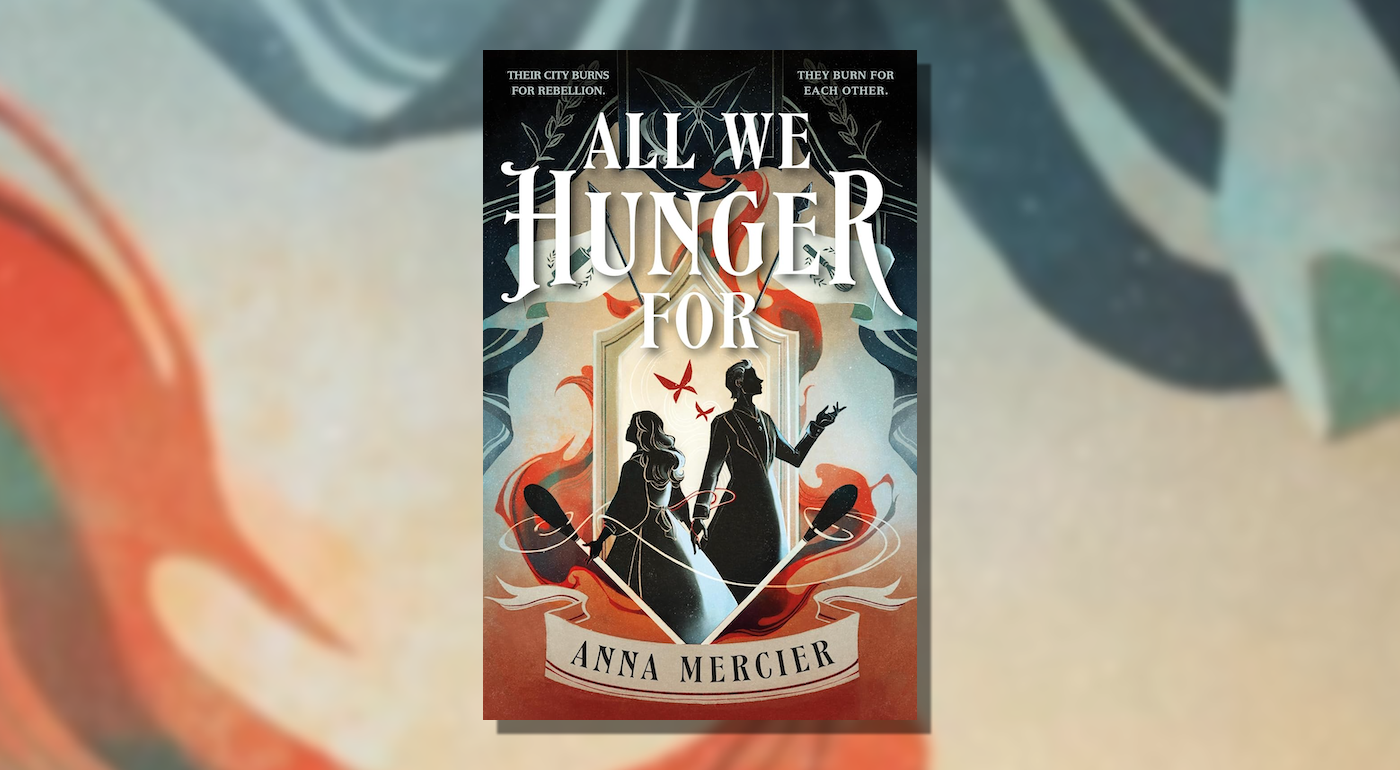
ANESPÉRER, GALERIE – A simmering revolution, a high-stakes culinary competition, and a forbidden romance are set to ignite the literary world with the release of Anna Mercier’s highly anticipated young adult fantasy novel, All We Hunger For. Published by Henry Holt and Co., the novel, available June 23rd, promises to transport readers to the vibrant yet fractured city of Anespérer, where artistic skill is the conduit for powerful magic, and the scent of rebellion hangs heavy in the air.
At the heart of this intricate tale is the Objet d’Art, an extraordinary and politically charged baking competition designed not merely to celebrate culinary prowess, but to elect a new Souverain to Anespérer’s ruling council. This year, however, the competition faces an unprecedented disruption: the audacious entry of Elara Rousseau, a gifted chef from the city’s impoverished district, the Restes, whose participation challenges centuries of tradition and class division.
Mercier’s narrative masterfully weaves together themes of social justice, identity, and the transformative power of art, all set against a backdrop of stark societal inequality. An exclusive excerpt, made available ahead of the novel’s release, offers a tantalizing glimpse into Elara’s perilous journey and the unexpected magic she brings to the elite halls of Galerie.
The Objet d’Art: A Foundation for Power and Prestige
Anespérer is a city defined by its unique magical system, where innate magical ability is inextricably linked to artistic expression. From the grand architectural feats that shape its skyline to the delicate brushstrokes of a painting, magic manifests through the hands of skilled artisans. This magical artistry is most powerfully showcased in the Objet d’Art, a revered institution that stands as the pinnacle of creative and political life in Anespérer.
Historically, the Objet d’Art has served as the ultimate test of an artist’s skill, a public demonstration of their magical command, and a pathway to immense power. Each iteration of the competition sees the election of a new Souverain, who then joins the venerable Counseil, the city’s ruling body. These Souverains, often chosen from the most privileged and established families of Galerie, are expected to embody the city’s artistic and magical ideals, guiding Anespérer with their combined talents and wisdom. The competition itself is a spectacle of opulence and intricate artistry, drawing immense public attention and serving as a powerful symbol of the ruling class’s continued dominance.
However, beneath the gilded surface of Galerie and its prestigious institutions lies the sprawling, neglected district of the Restes. A stark contrast to the city’s gleaming core, the Restes is a place of struggle, innovation, and simmering discontent. Magic, though present, is often raw, untamed, and unrecognized by the official institutions that govern its use. For someone from the Restes to even dream of competing in the Objet d’Art is not merely uncommon; it is virtually unheard of, a direct affront to the carefully maintained social order. The idea of a "Restes Aspirant" entering the "pool of Favored" candidates is an anomaly that threatens to unravel the very fabric of Anespérer’s hierarchical society.
Elara Rousseau’s Audacious Gambit: A Chronology of Disruption
The provided excerpt plunges readers directly into a pivotal moment: Elara Rousseau, operating under the assumed name "Elouise Auclair," stands before the formidable Souverains of the Counseil. Her presence is a carefully orchestrated secret, a clandestine maneuver facilitated by a "brooding figure from her past"—a figure later hinted to be Nikolas Dupont, son of a powerful Souverain.
The scene opens with Elara confronting the "haunting" perfection of the Souverains, their flawless visages reflecting an almost inhuman indifference. These are beings "of time and beyond it. One of the people and nothing like them." Her heart pounds as she assumes her false identity, a necessary deception to honor her mother’s recipes and pursue a future she never thought possible.
The Souverains, led by the astute Lafontaine, immediately sense an anomaly. "You are quite the mystery," he observes, noting her name’s absence from the official records of Arts Culinaires. Elara skillfully navigates their probing questions, invoking practiced lines about her "Professionnelle" and "innovation," all while silently enduring the snickers and pity from the aristocratic audience. A particular comment from a woman in a "brilliant yellow dress" — "That abysmal place across the river? The poor thing!" — underscores the deep chasm between her world and theirs.
Her moment of truth arrives with the presentation of her dish: a still-bubbling cherry clafoutis infused with "umber rum and almond crumble." The Souverains’ initial reaction is one of disdain. Souverain Cormier sneers, "You’re dishing it out like we’re hogs to a trough." Elara, however, stands firm, her response a subtle act of defiance: "My apologies if such compassion isn’t custom here in Galerie." This bold retort elicits a gasp, followed by an intrigued murmur from the woman in yellow, signaling Elara’s burgeoning impact.
The magic of her culinary art soon becomes undeniable. As the Souverains grudgingly taste the clafoutis, their expressions transform. Their eyes dilate, nostrils flare, and faces contort in "wonderment," akin to "children consuming their first taste of sugar." The simple joy of the food, a rare commodity in their detached world, breaks through their hardened exteriors. They begin to eat with a slow, savoring enjoyment, a stark contrast to the "ravenous hunger of the Restes."
But the true spectacle unfolds when Lafontaine inquires about the "magie." The audience erupts in giggles as the Souverains themselves begin to change. Their reflections in the clafoutis’s magic distort, taking on the appearance of others, including Elara herself. This chameleon-like effect creates a delightful chaos, a moment of unbridled amusement where the powerful rulers "found ways to entertain themselves, winking, flirting, and picking at hard-to-reach body parts." The entire hall is captivated, servants and police alike drawn in by the unexpected revelry. Amidst this magical spectacle, Fernand, Elara’s accomplice, makes his discreet exit, his mission accomplished.
Elara, for a brief moment, allows herself to revel in the pure joy she has brought. This is her dream: "to bring the joy of food to everyone." Yet, this personal triumph is quickly overshadowed by a new, intense observation. Lafontaine, momentarily transformed into a "striking" boy with "eyes like shards of glass," captures Elara’s attention. She then finds the "original boy" in the crowd, his "intensity in those blue eyes" narrowed not on the Souverains or the aristocracy, but solely on her. This fleeting, charged encounter is undeniably with Nikolas Dupont, a moment foreshadowing the complex relationship that will define their intertwined destinies.
The magic’s effect is temporary, and Lafontaine, returning to his original form, quickly shifts from amusement to a steely assessment of the "potential of this magie." As Elara prepares for what she expects to be her dismissal, Lafontaine’s abrupt action—stabbing his fork into the porcelain plate, pinning it—delivers a chilling pronouncement: "That was not a dismissal." The stage is set for a far more intricate game.
Supporting Data: The Intricacies of Anespérer’s Society
The excerpt and synopsis provide crucial details about Anespérer’s meticulously constructed society. The city is sharply divided into two distinct regions: Galerie and the Restes. Galerie represents the pinnacle of wealth, power, and recognized magical artistry, where the Souverains and aristocracy reside, enjoying lives of luxury and control. The Restes, conversely, is a marginalized district, teeming with unacknowledged talent and a history of unrest. The "uprising" mentioned hints at a turbulent past, a past that the Souverains are keen to suppress and forget.
Magic in Anespérer is not a nebulous force; it is a tangible skill, refined through artistic discipline. For Elara, her culinary art manifests as a potent form of magic, capable of not only delighting the senses but also altering perception and identity, even temporarily. This is a profound and perhaps dangerous capability, especially when wielded by someone from the Restes. The Souverains’ fascination with the "potential of this magie" indicates that Elara’s unique skill could be weaponized or, at the very least, exploited for political gain. The brown skirts she wears, indicating her "Aspirant colors," suggest a formal, albeit overlooked, training that contrasts sharply with her presumed lack of elite credentials.

Nikolas Dupont’s role is equally significant. As the son of a Souverain, he is deeply embedded in the political machinations of Galerie. His desire to impress his powerful father and potentially use a competition winner as a "political pawn" reveals the cynical underbelly of the Objet d’Art. His decision to "sneak" Elara into the Objet d’Art, despite her background, hints at a deeper, more complex motivation than mere ambition. Is he genuinely trying to help her, or is she merely a means to an end? His "subdued passions" ignited by Elara suggest a personal conflict that could derail his father’s plans and his own carefully constructed image.
Official Responses: Intrigue and Unforeseen Acceptance
The Souverains’ collective response to Elara’s presentation evolves dramatically, moving from initial indifference and skepticism to profound amusement, and finally, to calculated interest. Their "official response" to her entry, initially one of thinly veiled contempt for her presumed origins, is fundamentally altered by the undeniable power of her magic.
Souverain Lafontaine, as the primary interrogator, embodies this shift. His initial queries are designed to expose Elara’s deception, to confirm her status as an unwelcome outsider. Yet, the delight her clafoutis brings, and particularly the transformative magic it unleashes, forces a reevaluation. The collective cackles and childlike revelry among the Counseil represent a temporary break from their rigid decorum, a moment of pure, unadulterated enjoyment. This unexpected vulnerability, however fleeting, humanizes them and underscores the profound impact of Elara’s art.
Crucially, Lafontaine’s final declaration – "That was not a dismissal" – marks a significant turning point. It is an official acknowledgment of Elara’s talent and, more importantly, the strategic value of her unique magic. The Souverains, initially keen to dismiss her as an anomaly, now recognize the "potential" she represents. This is not an act of compassion but a calculated decision, signaling Elara’s unexpected entry into the formal competition and her transformation from an unknown Restes Aspirant to a player on the grand stage of Anespérer politics. Her audacity, combined with her undeniable skill, has earned her a place, albeit a precarious one, within the system she sought to infiltrate.
Implications: A City on the Brink of Transformation
Elara Rousseau’s unexpected success in the preliminary stages of the Objet d’Art carries profound implications for Anespérer, threatening to destabilize the existing power structures and ignite widespread change.
Firstly, Elara’s journey as a "hero to the city’s poor" has the potential to become a rallying cry for the Restes. Her very presence in the elite competition, a place previously inaccessible to anyone from her background, challenges the narrative of Galerie’s inherent superiority. Should she continue to excel, her story could galvanize the downtrodden, sparking a new wave of hope, or even outright rebellion, reminiscent of the "uprising" that preceded her time. Her defiance, as evidenced by her sharp retort to Souverain Cormier, is already resonating, as indicated by the intrigued "Oh, I like her" from the woman in yellow.
Secondly, the political ramifications for the Objet d’Art and the Souverains are immense. The competition, traditionally a controlled spectacle, is now infused with an unpredictable element. Elara’s unique magic, capable of altering perception, could be a powerful tool, but also a dangerous liability. The Souverains’ interest in her magic suggests they might seek to control or exploit it, turning her into a political asset rather than a genuine contender. Nikolas Dupont’s involvement further complicates this, as his initial intent to use a contestant as a "political pawn" might now clash with his growing personal connection to Elara. His "faith in his father crumbles" as he witnesses the raw power and authenticity Elara brings, hinting at a potential shift in his allegiances.
The burgeoning romantic tension between Elara and Nikolas adds another layer of complexity. Their vastly different backgrounds – one from the slums, the other from the pinnacle of power – make their connection inherently dangerous and politically charged. Their relationship could be a powerful force for unity, bridging the divide between Galerie and the Restes, or it could be exploited by their enemies, making them both vulnerable.
Finally, the central dilemma presented by Mercier – "fight to win the competition and secure a future of safety for them both, or use the power of Elara’s art to spark a revolution" – encapsulates the high stakes of the novel. Elara’s "traitorous secret" and false identity hang over her, a constant threat of exposure. Should her true origins be revealed, it could not only cost her the competition but potentially endanger her life and ignite the very revolution she might be trying to prevent or instigate. The novel promises a thrilling exploration of identity, sacrifice, and the profound impact one individual can have on an entire society.
As Anespérer holds its breath, the Objet d’Art is no longer just a competition; it is a crucible where the fate of a city and the hearts of its unlikely heroes will be forged. Anna Mercier’s All We Hunger For is poised to deliver a rich, evocative, and thought-provoking narrative that will leave readers hungering for more.
About the Author
Anna Mercier is a captivating new voice in young adult fantasy, known for her intricate world-building and compelling character development. All We Hunger For marks her debut with Henry Holt and Co. and is expected to establish her as a significant talent in the genre.
Buy the Book:
[Image: Cover of All We Hunger For by Anna Mercier.]
All We Hunger For
Anna Mercier
Excerpted from All We Hunger For, copyright © 2026 by Anna Mercier.




Leave a Comment