The Alchemy of Casting: How a Global Search and a ‘Harry Potter’ Connection Saved Jordan Firstman’s ‘Club Kid’
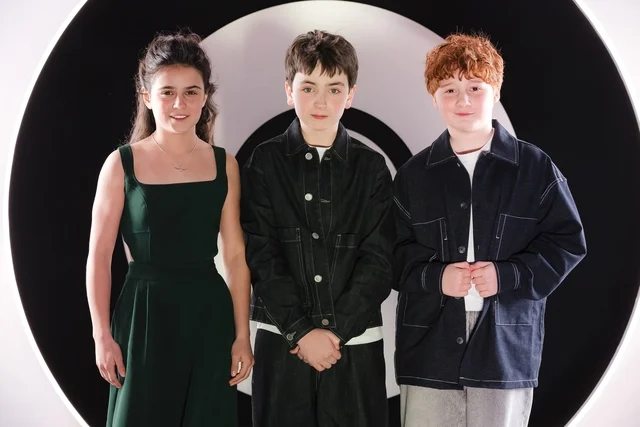
The success of an independent film often rests on a single, intangible element: the chemistry between its leads. For Jordan Firstman, the multi-hyphenate creator behind the A24-released drama Club Kid, this challenge was amplified by the specific requirements of his script. Firstman, who wrote, directed, and starred in the film, knew that the emotional architecture of the story depended entirely on finding a preteen actor who could embody Arlo, the long-lost son of his character, Peter.
The search for Arlo became a masterclass in the power of professional networks, the serendipity of the film industry, and a testament to how independent cinema survives in the shadow of massive franchise productions. Through a unique collaboration between legendary casting directors and an unorthodox approach to child acting, Club Kid found its "needle in a haystack" in young Reggie Absolom—a discovery made possible by the exhaustive casting efforts of the upcoming Harry Potter HBO series.
Main Facts: The Stakes of ‘Club Kid’
Club Kid follows Peter (Firstman), a high-energy New York City party promoter whose life is defined by the hedonistic, drug-fueled, and vibrant LGBTQ+ club scene. His world is upended when he is forced to take in Arlo, his estranged British son, following the suicide of Arlo’s mother. The film is a delicate balancing act, juxtaposing the "hard-living" lifestyle of the New York underground with the somber, protective shell of a grieving child.
The role of Arlo required a rare combination of traits. The actor needed to be:
- Authentically British: To maintain the cultural clash between his upbringing and Peter’s New York life.
- Visually Believable: As Firstman noted, the child needed to look like he was "half-Jordan," specifically requiring a quarter-Indian heritage to match the script’s lineage.
- Emotionally Mature: The character is described as "empathetic and wise," possessing an effortless coolness that allows him to eventually blend into a social circle of adult clubgoers without appearing out of place.
With a modest budget estimated between $4 million and $6 million, the production lacked the resources of a major studio. There was no budget for international talent scouts or for the director to spend months in London. The film’s survival hinged on a casting search that Firstman described on the Filmmaker Toolkit Podcast as the most "nerve-wracking" aspect of the entire production.

Chronology: From Crisis to Collaboration
The journey to finding Reggie Absolom began with Carmen Cuba, a casting director renowned for her ability to spot young talent. Cuba’s resume includes the iconic original ensemble of Stranger Things, but she immediately recognized that Club Kid presented a different set of hurdles. Unlike the six-month, multi-million-dollar searches she conducted for Netflix or big-budget features like Starfighter, Club Kid required a "plan of attack" that was both rapid and cost-effective.
The Vacation Breakthrough
The turning point occurred during Cuba’s annual vacation with a group of fellow casting directors. As the holiday drew to a close, Cuba shared her anxieties about the Arlo role with her colleague Lucy Bevan. Bevan, a titan in British casting with credits including Barbie and The Batman, had just reached the end of an exhausting six-month search for the upcoming Harry Potter and the Philosopher’s Stone series for HBO.
In her quest to find the next Harry, Ron, and Hermione, Bevan had auditioned a staggering 40,000 children across the United Kingdom. Recognizing the specific "vibe" Cuba was seeking for Firstman’s film, Bevan offered a gesture of professional generosity rarely seen in the competitive world of Hollywood: she shared her shortlisted names from the Harry Potter search.
The Discovery of Reggie Absolom
Among the thousands of tapes Bevan had reviewed, one face stood out. When Firstman saw a photograph of Reggie Absolom, he experienced an immediate visceral reaction. "I saw his face and I was like, ‘that is the face that I’ve seen in my head,’" Firstman recalled.
Despite the script’s specific requirement for a quarter-Indian child—a detail Firstman feared might be impossible to fulfill within the timeframe—Absolom fit the description perfectly. He was the literal embodiment of the character Firstman had prayed for, arriving with a resume that already included roles in Silo and The Other Bennet Sister.

Supporting Data: The Economics of Independent Casting
The disparity between the Harry Potter production and Club Kid highlights the economic realities of modern filmmaking. The HBO series, with a reported budget exceeding $200 million for its first season, could afford to leave no stone unturned in the UK. By leveraging Bevan’s work, Club Kid effectively benefited from a multi-million-dollar casting infrastructure on an indie budget.
| Feature | Harry Potter (HBO) | Club Kid (A24) |
|---|---|---|
| Estimated Budget | $200M+ | $4M – $6M |
| Casting Duration | 6 Months | Accelerated (Indie Timeline) |
| Talent Pool | 40,000+ applicants | Shortlisted via Bevan |
| Travel Budget | Global | Limited (No London flights for CD) |
Because the production could not afford to fly Carmen Cuba to London for the final sessions, Lucy Bevan hosted the callback sessions at her own office. This collaboration allowed Firstman to conduct unconventional auditions that would eventually define the film’s tone.
Official Responses: A New Directorial Philosophy
In his interview on the Filmmaker Toolkit Podcast, Firstman detailed how his approach to directing Absolom broke away from traditional "child acting" tropes. He rejected the idea of treating a child actor as a separate, fragile entity, opting instead for a relationship built on candor and mutual respect.
The "Walk and Talk" Audition
During the callbacks in London, Firstman decided to move the audition out of the sterile environment of a casting office. "Let’s take it outside," he told the team. With Bevan’s assistant trailing them with a camera, Firstman and Absolom walked through the streets of London, talking and improvising. This "walk and talk" allowed Cuba and Firstman to see how Absolom moved through the world and how he reacted to the unpredictable energy of the city—a crucial test for a character destined for the streets of Manhattan.
Beyond Traditional Rehearsals
Once Absolom was cast, Firstman found that traditional rehearsals were "awkward" and counterproductive to the naturalism he sought. He pivoted to a method of "social immersion":

- Shared Activities: The duo spent their time eating pizza and discussing music.
- Digital Connection: They bonded over TikTok clips, sharing the same digital language that real-world preteens use.
- Humor as a Bridge: Firstman allowed Absolom to make fun of him, breaking the power dynamic usually found between a director and a child. "Once he got permission to make fun of me, the whole dynamic shifted," Firstman said.
Carmen Cuba noted that this connection is palpable in the final cut of the film. "Jordan’s brain, and how he connects to everyone that he casts… it’s so familial," she observed during an IndieWire Craft Roundtable.
Implications: The Future of Indie Collaboration and Child Performance
The story of Club Kid’s casting has broader implications for the film industry, particularly concerning the survival of mid-budget independent dramas.
1. The Necessity of the "Casting Collective"
The friendship between Cuba and Bevan suggests that as budgets for independent films tighten, the "siloed" nature of production may need to dissolve. Professional generosity—sharing databases and resources—could become the primary way that smaller films maintain high production values and find elite talent.
2. Redefining Child Performance in Mature Spaces
Club Kid enters a tradition of films that place children in adult-oriented environments (reminiscent of The Florida Project or C’mon C’mon). By refusing to "sanitize" the world of the film for the child actor, Firstman has created a performance from Absolom that feels unforced. The implication is that authenticity in child acting comes not from coaching, but from genuine social integration with the adult cast.
3. A24’s Continued Strategy
For A24, Club Kid represents another successful bet on a distinct voice. By supporting a film that deals with grief and hedonism through the lens of a father-son relationship, the studio continues to champion "vibe-heavy" cinema that prioritizes character over plot. The successful casting of Absolom ensures that the film’s more provocative elements are anchored by a grounded, emotional center.

Club Kid is currently playing in select theaters in New York City and Los Angeles, with a nationwide expansion scheduled for Friday, November 13. As the film reaches a wider audience, the industry will likely look back at its casting process as a blueprint for how to find "the perfect face" when time and money are running out.