The Deluge of the Anthropocene: ‘The Ark’ Reimagines Survival and Stewardship at Powerhouse Arts
The concept of the "ark" is one of the oldest and most pervasive symbols in human history. Traditionally, it evokes the image of a monumental vessel—a sanctuary of wood and pitch built to preserve the diversity of life against a divinely ordained cataclysm. In the 21st century, however, the "Deluge" is no longer a myth of divine wrath but a measurable reality of the Anthropocene. As polar ice caps vanish and global sea levels creep upward, the metaphorical flood is one of our own making.
Currently on display at Powerhouse Arts in Brooklyn, a sprawling exhibition titled The Ark seeks to re-examine this ancient narrative through the lens of contemporary environmental and social upheaval. Featuring more than 90 sculptures and installations from over 50 world-renowned artists, the exhibition poses a fundamental, haunting question: Will we care for the future of our planet with the same intimacy and devotion we reserve for the animals we love?
Main Facts: A Monumental Menagerie in Brooklyn
The Ark represents a significant cultural moment for the New York art scene, both for its thematic depth and its sheer physical scale. Curated by the acclaimed artist Eric Fischl, the exhibition has transformed the industrial expanse of Powerhouse Arts into a sanctuary for a diverse "population" of artistic creatures.

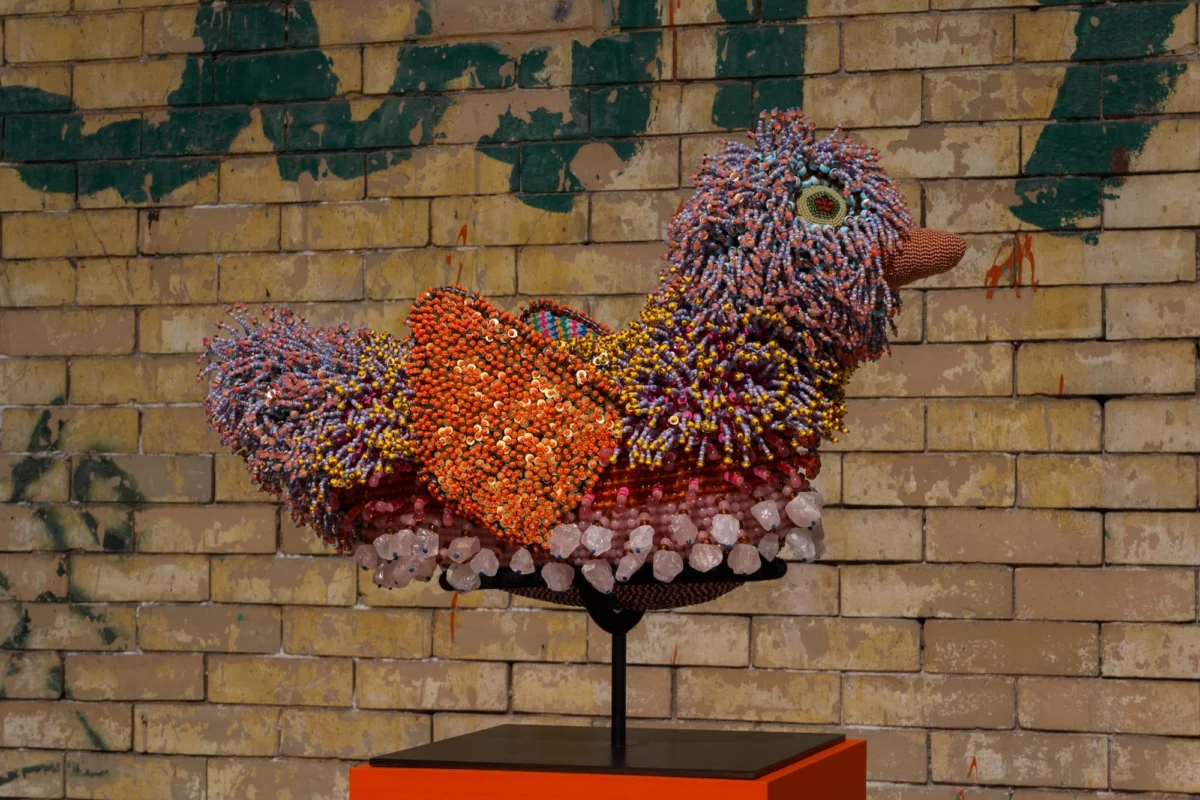
The exhibition is not a mere collection of animal-themed art; it is a curated dialogue. By utilizing the animal form as both "protagonist and interlocutor," the show forces visitors into close proximity with the non-human world. The works on display range from the hyper-realistic to the abstract, utilizing a staggering array of materials including cast bronze, carved stone, delicate feathers, resin, and reclaimed wood.
The roster of artists reads like a "who’s who" of contemporary sculpture. Notable contributors include:
- Kiki Smith, known for her explorations of the human-nature connection.
- Jeffrey Gibson, whose work often blends Indigenous craft traditions with contemporary aesthetics.
- Wangechi Mutu, who explores themes of hybridity and the female form.
- Maurizio Cattelan, the provocateur whose contributions often challenge the sanctity of the gallery space.
- Deborah Butterfield, famous for her equine sculptures that mimic the organic forms of driftwood.
The exhibition is hosted at Powerhouse Arts, a 170,000-square-foot nonprofit facility located in the Gowanus neighborhood of Brooklyn. The show is scheduled to run through August 30, 2026, offering a summer-long meditation on survival and the ethics of care.

Chronology: From Whaling History to Post-Industrial Brooklyn
The journey of The Ark to its current home in Brooklyn is as significant as the works themselves. The exhibition was first conceived and staged at The Church in Sag Harbor, New York.
The Sag Harbor Origins
The Church, a creative hub co-founded by Eric Fischl and April Gornik, is housed in a repurposed 19th-century Methodist church. Sag Harbor itself is a town steeped in the history of whaling—a past defined by the human exploitation of the natural world for industrial gain. In that setting, The Ark served as a poignant reflection on the village’s maritime heritage and its complicated relationship with the sea.
The Brooklyn Transition
In the summer of 2026, the exhibition migrated from the quiet, historical context of Sag Harbor to the gritty, industrial heart of Brooklyn. The transition to Powerhouse Arts—specifically the building known locally as the "Batcave"—added a new layer of meaning to the work.

The "Batcave" was originally a central power station for the Brooklyn Rapid Transit System, built in 1904. After decades of abandonment and its subsequent use as a legendary squat and graffiti destination, it was meticulously renovated into a state-of-the-art fabrication center. The move of The Ark from a former house of worship to a former house of industry mirrors the shift in our environmental discourse: from the spiritual and mythic to the material and systemic.
Supporting Data: A Deep Dive into Materials and Emotional Resonance
The power of The Ark lies in its diversity. The curators avoided a monolithic aesthetic, instead opting for a "broad church" approach that reflects the biological diversity the original Ark was meant to protect.
The Spectrum of Materials
The 90 pieces in the exhibition demonstrate a mastery of sculptural media:

- Bronze and Permanence: Works by Nichola and Anthony Theakston utilize cast bronze to imbue animals with a sense of the sacred. Anthony’s Spirit Owl and Nichola’s Sacred Cow (2025) lean into minimalist, almost totemic forms that suggest animals are not just biological entities, but spiritual icons.
- Resin and Fragility: John O’Reilly’s Intertwined (2012) stands out as one of the most emotionally taxing pieces in the show. Utilizing resin, graphite, and bone powder, O’Reilly depicts an emaciated female dog standing over her pup. The choice of material—porcelain-like and fragile—heightens the sense of vulnerability and the "heart-rending chord" of maternal grief.
- The Found and the Fabricated: Deborah Butterfield’s horses appear to be assembled from fragile driftwood found on a beach, but they are actually expertly cast in bronze. This material deception speaks to the persistence of nature even when it appears most weathered.
- Organic Textures: Kate MccGwire’s serpentine forms are composed of thousands of ethically sourced feathers, creating a texture that feels both seductive and unsettling, challenging the viewer’s tactile expectations of animal representation.
The Spatial Experience
The exhibition is designed to be experienced "in the round." Unlike traditional galleries where art is observed from a distance, The Ark places animals on the floor, on structural beams, and at eye level. Maurizio Cattelan’s pigeons, for instance, are perched high on the building’s original industrial beams, mimicking the way urban wildlife reclaims abandoned human spaces. This placement creates a sense of "surprise and wonder," forcing visitors to look up, down, and around, effectively becoming part of the installation.
Official Responses: Curatorial Vision and Institutional Goals
The organizers of The Ark have been vocal about their desire to move beyond the "doom and gloom" often associated with climate-centric art.
Eric Fischl’s Vision
Curator Eric Fischl has described the exhibition as a metaphor for the present moment. In an official statement, the curatorial team noted that the Genesis flood narrative serves as a framework for exploring how "environmental and social upheaval converge." For Fischl, the animal is the perfect medium for this exploration because it sits at the intersection of our domestic affections and our global responsibilities.

Powerhouse Arts’ Perspective
The leadership at Powerhouse Arts emphasizes the importance of the relationship between the viewer and the viewed. "Rather than framing environmental themes through notions of crisis and urgency alone," the organization stated, "the exhibition centers on relationships and intimate encounters."
By focusing on "intimate encounters," the exhibition aims to bypass the "compassion fatigue" that many feel when confronted with climate change statistics. Instead, it relies on the emotional weight of art to foster a sense of stewardship. The animals function not as victims, but as "interlocutors"—beings that demand a response and a conversation.
Implications: Art in the Shadow of the Superfund
The most profound implication of The Ark may lie in its specific geographic location. Powerhouse Arts sits directly adjacent to the Gowanus Canal, a body of water designated by the Environmental Protection Agency (EPA) as a Superfund site.

The Post-Industrial Backdrop
The Gowanus Canal is one of the most heavily polluted waterways in the United States, a legacy of 19th-century heavy industry including gas works, paper mills, and tanneries. The fact that an exhibition about preserving life and nature is held on the banks of a "dead" canal is a deliberate and biting irony.
This setting provides a "post-industrial background" that grounds the art in a physical reality. While the sculptures inside represent the beauty and sacredness of the animal kingdom, the view outside the window serves as a reminder of what happens when stewardship fails. The exhibition suggests that the "Ark" of the future will not be a boat, but a concerted effort toward urban cleanup, environmental justice, and the restoration of polluted habitats.
A New Model for Environmental Art
The Ark signals a shift in how major art institutions approach the climate crisis. It moves away from the didactic and toward the experiential. By filling a room from floor to ceiling with life-sized and larger-than-life animals, the show creates a sense of "overwhelming abundance." This abundance is meant to inspire a fear of loss.

The exhibition implies that our current "flood" is not a singular event that will pass, but a permanent change in the world’s tides. In this new reality, the "Ark" is no longer a temporary refuge but a permanent mindset of care. As visitors walk through the "Batcave," surrounded by bronze owls, slate birds, and resin dogs, they are reminded that the survival of these forms—and their real-world counterparts—is entirely dependent on human agency.
Conclusion
The Ark at Powerhouse Arts is more than a summer exhibition; it is a cultural audit of our relationship with the natural world. By blending the ancient myth of the Deluge with the modern crisis of the Anthropocene, Eric Fischl and the contributing artists have created a space that is simultaneously a gallery, a cathedral, and a laboratory.
As the show draws to a close on August 30, its lasting impact will likely be the way it reframed the environmental conversation. It reminds us that while the sea levels are rising because of us, the vessel that saves the future must also be built by us—not out of wood and pitch, but out of empathy, art, and a renewed sense of the sacred.