
The Alchemy of Mystery: Sophia Huitema’s "Prussian Blue" Debuts at Harper’s Gallery
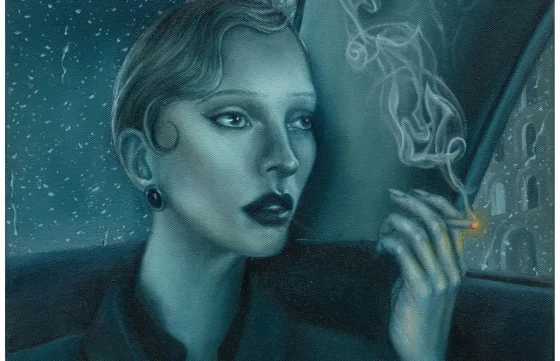
The New York art scene is currently witnessing the emergence of a singular voice in contemporary figurative painting. Harper’s Gallery has officially announced Prussian Blue, the inaugural solo exhibition of New York-based artist Sophia Huitema. This highly anticipated presentation, featuring a suite of seven new oil paintings, marks a significant milestone in Huitema’s career, offering a window into a world where historical decadence, cinematic tension, and chemical duality intersect. The exhibition is scheduled to remain on view through April 25, 2026, inviting audiences to immerse themselves in a psychological landscape defined by its cool harmonies and guarded subjects.
Main Facts: A Study in Indigo and Intrigue
Sophia Huitema’s Prussian Blue is more than a mere collection of paintings; it is a thematic exploration of a specific pigment’s history and its metaphorical resonance. The exhibition consists of seven large-scale oil works that utilize a restrained palette of deep blues and muted greens. These colors are not merely aesthetic choices but are central to the narrative arc of the show.
The central motif of the exhibition is the pigment Prussian Blue itself—a color with a complex and somewhat sinister pedigree. Discovered accidentally in the early 18th century, the pigment is chemically linked to cyanide, yet it is also used in modern medicine as an antidote for certain types of heavy metal poisoning. Huitema leans into this paradox—the "rare duality in which toxicity and protection converge"—to frame her subjects.
The figures within these works are predominantly female, characterized by elongated limbs, slender necks, and an air of aristocratic detachment. They inhabit "hazy, dreamlike worlds" that feel both opulent and claustrophobic. These are not passive subjects; rather, they are "watchful figures" who often break the fourth wall, confronting the viewer with gazes that are simultaneously seductive and predatory. The settings evoke a sense of film noir and the "Gatsby-era decadence" of the interwar period, blending high-society elegance with an underlying sense of menace.
Chronology: From Studio Practice to Solo Debut
The journey to Prussian Blue represents a significant ascent for Sophia Huitema within the competitive New York art ecosystem. Unlike many of her contemporaries who emerge from prestigious MFA programs, Huitema is notably self-taught. Her development has been characterized by "sustained studio practice and close observation," a path that has allowed her to bypass formal academic constraints and develop a highly idiosyncratic visual language.
- Formative Years: Huitema’s early work involved a deep dive into the traditions of early 20th-century fashion illustration and Art Deco design. By studying the streamlined silhouettes of illustrators like Erté, she began to experiment with the attenuated proportions that would become her signature.
- The Development of Style: Over the past several years, Huitema moved beyond simple illustration, integrating the compressed spaces of Symbolist and Surrealist painting. This evolution saw her move from depicting "scenes" to creating "psychological realms."
- The Harper’s Partnership: Recognizing the unique intersection of cinematic staging and classical oil technique in her work, Harper’s Gallery brought Huitema into their roster. This solo exhibition, which runs until the spring of 2026, serves as the formal introduction of her mature style to the global art market.
- Current Exhibition: The seven paintings on view represent the culmination of this self-directed journey, showcasing a refined mastery of the oil medium and a coherent conceptual framework centered on the titular pigment.
Supporting Data: The Chemical and Aesthetic Foundation
To understand the depth of Prussian Blue, one must examine the specific artistic and historical data points that inform Huitema’s practice.
The Pigment: A Dual Identity
Prussian Blue (ferric ferrocyanide) was the first modern synthetic pigment. Its history is a study in contradictions. It was the color of the Prussian army uniforms, yet it also gave its name to Prussic acid (hydrogen cyanide). Huitema uses this chemical history as a metaphor for the "femme fatale"—a figure who is both beautiful and potentially lethal. The artist’s choice to work within this specific chromatic range creates a "moody atmosphere" that acts as a visual anchor for the entire collection.
Stylistic Influences and Proportions
Huitema’s work is characterized by "attenuated proportions." In the history of art, this stretching of the human form—often referred to as Mannerism—is used to convey elegance, spiritual tension, or psychological unease. Huitema combines this with the "theatrical poise found in interwar couture."
| Feature | Influence | Effect in Huitema’s Work |
|---|---|---|
| Limbs/Necks | Art Deco / Erté | Creates a sense of fragile, high-society elegance. |
| Space | Symbolism / Surrealism | Shallow, compressed interiors that feel like "psychological realms." |
| Lighting | Film Noir | Dimly lit, high-contrast scenes that suggest a "cinematic suspense." |
Spotlight on "Sleeper Car"
A centerpiece of the exhibition, the painting Sleeper Car, serves as a case study for Huitema’s narrative technique. The work depicts a woman in a backless evening gown aboard a train. The composition is masterfully tense:
- The Pose: While her posture is relaxed, her right hand is "braced and ready to strike."
- The Environment: Rain streaks across the windows, and the narrow aisle of the train car stretches into an "uncertain depth."
- The Narrative: The painting functions like a still from a psychological thriller, leaving the viewer to wonder if the subject is the victim or the perpetrator of a pending crime.
Official Responses: The Gallery’s Perspective
Harper’s Gallery has positioned this exhibition as a significant moment for contemporary figurative art. In their official press release, the gallery emphasizes Huitema’s ability to synthesize disparate historical influences into a "contemporary visual language."
The gallery notes that Huitema’s work "moves fluidly between illustration, painting, and cinematic staging." This fluidity is seen as a strength, particularly in a market that is increasingly valuing "self-directed" artists who bring a fresh perspective to traditional mediums. By highlighting her lack of "formal academic training," the gallery underscores the authenticity of her vision, suggesting that her vocabulary was developed through "close observation" rather than rote instruction.
Curatorial commentary points to the "chromatic throughline" of the show, noting that the use of Prussian Blue is not just a stylistic choice but a "conceptual one." The gallery suggests that the exhibition succeeds because it manages to keep the motifs of "protection and threat in constant tension," ensuring that the viewer remains perpetually off-balance.
Implications: The Resurgence of "New Noir"
The debut of Prussian Blue has broader implications for the current trajectory of the art world. Huitema’s work arrives at a time when there is a renewed interest in figurative painting that explores themes of mystery, gendered power dynamics, and historical nostalgia.
1. The Blurring of Fine Art and Illustration
Huitema’s success signals a continuing breakdown of the barrier between "high art" and "illustration." By embracing the aesthetic of Erté and Gatsby-era design, she proves that decorative and illustrative elements can be used to explore profound psychological depths. This shift allows for a more "theatrical" approach to painting that resonates with a generation raised on cinematic storytelling.
2. The Value of the Self-Taught Artist
In an era where the "MFA industrial complex" often produces artists with similar styles and ideological frameworks, Huitema’s rise is a testament to the power of independent study. Her work suggests that "sustained studio practice" and a personal obsession with art history can yield a visual language that is as sophisticated—if not more so—than that of academically trained artists.
3. The Psychology of the "Femme Fatale"
By reclaiming the femme fatale archetype, Huitema invites a contemporary re-evaluation of women in positions of power and peril. Her figures are not merely objects of the "male gaze" but are "calculating" and "guarded." This adds a layer of feminist agency to a historically fraught trope, suggesting that the "beauty and menace" of these women is a form of armor in a hostile world.
4. Market Trends
For collectors, Prussian Blue represents an opportunity to engage with an artist whose work is both visually accessible and intellectually rigorous. The limited number of works (seven) creates a sense of scarcity and focus, likely driving significant interest in Huitema’s future output. The exhibition’s long run—extending into 2026—indicates the gallery’s confidence in the enduring relevance of this body of work.
As Sophia Huitema’s figures "slink through each scene" at Harper’s, they do more than just inhabit the canvas; they challenge the viewer to navigate the thin line between elegance and danger. Prussian Blue is a masterful debut that confirms Huitema as a formidable presence in the New York art world, one whose "hazy, dreamlike worlds" will likely haunt the imaginations of audiences for years to come.




Leave a Comment