The Absurdist Legacy of Brad Neely: A Critical Analysis of Creased Comics
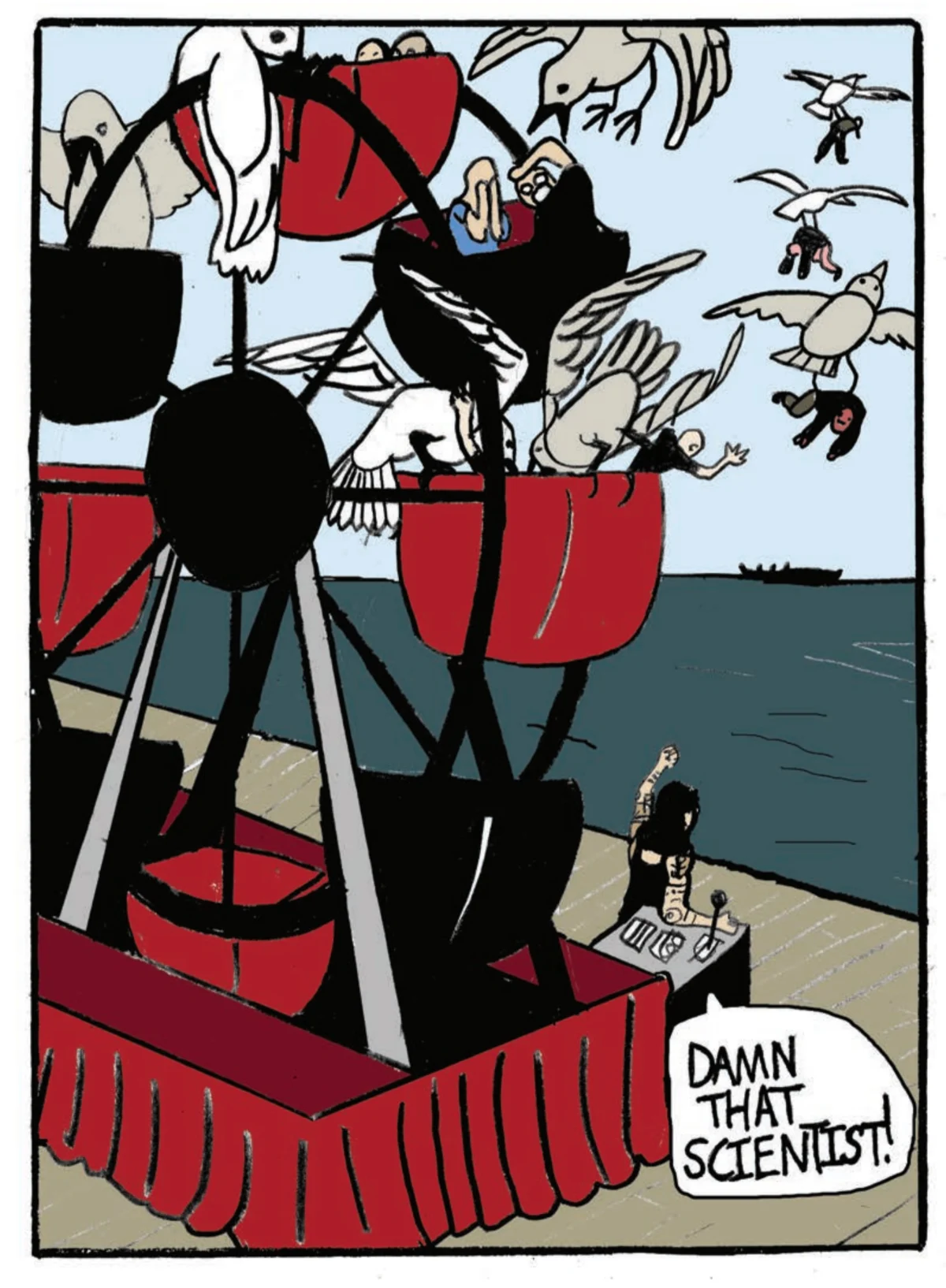
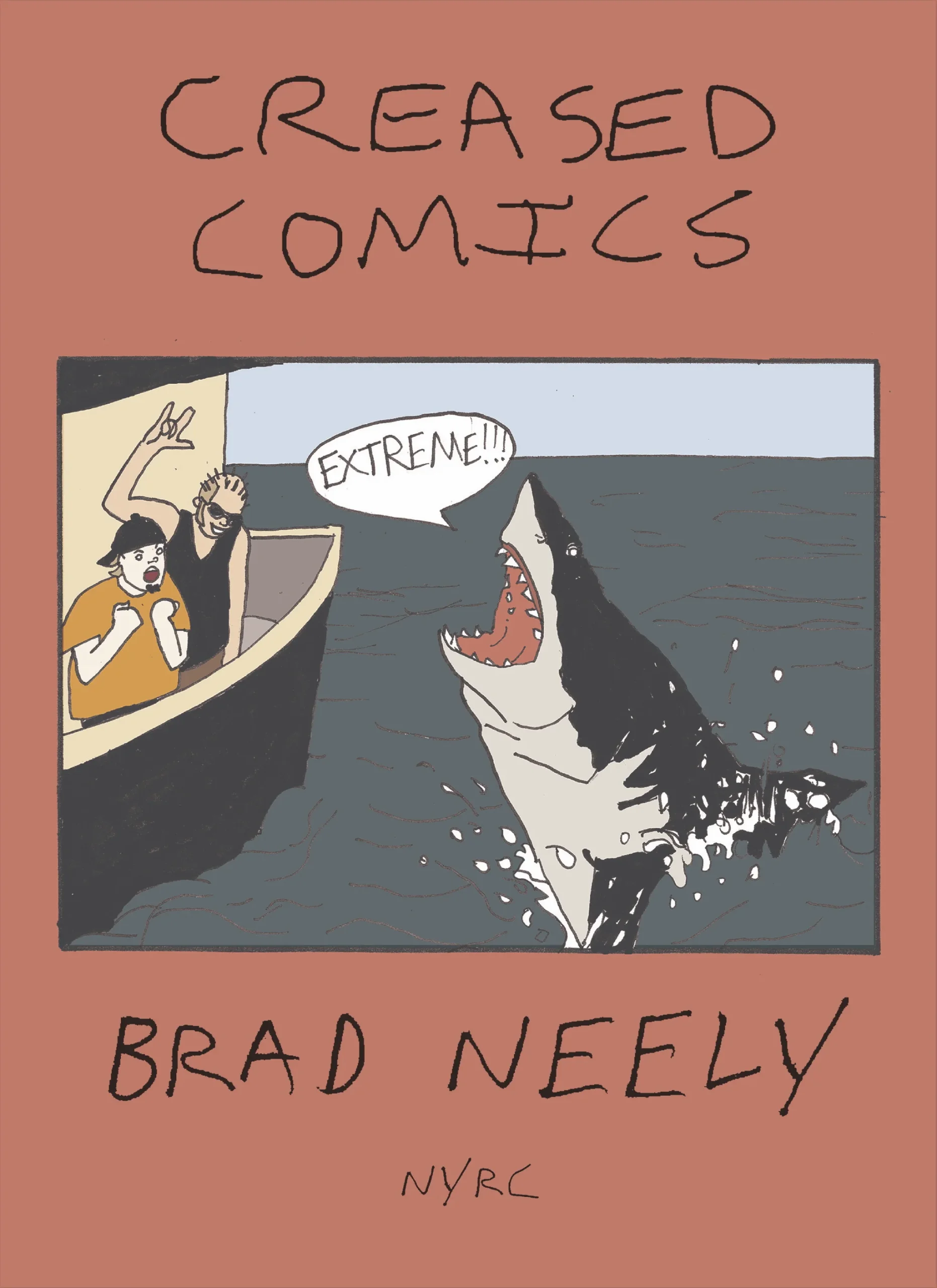
The release of Creased Comics by New York Review Comics (NYRC) in the summer of 2026 marks a significant milestone in the preservation of contemporary American humor. Compiling the formative work of Brad Neely—spanning from 1995 to 2010—the volume offers more than a mere retrospective of a cult animator’s origins. It provides a skeletal map of the "anti-craft" movement that redefined the aesthetics of the early 21st century.
Neely, perhaps best known for his surrealist contributions to Cartoon Network’s Adult Swim block, emerges in this collection as a vital link between the classic newspaper gag strips of the late 20th century and the nihilistic, digitally-native absurdity of the modern era.
Main Facts: The Genesis of Creased Comics
Creased Comics is a curated selection of Neely’s single-panel and short-form works, produced during a fifteen-year period that tracks his evolution from an underground cartoonist to a mainstream voice in adult animation. Published by the NYRC imprint—a label known for elevating "low" art to the status of literary merit—the book captures Neely’s output during his transition from youth to young manhood.
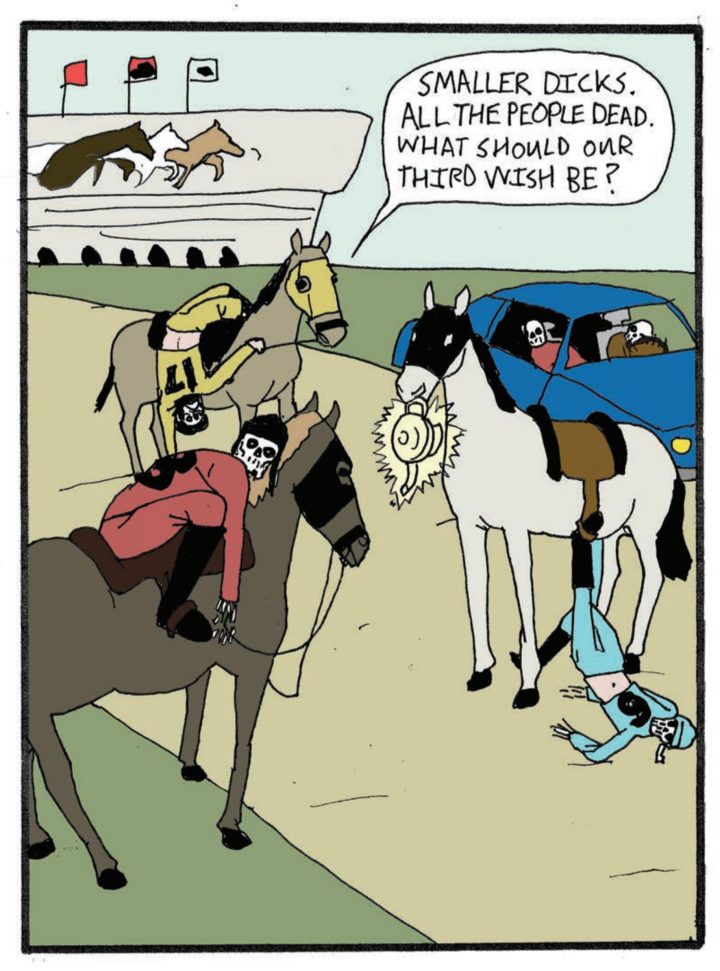
The collection is characterized by a specific brand of "dyspeptic" humor. It avoids the sentimentality often found in the comics medium, opting instead for a frank, often crass, exploration of human failure, institutional rot, and the bizarre. The artwork itself, while seemingly crude, follows a deliberate "anti-craft" aesthetic that prioritizes the "funny-look" over traditional technical precision—a hallmark of the era’s alternative comics scene.
Chronology: From the Drawing Board to Adult Swim
To understand the weight of Creased Comics, one must trace the timeline of Neely’s professional trajectory alongside the shifting landscape of American media.
The Formative Years (1995–2010)
The strips contained in the volume were largely produced for private circulation, college newspapers, and early internet forums. This was the era of the "slacker" aesthetic, where creators like Neely were reacting against the polished, commercialized art of the 1980s. During this period, Neely was honing the specific comedic voice that would later define his television career: a mixture of historical revisionism, academic satire, and non-sequitur violence.
The Adult Swim Era (2011–2015)
The comedic sensibilities found in Creased Comics reached their most visible form with the premiere of China, IL on Adult Swim in 2011. The show, set at the "worst college in America," acted as a macroscopic expansion of Neely’s single-panel themes. It tackled the "ripening vibe of institutional rot," where the behavior of those in power was disconnected from the needs of those they served. At a time when Adult Swim was beginning to transition from a niche novelty to a dominant cultural force, Neely’s work provided a bridge between the "weird for weird’s sake" era of Aqua Teen Hunger Force and a more sophisticated, albeit still grotesque, form of social satire.
The Retrospective View (2026)
With the publication of this volume in 2026, critics are reassessing Neely’s early work not just as a precursor to his animation, but as a standalone achievement in the medium of the single-panel cartoon. Seen from the vantage point of the mid-2020s, the jokes that once felt like absurdist exaggerations—such as political figures being declared "President for Life" as a punchline—have taken on a more descriptive, almost haunting quality.
Supporting Data: The Shadow of Gary Larson and the 80s Strip
The most profound revelation within Creased Comics is Neely’s undeniable debt to Gary Larson, the creator of The Far Side. While Neely was born in 1976, his formative years coincided with what has been described as the "Roman Spring" of the American comic strip (roughly 1980–1995).
The Influence of the "Big Three"
During the 1980s, the newspaper funny pages were dominated by three titans: Gary Larson (The Far Side), Bill Watterson (Calvin & Hobbes), and Berke Breathed (Bloom County). While Watterson offered philosophical depth and Breathed offered political bite, Larson offered a "thumb-print on the brain"—a way of seeing the world through a distorted, scientific, yet deeply silly lens.
Neely’s work in Creased Comics functions as a more aggressive, uncensored evolution of the Larson model. Where Larson had to contend with the strictures of newspaper syndication (famously being censored for calling Jane Goodall a "tramp" via a talking monkey), Neely was free to pursue a more "crass and frank" direction. However, the fundamental structure remains the same: the humor is baked into the visual composition. A character in a Neely strip looks funny before they ever speak.
The "Anti-Craft" Movement
Neely’s work is also historically situated within the "anti-craft" movement of the early 2000s. This period saw a rejection of the lush, illustrative styles of the past in favor of a raw, immediate approach. This movement was championed by figures like Frank Santoro and highlighted in the seminal anthology Kramers Ergot. Neely’s strips share this DNA, prioritizing the "energy" of the gag over the cleanliness of the line.
Official Responses and Critical Reception
The critical reception of Creased Comics has sparked a broader conversation within the industry regarding how comics history is categorized.
The Comics Journal and the Larson Oversight
In a notable self-reflection, critics at The Comics Journal have pointed out that in their "Top 100 Comics of the 20th Century" list, Gary Larson was entirely absent. This oversight is now viewed as a failure to recognize the "sinkhole in the imagination" Larson opened for subsequent generations. The publication of Creased Comics serves as a corrective, illustrating how Larson’s DNA has mutated and survived through creators like Neely.
Publisher’s Perspective: NYRC
New York Review Comics has positioned the book as a "selected volume," or the crème de la crème of Neely’s archives. By placing Neely in their catalog alongside literary giants of the medium, the publisher is making a definitive statement: the single-panel gag, when executed with a "distinctive, individual sense of humor," is a high-art form.
Peer Commentary
Industry contemporaries have noted that Neely’s "mastery" lies in his ability to condense complex social anxieties into a single image. For instance, the recurring motif of a man committing a bizarre or destructive act while saying "Free country" has been cited by fellow cartoonists as a "masterclass in satirical economy."
Implications: The "Free Country" and the Maw of Oblivion
The publication of Creased Comics in 2026 carries implications that extend beyond the world of art and into the realm of cultural sociology. Neely’s work, once viewed as purely cynical, now appears prescient.
From Irony to Description
Many of the strips in the collection deal with a sense of "pure dyspepsia." In the late 90s, a man pointing a pistol at a burning Christmas tree and saying "Free country" was a surrealist joke about the absurdity of American individualism. In 2026, critics argue that this same panel has transitioned from being a "funny joke" to being "purely descriptive." Neely captured a specific American "1,000-yard stare" that has become a ubiquitous part of the modern psyche.
The Durability of the Individual Voice
The ultimate lesson of Creased Comics is the value of a singular, uncompromised sense of humor. Neely’s success suggests that the "weirder the better" approach is not just a niche strategy, but a path to creating work that remains relevant decades later. In an era where AI-generated content and algorithmic humor threaten to flatten the cultural landscape, Neely’s "anti-craft," human-centric, and deeply weird output stands as a testament to the power of individual perspective.
Conclusion
Creased Comics is a vital document for anyone seeking to understand the evolution of American humor from the analog era to the digital present. It confirms Brad Neely as a primary architect of the modern absurdist aesthetic. By leaning into the "screaming maw of oblivion" with a pen in hand, Neely did more than just draw funny pictures; he charted the psychological decline of a century, one panel at a time. The book is not merely a collection of old jokes; it is an invitation to see the world through a lens that is as terrifying as it is hilarious.