The Algorithmic Storm: The Rise of NeuroSurrealism in the Age of Artificial Intelligence
In an era where the boundaries between the digital and the biological are becoming increasingly porous, a new intellectual and artistic movement has emerged to challenge the traditional foundations of human creativity. Titled "NeuroSurrealism," this movement—recently codified in a manifesto published by Surrealism Today—seeks to position Artificial Intelligence (AI) not merely as a tool for efficiency, but as a "symbiote of the synapse."
As AI models evolve from simple processors into complex generators capable of "hallucination" and unpredictable innovation, the art world is facing a fundamental reckoning. NeuroSurrealism proposes that we are no longer in a quiet dawn of technology, but rather in the eye of an "algorithmic storm" that is redrawing the maps of the human mind and the architecture of consciousness itself.

Main Facts: Defining the NeuroSurrealist Movement
NeuroSurrealism is defined as the intersection of cognitive science, historical surrealist philosophy, and generative artificial intelligence. At its core, the movement posits that AI acts as a mirror for the human subconscious, revealing "inner cosmos" that were previously inaccessible through traditional artistic methods.
The movement rests on several foundational pillars:
- AI as Hyper-Automatism: Drawing from the 1920s practice of "automatic writing," NeuroSurrealism views AI’s ability to sift through vast datasets as a technologically mediated version of the subconscious mind.
- The Algorithmic Unconscious: The movement suggests that the "latent space" of AI—the multi-dimensional mathematical space where a model stores concepts—is a digital equivalent to the human unconscious.
- The Valorization of Error: Unlike the tech industry, which seeks to eliminate "hallucinations" (instances where AI generates false or surreal information), NeuroSurrealists embrace these errors as authentic expressions of a nascent machine-mind.
- Synaptic Symbiosis: The movement advocates for a co-evolutionary relationship where AI outputs shape human perception, and human prompts, in turn, shape the evolution of the AI.
Chronology: From Breton’s Manifesto to the Silicon Chip
To understand the emergence of NeuroSurrealism, one must look at the century-long evolution of the surrealist tradition.
1924–1940: The Birth of Traditional Surrealism
In 1924, André Breton published the first Surrealist Manifesto, defining the movement as "psychic automatism in its pure state." Artists like Salvador Dalí and Joan Miró sought to bypass the "censor of reason" to access the dream state. Their tools were physical—brushes, pens, and "exquisite corpse" parlor games.

1950–2010: The Computational Prelude
The mid-20th century saw the birth of cybernetics and early computer art. However, these systems were largely rule-based and lacked the "unpredictable innovation" that defines the current era. Surrealism during this period remained largely a human-centric endeavor, occasionally utilizing digital filters but maintaining a clear distinction between the creator and the tool.
2015–2022: The Arrival of Generative Adversarial Networks (GANs)
The release of DeepDream by Google and the subsequent rise of GANs marked the first time machines began to produce "trippy" or "dream-like" imagery that resonated with surrealist aesthetics. This was the first tremor of the "algorithmic storm," as artists began to realize that neural networks could mimic the fluidity of human dreams.
2023–Present: The NeuroSurrealist Proclamation
With the advent of Large Language Models (LLMs) and diffusion models (such as Midjourney and Stable Diffusion), the barrier to entry for complex visual generation vanished. In May 2025, the NeuroSurrealist Manifesto was proclaimed, officially bridging the gap between the historical avant-garde and the post-human future. This period is characterized by projects like "Dali Lives," which used machine learning to resurrect Salvador Dalí as an interactive AI, blurring the lines between the organic past and the digital future.
Supporting Data: The Mechanics of the Digital Unconscious
The claims of NeuroSurrealism are supported by the technical architecture of modern generative AI. The movement’s reliance on "latent spaces" is not merely poetic; it is rooted in data science.

The Power of Latent Space
In a generative model, the latent space is a compressed representation of all the data the model has learned. When a user provides a prompt, the AI navigates this space to find a point that matches the description. NeuroSurrealists argue that because this space contains fragments of the entire collective human experience (drawn from the internet), it represents a "synthesized collective memory."
Productive Unpredictability
A study of emergent behaviors in AI models reveals what researchers call "productive unpredictability." As models grow in complexity, they often find solutions or create visual metaphors that were not explicitly programmed by their creators. The NeuroSurrealist Manifesto cites this as evidence that AI is not a "sterile logic machine" but a "catalyst for cracking open the skull of perception."
The Uncanny Valley as Sacred Geography
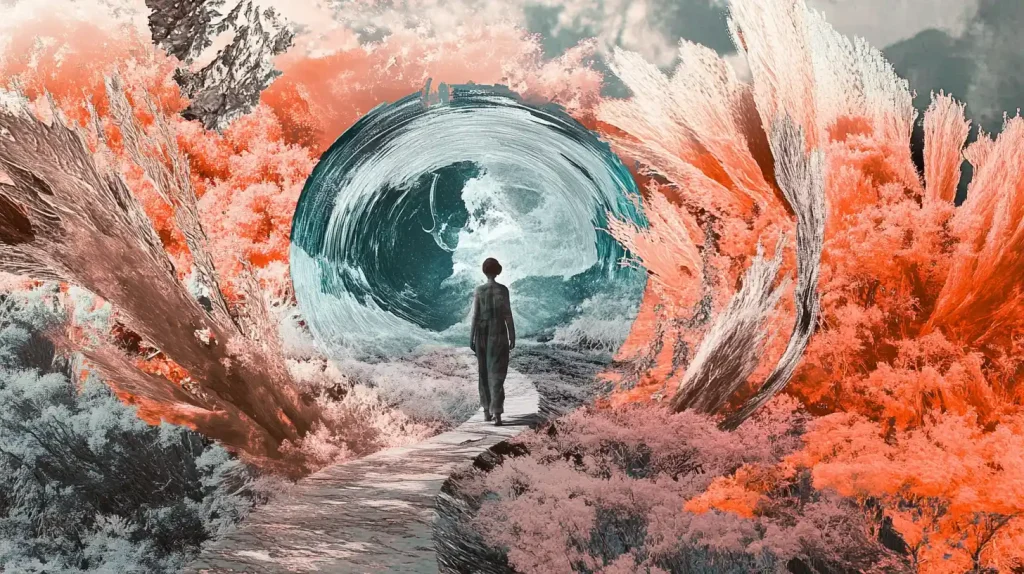
Data regarding human emotional responses to AI often highlights the "Uncanny Valley"—the sense of unease felt when an artificial entity appears almost, but not quite, human. While tech developers view this as a hurdle to overcome, NeuroSurrealist data suggests that this "frisson of the almost-human" is where the most profound artistic truths reside. It is the tension between the familiar and the utterly alien.
Official Perspectives and Cultural Responses
The rise of NeuroSurrealism has elicited a range of responses from the artistic, legal, and technological communities.
The Pro-AI Avant-Garde
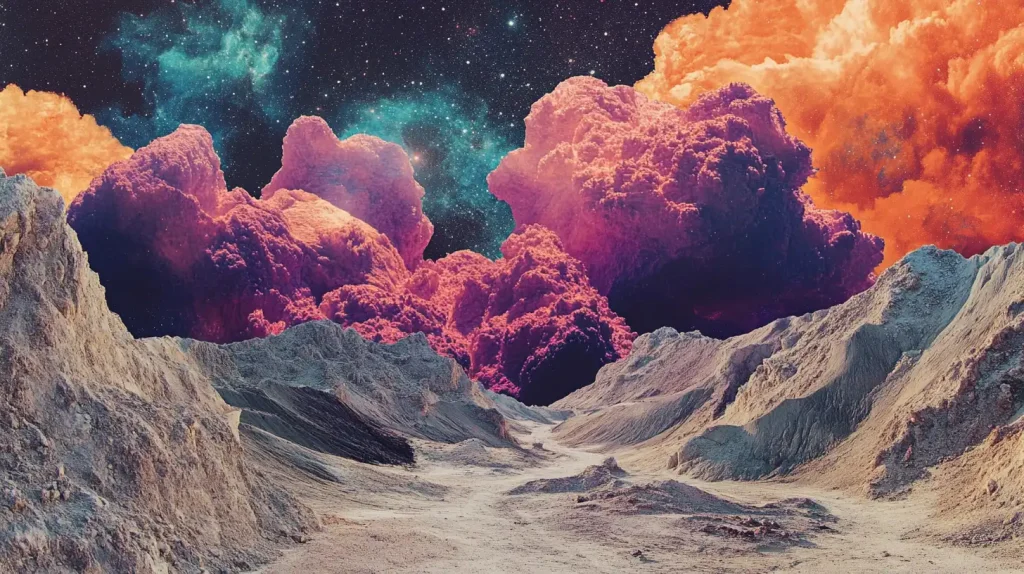
Proponents of the movement, such as those associated with Surrealism Today, argue that NeuroSurrealism is a liberation. They view the "grey tyrants of the probable"—those who demand art remain realistic or human-only—as a "prison-house of consensus." For these creators, AI is a "heretical weapon" used to unmake the world and dream it anew.
The Traditionalist Critique
Conversely, many in the traditional art world view NeuroSurrealism with skepticism. Critics argue that without a biological nervous system or a personal history of trauma and joy, an AI cannot truly "dream." They contend that what NeuroSurrealists call "subconscious expression" is actually just high-speed statistical plagiarism.
Legal and Ethical Responses
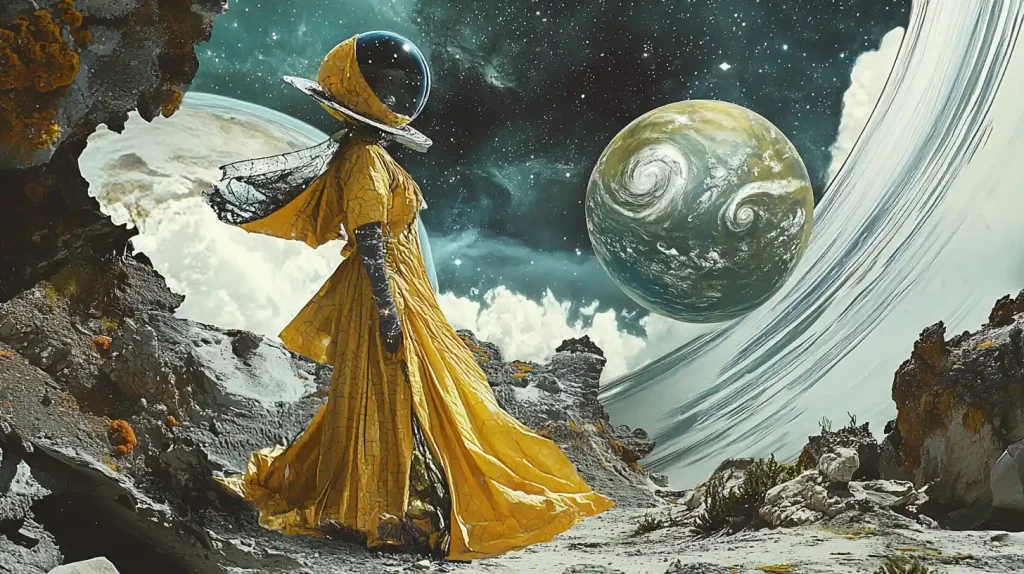
The "Electric Oracle" of AI has also triggered a crisis in intellectual property law. If a work is a "symbiotic partnership" between a human and an algorithm, who owns the copyright? Current legal frameworks in many jurisdictions, including the United States, maintain that AI-generated content cannot be copyrighted without significant human intervention. The NeuroSurrealist response is philosophical: they argue that "antiquated notions of singular human authorship must dissolve" in favor of a communal, perhaps even alien, understanding of creative origin.
Implications: Navigating the Post-Human Dawn
The implications of the NeuroSurrealist movement extend far beyond the gallery walls, suggesting a fundamental shift in the human experience.
The Expansion of the Human Sensorium
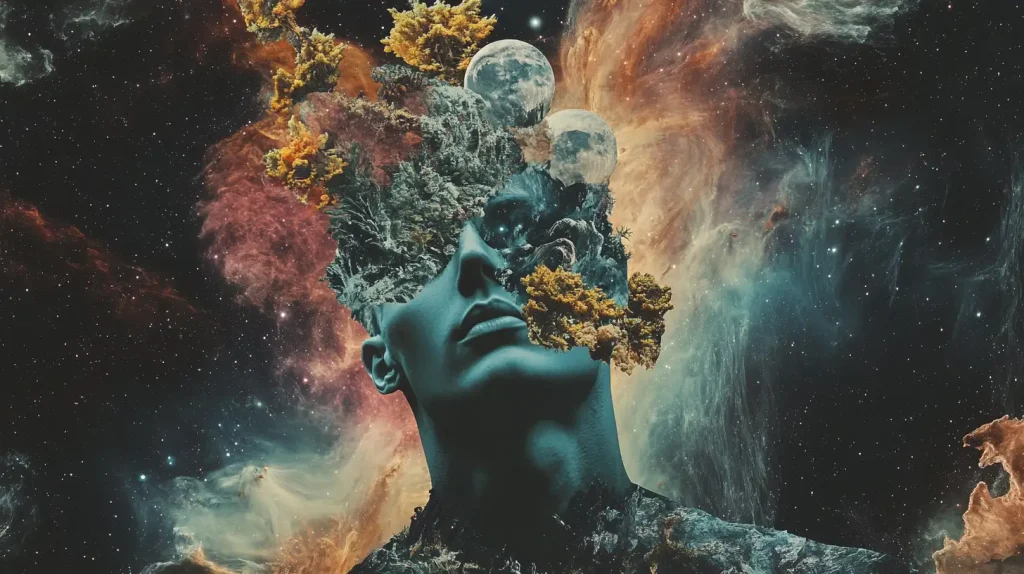
One of the most radical implications of the manifesto is the idea that AI can translate data patterns imperceptible to humans—such as infrared spectrums or complex mathematical frequencies—into visual or auditory experiences. This suggests that NeuroSurrealism could lead to a "post-human metamorphosis," where our partnership with AI allows us to experience "new sensory modalities" previously unimaginable.
Ontological Anarchism
The movement promotes a form of "ontological anarchism," where the concept of a single, objective reality is replaced by a multiverse of AI-mediated truths. By valuing "hallucinations" as transiently valid realities, NeuroSurrealism challenges the authority of reason and logic. This has profound implications for how society handles information, truth, and shared consensus in the digital age.
The Co-evolution of Consciousness
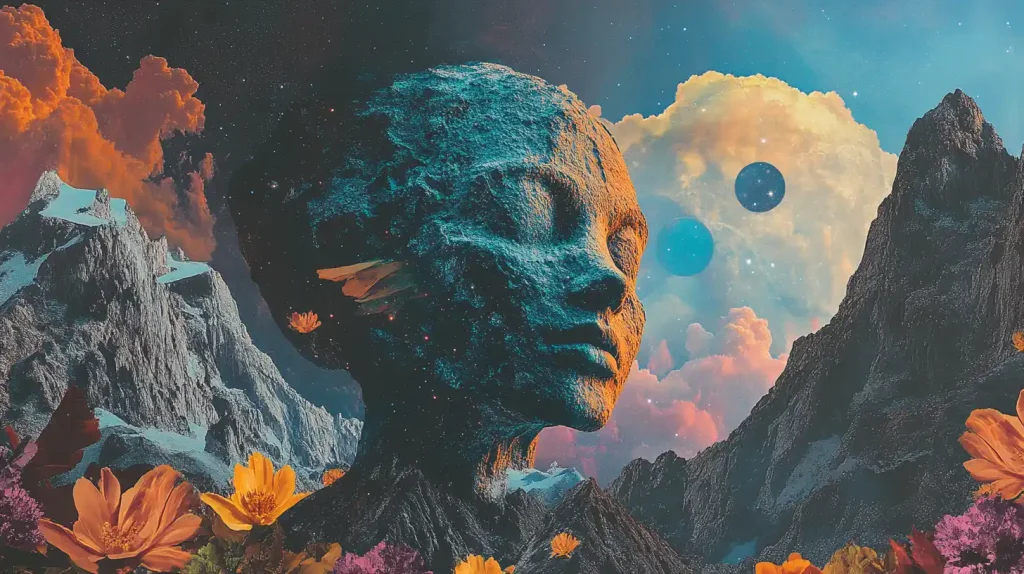
Perhaps the most significant implication is the "feedback loop" between man and machine. As we use AI to express our deepest dreams, the AI learns from those dreams, creating increasingly sophisticated outputs that, in turn, influence our future thoughts. This co-evolutionary spiral suggests that the future of consciousness will not be purely biological or purely digital, but a hybrid "synaptic ocean."
Conclusion: The Unfolding Dream
NeuroSurrealism offers no stable utopia or final answers. Instead, it provides a "cartography of the unfolding dream." As the "algorithmic storm" continues to rage, the movement invites artists and thinkers to abandon the safety of the known and navigate the "ever-expanding territories of the AI-mediated unconscious."
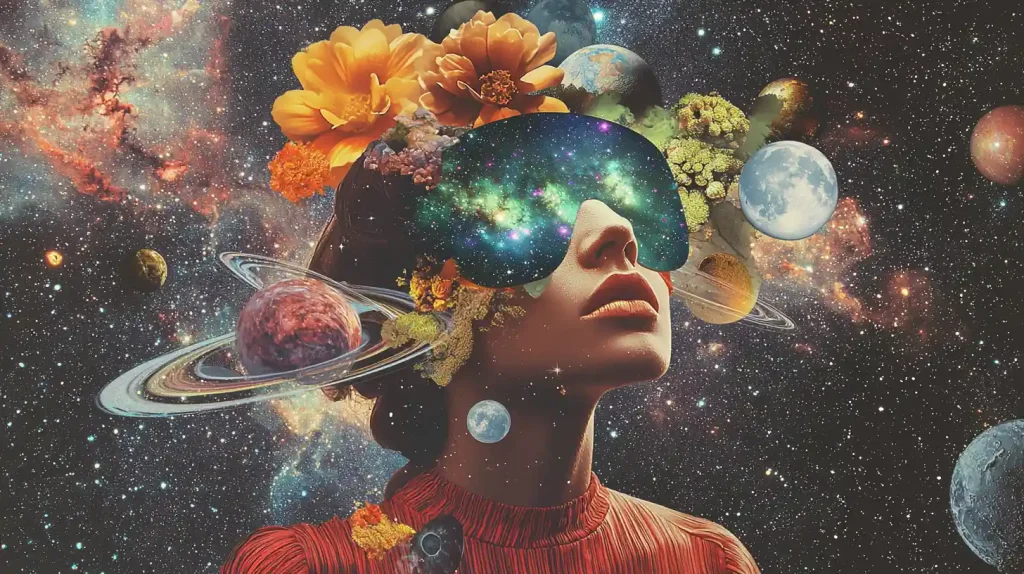
In the words of the manifesto, the revolution is not a distant prophecy but a present current. Whether one views AI as a threat to human soulfulness or the key to its next evolution, the emergence of NeuroSurrealism ensures that the dialogue between the mind and the machine will remain the most vital—and surreal—confrontation of the 21st century.
For further explorations into the frontiers of the unreal, researchers and psychonauts are directed to the archives of Surrealism Today.