
The Hague Reimagined: Whimsy and Heritage Collide in the ‘BlowUp Jubilee’ Inflatable Art Exhibition
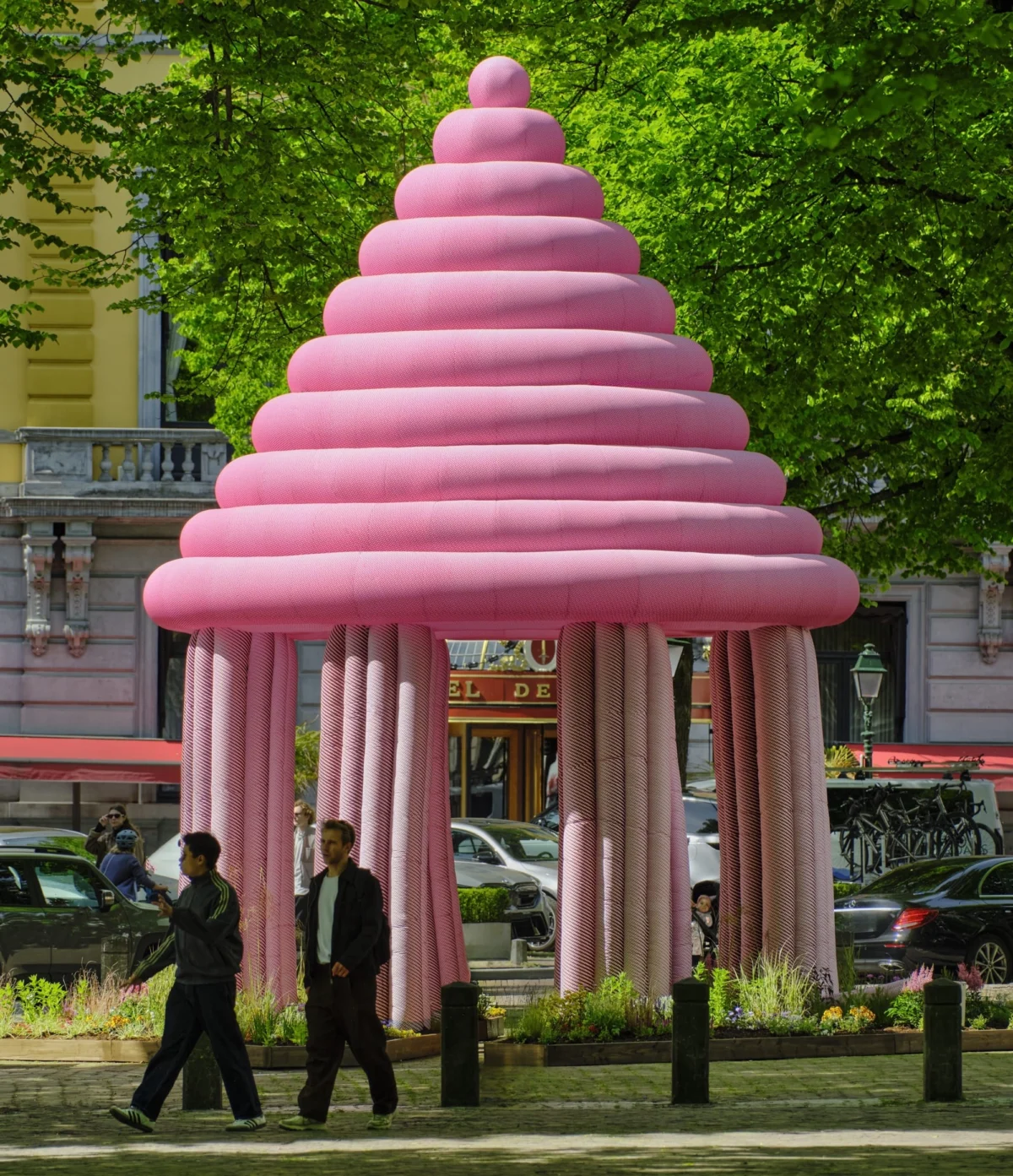
THE HAGUE, NETHERLANDS – The Dutch city of The Hague, globally recognized as the "International City of Peace and Justice," is currently undergoing a radical, air-filled transformation. While the city’s skyline is traditionally defined by the austere spires of the Peace Palace and the judicial architecture of the United Nations, a new, more buoyant aesthetic has taken hold. The sixth annual edition of the city’s premier public art event, titled BlowUp Jubilee, has officially launched, scattering twenty monumental inflatable installations across the city’s historic landscape.
Curated by the esteemed Mary Hessing, this year’s exhibition serves as a retrospective and a celebration, inviting back a select group of artists who have contributed to the festival’s success over the past five years. The result is a vibrant, interactive dialogue between the city’s centuries-old heritage and the ephemeral, playful nature of contemporary pneumatic sculpture.
Main Facts: A City-Wide Canvas of Air and Color
The BlowUp Jubilee is not a contained gallery experience but a sprawling, open-air exhibition designed to be encountered by the public in their daily lives. Running through June 21, the event features twenty distinct pieces that challenge perceptions of scale, materiality, and the permanence of urban monuments.

The exhibition is strategically placed across key locations in The Hague, most notably within the charming Scheveningen district and the world-famous Madurodam miniature park. By utilizing inflatable media, the artists are able to interact with historic buildings and public squares in ways that traditional, heavy sculpture cannot. These installations "hug" facades, wrap around statues, and nestle into formal gardens without causing permanent structural damage, offering a temporary reimagining of the city’s identity.
Key highlights of the Jubilee edition include:
- The Madurodam Scale-Play: A series of works specifically designed to interact with the miniature replicas of Dutch landmarks.
- Heritage Interaction: Installations that physically engage with monumental architecture, such as Steve Messam’s green passageways.
- Cultural Narratives: Works that move beyond mere aesthetics to explore personal and regional histories, such as Eugenie Boon’s Caribbean-inspired piece.
- Accessibility: As a free, public exhibition, the event fulfills a mandate of "art for all," removing the barriers of the traditional museum environment.
Chronology: Six Years of Rising Pressure
The evolution of BlowUp Art in The Hague reflects a broader global trend toward immersive, "Instagrammable," yet intellectually rigorous public art.

2019–2021: The Formative Years
The festival began as a niche experiment in urban intervention. The initial goal was to see if large-scale inflatables could draw residents back into public spaces and encourage them to look at their city with fresh eyes. These early years focused on the novelty of "Bubbletecture"—the architectural application of inflatable forms.
2022–2023: Expansion and Maturity
As the festival grew in popularity, it began attracting international talent. Artists like Steve Messam, known for his site-specific inflatable interventions in the English countryside and European cities, brought a new level of technical sophistication to the event. The curation began to focus more heavily on the "dialogue" between the soft, rounded edges of the art and the hard, linear edges of Dutch Neoclassical and Gothic architecture.
2024: The BlowUp Jubilee
Marking its sixth year, the current edition serves as a "best-of" and an evolution. Curator Mary Hessing made the strategic decision to invite back alumni artists. This has allowed for a unique artistic exercise: artists are revisiting their previous concepts but placing them in entirely new contexts or scaling them differently to reflect the specificities of the 2024 locations. This retrospective approach provides a sense of continuity and allows the public to witness the growth of the artists’ pneumatic techniques.

Supporting Data: The Installations and Their Architects
The technical and conceptual diversity of the BlowUp Jubilee is its greatest strength. The 2024 roster features a mix of architectural interventionists, textile artists, and conceptual designers.
The Paradox of Scale at Madurodam
One of the most talked-about installations is located within Madurodam, a park famous for its 1:25 scale models of Dutch cities. Here, the artists play with the viewer’s sense of perspective. A giant pink chair, created by an anonymous collective for the Jubilee, appears as a monumental throne when viewed against the backdrop of miniature palaces. However, in reality, the sculpture is only a few feet tall. This "double-scale" effect forces visitors to reconsider their physical relationship with the built environment.
Steve Messam’s Architectural Interventions
British artist Steve Messam has contributed several pieces to this year’s edition. His most striking work is a bulbous, vibrant green passageway that wraps around a historic sculpture in the city center. Messam’s work is characterized by its lack of internal support; the structures are held up entirely by air pressure. His second contribution, a small, spiky installation perched atop a miniature tower in Madurodam, serves as a sharp, contemporary contrast to the traditional craftsmanship of the model.

Eugenie Boon: "Koncha pa dilanti"
Artist Eugenie Boon provides one of the most culturally significant pieces of the exhibition. Titled “koncha pa dilanti,” the work is an ode to her Caribbean heritage. The title refers to a traditional board game played on the islands, and the form of the inflatable—resembling shells and organic shapes—serves as a bridge between the maritime history of the North Sea in The Hague and the tropical traditions of the Dutch Caribbean.
Experimental Forms: Körmeling, Calon, and Forzani
Other notable contributions include:
- John Körmeling: A giant yellow donut that injects a sense of pop-art absurdity into the urban landscape.
- Sigrid Calon: A pink pavilion that functions as a temporary architectural space, exploring how color and light filter through translucent inflatable skins.
- Yamuna Forzani: A "cosmic cafe" concept that utilizes bold graphics and queer-coded aesthetics to create a space of inclusivity and futuristic optimism.
- Studio Meike Meijer: Seafoam green sculptures that resemble coral or skeletal branches, bringing an organic, biological feel to the city’s manicured parks.
Official Responses: Curation and City Branding
The Hague’s municipal leadership and cultural departments have been vocal supporters of the BlowUp Art series, viewing it as a vital component of the city’s "The Hague 2030" cultural strategy.

Mary Hessing, the curator of the exhibition, emphasized the importance of heritage in this year’s edition. "The BlowUp Jubilee is about celebration," Hessing stated during the opening ceremony. "By bringing back these artists, we are honoring the relationships we’ve built with the city’s architecture. These inflatables are not just toys; they are tools for re-examining our history. They allow us to touch the monuments, figuratively and sometimes literally, in a way that is respectful yet radical."
Local tourism officials have also noted a significant "BlowUp effect" on foot traffic. The Scheveningen district, which usually relies on beach-goers for its economic vitality, has seen a more diverse demographic of art tourists visiting specifically for the installations. "It bridges the gap between our high-culture museums like the Mauritshuis and our family-friendly attractions like Madurodam," said a spokesperson for Den Haag Marketing. "It makes the entire city feel like a living museum."
Implications: The Future of Ephemeral Urbanism
The success of BlowUp Jubilee carries significant implications for the future of urban art and city planning.

1. Non-Invasive Heritage Engagement
As cities struggle with how to modernize historic centers without damaging protected structures, inflatable art offers a compelling solution. These works are temporary, leave no footprint, and can be installed and removed in a matter of hours. The BlowUp model proves that heritage sites can be "activated" for contemporary audiences without the need for permanent alterations.
2. The Democratization of the Artistic Experience
By placing high-concept art in public parks and squares, the exhibition bypasses the "white cube" intimidation factor of traditional galleries. The tactile, soft, and often humorous nature of the inflatables invites interaction from children and adults alike, fostering a sense of public ownership over the city’s cultural life.
3. Economic and Social Vitality
The "Instagrammability" of the BlowUp installations serves as a powerful marketing tool for the city. In an era where digital presence dictates tourism trends, these visually arresting sculptures provide a constant stream of organic promotion for The Hague. Beyond the economics, the festival creates a "social glue," providing a shared, joyful experience in public spaces that might otherwise be used only for transit or commerce.

As the BlowUp Jubilee continues through the summer solstice on June 21, it stands as a testament to the power of air and imagination. For a few more weeks, the "City of Peace and Justice" will remain the "City of Color and Clouds," proving that even the most serious of cities can find room to breathe, expand, and play.

Leave a Comment