The Architect of Shadows: Mike Mignola on the Labor of Creativity and the Burden of Writing
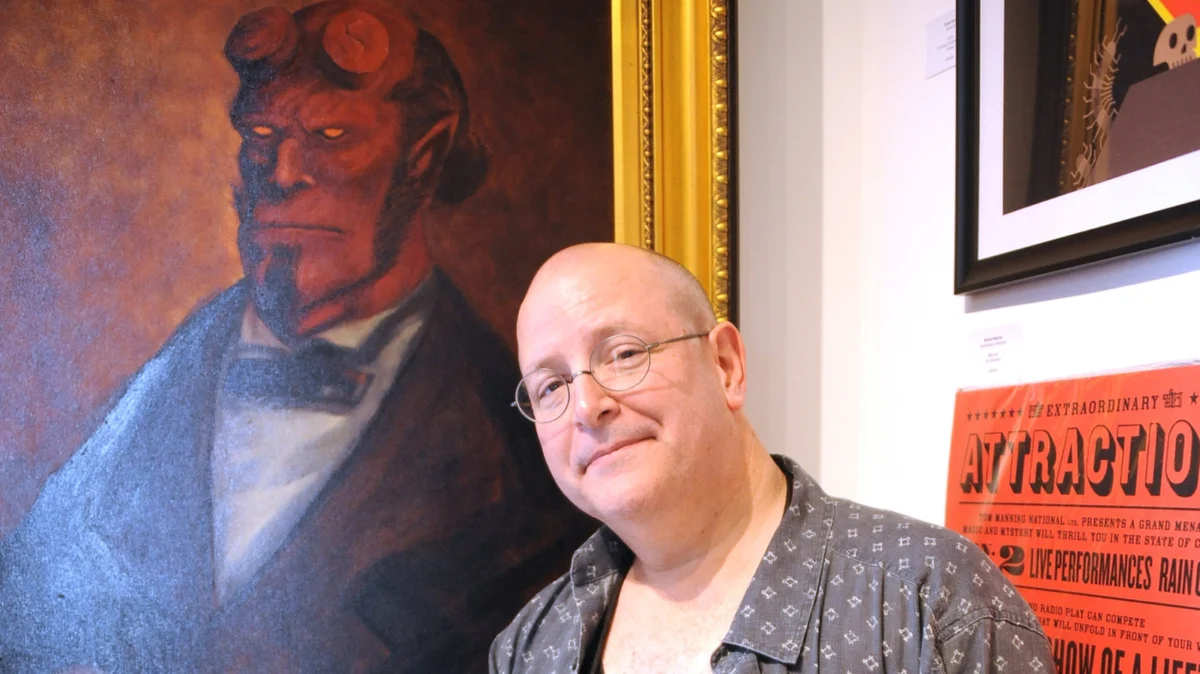
The world of contemporary comic books is often defined by its maximalism—sprawling multiverses, neon-soaked digital coloring, and hyper-detailed anatomy. Standing in stark opposition to this trend is Mike Mignola, a creator whose name has become synonymous with a specific, haunting aesthetic known as "Gothic Minimalism." As the creator of Hellboy, Mignola has spent over three decades crafting one of the most successful independent comic book universes in history. Yet, despite his status as a premiere storyteller, Mignola harbors a surprising perspective on his craft: he finds the actual act of writing to be an arduous chore.
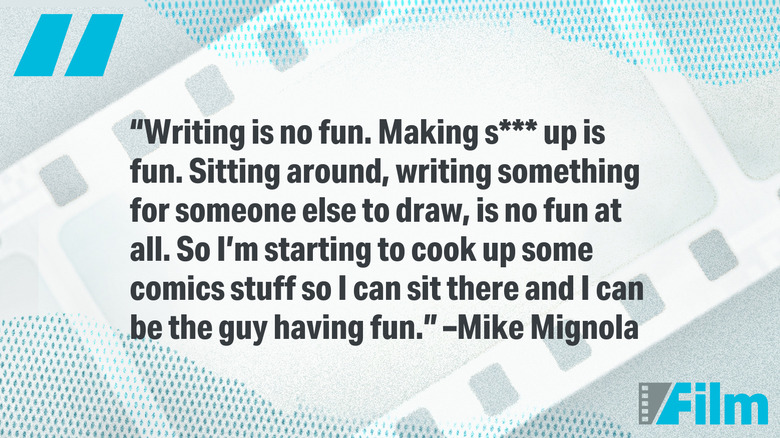
In a candid 2019 interview with Vulture, Mignola laid bare the internal friction that defines his creative process. "Writing is no fun. Making s*** up is fun," he remarked. "Sitting around, writing something for someone else to draw, is no fun at all." This sentiment reveals a profound truth about the nature of artistic production: there is a vast, often painful gulf between the spark of imagination and the mechanical execution required to bring a vision to life.
Main Facts: The Mignolaverse and the Power of Negative Space
Mike Mignola’s career is a testament to the power of stylistic conviction. While many artists find success by adapting to the prevailing trends of the industry, Mignola achieved immortality by refining a singular vision. His work is characterized by heavy black inks, sharp geometric shadows, and a masterful use of negative space. This style, often enhanced by the moody, desaturated palettes of longtime colorist collaborator Dave Stewart, creates an atmosphere that feels both ancient and modern.
Commonly described as "Jack Kirby meets German Expressionism"—a phrase frequently attributed to legendary writer Alan Moore—Mignola’s art prioritizes mood over intricate detail. By using shadows to define form, he invites the reader’s imagination to fill in the gaps, creating a participatory reading experience that is rare in the medium.
Since the debut of Hellboy in 1993 under Dark Horse Comics, Mignola has expanded his "Mignolaverse" into a sprawling tapestry of interconnected titles, including B.P.R.D., Abe Sapien, Lobster Johnson, and Sir Edward Grey, Witchfinder. Unlike the revolving-door creative teams of Marvel or DC, the Mignolaverse has maintained a remarkably consistent tone and narrative integrity, largely because Mignola remains the architect of its overarching mythology.
Chronology: From Berkeley to the Abyss
To understand Mignola’s perspective on the "work" of art, one must look at his professional trajectory. Born in Berkeley, California, in 1960, Mignola was raised in a Catholic household—an upbringing that would later inform his fascination with religious iconography, crumbling cathedrals, and the heavy weight of fate.
The Formative Years (1970s–1982)
Mignola’s obsession with the macabre began early. At the age of 12, he read Bram Stoker’s Dracula, a formative experience that cemented his love for Victorian horror and folklore. He pursued this passion formally at the California College of the Arts, graduating in 1982 with a Bachelor of Fine Arts in Illustration.
The Journeyman Era (1983–1992)
Upon moving to New York City, Mignola found work at the "Big Two" publishers, Marvel and DC. He began as an inker before moving into full pencils. During this period, he worked on high-profile titles such as The Incredible Hulk, Alpha Flight, and Cosmic Odyssey. However, it was his work on the 1989 Victorian-era Batman tale Gotham by Gaslight that hinted at his true potential. The book, which placed the Caped Crusader in a foggy, Ripper-esque London, allowed Mignola to lean into his gothic sensibilities.
The Birth of an Icon (1993–Present)
Despite his success with superheroes, Mignola felt constrained. He wanted to draw monsters, graveyards, and folklore. This desire led to the creation of Hellboy. Interestingly, Mignola was initially hesitant to take on the role of writer. The first Hellboy miniseries, Seed of Destruction, was scripted by the veteran John Byrne based on Mignola’s story beats. It was only after this initial run that Mignola gained the confidence to handle both the writing and the art, eventually proving himself to be a master of lean, evocative dialogue.
Supporting Data: The Mechanics of the "Mignolaverse"
The success of Hellboy is not merely a matter of aesthetic appeal; it is backed by a robust publishing history and a unique collaborative model. Since 1993, the Mignolaverse has produced hundreds of issues, several live-action films, animated features, and video games.
One of the key data points in Mignola’s career is the conclusion of the B.P.R.D. (Bureau for Paranormal Research and Defense) storyline. In 2019, B.P.R.D.: The Devil You Know brought a definitive end to the main narrative arc of his universe. In an industry where "the illusion of change" is the standard—meaning characters rarely die or stay dead—Mignola chose to let his world end. This commitment to narrative finality is a rarity in American comics and highlights his focus on storytelling over mere brand maintenance.
Furthermore, Mignola’s shift toward collaboration illustrates his 2019 quote regarding the "lack of fun" in writing for others. Over the years, he has hand-picked artists like Guy Davis, Duncan Fegredo, and Cyrille Pomès to bring his scripts to life. By acting as a "showrunner," he can focus on the "making s*** up" aspect—the ideation and world-building—while delegating the labor-intensive task of sequential illustration to others when he is not at the drawing board himself.
Official Responses: The Philosophy of the "Fun Part"
Mignola’s 2019 interview with Vulture serves as a primary source for his creative philosophy. When asked about his future projects, his response was telling of a man who has spent decades in the trenches of the industry.
"Writing is no fun. Making s*** up is fun. Sitting around, writing something for someone else to draw, is no fun at all. So I’m starting to cook up some comics stuff so I can sit there and I can be the guy having fun."
This distinction between "writing" and "making stuff up" is crucial. For Mignola, the "writing" refers to the technical, often tedious process of formatting scripts, describing panels, and managing the logistics of a narrative. "Making stuff up," however, refers to the pure, unadulterated act of imagination—the moment a new monster is conceived or a mythological twist is discovered.
Mignola’s preference for drawing over writing is a reflection of his identity as a visual artist first. He created Hellboy specifically as a vehicle for the images he wanted to see. When he writes for another artist, he is essentially creating a blueprint for someone else’s joy. By returning to projects like Hellboy in Hell, which he wrote and illustrated himself, he reclaims the tactile pleasure of the medium.
Implications: Art in the Age of Shortcuts
Mignola’s commentary on the "work" of art takes on a new resonance in the current technological climate. With the rise of generative AI, the distinction between "having an idea" and "executing an idea" has become a central point of contention in the creative community.
The Myth of the Shortcut
The current AI landscape allows individuals to generate images or text by simply providing a prompt—essentially "making stuff up" without the "work." Mignola’s career stands as a rebuttal to this approach. While he may find the writing process "no fun," it is the very act of struggling with the medium that gives his work its soul.
The character of Hellboy himself is a reflection of this blue-collar ethos. Based largely on Mignola’s father—a Korean War veteran and carpenter who approached his life with a stoic, "get-it-done" attitude—Hellboy is a demon who would rather be smoking a cigar and doing his job than fulfilling a grand destiny. This "sincere human expression," as noted by critics, cannot be replicated by an algorithm because it is rooted in the specific, lived experience of the creator.
The Legacy of Craft
Mignola’s willingness to endure the "un-fun" parts of the job is what allowed him to build a legacy. If he had only ever "made stuff up" without sitting down to do the grueling work of inking shadows and scripting panels, the Mignolaverse would not exist.
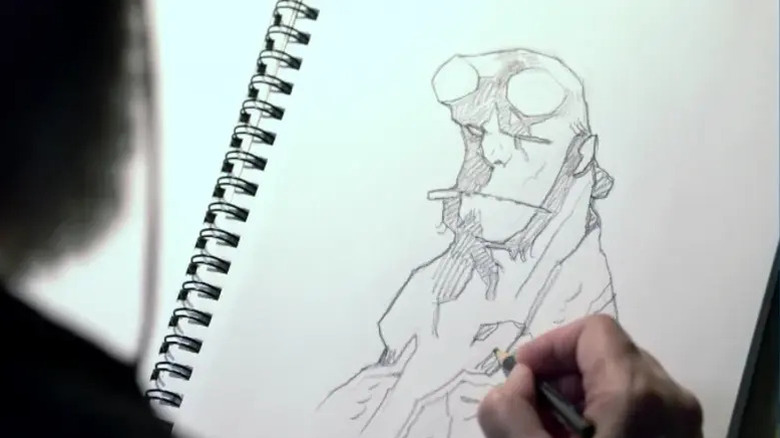
His career serves as a blueprint for modern creators: imagination is the engine, but discipline is the fuel. By building a network of trusted collaborators, Mignola has found a way to balance his desire for creative "fun" with the necessity of professional output. He has earned the right to be the architect, but he only reached that position by first being the bricklayer.
In the end, Mike Mignola’s "Quote of the Day" is more than just a humorous complaint from a tired veteran. It is a reminder that great art is a byproduct of labor. Whether it is a haunted graveyard in a Victorian London or a red demon fighting giants in the English countryside, the magic lies not just in the idea, but in the willingness to sit down and do the work—even when it isn’t fun.