The Unflinching Auteur: James Gray on the Folly of ‘Newness’ and the Eternal Power of the Middle Ground
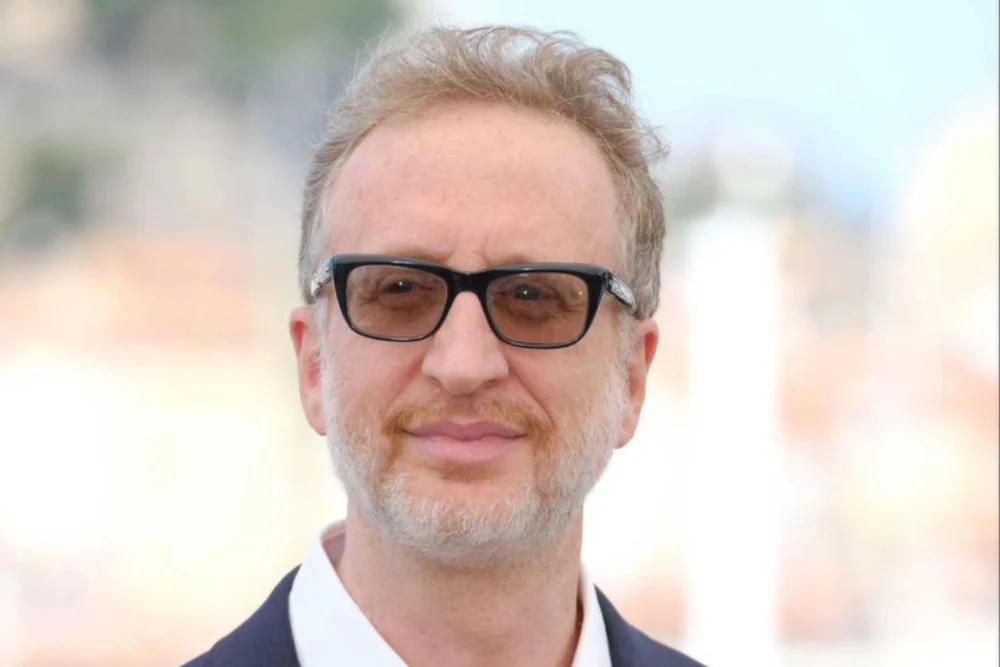
LOCARNO, SWITZERLAND — In an era of cinema increasingly defined by the polarized extremes of the billion-dollar franchise and the hyper-niche festival darling, filmmaker James Gray has carved out a singular, often precarious, space in the center. As he prepares to receive the prestigious Pardo alla Carriera (Lifetime Achievement Award) at the Locarno Film Festival, the director of The Lost City of Z and Ad Astra remains a defiant outlier. After three decades in the director’s chair, Gray is not merely surviving; he is mounting a vigorous defense of the "middle ground"—a space he believes is the true home of subversive, emotionally resonant art.
In an expansive conversation with Variety, Gray reflected on the current state of the industry, the "nightmare" of artificial intelligence, and his refusal to chase the ephemeral dragon of "freshness." For Gray, the pursuit of being "new" is not an artistic endeavor, but a symptom of a capitalist system that prioritizes copyright over soul.
Main Facts: A Career Defined by Idiosyncrasy
James Gray’s career has never followed the path of least resistance. Since his debut in 1994, he has consistently produced work that feels like a transmission from a different era of filmmaking—one where character dilemmas, moral ambiguity, and formal precision took precedence over high-concept gimmicks.
The upcoming honor at Locarno serves as a testament to this persistence. The Pardo alla Carriera recognizes a body of work that includes the gritty crime drama Little Odessa, the operatic We Own the Night, the intimate Two Lovers, and the philosophical sci-fi Ad Astra. His most recent project, Paper Tiger, continues this lineage, featuring a powerhouse cast including Adam Driver and Scarlett Johansson.
Gray’s central thesis is simple yet radical: authenticity is found in embracing one’s influences rather than attempting to reinvent the wheel. "This idea that we’re supposed to always try to be ‘new’… That doesn’t really mean anything," Gray says. "I think it’s important that we embrace who we are, especially as we get older."
Chronology: From Brighton Beach to the Stars
To understand Gray’s current philosophy, one must look at the steady, deliberate evolution of his filmography.
The Early Years: Crime and Consequence (1994–2007)
Gray emerged in the mid-90s with Little Odessa, a film that won the Silver Lion at Venice when he was just 25. He quickly became associated with a specific brand of New York noir—deeply textured, melancholic stories often centered on the Russian-Jewish immigrant experience in Brooklyn. Through The Yards (2000) and We Own the Night (2007), he established a fruitful collaboration with Joaquin Phoenix, creating a triptych of films that explored the suffocating bonds of family and the inevitability of fate.
The Pivot: Emotion and Atmosphere (2008–2013)
With Two Lovers (2008), Gray stepped away from the crime genre to deliver a devastating romantic tragedy. It was here that his "middle ground" approach became most apparent—a film that was too intimate for the studios but too classical for the avant-garde. This was followed by The Immigrant (2013), a lush, sepia-toned period piece that further cemented his reputation as a "director’s director."
The Expansive Canvas: Adventure and Existentialism (2016–Present)
In the last decade, Gray has pushed his boundaries physically and logistically. The Lost City of Z (2016) took him into the Amazon jungle, while Ad Astra (2019) saw him collaborating with Brad Pitt for a journey to the edge of the solar system. Despite the massive scale, Gray maintained his signature focus on the internal life of his protagonists. His most recent works, including the autobiographical Armageddon Time and the upcoming Paper Tiger, suggest a director returning to his roots while carrying the technical mastery of his larger-scale productions.
Supporting Data: The "Middle Ground" as a Superpower
The "middle" is often a dirty word in Hollywood—synonymous with "middlebrow" or "unmarketable." However, Gray views the bifurcation of the industry—the split between "super deluxe mainstream" and "super arty"—as a loss for culture.
"If you look at Fellini and Kurosawa, that’s actually what they were doing," Gray notes, pointing out that history’s greatest masters operated within narrative contexts while exploring complex moral ethics.
The Economics of Risk
Gray argues that the industry’s obsession with "newness" and "freshness" is a business concept rooted in capitalism. In his view:
- The "Freshness" Fallacy: Gray likens trend-chasing to food: "What’s fresh in your refrigerator today is spoiled tomorrow."
- Risk vs. Yardstick: He acknowledges that his position in the middle has caused "agitation," but insists it is his "superpower." By avoiding the yardstick of "tons of money," he preserves the ability to be subversive and idiosyncratic.
- The Auteur Theory: Gray remains a staunch believer in the "director’s hand." He cites John Ford and Alfred Hitchcock as masters whose camera placement and pacing made their work instantly recognizable—a human fingerprint that he believes is the ultimate defense against the mechanization of art.
Official Responses: Gray on Actors, AI, and Authenticity
Throughout his interview, Gray provided what could be considered his "official" stance on the various pressures facing modern filmmakers.
On Directing the World’s Biggest Stars
Gray has become a magnet for A-list talent, including Brad Pitt, Scarlett Johansson, and Adam Driver. His "official" method for handling such high-profile actors is surprisingly hands-off.
"Directing actors is not about telling them how to say a line," Gray explains. "It’s about giving them the space to be themselves, to be artists… I’m very fortunate that they all talk to each other." He recounts with a laugh that Scarlett Johansson had "checked up" on him before signing onto Paper Tiger to ensure his reputation for leaving actors alone was true.
On the Threat of AI
While many in Hollywood view Artificial Intelligence with existential dread, Gray views it with a mix of contempt and optimism. He describes AI as "worthless" because it lacks the ability to make the specific, idiosyncratic choices of a human auteur.
"This nightmarish side of AI has sharpened people’s idea of what it means to be authentic," he says. He believes the "jury-rigged" nature of AI-generated content will eventually drive audiences back toward honest, human-led storytelling.
On Success and Failure
In a candid moment, Gray reflects on his lack of "immediate, massive success." He references Peter Bogdanovich, who famously found success harder to manage than failure. "If I had [massive success early on], I’d probably be stuck in some rut. Instead, I’ve had a career that has hopefully steadily built in value."
Implications: A New Era of Cinephilia?
The most surprising takeaway from Gray’s reflections is his burgeoning optimism—a sentiment he says he didn’t possess five years ago. This optimism is rooted in the behavior of the next generation.
The Revival of the Revival House
Gray observes that while the "studios are very confused," a new generation of cinephiles is emerging. He notes that his son frequently attends sold-out screenings of classic films like Il Sorpasso (1962). "When I was a kid, revival houses were empty. It was just me and three homeless people sitting in the front row. There’s a cinephile culture that’s really exploding right now."
The Future of the Auteur
The implications of Gray’s stance are clear: the future of cinema may lie in looking backward to move forward. By rejecting the "folly" of newness and focusing on "emotion, beauty, and transcendence," Gray suggests that filmmakers can bypass the "confused" studio system and connect directly with an audience hungry for authenticity.
As he prepares to accept his lifetime achievement award, Gray is quick to point out that he is far from finished. Comparing himself to Hitchcock—who made Vertigo, Psycho, and The Birds after reaching Gray’s current age—he asserts that his prime is happening right now.
"I do have many flaws, obviously," Gray concludes. "But not wanting to keep going is not one of them. I’m not done yet. Honestly, I feel like I owe the world one or two truly great movies. I don’t think I’ve gotten there yet."
For an industry currently obsessed with the "next big thing," James Gray’s commitment to the "eternal middle" may be the most subversive act of all. In his refusal to be "fresh," he may have found the only way to remain timeless.