
The Architect of the Bronze Age: Remembering the Indelible Legacy of Gerry Conway
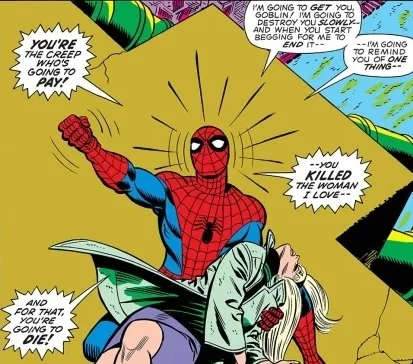
The comic book industry is in mourning following the announcement that Gerry Conway, one of the most prolific and influential writers of the 20th century, has passed away at the age of 73. A titan of the medium who bridged the gap between the whimsical Silver Age and the gritty realism of the Modern Age, Conway’s contributions to the mythologies of Marvel and DC Comics are woven into the very fabric of global popular culture.
From the tragic rooftops of New York City in The Amazing Spider-Man to the cosmic heights of the Justice League of America, Conway’s pen defined the moral complexities of the 1970s and 80s. As the co-creator of iconic characters like the Punisher, Ms. Marvel, and Firestorm, he provided the templates for heroes—and anti-heroes—who continue to dominate box offices and streaming platforms today.
Main Facts: The Passing of a Visionary
Gerry Conway’s death was confirmed on April 28, 2026, marking the end of an era for the "Bronze Age" of comics—a period characterized by a shift toward more sophisticated, socially conscious storytelling. Conway was a child prodigy of the industry, famously selling his first story to DC Comics at the age of 16 and taking over Marvel’s flagship title, The Amazing Spider-Man, before he was 20.
While his cause of death has not been officially detailed in initial reports, his passing has triggered a massive outpouring of grief and remembrance from colleagues, fans, and the various media conglomerates that have benefited from his imaginative output. Beyond his work on the page, Conway was a staunch advocate for creator rights, often speaking out about the need for publishers to provide equitable compensation and credit to the writers and artists who built the foundations of modern entertainment empires.
In honor of his passing, The Comics Journal has reached into its archives to re-release a seminal 1981 interview (originally published in issue #69), offering readers a raw, contemporary look at Conway’s philosophy during the height of his creative powers.
Chronology: A Career of Unprecedented Velocity
To understand Gerry Conway’s impact, one must look at the sheer speed of his ascent. His career did not just grow; it exploded.
The Teenage Sensation (1969–1972)
Born in Brooklyn in 1952, Conway was a fan-turned-professional. After a brief stint at DC writing horror and mystery shorts, he moved to Marvel Comics. By 1972, he was handed the reins of The Amazing Spider-Man from Stan Lee himself. At just 19 years old, Conway was tasked with guiding the world’s most relatable superhero through a changing cultural landscape.
The Night That Changed Everything (1973)
In 1973, Conway scripted The Amazing Spider-Man #121, titled "The Night Gwen Stacy Died." It was a watershed moment in comic book history. By killing off Peter Parker’s primary love interest, Conway shattered the "status quo" of the era, proving that superheroes could fail and that consequences were permanent. This story is widely cited by historians as the definitive end of the Silver Age.
The Anti-Hero and the New Guard (1974–1976)
In 1974, alongside artists Ross Andru and John Romita Sr., Conway introduced Frank Castle, the Punisher, in The Amazing Spider-Man #129. Originally intended as a secondary antagonist, the character’s brutal brand of vigilante justice resonated with a public disillusioned by the Vietnam War and rising crime rates. Shortly thereafter, Conway co-created Carol Danvers’ superhero persona, Ms. Marvel, setting the stage for what would eventually become the Captain Marvel franchise.
The DC Transition and Beyond (1976–1990s)
Conway’s career was marked by a rare fluidity between the "Big Two" publishers. At DC, he enjoyed a lengthy run on Justice League of America and co-created Firestorm, the Nuclear Man, and Power Girl. He also scripted the first-ever inter-company crossover, Superman vs. The Amazing Spider-Man (1976), a feat of diplomacy and storytelling that remains a landmark in the industry.
Supporting Data: A Pantheon of Creations
Conway’s legacy is perhaps best measured by the sheer volume of characters he brought to life. While many writers are lucky to create one lasting icon, Conway’s roster of co-creations reads like a "Who’s Who" of the Marvel and DC Universes:
- The Punisher (Marvel): A character that redefined the boundaries of heroism and remains one of the most recognizable logos in the world.
- Ms. Marvel / Carol Danvers (Marvel): A cornerstone of the modern Marvel Cinematic Universe (MCU).
- Firestorm (DC): A unique "dual-identity" hero who became a staple of the Legends of Tomorrow television series.
- Power Girl (DC): An iconic alternative-reality version of Supergirl.
- Killer Croc (DC): One of Batman’s most enduring and physically imposing rogues.
- Vixen (DC): One of the first prominent Black female superheroes in mainstream comics.
- The Jackal (Marvel): The architect of the "Clone Saga," a storyline that continues to influence Spider-Man media decades later.
Conway was also a prolific writer for television, contributing to series like Law & Order, Matlock, and Batman: The Animated Series. His ability to translate the procedural stakes of television to the serialized drama of comic books helped elevate the medium’s narrative standards.
Official Responses: Tributes from the Industry
The news of Conway’s passing has drawn responses from the highest levels of the entertainment industry.
Marvel Entertainment released a statement via social media:
"Gerry Conway was a titan who dared to take risks that changed the course of Marvel history. From the tragedy of Gwen Stacy to the introduction of the Punisher, his storytelling was fearless and his heart was always with the characters. He was a true architect of the Marvel Universe."
DC Comics echoed these sentiments, highlighting his versatility:
"Gerry was one of the few writers who truly understood the DNA of both Superman and Batman, while also having the vision to create new legends like Firestorm and Vixen. His impact on DC is immeasurable, and his mentorship of younger writers has left a permanent mark on our studio."
The Comics Journal, in its introductory remarks to the re-published 1981 interview, noted:
"Conway was often a polarizing figure because he was unafraid to challenge the editorial status quo. Looking back at his 1981 interview, you see a man who was deeply intellectual about the craft of comics, viewing them not just as ‘funny books’ but as a modern American mythology that deserved respect and rigorous authorship."
Implications: A Legacy of Creator Advocacy and Narrative Depth
Gerry Conway’s death marks a moment of reflection for an industry that has often struggled with its treatment of veteran talent. In his later years, Conway became a vocal proponent of "Creator Equity," particularly regarding his work at DC Comics. He was instrumental in navigating the complex legal and ethical waters of how writers are compensated when their creations are adapted into multi-billion-dollar film franchises.
The Shift Toward Realism
Conway’s willingness to kill Gwen Stacy or create a character as morally grey as the Punisher paved the way for the "Grim and Gritty" era of the 1980s, exemplified by Watchmen and The Dark Knight Returns. He proved that the audience was ready for stories that dealt with grief, trauma, and the failure of authority.
The Bridge Between Media
Conway was a pioneer in the "transmedia" movement long before the term existed. By moving between comics, animation, and live-action television, he demonstrated that the skills of a comic book plotter were perfectly suited for the "Golden Age of Television." His work on Law & Order brought a structured, character-driven discipline back to his later comic book work, such as his return to Spider-Man in the Spiral storyline.
The Mentor and Critic
Conway was never shy about criticizing the industry when he felt it was losing its way. He often lamented the "decompressed" storytelling of modern comics, advocating for the dense, high-stakes narratives he mastered in the 70s. His presence served as a North Star for writers who sought to balance commercial appeal with artistic integrity.
Conclusion: The Final Page
As The Comics Journal prepares its full obituary, the industry at large is left to grapple with the loss of a man who was, in many ways, the "adult in the room" during comics’ adolescence. Gerry Conway took a medium that was often dismissed as ephemeral and gave it weight, consequence, and a sense of history.
Whether it is the blue-and-red silhouette of Spider-Man swinging through a New York defined by loss, or the skull-chested vigilante standing in the shadows of an alleyway, Gerry Conway’s imagination is immortal. He did more than just write stories; he built the foundations of a modern culture, and his influence will be felt for as long as heroes—and the people who write them—dare to fail.
For further reading on Gerry Conway’s early career and his thoughts on the industry during its most transformative decade, please refer to the 1981 interview archived by The Comics Journal.


Leave a Comment