The Architect of the Unseen: Exploring the Provocative Surrealism of Alfred De Angelo

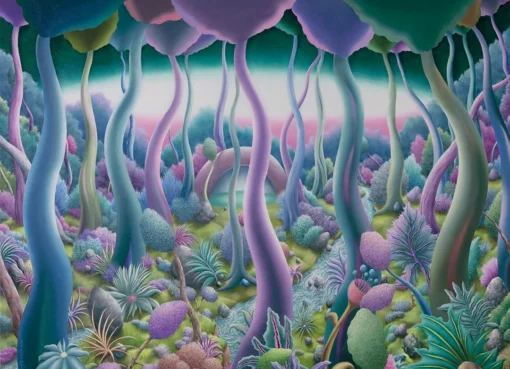
In the contemporary landscape of fine art, where the boundaries between the digital and the physical continue to blur, the work of Alfred De Angelo stands as a testament to the enduring power of traditional mastery married to the avant-garde. De Angelo, a painter whose technical fluency is matched only by his philosophical depth, has carved out a niche within the surrealist movement that is at once deeply personal and universally resonant. His canvases do not merely display images; they act as "doorways" to a visual world defined by provocative beauty and a relentless pursuit of the "essential mystery of existence."
Through a career built on a foundation of elite academic training and a refined "private vocabulary of images," De Angelo challenges the viewer to step outside the comfort of established thought patterns. His work serves as a bridge between the tangible world of subjective experience and the intangible realm of the subconscious, inviting an engagement that is as intellectually demanding as it is aesthetically rewarding.
Main Facts: The Aesthetic of Beguilement and Expertise
Alfred De Angelo’s artistic output is characterized by what critics describe as a "remarkable fluency." Unlike many contemporary surrealists who rely on shock value or disjointed imagery, De Angelo’s work is rooted in a sensual, almost classical beauty. This aesthetic choice is deliberate; it lures the viewer into a space that feels familiar yet fundamentally "other."
The primary hallmarks of De Angelo’s work include:
- Technical Fluency: A mastery of medium that allows for the seamless depiction of impossible or dream-like scenarios.
- Provocative Beauty: An emphasis on the sensual and the alluring, used as a tool to engage the viewer before introducing more complex, often bewildering, themes.
- The "Doorway" Concept: His paintings are framed not as static objects, but as entry points into a compelling visual world where the laws of physics and logic are secondary to emotional and spiritual truth.
- Subjective Scale: A focus on localized, personal impressions of life, translated into a broader symbolic language.
De Angelo’s objective is not merely to paint what is seen, but to look "through" outward appearances. This philosophy aligns him with the historical surrealist tradition—following in the footsteps of masters like Salvador Dalí and René Magritte—while maintaining a modern sensibility that speaks to the fragmented nature of 21st-century life.
Chronology: The Academic Evolution of a Master
The sophistication of De Angelo’s work is the result of a rigorous academic journey through some of the United States’ most prestigious art institutions. His development can be traced through two pivotal stages of formal education, which provided the tools necessary to translate his internal visions into professional-grade fine art.

The Foundation: Massachusetts College of Art (BFA)
De Angelo began his formal training at the Massachusetts College of Art (MassArt) in Boston. As the first and only independent public college of art and design in the country, MassArt has a long-standing reputation for fostering social consciousness alongside technical skill. It was here that De Angelo likely honed his foundational abilities in draftsmanship and color theory. The BFA years are critical for any artist in establishing the "fluency" mentioned in his professional critiques. For De Angelo, this period represented the acquisition of the "outward" skills—the ability to render the world with such precision that he could later afford to deconstruct it.
The Refinement: Rhode Island School of Design (MFA)
The transition to the Rhode Island School of Design (RISD) for his Master of Fine Arts marked a shift from technical acquisition to conceptual mastery. RISD is globally recognized as one of the most elite art schools, known for a curriculum that demands rigorous self-reflection and the development of a unique artistic voice.
At the MFA level, artists are challenged to justify every brushstroke and symbolic choice. It was during this period that De Angelo likely began developing his "private vocabulary of images." The move from Boston to Providence represents a transition from a student of the craft to a philosopher of the canvas. The "expertise" noted in his current work is a direct legacy of this high-level academic environment, where the boundaries of surrealism are pushed beyond mere fantasy into the realm of serious ontological inquiry.
Supporting Data: Decoding the "Private Vocabulary"
To understand De Angelo’s impact, one must analyze his Artist’s Statement, which serves as a blueprint for his creative process. He notes that human experiences are "usually localized and subjective," creating a series of "impressions on a personal scale."
This data point is crucial: it suggests that his surrealism is not based on random absurdity, but on a systematic translation of real-life emotions into a symbolic code.
The Mechanics of Amazement and Confusion
Psychological studies on art appreciation suggest that "aesthetic awe" occurs when a viewer is presented with something that exceeds their current mental schemas. De Angelo’s work intentionally triggers this state. By pressing viewers against the "limits of their understanding," he forces a cognitive recalibration.

- Initial Engagement: The viewer is attracted by the "sensual beauty" and technical skill.
- Cognitive Dissonance: The viewer realizes the scene depicted is impossible or "bewildering."
- Resolution/Delight: The viewer gives themselves "permission to be amazed," accepting the mystery rather than trying to solve it.
This three-step process is what separates De Angelo from commercial illustrators. His work is designed to be a psychological journey, not just a visual one.
Official Responses and Contextual Comparisons
The art world’s response to De Angelo often places him in conversation with other forms of modern surrealism, ranging from the physical to the digital. When viewing De Angelo’s work alongside contemporary trends, several distinct contrasts emerge.
The Human Element vs. The AI Aesthetic
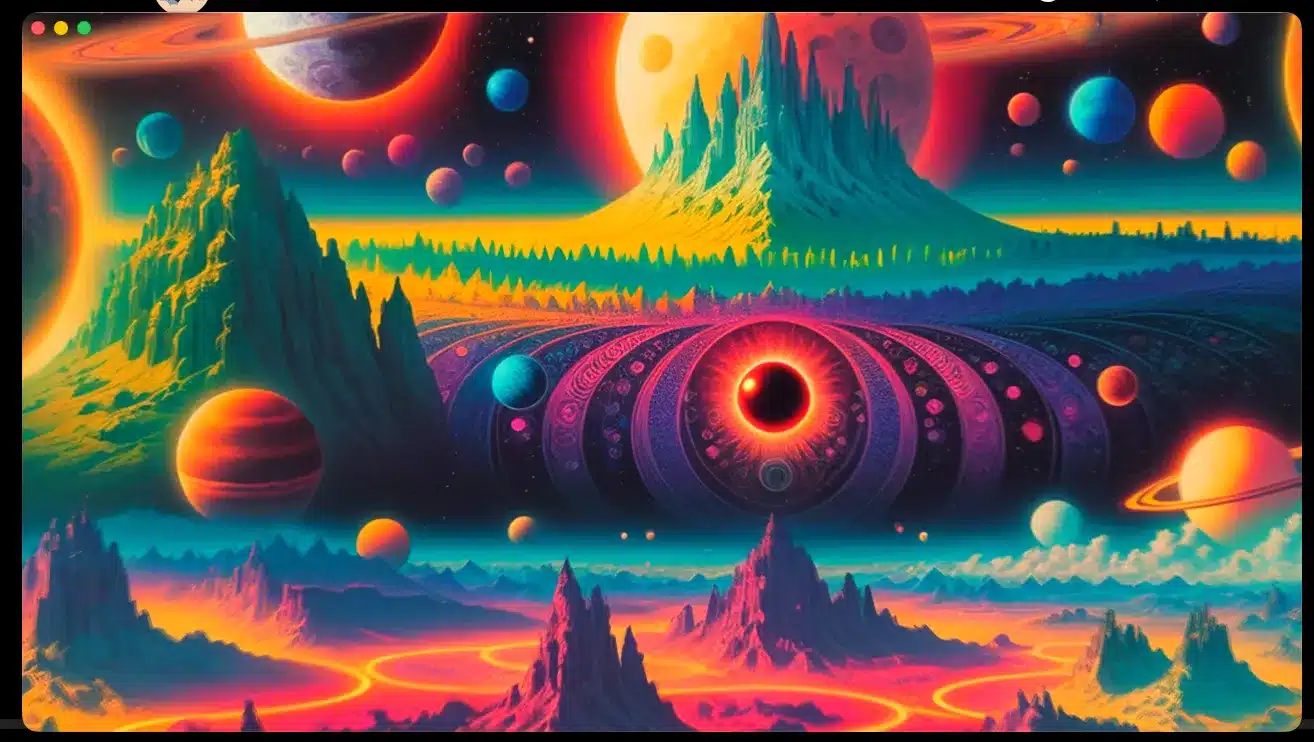
In an era where AI tools like Infinidream.ai and the works of digital artists like Jacob Holster are redefining "painterly aesthetics," De Angelo represents the "Human Terrain." While AI can generate surreal imagery through algorithms, De Angelo’s work is praised for its "private vocabulary." Critics argue that AI surrealism often feels like a collage of existing data, whereas De Angelo’s paintings feel like a singular, coherent vision derived from a lived human experience. His work provides a necessary counterpoint to the "hyper-realistic renders and glossy digital imagery" that dominate the modern web.
Physical Surrealism: The Puppetry Connection
Interestingly, De Angelo’s work shares a spiritual lineage with "Surrealism You Can Hold," such as the puppetry of Big Nazo and the Henson lineage. Both De Angelo and these physical creators aim to "embody the essential mystery of existence" by bringing the impossible into a tangible form. Whether through a 12-foot puppet or a finely detailed oil painting, the goal is the same: to lure the viewer out of "well-worn patterns of thought."
Implications: The Future of the Essential Mystery
The work of Alfred De Angelo has significant implications for the future of the surrealist movement and the broader fine art market. As society becomes increasingly saturated with literal, data-driven information, the "essential mystery" that De Angelo seeks to embody becomes more valuable.
Preservation of the Mystery
In his statement, De Angelo mentions trying to look "through" outward appearances. This suggests a move toward a "New Mysticism" in art—a rejection of the idea that everything can be explained or quantified. By creating images that "bewilder" but "never fail to impress," De Angelo asserts that the role of the artist is to protect the unknown, rather than to solve it.
The Enduring Value of Academic Mastery
De Angelo’s success also reinforces the continued relevance of high-level academic training (MassArt, RISD). In a "DIY" digital age, the "remarkable fluency" of a classically trained hand provides a level of authority and depth that is difficult to replicate. His work suggests that the most effective way to break the rules of reality (surrealism) is to first master the rules of representation.
Conclusion
Alfred De Angelo is more than a painter; he is a provocateur of the subconscious. His canvases serve as a necessary friction against the smooth, predictable surfaces of modern life. By inviting viewers to be "amazed, confused, and delighted," he restores a sense of wonder to the act of seeing. For those who wish to explore the limits of their own understanding, De Angelo’s "doorways" remain wide open, offering a glimpse into a world where beauty and mystery are inextricably linked.
For further exploration of his portfolio and philosophy, the artist maintains a digital presence at artistpainter.ws, where the "private vocabulary" of his life’s work continues to evolve.