The Architecture of Absence: Understanding ‘Emotional Outsourcing’ and the Path to Internal Wholeness
By Investigative Health Correspondent
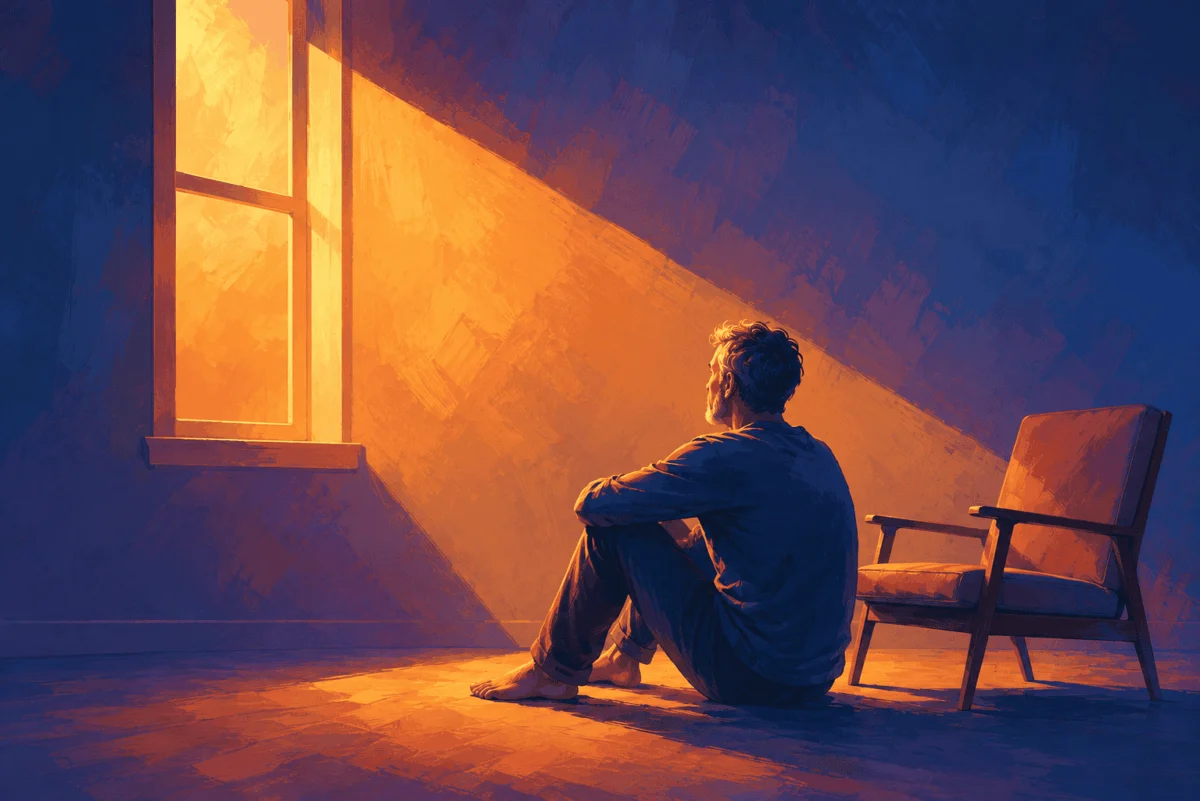
In the quiet aftermath of a relationship’s end, the physical world often remains stubbornly unchanged. The furniture stays in its place, the light hits the floor at the same angle, and the daily rhythms of the neighborhood continue unabated. Yet, for the individual left behind, the internal landscape is often unrecognizable. This phenomenon, described by author and contemplative practitioner Santiago Vitagliano (writing under the pen name SAVI), serves as the foundation for a burgeoning discussion on the nature of "emotional outsourcing"—the psychological habit of placing one’s sense of self-worth and stability in the hands of another.
Vitagliano’s recent reflections, rooted in the philosophical tradition of Rumi and modern contemplative faith, challenge the conventional understanding of grief. He posits that the most agonizing part of loss is not necessarily the absence of the loved one, but the disappearance of the version of the self that existed only in their presence. This exploration provides a profound look at how humans navigate the delicate balance between healthy intimacy and the dangerous "transaction" of seeking wholeness through external sources.
Main Facts: The Concept of the ‘Outsourced Self’
At the heart of Vitagliano’s thesis is the distinction between love as a gift and love as a transaction. In many modern relationships, individuals unknowingly engage in what Vitagliano terms "outsourcing." This occurs when an individual hands over essential components of their psyche—their sense of being "okay," their motivation to engage with the world, and their certainty of mattering—to a partner or loved one.
"We give away the parts of ourselves that feel too heavy to carry, and we call the arrangement love," Vitagliano observes. This arrangement creates a precarious psychological structure. When the "house" where these essential parts are stored—the other person—is no longer accessible due to death, separation, or change, the individual experiences a total systemic collapse.
The primary facts of this psychological state include:
- Disorientation as a Symptom: Unlike simple sadness, the disorientation following a loss indicates that a person has lost their internal "navigation system" because it was tethered to another person.
- The Window vs. The Light: A central metaphor in this framework is that the loved one acts as a "window" through which an individual sees their own internal light. The loss of the window is painful, but the light itself remains an internal property that the individual must learn to access directly.
- The Transactional Trap: Love that is used to "become whole" rather than shared by two already whole individuals is defined as a transaction. This form of devotion, while common, is fragile and leads to the "disappearance" of the self upon the relationship’s conclusion.
Chronology: The Lifecycle of Emotional Integration and Loss
The journey from emotional outsourcing to reclaimed wholeness follows a specific, often painful, chronological progression. Understanding this timeline is essential for those navigating the "map" of grief.
Phase I: The Period of Unconscious Tethering
In the early stages of a deep connection, the process of outsourcing is often invisible. It feels like intimacy and support. One partner becomes the "steadying force," holding the other end of an emotional rope. During this phase, the individual feels secure, but this security is contingent on the presence and stability of the other.
Phase II: The Catalyst of Loss
The chronology shifts abruptly when the relationship ends. Whether through a breakup, a death, or a fundamental change in the other person, the "external storage" for one’s sense of self is suddenly removed.
Phase III: Acute Disorientation and ‘The Search’
Immediately following the loss, the individual enters a phase of reaching for "steadiness" in places where it no longer exists. Vitagliano compares this to reaching for a light switch in a room where the wiring has been removed. This is the period where the "ache" is most intense, acting as information that points to exactly where the individual had been living "outside themselves."
Phase IV: The Decision to Stay
The turning point in the chronology occurs when the individual stops trying to "think their way out" of the pain. Instead of fleeing the empty room or immediately seeking a new person to hold their "heavy parts," the individual chooses to sit with the discomfort. This is the "work" of healing—a period of small, daily refusals to outsource the self again.
Phase V: Reclamation and Internal Discovery
Over time, the "empty room" begins to feel like it belongs to the individual. The qualities they once attributed to the partner—warmth, quiet, and enoughness—are discovered to be internal assets that were merely reflected by the partner. The "window" is gone, but the "light" is integrated into the self.
Supporting Data: Psychological Frameworks of Attachment and Resilience
Vitagliano’s personal insights align with several established psychological theories regarding human connection and recovery.

Attachment Theory and Co-regulation
Psychologists have long studied "co-regulation," the process by which partners in a relationship help manage each other’s physiological and emotional states. While healthy in moderation, an over-reliance on a partner for regulation can lead to "anxious attachment" or codependency. Data suggests that individuals with high levels of self-differentiation—the ability to maintain a sense of self while remaining connected to others—fare better after the loss of a relationship.
Post-Traumatic Growth (PTG)
The idea that "the wound is the place where the light enters" is a poetic rendering of Post-Traumatic Growth. Research by psychologists Richard Tedeschi and Lawrence Calhoun indicates that individuals who experience deep loss often report a greater sense of personal strength and a shift in perspective that allows them to discover previously untapped internal resources. Vitagliano’s experience of "loss returning him to himself" is a textbook example of PTG.
The Self-Expansion Model
Proposed by Arthur and Elaine Aron, this model suggests that we include others in our self-concept. When a relationship ends, our self-concept literally shrinks. The "disappearance" Vitagliano describes is the psychological reality of a self-concept that has been so heavily integrated with another that it lacks independent structure.
Official Responses: Philosophical and Practitioner Perspectives
While there is no "official" governing body for the experience of grief, practitioners in the fields of contemplative faith and mental health have responded to these themes with a mixture of validation and caution.
The Contemplative Perspective:
As an author of works like The Journey Begins Within, Vitagliano represents the contemplative approach. This perspective emphasizes that healing is not about "solving" the problem of grief but about "permission to feel it." Contemplative practitioners argue that modern society rushes the grieving process, attempting to provide "lessons" before the individual has had the chance to process the "information" the pain is providing.
Clinical Mental Health Responses:
Therapists often warn against the "independence at all costs" narrative. While Vitagliano acknowledges that "we are made for connection," clinical experts emphasize that the goal of healing is "interdependence"—the ability for two whole people to rely on each other without losing their core identities. The "official" clinical stance is that sitting with discomfort (as Vitagliano suggests) is a form of exposure therapy that helps desensitize the nervous system to the "threat" of being alone.
The Rumi Framework:
The inclusion of the 13th-century Persian poet Rumi provides a historical and spiritual "official response" to suffering. By framing the wound as an entry point for light, this tradition suggests that the "break" in the self is actually a necessary opening for a deeper, more authentic form of consciousness to emerge.
Implications: Redefining Love and Mental Health in a Connected Age
The implications of Vitagliano’s reflections extend far beyond individual grief recovery, touching on how society views relationships and mental health.
1. The Deconstruction of ‘Romantic Completion’
The "You Complete Me" narrative, prevalent in popular culture, is identified here as a psychological hazard. The implication is that we must move toward a model of "Romantic Contribution," where partners add to an already established sense of self, rather than acting as the sole source of it.
2. Grief as a Diagnostic Tool
If grief is a "map" that shows us where we stopped holding our own lives, then the intensity and nature of one’s grief can be used as a diagnostic tool for personal growth. This shifts the focus from "getting over it" to "learning from the shape of the ache." It implies that the areas of greatest pain are the areas where the individual has the most "unfinished work" in terms of self-development.
3. The Role of Solitude in Mental Health
The act of "sitting in an empty room until it feels like yours" has significant implications for how we treat loneliness. It suggests that solitude is not a state to be cured, but a skill to be mastered. In an era of constant digital connection and "outsourcing" through social media validation, the ability to maintain a whole self in silence is becoming a vital component of psychological resilience.
4. A Shift in Support Systems
For those supporting the grieving, the implication is a shift in strategy. Instead of offering platitudes or "rushing people to the lesson," support systems should focus on providing the safety for the grieving person to "stay with the discomfort." The work of healing is internal; the role of the community is to hold the perimeter while that work takes place.
In conclusion, the journey from the "outsourced self" to internal wholeness is one of the most difficult transitions a human can make. As Santiago Vitagliano’s work suggests, the cruelty of grief is also its greatest utility: it walks us to the places we were too afraid to go alone, only to show us that we were never truly empty to begin with. The "light" was never in the window; it was always in the room.