The Architecture of Failure: Why Contemporary Philosophy Views Self-Sabotage as a Secret Success
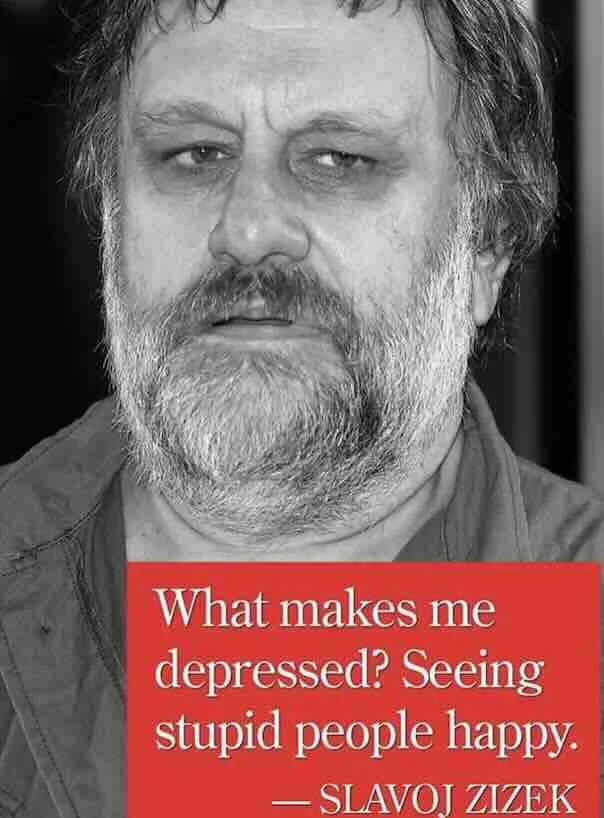
LJUBLJANA, SLOVENIA – In the landscape of modern self-improvement, the narrative is almost always one of linear progress: identify a goal, remove obstacles, and achieve self-actualization. However, a growing body of cultural critique, spearheaded by the provocative Slovenian philosopher Slavoj Žižek, suggests that this model is fundamentally flawed. According to this perspective, self-sabotage is not an accidental glitch in the human psyche but a highly consistent, systemic investment. We do not simply fail to reach our goals; we actively, albeit unconsciously, collaborate in our own stagnation.
Main Facts: The Paradox of the "Successful" Failure
The central premise of Žižekian thought regarding personal conduct is that humans are not unified, transparent beings. While traditional psychology often treats the "self" as a pilot navigating a ship toward a destination, Žižek—drawing heavily from Lacanian psychoanalysis—argues that we are a "mess of drives" that frequently conflict.
The phenomenon commonly labeled as "self-sabotage" is, in this framework, a misnomer. It is not a failure of the will, but rather the fulfillment of a hidden desire. When we procrastinate, cling to toxic relationships, or remain buried in "busy work" that yields no results, we are often protecting ourselves from the terrifying reality of actual change or the responsibility of success.
Žižek’s critique focuses on several key psychological mechanisms:
- Jouissance: The "ugly thrill" or dark pleasure derived from suffering or martyrdom.
- Pseudoactivity: Engaging in constant motion to avoid meaningful action.
- Interpassivity: Outsourcing our experiences to objects or digital archives rather than living them.
- The Superego of Enjoyment: The modern pressure to "be happy" and "have fun," which turns leisure into a stressful performance.
Chronology: From Self-Actualization to Self-Deception
To understand how we arrived at this crisis of self-sabotage, one must look at the evolution of the "Self" in the 20th and 21st centuries.
The Era of Discipline (Pre-1960s):
Historically, social structures were built on the "Superego of Prohibition." Success was defined by self-denial and adherence to duty. Self-sabotage in this era was often seen as a rebellion against external authority.
The Rise of the Authenticity Industry (1970s–1990s):
Following the counter-cultural movements, the focus shifted toward "finding one’s true self." This period saw the birth of the modern self-help industry, which promised that beneath layers of social conditioning lay a "pure essence" waiting to be excavated. Self-sabotage was framed as a lack of self-esteem or a "limiting belief" that could be unlearned through positive thinking.
The Post-Modern Deadlock (2000s–Present):
In the current era, the command has flipped. We are no longer told to "deny ourselves," but to "realize ourselves." Žižek argues that this is where the madness lives. The pressure to be "authentic" and "productive" has become so immense that we have developed sophisticated defense mechanisms to avoid the very things we claim to want. We have moved from being "oppressed by others" to "oppressing ourselves" through the illusion of choice.
Supporting Data: The Six Pillars of Self-Sabotage
The internal machinery of self-sabotage is complex. Below is an analysis of the data and theoretical frameworks supporting the Žižekian view of our "consistent failure."
1. The Economy of Jouissance
The term jouissance refers to a type of "excessive" pleasure that borders on pain. In a journalistic context, this is observable in the "outrage economy." People claim to hate the stress of political polarization or the toxicity of social media, yet they spend hours "doomscrolling." The data suggests a psychological "kickback": the feeling of being a "noble victim" or being "right" provides an emotional reward that outweighs the misery of the experience.
2. The Productivity Trap: Pseudoactivity
A 2023 study on workplace habits found that employees spend an average of 58% of their time on "work about work"—meetings, emails, and status updates—rather than the core tasks they were hired to do. Žižek classifies this as "pseudoactivity." It is the act of remaining in constant motion to ensure that nothing actually changes. By clearing an inbox, one feels the "glow" of productivity while successfully avoiding the high-stakes project that could lead to either great success or public failure.
3. The Myth of the "True Self"
The multi-billion dollar "authenticity" industry relies on the idea of a stable, core self. However, neurological and psychological research increasingly supports the "modular" view of the brain—a collection of competing impulses. Žižek posits that there is no "Platonic form" of a person. Waiting for "inner certainty" before taking action is a primary form of self-sabotage; it ensures that the individual stays in a state of perpetual preparation, never having to face the "embarrassment" of reality.
4. The Superego of Enjoyment
Modern leisure has become a performance review. Data from social media usage indicates that individuals often experience "leisure anxiety"—the fear that they are not maximizing their time off. When pleasure becomes a "command" (e.g., "You must have a fulfilling weekend!"), it ceases to be pleasure. We sabotage our relaxation by grading it, turning a Saturday afternoon into a mining operation for "meaning."
5. The Trap of Resilience
While resilience is often touted as a virtue, Žižek warns that it can be "the worst thing you can be." In professional and personal contexts, "toxic resilience" allows individuals to endure intolerable conditions—such as abusive workplaces or failing relationships—under the guise of "growth" or "challenge." This optimism acts as an anesthesia, preventing the radical change necessary to solve the underlying problem.
6. Interpassivity: The Outsourced Life
Digital culture has perfected "interpassivity." We "bookmark" articles we will never read, "like" videos we don’t truly watch, and "subscribe" to newsletters that sit in folders. This provides the feeling of participation without the effort. We collect the "accessories" of a life (gym memberships, unread books, productivity apps) to simulate progress, which paradoxically keeps us from the actual activity.
Official Responses: The Psychological Consensus vs. Radical Critique
The Žižekian approach remains controversial within the mainstream psychological community.
The Clinical Perspective:
Mainstream Cognitive Behavioral Therapy (CBT) focuses on identifying "maladaptive patterns" and replacing them with "healthy behaviors." Clinical psychologists often argue that Žižek’s view is too fatalistic. "While it’s true that we have conflicting drives, framing it as a ‘secret investment’ can lead to unnecessary guilt," says Dr. Elena Rossi, a clinical psychologist. "The goal of therapy is often to strengthen the executive function, not just to admire the madness of the subconscious."
The Corporate/Productivity Response:
The "Human Resources" industry has largely attempted to co-opt these ideas through the lens of "burnout prevention." However, critics argue that corporate wellness programs often reinforce "pseudoactivity" by providing employees with "mindfulness apps" rather than addressing the structural issues of overwork.
The Academic View:
Philosophers and cultural theorists largely agree with the diagnosis of "interpassivity." Dr. Marcus Thorne, a professor of cultural studies, notes, "Žižek is pointing out that our culture has become a giant machine for avoiding direct experience. We are more comfortable with the ‘fantasy’ of being a healthy, productive person than with the ‘messy reality’ of actually being one."
Implications: The Path Beyond Sabotage
The implications of this "unpolite" philosophy are profound for how we approach change in the 21st century. If self-sabotage is a choice we make to avoid the "terror" of a new life, then the solution is not "more hope" or "better habits," but a radical honesty.
1. Acceptance of the "Bad":
The first step toward change is the cessation of "toxic optimism." One must admit that a situation is not "a challenge," but simply "bad." Only when the "anesthesia" of hope is removed can real action begin.
2. From Excavation to Construction:
The search for a "true self" must be replaced by the "building of a self." This shifts the focus from inward contemplation (which often leads to paralysis) to outward experimentation. As Žižek suggests, we become who we are through our failures and revisions in the real world, not through our fantasies.
3. Dismantling the Fantasy:
We must recognize that our "fantasies" of success are often what make reality seem disappointing. By lowering the stakes of every decision—refusing to see every choice as an "existential referendum"—we reduce the need for the protective mechanism of self-sabotage.
4. The Return to "Direct Activity":
To combat interpassivity, individuals must "stop confusing the receipt with the event." The shift from "collecting signs of a life" to "living one" requires a move toward small, unglamorous acts: reading one page, cooking one meal, or meeting one friend in physical space.
In conclusion, Slavoj Žižek’s "airport-bench philosophy" offers a harsh but necessary mirror. In a world obsessed with "polite nonsense" and "false reassurance," the realization that we are our own most consistent saboteurs is not a reason for despair. Rather, it is the only honest starting point for a life that is actually lived, rather than merely simulated. As the "rumpled man" himself might suggest, once you see where the madness lives, you are no longer its prisoner; you are merely its host—and that is where freedom begins.