The Architecture of Miniature Magic: How Travis Knight’s ‘Wildwood’ Redefines the Limits of Stop-Motion
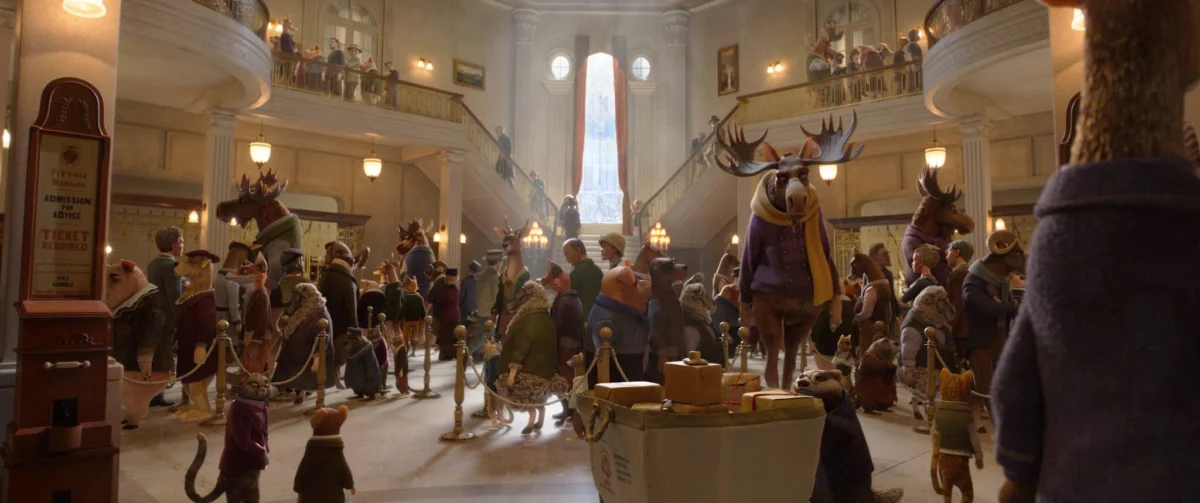
The stop-motion animation house Laika Studios has long been synonymous with the impossible. From the haunting corridors of Coraline to the feudal Japanese landscapes of Kubo and the Two Strings, the Hillsboro, Oregon-based studio has consistently pushed the boundaries of what can be achieved through the painstaking manipulation of physical puppets. However, with their latest feature, Wildwood, director Travis Knight is attempting something perhaps even more audacious than the studio’s previous triumphs: he is seeking to erase the visual distinction between the tactile world of stop-motion and the fluid, intimate camera language of high-budget live-action cinema.
While Wildwood is packed with the kind of epic scale audiences have come to expect—eldritch magic, sprawling battle sequences, and giant eagles—Knight reveals that the film’s greatest technical hurdles were found not in the fantastical, but in the mundane. The effort required to move a camera across a teenage girl’s bedroom has become a testament to the "miraculous moments of engineering" that define the modern era of Laika.
Main Facts: The Vision Behind ‘Wildwood’
Wildwood, based on the beloved novel by Colin Meloy (lead singer of The Decemberists) and illustrated by Carson Ellis, follows the journey of Prue McKeel (voiced by Peyton Elizabeth Lee). When her younger brother is abducted by a murder of crows and taken into the "Impassable Wood"—a dense, magical forest on the outskirts of Portland—Prue must venture into a hidden world to rescue him.
The film represents a homecoming for Travis Knight, who returns to the director’s chair at Laika after a successful foray into live-action filmmaking with the Transformers spin-off Bumblebee and the upcoming Masters of the Universe. This dual experience has fundamentally altered his approach to animation. Knight’s goal for Wildwood was to discard the "inherent limitations" of stop-motion cinematography, specifically the static or restricted camera movements that often characterize the medium.
To achieve this, Laika utilized high-end Canon cameras mounted on massive, sophisticated motion-control rigs. These rigs allow for precise, frame-by-frame adjustments of the camera’s position, matching the incremental movements of the puppets. However, as Knight noted in a recent interview on IndieWire’s Filmmaker Toolkit podcast, this technology creates a massive disparity in scale: a camera rig that appears standard on a live-action set becomes the size of a Ford F-150 when placed within the fifth-scale world of a 10-inch-tall puppet.

Chronology: From Live-Action Back to the Puppet Stage
The development of Wildwood’s unique visual style is a direct result of Travis Knight’s professional evolution over the last decade. To understand why a simple bedroom scene in Wildwood is considered a technical marvel, one must look at the timeline of Knight’s directorial philosophy:
- The Laika Foundation (2005–2016): Knight rose through the ranks at Laika as a lead animator and producer, eventually making his directorial debut with Kubo and the Two Strings. During this era, Laika perfected the "hybrid" approach—combining physical puppets and sets with 3D-printed facial expressions and subtle CG enhancements.
- The Live-Action Transition (2018): Directing Bumblebee exposed Knight to the freedom of the "intimate camera." In live-action, a cinematographer can track an actor through a room with a handheld camera or a small gimbal, capturing spontaneous movement and wordless emotional beats.
- The Return to Stop-Motion (2020–Present): Upon returning to Laika for Wildwood, Knight found himself frustrated by the traditional "lock-off" nature of stop-motion. He wanted the camera to huff and puff alongside Prue, to move with the same weight and curiosity as a camera following a human actor.
- The Engineering Phase: This desire led to a multi-year pre-production phase where engineers had to figure out how to physically fit "truck-sized" camera rigs into miniature sets without destroying the delicate environments.
Supporting Data: The Physics of the "Kaiju" Animator
The technical complexity of Wildwood is best understood through the lens of scale and physics. The human characters in the film, including the protagonist Prue, are built at a fifth-scale (1:5). This means a puppet representing a 5-foot-tall girl stands roughly 10 to 12 inches high.
When Knight speaks of the camera rig being the size of a Ford F-150, he is not exaggerating the spatial impact. For a camera to "pan" across a miniature bedroom, the rig—which consists of heavy steel beams, motors, and the camera body itself—must occupy the same physical space as the walls of the set.
Furthermore, the "human factor" adds another layer of difficulty. Each frame of a stop-motion film (24 frames per second) requires an animator to reach into the set and manipulate the puppet. In this context, the animator is the size of a Kaiju—a giant monster—relative to the environment. The production team, therefore, faced a three-way spatial conflict:
- The Puppet: Needs a stable, detailed environment to stand in.
- The Camera Rig: Needs a clear path of travel to create "live-action" movement.
- The Animator: Needs physical access to the puppet to adjust its limbs and facial expressions between every single frame.
Official Responses: Travis Knight on the "Clamshell" Solution
Speaking on the Filmmaker Toolkit podcast, Knight detailed the "stupidly" complex engineering required for a sequence where Prue walks across her bedroom. The scene was designed to show Prue’s transition from a "carefree kid" to a "disaffected teen" through the shifting decor of her room—a piece of visual storytelling that required a long, continuous tracking shot.

"I still wanted it to feel like it was shot like a live-action film, with that kind of intimacy," Knight explained. "But a camera on a motion-control rig is the size of a Ford F-150 in our world. And so if a camera is moving, you have to create space for the camera on set."
The solution was the creation of "clamshell" sets. These are environments designed with hydraulic or manual hinges that allow the walls and ceilings to literally swing open to let the camera rig pass through, and then snap back into a perfectly seamless position so the animator can continue their work.
"We essentially had to deconstruct the set," Knight said. "It would open to make room for the camera, and then it would close up again. It was such a complicated engineering feat, when all it is [for] is a camera panning across a room. Those are the kinds of challenges that the team has to figure out… but it’s what it requires if you’re trying to tell a story like this."
Knight emphasized that these "miraculous moments of engineering" are what move him most when watching the final cut. The goal is for the audience to never realize the set was being dismantled and rebuilt 24 times for every second of footage.
Implications: A New Era for Stop-Motion Animation
The innovations found in Wildwood carry significant implications for the future of the medium. For decades, stop-motion was seen as a "charming" but "stiff" alternative to the fluid world of CGI and live-action. By integrating high-level motion control and deconstructible set engineering, Laika is effectively removing the "hand-made" limitations of the genre while retaining its tactile soul.

1. The Death of the "Locked" Camera
Traditionally, stop-motion films relied on wide shots and minimal camera movement because moving the camera increased the risk of "chatter" or physical interference with the set. Wildwood proves that stop-motion can sustain the same kinetic energy as a blockbuster action film or the quiet intimacy of an indie drama.
2. Narrative Depth through Visual Language
Knight’s insistence on live-action camera language allows for more sophisticated storytelling. By tracking Prue closely as she moves through her personal space, the film communicates her internal state—her stubbornness, her growth, and her disaffection—without relying solely on dialogue. This elevates stop-motion from a visual gimmick to a serious vessel for character study.
3. The Hybridization of Craft
The production of Wildwood suggests that the future of animation lies in the "invisible" blend of disciplines. The film uses fabric and feathers for giant puppets to simulate flight tactilely, rather than relying on digital hair and fur simulations. This commitment to the physical, supported by advanced engineering, creates a "hyper-real" aesthetic that CGI still struggles to replicate.
Conclusion: The Invisible Magic
As Wildwood enters theaters, it stands as a monument to the thankless work of hundreds of artists, engineers, and animators. While the audience may marvel at the soaring eagles and the eldritch magic of the Impassable Wood, the film’s true triumph lies in a simple pan across a bedroom.
For Travis Knight, the "clamshell" sets and the F-150-sized camera rigs are not just tools; they are the means by which stop-motion finally achieves its full potential as a cinematic language. "When I see this movie, I am seeing all these little miraculous moments of engineering and artistry and human creativity at play," Knight concluded. In the world of Laika, the most spectacular sights are often the ones you aren’t supposed to notice at all.