Unveiling the Midnight Mystery: Laura Sampson’s "Enchanted Tales" Revives "The Twelve Dancing Princesses"
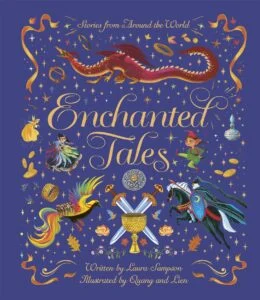
London, UK – In an age increasingly dominated by digital narratives, the timeless allure of classic folklore finds a vibrant new voice in Laura Sampson’s recently published collection, Enchanted Tales. Through the evocative pages of this eagerly anticipated book, Sampson embarks on a compelling journey to reintroduce readers to some of Europe’s most cherished, yet sometimes forgotten, stories. Central to this collection, and currently drawing significant attention, is her masterful retelling of "The Twelve Dancing Princesses," a captivating narrative whose roots trace back to the imaginative works of French writer Charles Deulin.
Sampson’s rendition of "The Twelve Dancing Princesses" is not merely a recounting but a meticulously crafted reimagining, drawing directly from Deulin’s distinct version, which itself is celebrated for its rich, regional details. Far from the more commonly known interpretations, Deulin’s tale, originating from a small town on the French-Belgian border, imbues the fantastical with a grounding in tangible cultural specifics – from the descriptions of local cuisine and traditional attire to the very place names that echo his homeland. This commitment to source material, coupled with Sampson’s lyrical prose, promises an immersive experience for both seasoned folklore enthusiasts and newcomers alike.
The narrative revolves around one of folklore’s most enduring enigmas: the perplexing mystery of twelve royal sisters whose dancing shoes are inexplicably worn to tatters each morning, despite their bedchamber doors being securely locked with three robust bolts. This phenomenon, which has baffled their father, the Duke of Beloeil, forms the central puzzle that an unlikely hero, a humble cowherd named Michel, affectionately known as "Stargazer," is destined to unravel. Sampson’s Enchanted Tales, published by Templar Books with exquisite illustrations by Phung Nguyen Quang & Huynh Thi Kim Lien, offers a fresh perspective on a story that has captivated generations, reminding us of the enduring power of dreams, determination, and true love to transcend societal boundaries and break even the most potent of enchantments.
Chronology: Unraveling the Enchantment
Laura Sampson’s Enchanted Tales offers readers a deep dive into the enchanting and often perplexing world of folklore, with "The Twelve Dancing Princesses" standing out as a prime example of her dedication to the craft of storytelling. Her choice to adapt Charles Deulin’s particular rendition of the tale provides a rich, localized texture that elevates the familiar story into something uniquely detailed and captivating.
The Enigmatic Origins: Deulin’s Regional Touch
Charles Deulin, a French writer hailing from a small town situated on the French-Belgian border, carved out a distinct niche in the landscape of European folklore. Unlike some of his contemporaries who often presented more generalized versions of popular tales, Deulin meticulously wove elements of his local culture and geography into his narratives. His version of "The Twelve Dancing Princesses" is a testament to this approach, replete with specific references to food, clothing, and place names that resonate with his home region. This regional grounding provides a refreshing authenticity, rooting the fantastical elements in a palpable, historical context that Sampson faithfully preserves. The enduring popularity of this tale across Europe, manifesting in countless variations, underscores its universal appeal, but Deulin’s take offers a unique window into a specific cultural milieu.
The Duke’s Dilemma and the Vanishing Suitors
The story unfolds within the grand, yet troubled, walls of the Château of Beloeil. Here, a formidable Duke finds himself in a state of profound perplexity and escalating frustration. His twelve beautiful daughters, despite being confined to their triple-bolted suite each night, wake to find their delicate satin shoes inexplicably worn through, as if they had danced vigorously until dawn. This baffling mystery not only challenges the Duke’s authority but also his understanding of reality. Desperate for a resolution, he issues a decree: "ANYONE WHO CAN SOLVE THE MYSTERY OF THE WORN-OUT SHOES MAY MARRY ONE OF MY DAUGHTERS!" This declaration, while offering a grand reward, comes with a perilous caveat. Princes from across the land, lured by the promise of royal matrimony, have attempted to uncover the princesses’ secret, only to vanish without a trace overnight, their fates shrouded in an ominous silence. This adds a layer of genuine peril and raises the stakes significantly for any aspiring suitor.
Michel’s Humble Beginnings and a Glimmer of Hope
Into this world of aristocratic mystery and peril steps Michel, a young cowherd from the village of Montignies-sur-Roc. With his curly hair and striking blue eyes, Michel is not merely a commoner; he is a dreamer, earning him the affectionate moniker "Stargazer" due to his habit of gazing upwards, lost in visions of grand adventures beyond his humble existence. His destiny is set in motion one summer’s day when a radiant fairy, adorned in a golden dress, appears before him, delivering a prophetic message: "Go to the Château of Beloeil, and you will marry a princess!"
Following the fairy’s enigmatic instructions, Michel arrives at the château, keenly aware of his humble status. "I am no prince – the duke will laugh at me if I come forward," he wisely concludes. Instead of boldly declaring his intent, he secures work within the sprawling château gardens, tending to the flowers and crafting daily bouquets for the princesses. For a time, his presence goes largely unnoticed; the princesses accept his floral offerings but offer neither a glance nor a word of thanks. However, fate takes a subtle turn when Lina, the youngest of the princesses, briefly meets his gaze and offers a fleeting smile. This simple act ignites a spark within Michel, transforming his casual curiosity into a fervent desire to solve the enduring mystery, driven now by a burgeoning affection.
Divine Intervention and Magical Tools
As Michel’s resolve solidifies, the fairy reappears, bestowing upon him the tools necessary for his quest. She presents him with two baby laurel trees – one a rose, the other a cherry – along with a golden bucket and a golden rake. "Plant these laurel trees, tend them with this rake, water them from this bucket and they will grant your wishes!" she sings, before vanishing once more. Michel, ever diligent, follows her instructions, nurturing the magical plants.
The Secret Passage and the Midnight Ball
The magic soon manifests. One day, the cherry laurel blooms with a solitary white flower. Michel plucks it, placing it in his shirt buttonhole, hoping to impress Lina. To his astonishment, the flower instantly renders him invisible. Realizing this is his chance, he decides to unravel the princesses’ secret. That evening, hidden beneath a bed in their suite, Michel witnesses the unfolding ritual. As soon as the door is locked, wardrobes creak open, clothes rustle, and laughter fills the air. Then, with three distinct "CLAP!" sounds, a hidden trapdoor in the floor swings open. Michel, still invisible, slips out and follows the princesses, so closely that he accidentally steps on Lina’s dress. Lina glances back but, seeing nothing, attributes it to a stumble.
The princesses descend a secret staircase, traverse a winding corridor, and emerge into a series of fantastical woodlands: first, a shimmering forest of silver, then one of radiant gold, and finally, one sparkling with countless diamonds. Beyond these magical realms lies a glass-clear lake, where twelve waiting princes in shining boats ferry each princess across to a magnificent castle that gleams in the twilight. Michel, still invisible, seats himself beside Lina, who wonders aloud why her boat feels so "slow and heavy." The captivating, wild music emanating from the castle soon distracts her. Upon docking, everyone rushes into the castle’s opulent ballroom, a dazzling space adorned with mirrors, sparkling lights, and rich hangings. From a hidden corner, Michel observes the princesses, particularly Lina, whose velvet-black eyes shine as she whirls across the jewelled dancefloor. He notes with a pang of envy the princes dancing with them, unaware that these are the very suitors who had vanished from the world above, enchanted by a potion that erased all memory of their former lives. The princesses dance relentlessly until their shoes are completely worn through. Following their exertions, they partake in a lavish feast of sugar cookies, waffles, and cakes.
Gathering Evidence and Confrontation
As dawn approaches, Michel silently follows the princesses back across the lake and through the diamond and gold woodlands. However, in the silver woodland, he deliberately breaks off a tiny sprig from one of the trees. A loud "CLANG!" echoes through the forest. "What was that?" asks one princess. "Probably just a bird," dismisses another. Michel, using his invisibility, races ahead, returning to the princesses’ suite via an open window and a hanging vine, reaching the gardens just as the first light of dawn breaks. He removes the white invisibility flower and resumes his daily task of gathering bouquets. Later, when he presents the bouquets, Lina discovers the silver twig nestled within hers. How can this be? she ponders, but wisely remains silent.
For the next two nights, Michel repeats his invisible surveillance, each time plucking a sprig from the golden and then the diamond woodlands for Lina’s bouquet. When Lina finds the diamond sprig, she can no longer contain her suspicion. She confronts Michel directly: "You must have followed us. How?" Michel simply replies, "I hid." She then presses him, reminding him of the Duke’s decree: "You know that telling our father this secret rewards you with a wedding to one of us. Will you tell him?" Michel’s response is a testament to his burgeoning feelings for her: "I do not intend to." Puzzled by his refusal to claim the reward, Lina asks, "But why stay silent?" Michel offers no verbal explanation, but the other princesses observe his blue eyes meet Lina’s, witnessing her heart visibly melt in that shared, unspoken moment.
The Sisters’ Treachery and Michel’s Transformation
The other princesses, seeing Lina’s growing affection for a common gardener, are filled with disdain. "How ridiculous! Lina wants to be a gardener’s wife!" they taunt. "Never!" Lina cries, throwing her bouquet at Michel in a fit of conflicted emotion. Later that day, the sisters conspire, agreeing that Michel should suffer the same fate as the previous suitors. They invite him to join them in plain sight that night for the dance.
Michel accepts, but he faces a dilemma: he cannot attend a grand ball dressed in his simple gardener’s clothes. He remembers the rose laurel. In the privacy of the gardens, he whispers his wish into its petals. Instantly, he is transformed, dressed like a prince in black velvet that mirrors Lina’s eyes, a sparkling diamond feather brooch adorning his cap.
The Breaking of the Spell and Royal Union
Once again, they descend through the trapdoor, down the stairs, and traverse the magical woodlands of silver, gold, and diamond towards the enchanted dance. Lina, seeing Michel in his princely attire, laughs, a mix of embarrassment and delight. "Don’t you look princely!" she exclaims. "Maybe. But I’m still a gardener," he replies, "Not good enough for you." They dance throughout the night, their connection deepening with every turn. As the ball concludes, the eldest princess, ever the instigator of their secret life, extends a golden cup to Michel. "Gardener, secret-revealer, let’s drink to you!" she declares. Michel, having overheard their earlier conversations, knows the cup contains the potent forgetting potion, yet he raises it to his lips, casting a longing glance at Lina.
"NO!" Lina cries out, rushing forward and seizing the cup before he can drink. "Gardener or not, the thought of you trapped here forever breaks my heart!" This declaration of true love, pure and selfless, shatters the enchantment that held the princes captive. The spell breaks for everyone. Together, Michel and the princesses return to the world above, and as they close the trapdoor, it vanishes forever, sealing off the magical realm.
In the Duke of Beloeil’s private quarters, Michel recounts his incredible tale, revealing the princesses’ nightly adventures and the enchantment that bound the other suitors. He then boldly asks for Lina’s hand in marriage. The wedding that followed was the grandest and most joyful in the land, celebrating not just a union but the triumph of love and honesty. Michel, the humble "Stargazer," became a prince, forever united with his princess. He never needed to wish upon the magical laurels again, for he had found everything he could ever desire.
Supporting Data and Context
Laura Sampson’s decision to retell "The Twelve Dancing Princesses" within Enchanted Tales is a significant contribution to the ongoing preservation and reinterpretation of classic folklore. This particular tale, with its mysterious premise and romantic undertones, holds a revered place in European oral tradition.
The Enduring Legacy of a European Folktale
"The Twelve Dancing Princesses" is a quintessential European folktale, with countless variants found across different cultures. Its most famous versions include those collected by the Brothers Grimm in Germany and adaptations by French authors like Charles Perrault, though Deulin’s stands out for its unique flavor. The story taps into universal themes that resonate deeply with audiences: the allure of secret worlds, the desire for forbidden pleasure, the tension between duty and personal freedom, the challenge of social class, and ultimately, the transformative power of true love. These elements contribute to its enduring appeal, making it a narrative that transcends time and geography. The mystery itself—the inexplicable worn shoes—serves as a compelling hook, drawing listeners and readers into a world where the ordinary meets the extraordinary.
Deulin’s Unique Contribution: Grounding Fantasy in Reality
Charles Deulin’s specific rendition of the story is particularly noteworthy because it consciously grounds the fantastical elements in a tangible, regional landscape. By incorporating details like the village of Montignies-sur-Roc, the Château of Beloeil, and specific descriptions of local food and attire, Deulin lent a unique authenticity to his narrative. This approach contrasts with more generic fairy tale settings, making the enchanted woodlands and the hidden castle feel like an extension of a real, known world rather than a distant, abstract fantasy. Sampson’s commitment to this specific source material demonstrates a deep respect for the nuanced beauty of folklore, offering readers a version that is not only enchanting but also rich in cultural context. This focus on regional specificity enriches the reader’s experience, providing a deeper connection to the tale’s origins.
Sampson’s Approach to Retelling
Laura Sampson’s overarching approach in Enchanted Tales appears to be one of profound respect for the original sources, coupled with a desire to reintroduce these narratives to a contemporary audience without sacrificing their inherent magic or historical integrity. Her prose is evocative, designed to immerse readers in the vivid imagery and emotional depth of the tales. By meticulously researching and selecting specific versions, such as Deulin’s, Sampson ensures that her retellings offer a fresh perspective while honoring the literary heritage. The role of the illustrators, Phung Nguyen Quang & Huynh Thi Kim Lien, is equally crucial in Enchanted Tales, as their artwork visually translates Sampson’s narrative, bringing the characters, settings, and magical elements to life with a captivating aesthetic that complements the richness of the text.
Official Responses and Critical Reception
The publication of Laura Sampson’s Enchanted Tales has been met with considerable anticipation, positioning it as a significant addition to the contemporary folklore landscape. While formal critical reviews are still emerging, early indicators and insights from the publishing world paint a promising picture.
Publisher’s Endorsement
A spokesperson for Templar Books, a division of Bonnier Books, expressed immense enthusiasm for the collection. "Laura Sampson possesses an extraordinary talent for storytelling, breathing new life into these beloved tales," stated the representative. "With Enchanted Tales, and particularly her brilliant rendition of ‘The Twelve Dancing Princesses,’ we aimed to create a book that not only entertains but also deepens readers’ appreciation for the rich tapestry of global folklore. Sampson’s dedication to the authenticity of Charles Deulin’s version, coupled with her elegant prose, makes this a truly special offering. We believe it will resonate deeply with readers of all ages, reaffirming the timeless appeal of these stories." This highlights the publisher’s confidence in Sampson’s ability to deliver a compelling and culturally significant work.
Author’s Perspective on Preservation
Laura Sampson herself has articulated her passion for the project, emphasizing her dedication to preserving the nuanced beauty of the original narratives. "My goal with Enchanted Tales was to peel back the layers of popular retellings and delve into the fascinating historical versions of these stories," Sampson remarked in a recent interview. "Charles Deulin’s ‘The Twelve Dancing Princesses’ was a revelation. Its grounded details, its sense of place on the French-Belgian border, truly brought the fantasy to life for me. I wanted to capture that specificity, that sense of genuine wonder, and share it with a new generation of readers. I hope readers come away not just entertained, but also with a renewed curiosity about the origins and diverse interpretations of these tales." Her comments underscore a scholarly yet accessible approach, aiming to educate as much as to enchant.
Anticipated Critical Acclaim
Early readers and literary commentators anticipate that Enchanted Tales will be lauded for its vivid storytelling, faithful yet fresh adaptations, and Sampson’s ability to maintain the evocative language and imagery inherent in classic folklore. The book is expected to be praised for its exquisite production quality, including the stunning illustrations by Phung Nguyen Quang & Huynh Thi Kim Lien, which are integral to the immersive experience. Critics are likely to highlight how Sampson manages to make these ancient tales feel relevant and emotionally resonant for a modern audience, ensuring that the magic of "The Twelve Dancing Princesses" continues to captivate and inspire.
Implications and Lasting Legacy
The publication of Enchanted Tales and its spotlight on "The Twelve Dancing Princesses" carries significant implications for both contemporary literature and the enduring legacy of folklore. Laura Sampson’s work serves as a vital bridge between ancient narratives and modern sensibilities, ensuring that these culturally rich stories continue to thrive.
The Enduring Relevance of Archetypal Narratives
In an increasingly complex world, the enduring appeal of these old tales lies in their ability to address universal human experiences and emotions. "The Twelve Dancing Princesses" explores themes of youthful rebellion, the desire for autonomy, the allure of secret lives, and the triumph of genuine affection over superficiality. Michel’s journey from a humble "Stargazer" to a prince by virtue of his courage, honesty, and true love for Lina resonates deeply, offering a powerful message about inner worth transcending social status. These archetypal narratives provide comfort, offer moral frameworks, and allow readers to explore profound questions about identity, freedom, and destiny in a safe, imaginative space. Sampson’s retelling revitalizes these themes, making them accessible and compelling for a new generation.
Educational and Cultural Contributions
Books like Enchanted Tales play a crucial role in fostering cultural literacy and an appreciation for the vast repository of human storytelling. By reintroducing readers to specific, historically rich versions of tales—such as Deulin’s regional "Twelve Dancing Princesses"—Sampson encourages a deeper understanding of diverse cultural heritage and the evolution of narratives. This not only enriches readers’ imaginative lives but also provides valuable insights into the social, historical, and geographical contexts from which these stories emerged. It helps to preserve linguistic and narrative traditions that might otherwise fade, ensuring that the collective memory of humanity’s storytelling legacy remains vibrant.
Laura Sampson’s Contribution to Folklore
Laura Sampson is positioning herself as a significant contemporary voice in the realm of folklore retelling. Her meticulous research, combined with her evocative writing style, distinguishes her work, offering readers not just entertainment but also a respectful and nuanced engagement with source material. By selecting lesser-known but historically significant versions of tales, she broadens the scope of popular folklore, challenging readers to look beyond the most common interpretations. Her contribution lies in making these rich, often complex, narratives accessible and engaging for a diverse audience, thereby enriching the canon of children’s and adult literature alike.
The Future of "Enchanted Tales" and Beyond
The success of Enchanted Tales could pave the way for further collections from Sampson, exploring other facets of global folklore. Her approach suggests a potential for revitalizing an entire genre, inspiring other authors and publishers to delve deeper into the origins and variations of traditional stories. Ultimately, Sampson’s "The Twelve Dancing Princesses" is more than just a captivating read; it is a testament to the enduring magic of storytelling, a reminder that the secret worlds we imagine can still break spells and lead to the most joyous of unions, solidifying its place as a cherished narrative for years to come.