The Architecture of Restraint: Ridley Scott’s Post-Apocalyptic Vision in ‘The Dog Stars’
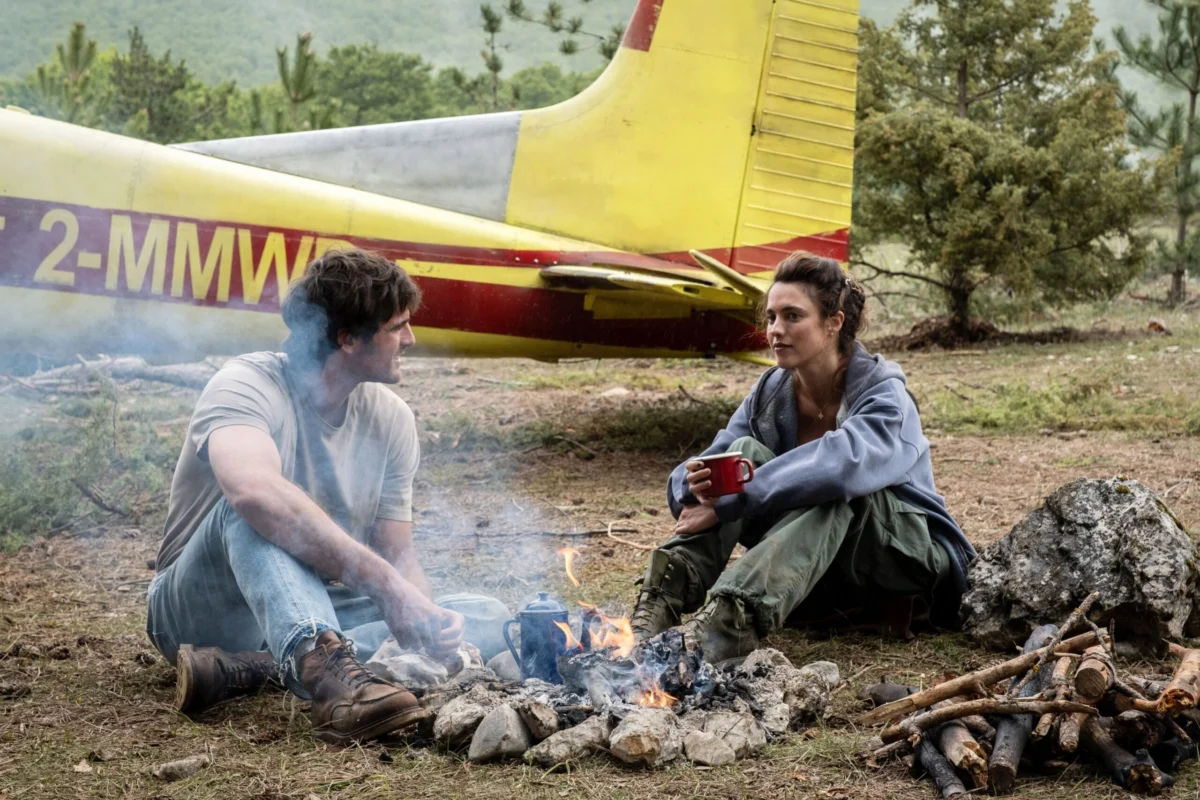
At 87 years old, Sir Ridley Scott remains one of the most prolific and technically audacious directors in the history of cinema. His latest offering, The Dog Stars, an adaptation of Peter Heller’s celebrated post-apocalyptic novel, serves as a masterclass in genre-blending and technical efficiency. Starring Jacob Elordi and Margaret Qualley, the film is not merely a survivalist drama; it is a complex tapestry of Kubrickian horror, kinetic action, and—most surprisingly—a deeply restrained romance that eschews the sentimental tropes of contemporary Hollywood.
In a recent deep dive on the IndieWire Filmmaker Toolkit podcast, Scott revealed the philosophy behind his unique approach to storytelling and the evolution of a technical methodology that has made him the most efficient filmmaker of his generation.
I. Main Facts: A Genre-Defying Post-Apocalypse
The Dog Stars presents a world hollowed out by a devastating virus. Jacob Elordi stars as Hig, a pilot and mechanic who lives in a secluded hangar with his dog and a volatile survivalist named Bangley (played by Josh Brolin). The narrative follows Hig as he intercepts a mysterious radio transmission, sparking a dangerous journey in search of human connection.
Critics and early audiences have noted that the film feels like several movies woven into one. It balances:
- Dystopian Drama: A bleak exploration of isolation and the collapse of civil society.
- Buddy Comedy: The prickly, often humorous dynamic between the sensitive Hig (Elordi) and the militant Bangley (Brolin).
- Kubrickian Horror: Moments of eerie, atmospheric dread that recall the psychological tension of The Shining.
- Kinetic Action: High-stakes sequences involving aerial maneuvers and desperate ground skirmishes.
Central to the film is the blossoming relationship between Hig and a young widow, Cee (Margaret Qualley). However, true to Scott’s directorial DNA, this "love story" is handled with a surgical lack of sentimentality. It is a relationship defined by silence, shared labor, and tentative trust rather than grand cinematic gestures.
II. Chronology: The Evolution of the Scott Method
To understand the technical precision of The Dog Stars, one must trace Ridley Scott’s career through three distinct phases of camera methodology.
The BBC and the Live Drama Roots (1960s)
Scott’s journey began at the BBC, where he worked as a designer and later a director. In the early days of television, drama was often broadcast live or recorded "as live" using a multi-camera setup. "There you’re doing live drama with six cameras, so I learned to pre-plan the geometry of the scene with the actors," Scott recalled. This early exposure to "blocking" for multiple angles simultaneously laid the groundwork for his future efficiency.
The Single-Camera Masterpieces (1977–1991)
After a decade as a titan of the advertising world—directing thousands of commercials—Scott transitioned to feature films with The Duellists, Alien, and Blade Runner. During this era, and through to Thelma & Louise (1991), Scott was known for a meticulous single-camera approach. He famously operated the camera himself on many of these projects, obsessing over light, smoke, and composition. While this resulted in some of the most iconic imagery in film history, it was a slow, deliberate process.

The Multi-Camera Revolution (2001–Present)
The true shift occurred during the production of Black Hawk Down. Facing the logistical nightmare of filming massive urban combat sequences in Morocco, Scott reverted to his BBC roots but on a gargantuan scale. He began using up to 11 cameras simultaneously. This allowed him to capture complex action in a single take, ensuring that every explosion, stunt, and performance beat was recorded from every conceivable angle. The Dog Stars represents the refinement of this "multi-cam" philosophy applied to intimate character drama.
III. Supporting Data: The Logistics of Efficiency
The "Scott Method" is built on two pillars: the "Ridleygram" and the multi-camera bank.
The Ridleygram
Scott is a classically trained artist, and unlike many directors who hire storyboard artists, he draws his own. These "Ridleygrams" are detailed sketches that dictate the composition, lighting, and movement of every shot before he even arrives on set.
"I’m filming on paper before I get there," Scott explained. This preparation eliminates the "morning drift" common on many film sets. While some productions spend hours debating camera placement, Scott’s crews are often rolling by 8:45 AM. By knowing exactly where the "geometry" of the scene lies, he can place four to six cameras in positions where they do not see one another, yet cover the entire emotional arc of a scene.
Statistical Speed
The impact of this method on production timelines is staggering. On Black Hawk Down, Scott noted that a sequence that would typically take two days to film was completed in a single morning. For The Dog Stars, using four to six cameras for dialogue scenes allowed Elordi and Qualley to perform entire pages of script without the interruption of "re-lighting for the closeup." This not only saves millions in production costs but maintains the emotional momentum of the actors.
IV. Official Responses: Scott on the "Disease" of Sentimentality
During his interview with IndieWire, Scott was vocal about his disdain for the way Hollywood often packages emotion. For the director, the "subtle and barely consummated" romance in The Dog Stars is a direct reaction against industry pressure.
"When I go to Hollywood, they’ll pitch me on a story and say ‘it’s sentimental,’ or ‘it’s melodramatic,’ like it’s a compliment," Scott said. "I say, ‘Stop.’ Those two words are terrible."
Scott attributes his preference for restraint to his British upbringing, citing a famous Winston Churchill observation that the English and Americans are "divided only by the same language." In Scott’s view, American cinema often "asks" for emotion through swelling scores and over-the-top acting, whereas he believes a director must "earn" the emotion.

"As soon as the music comes up, that means it’s not quite working," he stated. This philosophy is evident in The Dog Stars, where the relationship between Elordi and Qualley is solidified through a single kiss rather than a typical Hollywood climax. He compared this to the understated bond between Susan Sarandon and Michael Madsen in Thelma & Louise, noting that the most powerful moments are often those where characters "tentatively let their guards down" rather than baring their souls in monologue.
V. Implications: The Future of the "Actor-First" Technicality
While some purists argue that multi-camera shooting can lead to "lazy" cinematography, Scott argues the opposite. For him, the technology is a tool to liberate the performer.
Freedom from Continuity
In a traditional single-camera setup, an actor must perfectly replicate their movements (e.g., picking up a glass at the exact same word) across twenty different takes so the editor can match the shots. In Scott’s multi-camera environment, the actor can be spontaneous. Because the "master shot," the "medium," and the "closeup" are all being recorded at the same time, the actor’s movements are always in sync across all angles.
"I’ll leave it on the actor," Scott said. "If they say, ‘I don’t like it that way,’ I say, ‘What do you want to do?’" This freedom is particularly vital for young actors like Jacob Elordi, who are known for a naturalistic, somewhat unpredictable style of performance.
The Power of Silence
The final implication of Scott’s work on The Dog Stars is a reminder of the power of cinematic "negative space." In an era of "content" designed to keep viewers stimulated every second, Scott’s insistence on silence and stillness stands out.
"Silence is the biggest sound you can have," Scott noted. "Suddenly you go silent, and everyone starts paying attention."
As The Dog Stars begins its theatrical run, it stands as a testament to a filmmaker who has successfully merged the speed of live television, the visual eye of a master painter, and a quintessentially British sense of emotional economy. At a time when the film industry is struggling with bloated budgets and formulaic storytelling, Ridley Scott’s "filming on paper" and his refusal to succumb to melodrama offer a blueprint for a more efficient, yet more soulful, future for cinema.
“The Dog Stars” is currently playing in theaters nationwide. For more insights into the technical craft of the film, the full interview with Ridley Scott is available on the IndieWire Filmmaker Toolkit podcast.