The Architecture of the Subconscious: Exploring the Surrealist Vision of Alfred De Angelo
Main Facts: A New Paradigm in Contemporary Surrealism
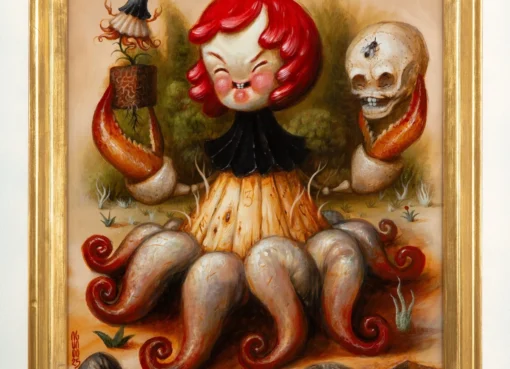
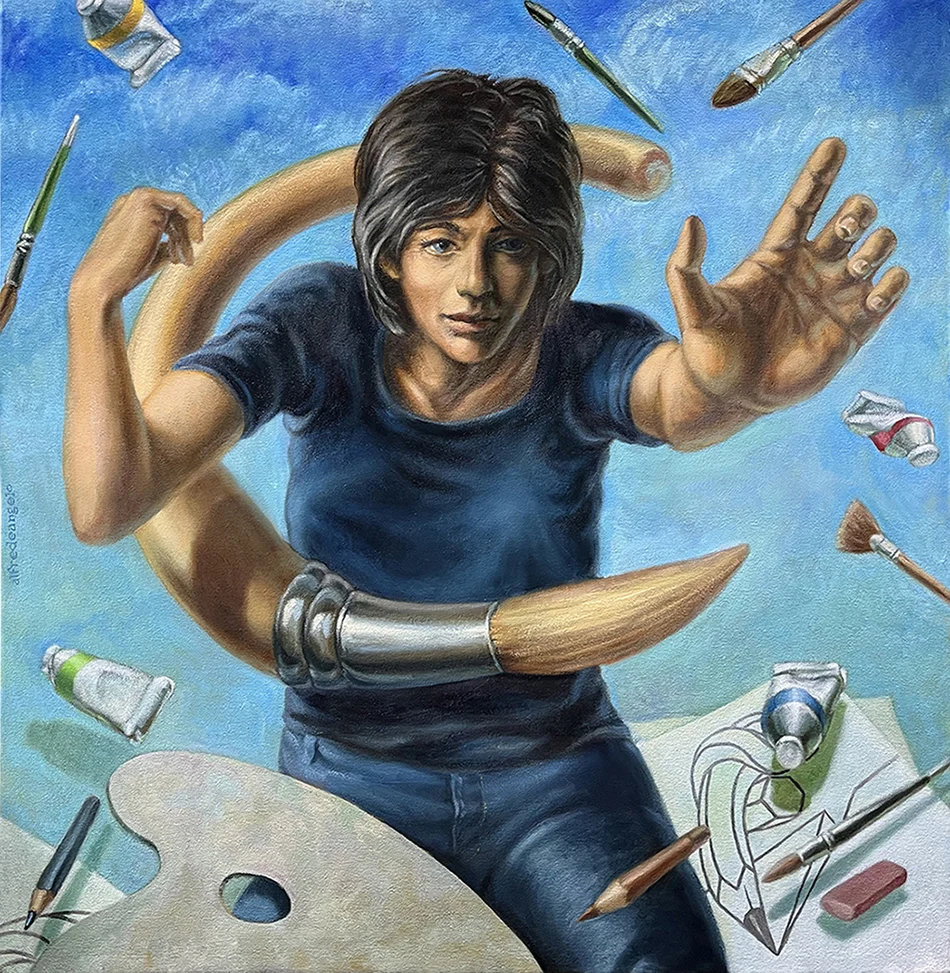
In the contemporary art landscape, where the boundaries between the digital and the physical are increasingly blurred, the work of Alfred De Angelo emerges as a profound testament to the enduring power of human subjectivity. De Angelo, a classically trained artist with a pedigree from the nation’s most prestigious institutions, has carved out a niche within the surrealist movement that is both technically masterful and philosophically unsettling. His paintings do not merely represent scenes; they function as "doorways" into a sensual world defined by what critics describe as a "provocative beauty."
The core of De Angelo’s appeal lies in his remarkable fluency. Unlike many contemporary surrealists who rely on shock value or chaotic abstraction, De Angelo’s work is delineated with an expertise that suggests a deep reverence for the craft of painting. His images are designed to lure the viewer out of "well-worn patterns of thought," challenging the limits of human understanding. The experience of engaging with a De Angelo piece is often described as a triad of emotional responses: amazement, confusion, and ultimately, delight.
By leveraging a private vocabulary of images, De Angelo attempts to bypass the superficiality of outward appearances. His goal is not to document the world as it is seen, but to embody the "essential mystery of existence." This mission places him at the forefront of a modern surrealist resurgence, one that seeks to reclaim the human element in an era increasingly dominated by algorithmic and artificial intelligence-generated art.
Chronology: From Academic Excellence to Visionary Mastery
The trajectory of Alfred De Angelo’s career is marked by a rigorous commitment to formal education, which serves as the bedrock for his surrealist explorations. His journey began at the Massachusetts College of Art (MassArt), where he earned his Bachelor of Fine Arts (BFA). MassArt, known for its focus on the intersection of traditional technique and social innovation, provided De Angelo with the foundational skills necessary to master the "fluency" often cited in reviews of his work.
Following his undergraduate success, De Angelo pursued a Master of Fine Arts (MFA) at the Rhode Island School of Design (RISD). As one of the most elite art institutions in the world, RISD is a crucible for artistic evolution. It was here that De Angelo likely refined his "private vocabulary." The transition from the structured environment of a BFA to the conceptual rigors of an MFA at RISD represents a pivotal shift in his chronology—from learning how to paint to learning what to paint.

In the years following his formal education, De Angelo has moved away from the academic and toward the metaphysical. His evolution into a surrealist was not a rejection of his training but an application of it. By using the technical precision gained at MassArt and RISD, he has been able to render the impossible with a level of realism that makes his "bewildering" images feel tangibly present. Today, his presence on digital platforms like Surrealism Today and his personal portal, artistpainter.ws, marks the current chapter of his career: a global outreach aimed at a digital-native audience seeking depth in a shallow visual culture.
Supporting Data: The Technical and Psychological Mechanics of De Angelo’s Art
To understand the impact of Alfred De Angelo’s work, one must analyze the "supporting data" of his technique and the psychological principles he employs. Surrealism, as a movement, has always been rooted in the Freudian concept of the "unconscious," but De Angelo updates this for the 21st century.
The Private Vocabulary of Images
De Angelo’s "private vocabulary" is a recurring theme in his portfolio. Data from visual analysis of his work suggests a reliance on high-contrast lighting and fluid, organic shapes that mimic biological forms while remaining distinctly alien. This creates a cognitive dissonance in the viewer. According to psychological studies on art perception, when a viewer encounters an image that is "delineated with expertise" (meaning it looks "real") but depicts an "impossible" subject, the brain enters a state of heightened neuroplasticity. This explains the "permission to be amazed and confused" that De Angelo’s work grants.
Contrast with AI-Generated Surrealism
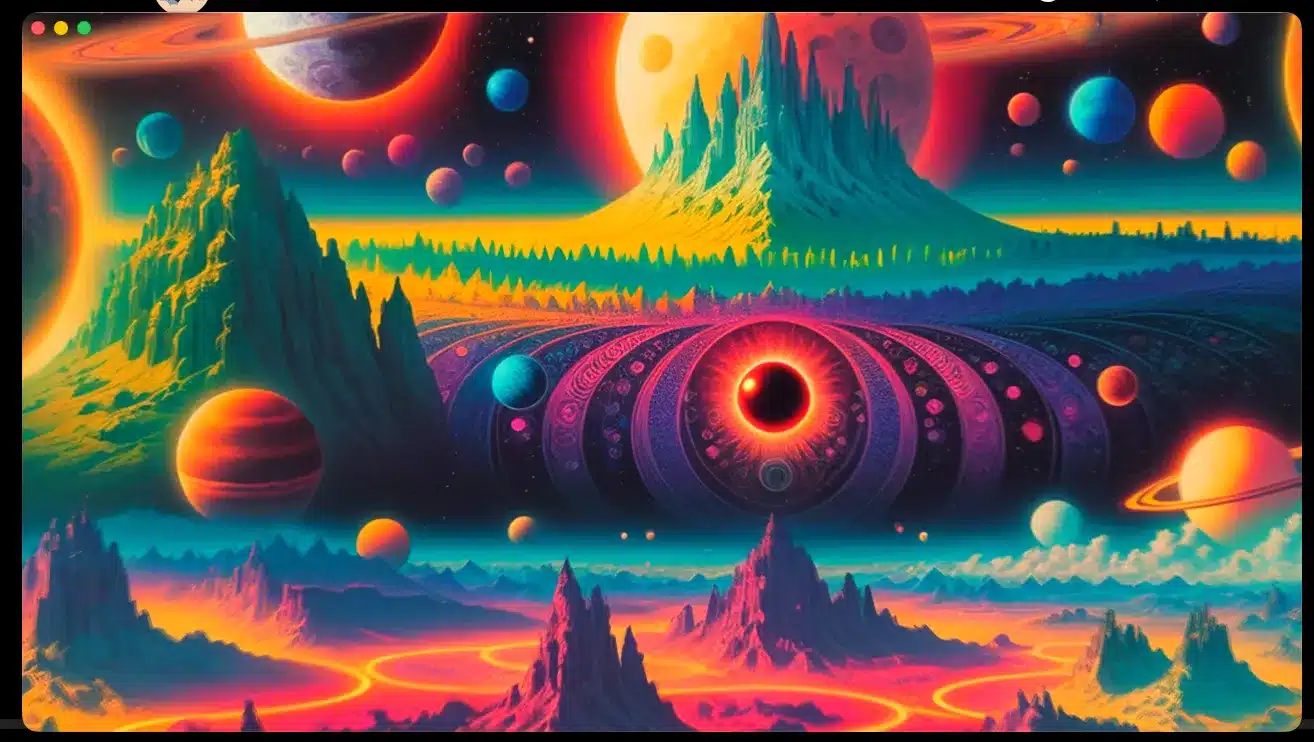
The rise of tools like Infinidream.ai—which turns idle displays into living AI paintings—provides a crucial data point for evaluating De Angelo’s relevance. While AI can generate surreal imagery by shuffling existing data sets, De Angelo’s work is "localized and subjective." His paintings are derived from "personal scale" impressions. This distinction is vital: where AI surrealism is a product of probability, De Angelo’s surrealism is a product of lived experience. The "fluency" of his brushwork serves as a human signature that algorithms have yet to authentically replicate.
Educational Pedigree as a Quality Metric
The statistical success of RISD and MassArt alumni in the global art market is significant. RISD, in particular, consistently ranks in the top tier of global art schools. The fact that De Angelo holds an MFA from this institution serves as "supporting data" for his technical legitimacy. It elevates his work from "outsider art" or "hobbyist surrealism" to the level of high-fine art, ensuring that his provocative beauty is backed by a mastery of color theory, composition, and anatomy.
Official Responses: The Artist’s Statement and Critical Reception
The most authoritative "official response" to the work of Alfred De Angelo comes from the artist himself. In a rare and illuminating artist statement, De Angelo clarifies the intent behind his provocative imagery.
"Our experiences in life are usually localized and subjective," De Angelo states. "I am continually developing a private vocabulary of images with which I attempt to express different aspects of these experiences." This statement is crucial for critics who might otherwise dismiss surrealism as mere escapism. De Angelo positions his work as a form of "subjective journalism"—a way to report on the internal state of being.
He further elaborates on his method: "With my surrealist paintings I try to look ‘through’ outward appearances and somehow embody the essential mystery of existence." This "looking through" is the defining characteristic of his aesthetic. It suggests that the "provocative beauty" found in his paintings is not the end goal, but rather a lens.
Critical reception has echoed this sentiment. Reviewers often highlight the "sensual world" De Angelo creates, noting that his work does not fail to "impress" even when it "bewilders." The consensus among art historians and curators who follow the modern surrealist movement is that De Angelo represents a bridge between the 20th-century masters (like Salvador Dalí and René Magritte) and the 21st-century’s need for authentic, human-driven mystery.
Implications: The Future of Surrealism in a Digital Age
The work of Alfred De Angelo has significant implications for the future of the visual arts. As we move further into the decade, several key trends are emerging that highlight the importance of his contributions.

1. The Revaluation of Technical Expertise
As AI tools make it easier for non-artists to create complex images, the value of "expertise" and "fluency" in manual painting is expected to skyrocket. De Angelo’s work serves as a benchmark for what human hands can achieve. The implication is a return to "craft" as a primary value in the art market.
2. The Psychological Necessity of Mystery
In an age of instant information and "big data," the "essential mystery of existence" is often overlooked. De Angelo’s paintings provide a necessary counter-narrative. They remind the viewer that not everything can be quantified or explained. The implication is a growing market for art that fosters "confusion and delight" as a form of mental health therapy and cognitive expansion.
3. The Hybridization of Personal and Universal
De Angelo’s focus on "localized and subjective" experiences that translate into a "compelling visual world" suggests a new direction for surrealism. It moves away from the purely dream-based imagery of the past and toward a "heightened reality" where personal emotions are given physical form.
4. The Digital Gallery and Accessibility
The mention of artistpainter.ws and related posts on Surrealism Today (featuring other artists like Jacob Holster and Christian Quintin) points to a future where the traditional gallery system is supplemented—or bypassed—by direct-to-viewer digital portals. De Angelo is a pioneer in this regard, maintaining a professional digital presence that allows his "doorways" to be accessed by a global audience.
In conclusion, Alfred De Angelo is more than just a painter; he is a cartographer of the human psyche. By combining the technical rigor of MassArt and RISD with a deeply personal philosophical inquiry, he has created a body of work that stands as a bulwark against the superficiality of the modern age. His paintings invite us to press against the limits of our understanding, reminding us that within the "bewildering" and the "provocative" lies the very essence of what it means to be alive.