The Audiobook Revolution: Navigating a New Era of Audio Storytelling
Introduction: The Shifting Landscape of Audiobooks
For decades, the creation of an audiobook was a significant financial undertaking for authors, often requiring thousands of dollars upfront with no guarantee of recouping the investment. This prohibitive cost deterred many, especially emerging writers, from venturing into the audio format. However, a seismic shift is underway, fundamentally altering the economics and accessibility of audiobook production. Artificial intelligence, evolving distribution platforms, and a democratized production landscape are ushering in a new era, making audiobooks more attainable and dynamic than ever before. This transformation presents both unprecedented opportunities and complex decisions for authors navigating this evolving market.
The Peril of the Silent Book: Why Audiobooks Are No Longer Optional
In the contemporary literary marketplace, the absence of an audiobook is increasingly becoming a conspicuous indicator of a book’s origin. As the article points out, "The number one tell of an AI-written book is now the lack of an audiobook. If you don’t have one, your book looks like it was written by a robot." This stark assertion highlights a critical perception shift. While AI-generated text may be a growing concern, the lack of an audio counterpart can now be interpreted as a lack of polish or a failure to engage with a vital segment of the reading public. Even an AI-narrated audiobook, with its rapidly improving quality, lends a more "human" impression than a complete void in the audio space.
The cost spectrum for audiobook production has dramatically widened. Gone are the days of a single, prohibitively expensive path. Authors can now opt for lavish, full-cast productions akin to cinematic experiences, costing upwards of $10,000, or conversely, utilize remarkably lifelike AI voices for as little as $100. This affordability revolution extends beyond production costs, impacting distribution as well.
A Fragmented Market: Beyond Audible’s Dominance
Historically, Audible reigned supreme as the dominant audiobook platform. However, this landscape has fragmented significantly in recent years. Competitors such as Chirp, Spotify, and even YouTube are actively challenging Audible’s market share. This erosion of dominance is partly attributed to Audible’s royalty structure, which some authors find less appealing. As a result, Audible is transitioning from an essential, mandatory platform to a more optional one for many creators. This newfound optionality allows authors to explore alternative avenues and potentially achieve greater financial success without solely relying on a single ecosystem.
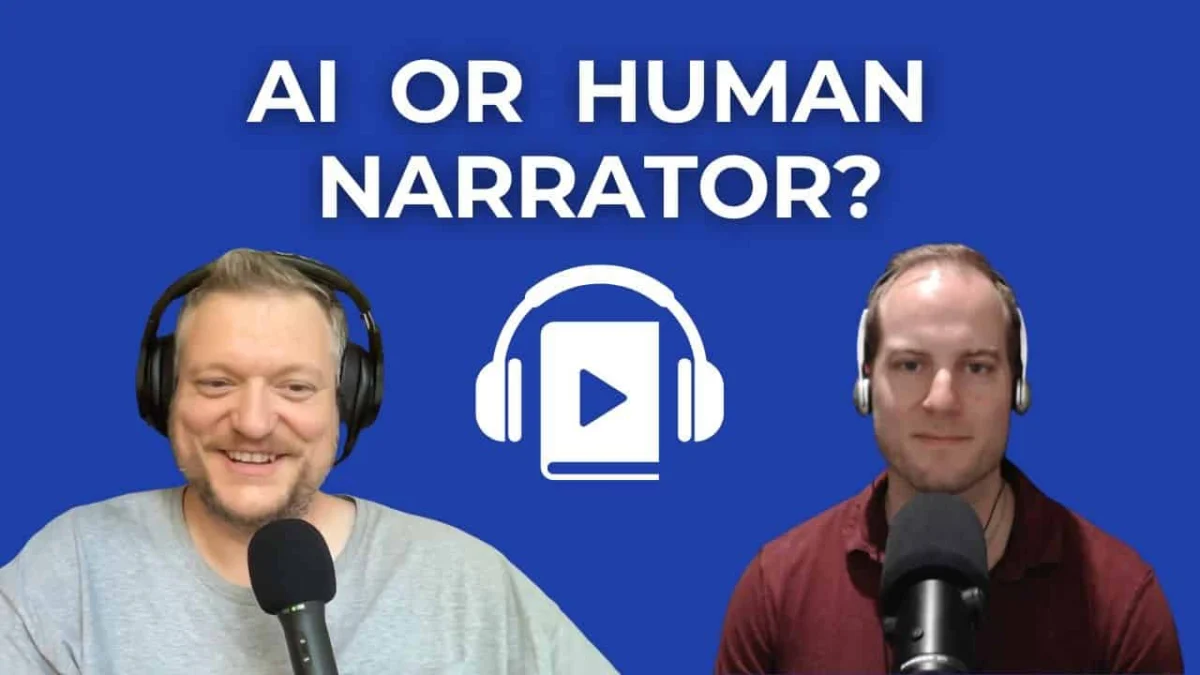
To delve deeper into these transformative changes, we spoke with audiobook expert Derek Doepker. Doepker, who has extensively researched and implemented various audiobook production and distribution strategies, shared insights into the five primary tiers of audiobook creation and the crucial decisions authors face.
Tier 1: AI-Narrated Audiobooks – The Accessible Entry Point
The advent of artificial intelligence has introduced a groundbreaking option for audiobook creation: AI narration. While some may harbor reservations about AI’s role in creative fields, its application in audiobooks offers a pragmatic solution for authors seeking to expand their reach without substantial financial outlay.
Navigating AI’s Nuances and Platform Restrictions
Derek Doepker emphasizes a balanced perspective on AI, acknowledging its utility while also recognizing its limitations. "I see applications, upsides, and downsides, and that’s the case with an AI-narrated audiobook," he states. A significant consideration is platform compliance. Amazon, for instance, offers its "Virtual Voices" program, utilizing proprietary AI voices. However, directly uploading self-generated AI audiobooks to platforms like Amazon may not be permissible under their terms of service.
Thomas, a commentator on the article, points out the surprising cost of Amazon’s Virtual Voices program, which can approach $150 per recorded hour. In contrast, services like ElevenLabs offer comparable, and often superior, AI voices for a fraction of the cost ($15 per hour). However, a critical caveat remains: Audible currently restricts the use of AI voices generated by third-party services like ElevenLabs. This restriction necessitates careful consideration of distribution strategies.
The Listener Experience and the "Uncanny Valley"
A key concern with AI narration is the listener experience. While AI voices are rapidly improving, some listeners may simply prefer the warmth and nuance of a human narrator. Publishing an AI-narrated audiobook could mean foregoing a segment of this audience. Doepker notes, "After a few minutes, they tend to slip into the uncanny valley and start feeling weird." This phenomenon, where AI-generated content becomes unsettlingly close to, but not quite, human, can detract from the immersive quality of an audiobook.
Despite these potential drawbacks, the AI option presents a compelling alternative to having no audiobook at all. For authors on a tight budget or those hesitant about their own vocal performance, an AI-narrated book can generate sales that would otherwise be lost. Furthermore, it serves as a foundational step, with the potential to be replaced by a human-narrated version at a later stage. "If the choice is between nothing and an AI-narrated version, AI is at least something," Doepker advises.
Shifting Perceptions: The Generational Embrace of AI Voices
Thomas observes a significant shift in public tolerance for AI voices, particularly among younger demographics. "Probably 30 to 40% of all the audio people consume on Reels is AI-generated, and probably half the time they don’t even realize the voiceover on the video they’re watching is AI." This widespread exposure, coupled with advancements in AI’s emotional expressiveness, is normalizing the technology. The recent high-profile use of AI voice cloning by public figures further legitimizes its application.
Tier 2: AI Full Cast – Enhancing Immersion with Distinct Voices
Building upon the capabilities of single AI narrators, a more sophisticated approach emerges: AI full-cast productions. This tier leverages AI to assign distinct voices to different characters, transforming a solitary narration into a more dynamic, radio-drama-like experience.
The Power of Character Distinction
Using tools like ElevenLabs, authors can assign unique AI voices to each character, significantly enhancing the listening experience without a proportional increase in cost. Female characters can have female voices, robots can sound like robots, and even animal characters can be given appropriate vocalizations. This flexibility allows for a richer, more engaging narrative.
While this approach offers a significant improvement over a single AI narrator, Thomas cautions against using it solely to mimic a traditional human narrator. In such cases, hiring a human narrator through platforms like ACX might be more cost-effective and yield better results. However, for those embracing AI, leaning into its strengths by creating a full cast offers a compelling and relatively inexpensive way to elevate the audiobook’s production value.
Bridging the Gap: AI and Human-Like Performance
Derek Doepker acknowledges the rapid improvement in AI voice quality, predicting a future where distinguishing between AI and human narration will become increasingly difficult. This technological trajectory raises profound implications, but as Doepker notes, "that’s how technology works. We can accept it and ask what we do with it."
The concept of a full cast, once logistically challenging and expensive for novels requiring multiple actors, is now streamlined by AI. This makes it a viable option for fiction authors who desire a more theatrical presentation of their work. While distribution limitations for AI-generated content still apply, direct-to-consumer sales can offer an alternative.
Tier 3: Professional Human Narrator – The Enduring Standard
Despite the rise of AI, the professional human narrator remains a cornerstone of audiobook production. This tier represents the traditional, yet increasingly accessible, route to high-quality audiobooks.
The Democratization of Narration
The cost of professional human narration has decreased dramatically over the years. Technological advancements have shifted recording from expensive studios to home environments, significantly reducing overhead for narrators. This democratization of recording equipment and software has led to an increased number of skilled narrators and, consequently, more competitive pricing.
While AI narration can be as low as $15 per hour, human narrators can be found for as little as $150 per finished hour. For a typical audiobook, this translates to a production cost of $1,500 to $3,000. The article highlights that certain narrators are renowned within specific genres, and their association with a book can drive sales, justifying a higher per-hour rate. Readers actively search for familiar narrators on platforms like Audible, making a "celebrity" narrator a strategic investment for some authors.
DIY Narration: Empowering Authors to Take Control
The affordability of recording equipment has also empowered authors to narrate their own audiobooks. This do-it-yourself approach, while demanding, offers complete creative control and can become a supplementary income stream. Derek Doepker himself has narrated books for other authors, demonstrating the viability of this path. Acquiring the necessary recording and editing skills has become more accessible than ever before.
Platforms like ACX and Upwork streamline the process of finding and hiring narrators. Authors can listen to samples, request custom auditions, and even engage their audience in selecting a narrator. The cost of setting up a professional home recording studio is now significantly less than it was decades ago, making it an attractive option for authors aiming for a high-quality, personalized audiobook.
The Suspicion Factor: Why Audiobooks Signal Legitimacy
The article points out that the absence of an audiobook can be a red flag, particularly in the context of AI-generated books. Authors seeking to churn out AI content at scale often eschew audiobook production due to the added effort and expense. Therefore, a book lacking an audio version might be perceived as less legitimate or less professionally produced. For nonfiction works, narrating it yourself is often a strong choice. However, fiction requires a performance element to bring characters to life, making a skilled human narrator or a robust AI full-cast production more crucial.
Tier 4: Human Narrator with AI Supporting Cast and Sound Effects – The Immersive Blend
This tier represents a sophisticated fusion of human narration with the advanced capabilities of AI and sound design. It aims to bridge the gap between traditional audiobooks and more cinematic audio experiences.
Crafting a Multi-Layered Sonic Landscape
The core of this tier involves a human narrator for the main narrative, augmented by AI-generated voices for supporting characters and a rich tapestry of sound effects. This approach is particularly beneficial for authors who wish to narrate their own fiction but struggle with performing diverse character voices. By integrating AI-generated character voices and carefully selected sound effects, authors can create a highly immersive audio production that rivals traditional radio dramas.
The accessibility of Digital Audio Workstations (DAWs) and sound editing software has made this level of production attainable for many authors. While some technical proficiency is required, the tools are becoming more intuitive. The potential for creating a "movie-like" audiobook experience is immense, with the added benefit of AI voices seamlessly handling characters outside the narrator’s vocal range.

Creative Freedom and Potential Distribution Advantages
This hybrid approach also unlocks creative possibilities. For stories featuring artificial intelligence or robotic characters, using AI voices naturally fits the narrative. Furthermore, some believe that highly produced, full-cast AI productions might qualify for exceptions to Audible’s AI restrictions, given Audible’s historical embrace of multi-narrator projects.
Navigating Complexity: The "Walk Before You Run" Philosophy
Derek Doepker advises a cautious approach to this tier, emphasizing the importance of not getting overwhelmed by the technical complexities. "My advice is simply to do what you can do," he states. While a full-cast, sound-effect-driven production can be fantastic, it requires significant investment in time, skill, or resources. For many authors, a simpler, single-narrator approach remains a proven and effective strategy. The key is to start with a manageable production and iterate over time, gradually increasing complexity as skills and resources allow.
Tier 5: Full Human Cast – The Pinnacle of Audio Dramatization
The most ambitious and potentially costly tier involves a full human cast, often blurring the lines between an audiobook and a radio drama. This approach elevates storytelling to a truly cinematic level.
From Audiobook to Audio Drama
This tier encompasses two primary forms: a full-cast audiobook where different actors voice distinct characters, and a full-cast radio drama where the book is adapted into a script and performed as a theatrical piece. The latter moves into a different medium altogether, akin to adapting a book into a film, but at a significantly lower cost.
For books that are frequently described as "cinematic," this tier can be a powerful way to bring the narrative to life. While the process is complex and expensive, requiring skilled producers to manage multiple recordings and ensure audio consistency, the result can be a deeply immersive and engaging listening experience.
The Role of the Producer and DAW Sophistication
Producing a full human cast audiobook necessitates expert guidance. Producers with experience in multi-narrator projects are crucial for maintaining consistent audio quality across various recording environments. The choice of Digital Audio Workstation (DAW) becomes more critical at this level, with professional software like Pro Tools and Adobe Audition offering advanced mixing and mastering capabilities beyond simpler tools like Audacity.
A simpler variant of this tier involves dual narrators, often a husband-and-wife team, recording in the same studio. This approach, exemplified by narrators like Michael Kramer and Kate Reading, simplifies audio consistency while still offering distinct voices for different points of view. The ultimate decision on the scale of a full-cast production hinges on the number of characters requiring unique vocalizations.
Distribution Strategies: Embracing the "Wide" Approach
The evolving audiobook landscape necessitates a re-evaluation of distribution strategies. While Audible remains a dominant player, its market share has declined, opening doors for competitors like Spotify and Chirp.
The Decline of Exclusivity and the Rise of "Going Wide"
Historically, exclusivity to Audible was often the default choice due to a lack of viable alternatives. However, with the proliferation of competing platforms, authors are increasingly opting to "go wide," distributing their audiobooks across multiple ecosystems. This strategy maximizes reach and caters to diverse listener preferences.
Spotify, in particular, has emerged as a significant competitor, leveraging its vast music-streaming user base. Authors are compensated for listens on Spotify through subscription revenue, making it a lucrative alternative to Audible. This shift empowers authors to choose platforms that best align with their audience and financial goals.
The Strategic Advantage of Non-Exclusivity
Derek Doepker advocates for a non-exclusive distribution strategy, emphasizing the flexibility it offers. "My preference, however, is to stay non-exclusive and keep as many doors open as possible," he states. By distributing through various channels, including ACX, Voices by InAudio, and library services, authors can tap into a wider market and capitalize on emerging promotional opportunities. This approach allows for greater adaptability in a rapidly changing industry.
The decision to remain exclusive to Audible for seven years requires careful consideration of the platform’s future market share. If Audible’s decline continues, authors may find themselves locked into an ecosystem with a shrinking listener base. Conversely, for authors targeting new audiobook listeners, platforms like Spotify offer a lower barrier to entry, as users can often access audiobooks through existing subscriptions.
Monetizing Audiobooks on YouTube: An Untapped Frontier
YouTube has emerged as a surprising yet significant avenue for audiobook monetization. Authors are increasingly leveraging the platform to offer their audiobooks, often for free, and generating revenue through watch time and advertising.
The Power of Passive Consumption
Long-form content like audiobooks can perform exceptionally well on YouTube, attracting viewers who may play the content for extended periods, such as overnight listening. This passive consumption model can generate substantial revenue, especially for creators who already have an established audience and meet YouTube’s monetization thresholds.
Strategic Repurposing and Piracy Prevention
Posting audiobooks on YouTube also offers strategic advantages. Authors can offer different versions of their work across platforms – for instance, an AI full-cast version on YouTube and a human-narrated version on Audible. This multi-stream approach maximizes the intellectual property’s reach and revenue potential. Furthermore, by providing an official version on YouTube, authors can proactively combat piracy and capture revenue that might otherwise be lost to unauthorized uploads.
Transforming Audio into Video for YouTube
To post audio content on YouTube, it must be converted into a video format. Simple solutions include using a static book cover image, animating it slightly, or employing thematic video footage. Game footage, in particular, has proven to be an effective and popular backdrop for audiobooks, often used for its atmospheric qualities and minimal copyright enforcement issues, especially when combat or distracting elements are removed. This creative approach can enhance viewer engagement and create a mood conducive to the audiobook’s content.
The Generational Divide in Content Consumption
The article touches upon a generational shift in content consumption, with formats like "Minecraft philosophy videos" demonstrating how younger audiences engage with long-form audio content paired with visual elements. This highlights the importance of understanding diverse audience preferences across platforms like Spotify, YouTube, and Audible, each catering to different demographics and price sensitivities.
Traditional Publishers: A Resurgence in Audiobook Deals?
While the trend leans towards independent audiobook production, traditional publishers are re-emerging as viable partners for authors seeking better audiobook deals.
Negotiating More Favorable Terms
Audible’s standard independent author terms can be less than optimal. In contrast, traditional audiobook publishers, particularly those specializing solely in audio, may be able to secure more favorable per-unit payouts for authors while still maintaining their own profit margins. This partnership model can offer a pathway to wider distribution without relinquishing underlying intellectual property rights.
A Hybrid Publishing Model
The rise of audiobook-only deals suggests a potential for hybrid publishing models, where authors remain independently published for their ebook and print formats but collaborate with traditional partners for their audiobooks. This offers a strategic advantage in a market where audiobook rights are increasingly valuable.
Final Thoughts: Embracing the Audiobook Renaissance
The audiobook landscape is undergoing a profound transformation, driven by technological innovation and evolving market dynamics. Authors are no longer bound by prohibitive costs or a single dominant platform. The accessibility of AI narration, the fragmentation of distribution channels, and the increasing sophistication of audio production tools have created an unprecedented opportunity for creators to bring their stories to life in audio.
Key Takeaways for Authors:
- Embrace the Audiobook: The absence of an audiobook can now be a detriment. Even an AI-narrated version is preferable to none.
- Explore AI Options: AI narration offers an affordable entry point, with continuous improvements in quality and expressiveness.
- Consider Distribution: The "wide" approach, distributing across multiple platforms, offers greater flexibility and reach than exclusive deals.
- Leverage YouTube: YouTube presents a growing opportunity for audiobook monetization and audience building.
- Don’t Fear Complexity, but Prioritize: While advanced production tiers offer rich experiences, start with what’s manageable and iterate.
- Stay Informed: The audiobook market is dynamic. Continuously track industry changes and emerging opportunities.
As Derek Doepker aptly concludes, "We’re in a good moment right now where more opportunities are opening up, and audiobook production is easier and more affordable than ever." By understanding the evolving landscape and embracing the tools and strategies available, authors can unlock the immense potential of audio storytelling and connect with a broader, more engaged audience. This is a golden age for audiobooks, and authors who actively participate stand to benefit significantly.