
The Cowboy’s Sincerity: Clint Eastwood’s Lasting Defiance in the Legacy of ‘Bronco Billy’
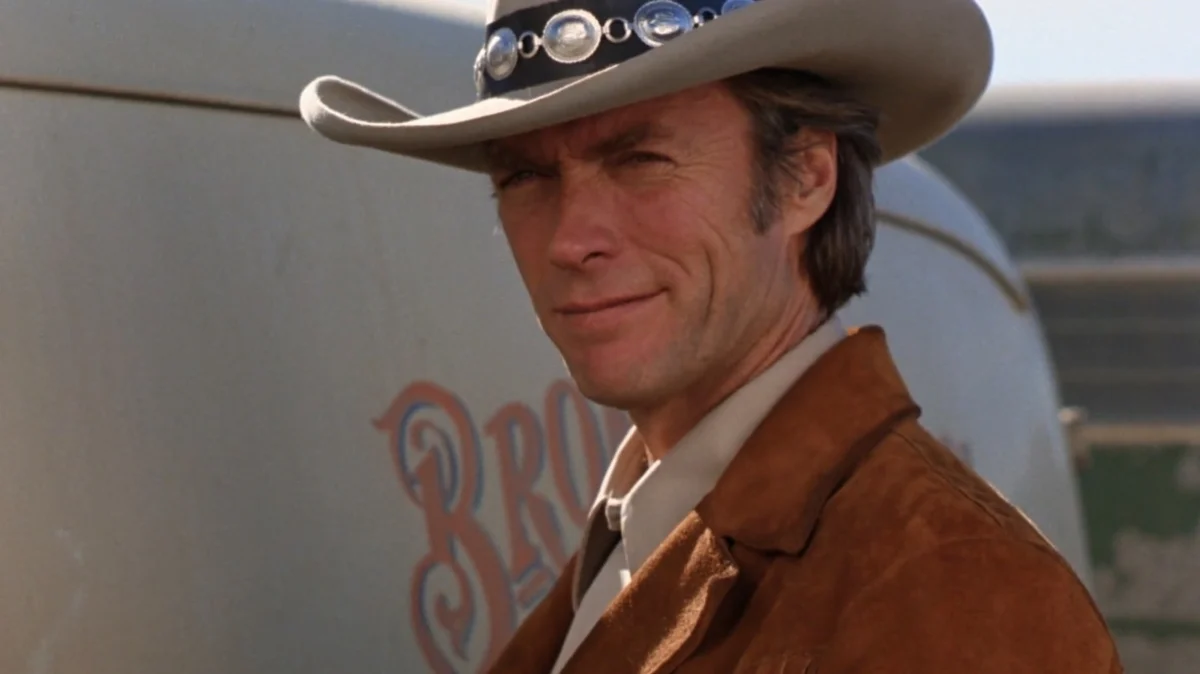
Clint Eastwood is a name synonymous with the stoic, flinty-eyed archetypes of American masculinity. From the nameless drifter of Sergio Leone’s "Spaghetti Westerns" to the rule-breaking Detective Harry Callahan, Eastwood’s early career was defined by a specific brand of rugged individualism and lethal efficiency. However, behind the squint and the .44 Magnum was a filmmaker deeply invested in the deconstruction of his own mythos. Among his vast filmography, which spans seven decades, the 1980 film Bronco Billy remains one of the most significant, if commercially overlooked, entries.
While audiences of the era preferred his more violent or slapstick offerings, Eastwood has remained a steadfast defender of this whimsical, character-driven dramedy. Bronco Billy represents a pivotal moment where the world’s biggest movie star attempted to trade cynicism for sincerity, a move that provides deep insight into Eastwood’s evolution as both an artist and a man.
Main Facts: A Departure from the "Dirty Harry" Persona
Released in June 1980, Bronco Billy was directed by and starred Clint Eastwood as the titular character, Billy McCoy. The film follows the leader of a struggling, ragtag traveling Wild West show. Unlike the "Man with No Name," Billy McCoy is not a legendary gunfighter from the 1800s; he is a former shoe salesman from New Jersey who has reinvented himself as a modern-day cowboy hero. His troupe is comprised of social outcasts, former convicts, and dreamers who have all abandoned their pasts to embrace a romanticized, albeit fading, vision of the American West.
The film co-starred Sondra Locke as Antoinette Lily, a spoiled heiress who finds herself stranded and eventually joins the show. The narrative functions as a gentle satire of the Western genre while simultaneously serving as an earnest tribute to the values of the "Old West"—honor, kindness, and the "can-do" spirit. For Eastwood, the film was a deliberate attempt to play to a family audience and to explore a softer, more idealistic side of his screen presence. Despite its warmth, the film struggled to find the massive audience that typically flocked to Eastwood’s more aggressive projects.
Chronology: From Spaghetti Westerns to Sincere Storytelling
To understand the significance of Bronco Billy, one must look at the trajectory of Eastwood’s career leading up to 1980.
The Rise of the Icon (1964–1971)
Eastwood’s ascent began with the "Dollars Trilogy," which redefined the Western as a gritty, cynical, and violent genre. By the time he returned to the United States, he was a global superstar. He solidified this status with Dirty Harry (1971), a film that tapped into the urban anxieties of the Nixon era. However, even at his peak, Eastwood was restless. In 1971, the same year as Dirty Harry, he released his directorial debut, Play Misty for Me, a psychological thriller where he played a vulnerable man stalked by a fan. This demonstrated an early willingness to subvert his "tough guy" image.
The Peak of Commercial Power (1972–1979)
Throughout the 1970s, Eastwood was the king of the box office. He oscillated between revisionist Westerns like The Outlaw Josey Wales (1976)—which he considers a high point of his career—and massive commercial hits like Every Which Way But Loose (1978). The latter, a redneck comedy featuring an orangutan named Clyde, was a staggering success, proving that Eastwood’s audience would follow him into almost any genre, provided it was entertaining.
The 1980 Pivot: Bronco Billy
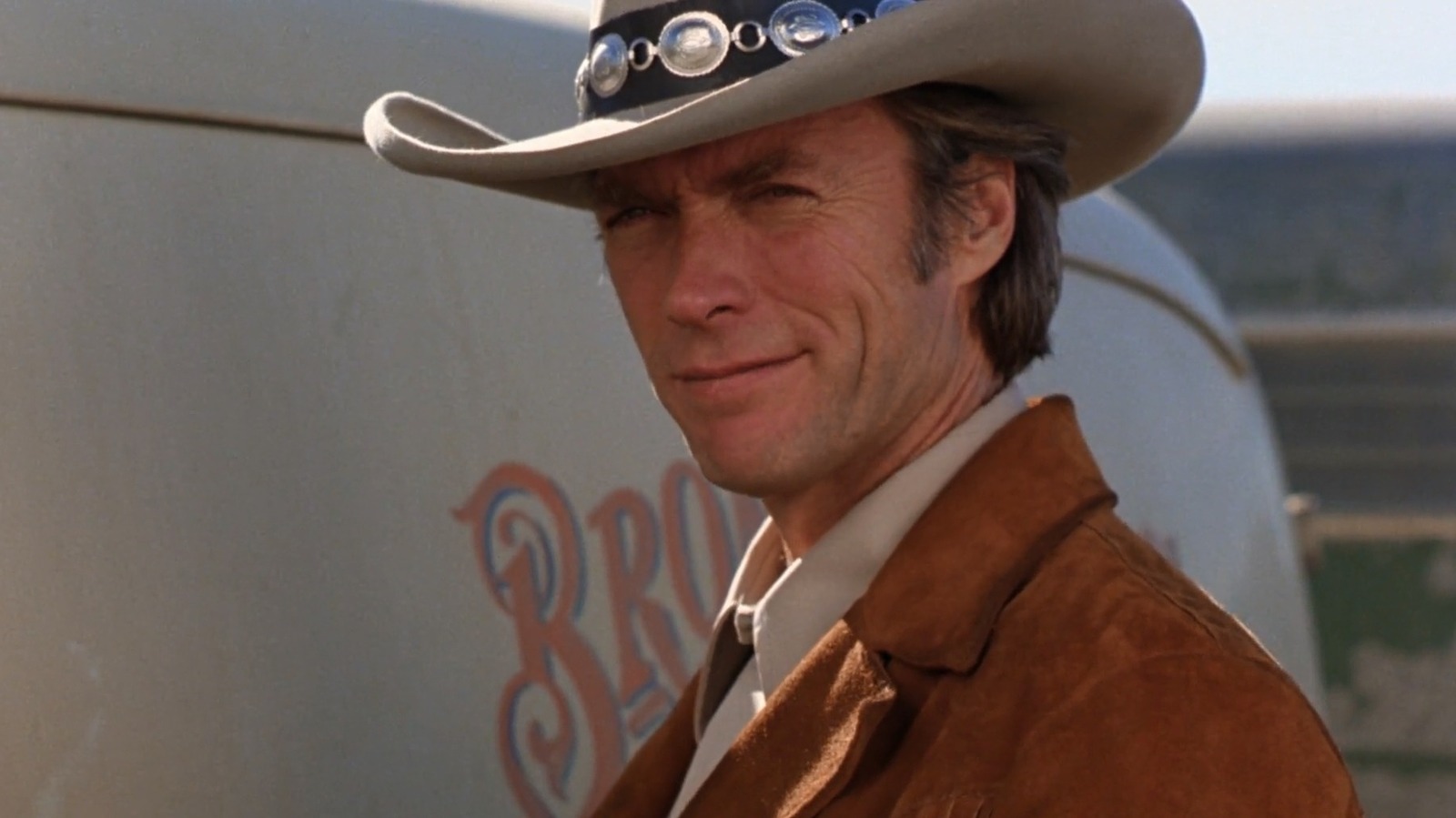
By 1980, Eastwood felt he had earned enough "capital" with his fans to take a genuine creative risk. Bronco Billy was filmed in just five weeks, primarily in Idaho. It was a project born of passion rather than commercial calculation. Eastwood saw in the script a chance to address the growing cynicism of the late 1970s and early 1980s. While the world was moving toward the high-octane blockbusters of the Reagan era, Eastwood wanted to look backward at a simpler, more virtuous form of entertainment.
Supporting Data: The Financial and Critical Disconnect
When analyzing the success of Bronco Billy, the data presents a nuanced picture. By standard industry metrics, the film was a success; however, by "Eastwood metrics," it was a disappointment.
Box Office Performance
Bronco Billy was produced on a modest budget of approximately $6.5 million. It went on to gross $24.3 million at the domestic box office. While this represented a healthy return on investment, it paled in comparison to Eastwood’s other 1980 release, Any Which Way You Can (the sequel to his orangutan comedy), which earned over $70 million. The disparity highlighted a clear trend: audiences were more interested in seeing Eastwood engage in barroom brawls and slapstick than in watching him lead a troupe of philosophical circus performers.
Critical Reception
While the general public was somewhat indifferent, critics were surprisingly warm toward the film. Many praised Eastwood’s direction and his willingness to poke fun at his own legendary status. The film currently holds a respectable rating among historians of his work, who view it as a precursor to his later, more acclaimed directorial efforts. It was recognized not for its action, but for its heart—a rarity in the Eastwood canon at that time.
The 2019 Revival
The enduring appeal of the story was validated decades later. In 2019, Bronco Billy was adapted into a stage musical, premiering in Los Angeles to positive reviews. The transition to musical theater underscored the inherent "theatricality" and "showmanship" that Eastwood had embedded in the original film, proving that the story’s themes of reinvention and found family were timeless.
Official Responses: Eastwood on "Fighting Cynicism"
Clint Eastwood has never been one to apologize for his creative choices. In a 1982 interview conducted during the promotion of his high-tech thriller Firefox, Eastwood was asked directly about the lukewarm reception of Bronco Billy. His response was characteristically blunt and insightful.
"It was a favorite project of mine," Eastwood remarked. "I liked the film. It had some purity, a certain fighting against the cynicism of our day. There was a certain element of it that I always enjoyed—the story."
Eastwood acknowledged that the film might have been "too old-fashioned" for an audience that had grown accustomed to the grittiness of the 1970s. However, he defended the necessity of the experiment. "You can’t do the same thing all the time," he explained. "I’d still be in Italy doing Westerns like I started. There’s a time to move on and try something else."
These comments reveal a filmmaker who viewed his career as a marathon rather than a sprint. Eastwood understood that to survive in the industry for decades, he had to occasionally alienate his core fan base in favor of artistic growth. For him, Bronco Billy wasn’t a failure; it was a necessary exercise in sincerity.
Implications: A Bridge to Unforgiven and Beyond
The legacy of Bronco Billy extends far beyond its 1980 box office numbers. It serves as a vital psychological bridge between the "invincible" Eastwood of the 60s and 70s and the "reflective" Eastwood of the 90s and 2000s.
Subverting the Myth
Bronco Billy allowed Eastwood to explore the idea of the "Cowboy" as a performance. By playing a man who pretends to be a Western hero, Eastwood was commenting on his own career. This self-awareness would eventually culminate in Unforgiven (1992), where he played William Munny, a retired killer who can no longer even mount a horse properly. Without the gentle deconstruction found in Bronco Billy, the searing critique of Unforgiven might never have been possible.
The "Found Family" Theme
The film also established a recurring theme in Eastwood’s directorial work: the "found family." From the troupe in Bronco Billy to the unlikely bonds in Million Dollar Baby or Gran Torino, Eastwood has spent much of his later career exploring how broken individuals come together to find purpose. Bronco Billy was the first time he centered this theme so prominently, moving away from the "lone wolf" narrative that had defined his early years.
A Lesson in Artistic Longevity
Finally, Bronco Billy stands as a testament to the importance of creative conviction. In an industry driven by sequels and "safe" bets, Eastwood’s insistence on making a movie about a shoe-salesman-turned-cowboy simply because he liked the story is a masterclass in artistic integrity. It reminds us that a filmmaker’s "minor" works often contain the most honest glimpses into their soul.
In conclusion, Bronco Billy may not have the cultural footprint of The Good, the Bad and the Ugly or the visceral impact of Dirty Harry, but for Clint Eastwood, it remains a badge of honor. It was the moment he chose purity over profit and sincerity over cynicism—a choice that has allowed him to remain a relevant and evolving force in cinema for over half a century. As the "Cowboy" himself might say, it wasn’t about the size of the crowd, but the quality of the show.


Leave a Comment