
From Southern Gothic to Superheroes: Exploring Erin Moriarty’s Pivotal Early Role in HBO’s True Detective
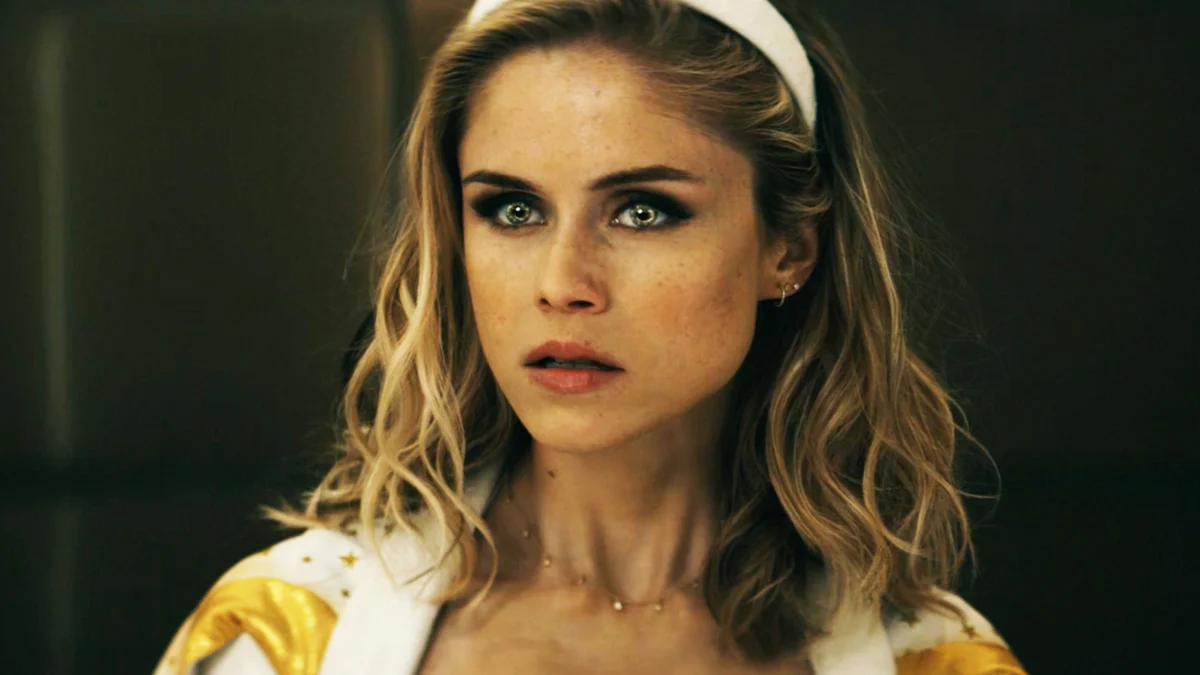
Before she was the beacon of hope known as Starlight in Prime Video’s subversive hit The Boys, Erin Moriarty was a young actress navigating the dark, swampy corridors of one of the most acclaimed seasons of television ever produced. Long before she donned the gold-and-white spandex of Annie January, Moriarty delivered a haunting, understated performance in the first season of HBO’s True Detective. While her role as Audrey Hart, the rebellious daughter of Woody Harrelson’s Marty Hart, may have been limited in screen time, its impact on the narrative’s emotional stakes was profound.
The trajectory of Moriarty’s career offers a fascinating look at how a "prestige TV" pedigree can prepare an actor for the complexities of modern genre storytelling. In True Detective, she played a victim of collateral damage in a world of toxic masculinity and occult horror; in The Boys, she plays a survivor reclaiming her power from a corporate machine. To understand Moriarty’s current status as a household name, one must look back at the 2014 masterpiece that set the stage for her ascent.
Main Facts: The Emergence of Audrey Hart
In 2014, True Detective Season 1 became a global phenomenon. Written by Nic Pizzolatto and directed in its entirety by Cary Joji Fukunaga, the series redefined the "prestige crime" genre, blending hard-boiled detective tropes with cosmic horror and nihilistic philosophy. At the center of this storm were two detectives: the ascetic, pessimistic Rustin Cohle (Matthew McConaughey) and the outwardly traditional but deeply flawed Marty Hart (Woody Harrelson).
Erin Moriarty entered this landscape as the teenage version of Audrey Hart. The character was essential to Marty’s arc, representing the domestic life he claimed to cherish but constantly jeopardized through his infidelities and professional obsessions. Audrey’s transformation from a playful child to a disturbed, defiant adolescent served as a barometer for the moral decay within the Hart household.
While Moriarty was only 19 during filming, she was tasked with holding her own against Harrelson, a seasoned veteran delivering a career-best performance. Her portrayal of Audrey was marked by a quiet, simmering resentment—a stark contrast to the bright-eyed idealism she would later bring to the early episodes of The Boys.
Chronology: From Louisiana Swamps to Vought International
The evolution of Erin Moriarty’s career can be mapped through three distinct phases that highlight her growth as a dramatic performer.
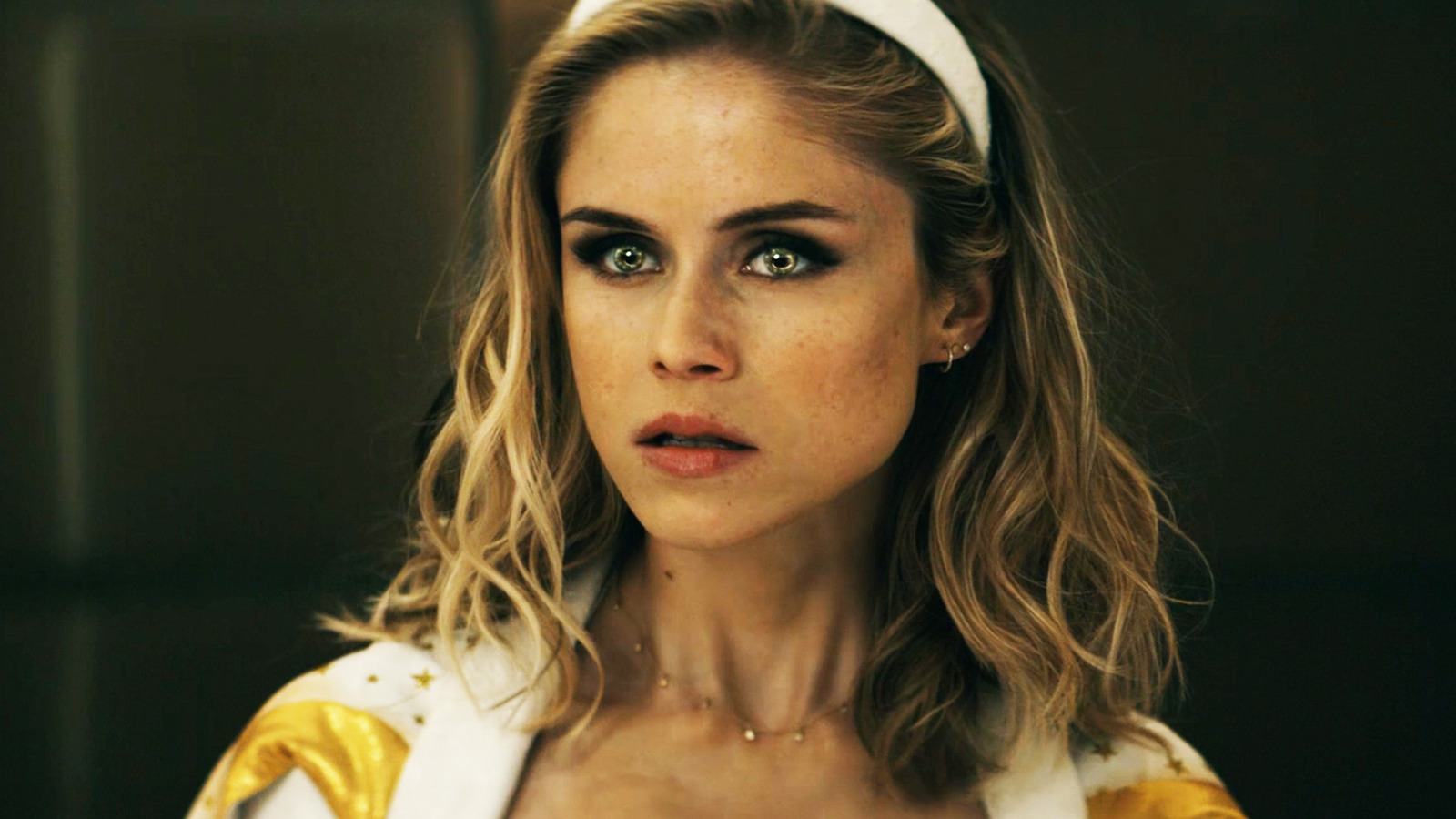
1. The Casting and the Fukunaga Vision (2013–2014)
Moriarty’s entry into the world of True Detective was not a straightforward path. Initially, she auditioned for a different, smaller role. However, director Cary Joji Fukunaga saw a specific quality in her—a mixture of vulnerability and steely defiance—that made her perfect for the older version of Audrey Hart.
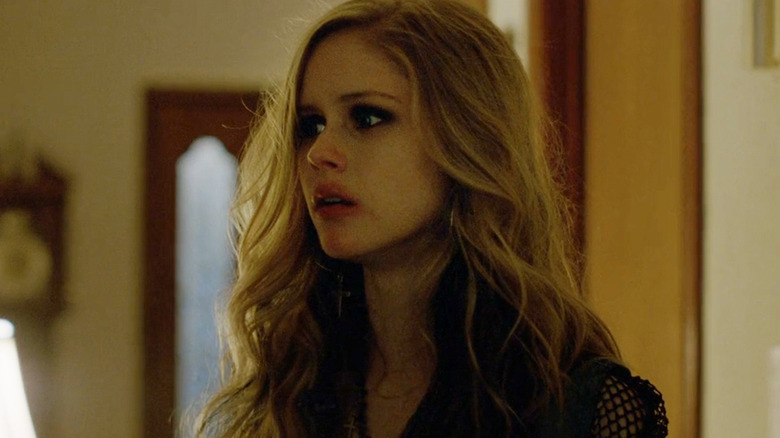
During the production of Season 1, the show utilized a non-linear timeline spanning 17 years. This required the role of Audrey to be split between two actresses. Madison Wolfe played the younger Audrey, while Moriarty took over for the segments set in the late 1990s and early 2000s. This transition was crucial; Moriarty had to embody the psychological fallout of the traumas hinted at during Audrey’s childhood.
2. The Bridge Years (2015–2018)
Following the success of True Detective, Moriarty began to build a resume that favored gritty, character-driven narratives. She appeared in the Netflix Marvel series Jessica Jones as Hope Shlottman, a role that required immense emotional range as a victim of the villainous Kilgrave. This role further solidified her ability to play characters trapped in dark, oppressive systems—a theme that would reach its zenith in her next major project.
3. The Starlight Phenomenon (2019–Present)
In 2019, Moriarty was cast as Annie January/Starlight in The Boys. The show became an instant hit, and Moriarty’s character became the moral compass of a series defined by depravity. While The Boys is a satirical superhero show, Moriarty has frequently noted that she approaches the role with the same dramatic weight she applied to her work on HBO. The success of The Boys has led to spin-offs like Gen V, where Moriarty’s character remains a central figure in the lore.
Supporting Data: The Narrative Weight of a "Small" Role
In the context of True Detective, no character is truly "small." Every interaction in Nic Pizzolatto’s script is designed to build a world where the line between the investigators and the monsters they hunt is razor-thin.
The Mirror of Marty’s Failure
Audrey Hart serves as a mirror for Marty’s hypocrisy. Marty often justifies his violent outbursts and affairs by claiming he is "protecting his family." However, Moriarty’s performance shows the reality: his family is falling apart because of his absence and his temper. The most famous scene between the two involves Marty discovering Audrey in a car with two boys. The ensuing confrontation, which culminates in Marty slapping his daughter, is a pivotal moment of domestic horror. Moriarty’s reaction—a blend of shock, hatred, and a lack of surprise—perfectly encapsulates the broken bond between father and child.
The "Dolls" Mystery and Fan Theories
One of the most enduring mysteries of True Detective Season 1 involves a scene from Audrey’s childhood where she and her sister arrange their dolls in a graphic, ritualistic tableau reminiscent of the "Yellow King" cult’s crime scenes.
When Moriarty took over the role as the teenage Audrey, fans looked for signs that the character had been abused or recruited by the cult. While the show never explicitly confirms this, Moriarty played Audrey with a sense of "lostness" that fueled these theories for a decade. This ambiguity is a testament to her ability to convey a complex internal history without the need for expository dialogue.
Official Responses: Moriarty on Working with Legends
In various retrospectives and interviews, most notably with The Daily Beast, Moriarty has reflected on the intimidating yet rewarding experience of joining the True Detective cast.
"I agreed [to the role] because I wanted to work with all the amazing people involved," Moriarty stated, emphasizing that the opportunity to observe Harrelson and McConaughey was a masterclass in acting. She noted that the atmosphere on set was intense, matching the somber tone of the show, but that Harrelson was a supportive scene partner who encouraged her to lean into the character’s rebellious streak.
Regarding the fan theories about Audrey’s trauma, Moriarty has remained diplomatically mysterious, suggesting that the beauty of the show lies in what is left unsaid. She has often credited the series for teaching her how to "act in the silences," a skill she uses extensively in The Boys when Annie January must hide her true intentions from the psychopathic Homelander.
Implications: The Legacy of Prestige Television
The presence of an actor like Erin Moriarty in a show as high-caliber as True Detective highlights a shift in the television industry. In the past, "genre" shows like The Boys were often seen as separate from "prestige" dramas. Today, however, the talent pool is shared.
Moriarty’s journey suggests several key implications for the industry:
- The "Prestige" Training Ground: Actors who start in high-concept HBO dramas bring a level of grounded realism to genre fiction. This is why The Boys feels more like a political thriller than a standard superhero romp; its actors, including Moriarty, treat the stakes as life-and-death.
- The Evolution of the Female Hero: Moriarty has carved out a niche playing women who are initially underestimated by powerful, patriarchal figures (Marty Hart, Vought International) but eventually find their own agency.
- The Flat Circle of Career Success: As the phrase "Time is a flat circle" suggests, Moriarty’s career has come full circle. She started by playing a girl whose life was controlled by the whims of a powerful, flawed man, and she has become an icon playing a woman who refuses to be controlled by anyone.
Conclusion
While Erin Moriarty is currently synonymous with the shimmering light of Starlight, her performance in True Detective remains a vital chapter in her filmography. It was in the rain-soaked landscapes of Louisiana that she first demonstrated the ability to convey deep-seated trauma and quiet resilience.
For fans of The Boys who have yet to experience the first season of True Detective, the series offers more than just a "before they were famous" look at Moriarty. It provides a foundational understanding of the darkness she is capable of portraying—a darkness that makes her heroic turn as Annie January all the more earned. In the world of prestige television, Moriarty proved early on that she didn’t need a cape to be the most compelling person in the room.




Leave a Comment