The Cult of the Golden Apple: Unpacking the Bizarre Brilliance of an 80s Sci-Fi Musical Oddity
In the vibrant tapestry of 1980s cinema, a particular thread of fantasy films emerged – a legacy characterized by its distinctive blend of the earnest, the audacious, and the downright bizarre. While the 1990s largely saw this unique cinematic strain recede, it resurfaced in the 2000s, albeit often in a more polished, less experimental form. The "80s Fantasy Film Club" column delves into this fascinating era, examining canonical works and exploring their enduring, often peculiar, impact. Following deep dives into the brutal edge of 1981’s Dragonslayer and the schlocky depths of Roger Corman’s Sorceress, we now turn our gaze to a film that resides at the pinnacle of unintentional camp: Menahem Golan and Yoram Globus’s 1980 sci-fantasy biblical allegory musical, The Apple.
For many, The Apple is not merely a bad movie; it is a transcendent experience in cinematic failure, a work so profoundly misguided in its ambition that it loops back around to become something truly magnificent. This article aims to peel back the layers of this golden, glitter-choked enigma, exploring its origins, its calamitous reception, and its unlikely ascension to cult status, all while analyzing the rich, if chaotic, data points that make it a cornerstone of "so bad it’s good" cinema.
Main Facts: A Dystopian Disco Messiah
The Apple, released in 1980, is an English-language Israeli-American co-production that boldly fuses science fiction, fantasy, rock opera, and biblical allegory into an unforgettable, if often baffling, spectacle. Directed and co-written by the prolific Menahem Golan, a co-founder of the infamous Cannon Films, alongside his cousin Yoram Globus, the film aimed to be a major musical hit, echoing the success of The Rocky Horror Picture Show.
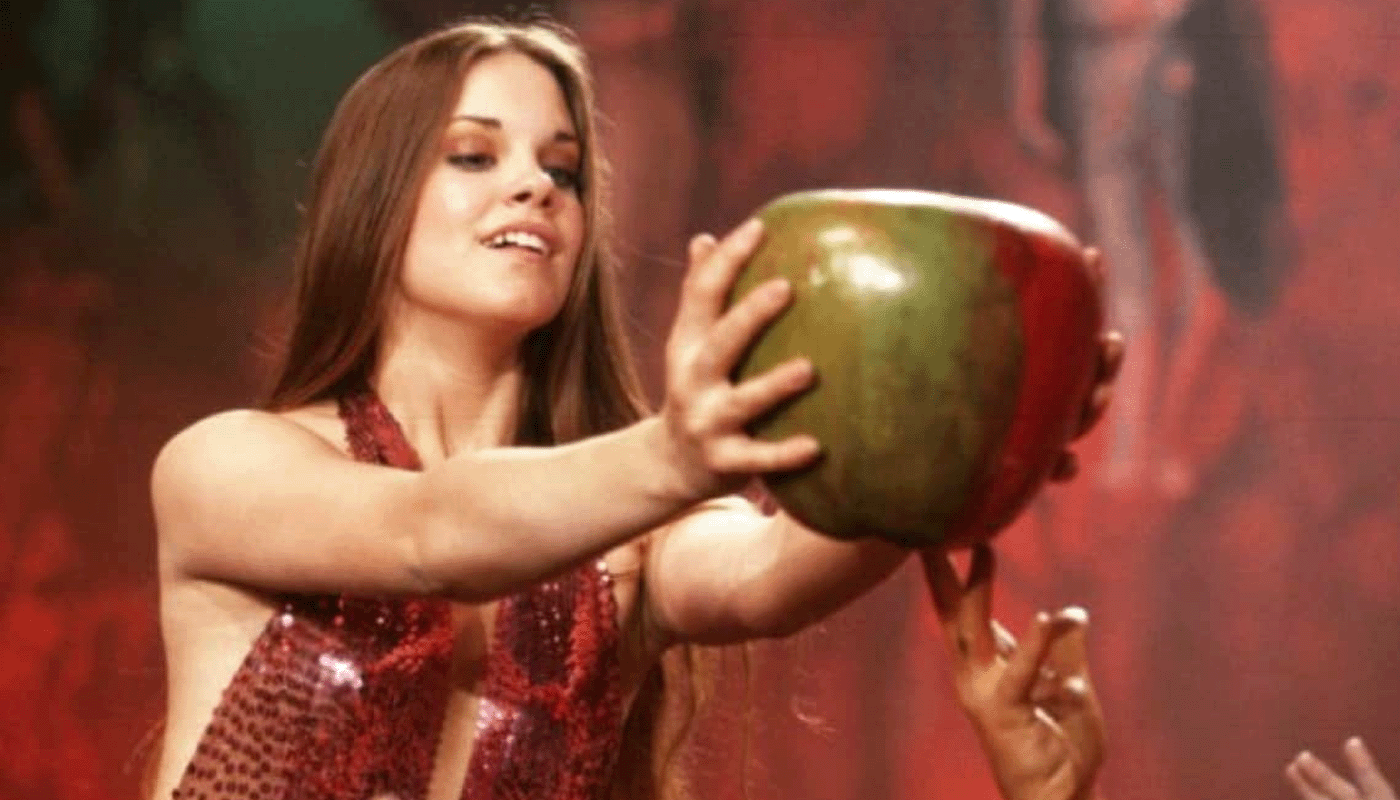
Set in the "distant future" of 1994, the narrative plunges viewers into a world where the global pop music industry, dominated by the insidious Boogalow International Music (BIM) empire led by the Satanic Mr. Boogalow (Vladek Sheybal), wields totalitarian control over society. The story follows the innocent folk duo Alphie (George Gilmour) and Bibi (Catherine Mary Stewart) from Moosejaw, Canada, as they participate in the Worldvision Song Competition. Their earnest ballad, "Love, the Universal Melody," surprisingly triumphs over BIM’s manufactured disco anthem, "BIM’s the Only Way." This victory sets in motion a Faustian struggle, with Mr. Boogalow tempting Bibi with fame and fortune—the titular "apple"—at the cost of her soul and integrity.
Initially met with widespread critical derision and box office failure, The Apple languished in obscurity for decades. However, its audacious vision, peculiar performances, and bewildering musical numbers eventually garnered it a fervent cult following in the early 2000s. Today, it is celebrated at midnight screenings, sing-alongs, and through home video releases, firmly cementing its place as a quintessential entry in the pantheon of beloved cinematic oddities. For the "80s Fantasy Film Club," The Apple serves as a prime example of the era’s willingness to push genre boundaries, even if the results were spectacularly unhinged.
Chronology: From Grand Vision to Glorious Failure
The journey of The Apple from ambitious concept to notorious cult classic is as convoluted and bizarre as the film itself, deeply intertwined with the rise of Cannon Films and the singular vision of Menahem Golan.
The Genesis of The Apple
The late 1970s marked a period of burgeoning ambition for Menahem Golan and Yoram Globus, the Israeli cousins who would soon become synonymous with Cannon Films. Their business model was straightforward: produce a high volume of low-to-mid-budget genre films, often exploiting popular trends, and distribute them widely. Golan, the more artistically inclined of the duo, harbored aspirations beyond mere exploitation cinema. He envisioned The Apple not just as another genre flick, but as a culturally significant musical that would capture the zeitgeist and rival blockbusters of the era. He genuinely believed it could be the next Rocky Horror Picture Show, a social commentary disguised as a dazzling spectacle.
The casting choices for The Apple reflect a mix of international talent and lesser-known performers. Vladek Sheybal, known for his role as Kronsteen in From Russia with Love, brought a chilling, theatrical menace to Mr. Boogalow. George Gilmour and Catherine Mary Stewart, relatively fresh faces, were cast as the wholesome Alphie and Bibi, embodying the innocence corrupted by the music industry. The unexpected inclusion of British stage and screen legend Miriam Margolyes as Alphie’s kindly landlady remains one of the film’s most inexplicable, yet delightful, cameos, highlighting the eclectic nature of the production. Nigel Lythgoe, who would later achieve fame as a judge on So You Think You Can Dance and American Idol, was brought in to choreograph the film’s ambitious musical numbers, marking an early, if chaotic, chapter in his illustrious career.
Production Challenges and Eccentricities
The production of The Apple was, by many accounts, a chaotic affair, characterized by the "cursed production" hinted at by cast members like Francesca Poston (the BIM receptionist). Filmed predominantly in West Germany with a mix of European and American talent, the production faced significant challenges inherent in ambitious low-budget filmmaking. Golan’s directorial style was reportedly intense and hands-on, pushing his cast and crew to realize his grand, often ill-defined, vision. The sheer scale of the musical numbers, with their intricate choreography, elaborate costumes, and futuristic sets, often stretched the film’s modest resources to their breaking point.
Accounts from cast members describe a frantic atmosphere, where creative decisions were often made on the fly, leading to the film’s famously disjointed narrative and jarring tonal shifts. The brutalist architecture of the German sets provided an inadvertently inspired retro-futuristic backdrop, while the costume department wrestled with Golan’s vision of a glittering, hyper-sexualized future, resulting in outfits that looked, as one observer put it, "as though they were designed by a Medieval monk reading mistranslated descriptions of Elton John stage costumes." This clash between grand artistic intent and practical limitations ultimately forged the film’s unique, often bewildering, aesthetic.
Release and Initial Fallout
The premiere of The Apple at the 1980 Montreal World Film Festival was nothing short of a disaster. Golan, reportedly convinced he had a mega-hit on his hands, was devastated by the overwhelmingly negative critical reception. Reports indicate his despair was so profound that he contemplated jumping out a window, a testament to the chasm between his artistic conviction and the audience’s reaction. Critics universally panned the film, accurately identifying it as a "cut-rate Rocky Horror Picture Show" that failed to replicate its predecessor’s charm or subversive wit.
Commercially, The Apple was a box office bomb, recouping little of its production costs. Its initial theatrical run was brief, and it quickly faded into obscurity, dismissed as an embarrassing misstep by a director who had clearly overreached. The critical consensus at the time was damning, solidifying its reputation as one of the worst films of the decade.
The Rise of a Cult Phenomenon
For nearly two decades, The Apple remained largely forgotten, a cinematic footnote for those tracking the careers of Cannon Films or its eccentric founder. However, with the dawn of the new millennium, a curious phenomenon began to unfold. Fueled by the rise of home video, DVD releases, and the burgeoning internet culture, The Apple slowly but surely began to find its audience. Midnight screenings, reminiscent of Rocky Horror‘s early days, started popping up, attracting viewers drawn to its sheer audacity and unintentional humor.
The film’s journey into cult classic status was further propelled by platforms that celebrated "bad movies," such as Mystery Science Theater 3000 (though The Apple was never featured, its spirit resonated with MST3K fans) and, years later, podcasts like How Did This Get Made, where its absurdities were lovingly dissected and celebrated. Its unique blend of earnestness, camp, and bewildering narrative proved irresistible to a new generation of cinephiles who reveled in films that were "so bad they were good." This resurrection transformed The Apple from a forgotten flop into a cherished totem of joy, a testament to the enduring power of cinematic ambition gone delightfully awry.
Supporting Data: The Anatomy of a Misfire Masterpiece
To understand The Apple‘s unique appeal, one must delve into the specific elements that coalesce into its glorious, chaotic whole. From its heavy-handed narrative to its baffling musical choices and outlandish aesthetics, every aspect contributes to its accidental genius.
Narrative and Allegorical Depths
The Apple‘s central conceit is a thinly veiled, yet relentlessly pursued, biblical allegory. Alphie and Bibi are transparent stand-ins for Adam and Eve, while Mr. Boogalow, with his single golden devilish horn and sparkly Van Dyke beard, is unequivocally Satan. The lure of fame and selling out becomes the forbidden fruit—the titular Apple. This allegory is not subtle; it is pounded home with the force of a disco beat, often to the detriment of nuanced storytelling. The film’s dystopian vision of 1994, where pop music charts control governments and "BIM marks" are mandatory, serves as a clunky, disco-infused homage to George Orwell’s 1984, albeit one filtered through a lens of glitter and synths. The "National BIM Hour," a mandatory national fitness program blasted with propaganda music, exemplifies this totalitarian pop culture.
Perhaps the most bewildering narrative turns include the infamous "pansexual orgy" scene, where Alphie, after imbibing a "Passionate Pandi Special," wanders into a chaotic, drug-fueled bacchanal. This sequence, complete with the hallucinogenic number "I’m Coming for You" (whose innuendo is so blatant it misses being a double entendre), highlights the film’s willingness to throw anything at the screen, regardless of narrative coherence. The abrupt arrival of the Rapture, with Alphie, Bibi, their newborn, and a repentant Pandi marching into the sky to join Mr. Topps (the Liberace-esque stand-in for God, driving a spectral golden Rolls-Royce), is a final, bewildering crescendo of biblical sci-fantasy excess. The suddenness of this divine intervention, concluding the film with no real resolution beyond a helpful on-screen "The End," solidifies The Apple‘s status as a narrative train wreck of epic proportions.
Musical and Choreographic Quirks
The music of The Apple is a capacious, genre-hopping feast, ranging from doo-wop and reggae to rockabilly, disco, and soft rock, often within the same scene or even song. While the songs themselves are undeniably catchy, their lyrics are a masterclass in baffling composition. They are overwritten, awkward, and frequently sacrifice sense for rhyme. A prime example is the title song, which dedicates precious seconds and considerable production effort to bringing an "actual actual vampire" to life, a character who never reappears or serves any purpose. The lyricists’ obsession with cramming too many syllables into a line is legendary; the opening number’s repeated lyric "BIM’s the only way" is consistently garbled into "BIM’s on the way" due to pacing constraints, even fooling Amazon Prime’s subtitles.
Nigel Lythgoe’s choreography is equally remarkable. It is intricate, aggressive, and performed by dancers who visibly struggle to keep up. The zenith of this struggle is Catherine Mary Stewart’s performance as Bibi during "Speed." Crammed into a restrictive silver leotard and thigh-high platform boots, she battles desperately to hit her marks and avoid tripping, delivering a performance that evokes genuine sympathy rather than disdain. Her Janis Joplin-esque huskiness and motor control further enhance the sense of earnest, physical struggle, making the choreography not merely "bad" but a captivating display of human endeavor against impossible odds.
Aesthetic of Accidental Genius
The visual language of The Apple is a jarring yet mesmerizing blend of brutalist production design and inadvertently inspired retro-futuristic touches. The cars, resembling early, blocky prototypes, bear an uncanny resemblance to "The Homer" from The Simpsons episode "Oh Brother, Where Art Thou?", hinting at a possible, albeit unconfirmed, influence. The sets are stark and imposing, creating a sense of a future that is both technologically advanced and aesthetically oppressive.
The costumes are a glitter-choked explosion of chest-baring, skin-tight ensembles that seem to have no logical connection to either the dystopian setting or the biblical allegory. The description of them as being designed by "a Medieval monk reading mistranslated descriptions of Elton John stage costumes" perfectly encapsulates their unique, campy grandeur. This visual incongruity, combined with the other elements, contributes to the pervasive feeling that The Apple was "made by aliens trying desperately to prove their human credentials"—a film that understands the superficial elements of human culture but utterly misses the underlying logic.
Official Responses: Critical Vitriol and Golan’s Dogged Conviction
The official responses to The Apple paint a stark picture of its initial failure and the director’s unyielding belief in his work.
Critical Reception
The initial critical reception of The Apple was overwhelmingly negative, bordering on hostile. Reviewers at the Montreal World Film Festival, and subsequently during its brief theatrical release, lambasted the film for its nonsensical plot, atrocious lyrics, wooden acting, and bewildering aesthetics. It was widely dismissed as a misguided attempt to capitalize on the rock opera trend, failing miserably in comparison to its obvious inspiration, The Rocky Horror Picture Show. The film’s 27% rating on Rotten Tomatoes reflects this initial critical drubbing, placing it firmly in the category of critically panned cinema. Critics found little to redeem in its chaotic narrative and over-the-top performances, viewing it as a prime example of cinematic hubris.
However, over time, as the film transitioned into a cult classic, the critical lens shifted. What was once seen as unforgivable incompetence began to be re-evaluated as unintentional genius. The very elements that drew scorn—the audacious ambition, the earnest overacting, the bizarre musical numbers—became the qualities celebrated by its newfound audience. This shift highlights a common trajectory for many "bad-good" movies, where sincerity and audacity, even when misplaced, can eventually earn a unique form of critical appreciation from a different kind of audience.
Menahem Golan’s Unwavering Conviction
Perhaps no "official response" is more telling than that of Menahem Golan himself. Despite the universal condemnation, Golan remained staunchly convinced of The Apple‘s artistic merit. His famous quote, "It’s impossible that I’m so wrong about it. I cannot be that wrong about the movie. They just don’t understand what I was trying to do," perfectly encapsulates his "Ed Wood-level delulu" (delusion). This unwavering belief, despite overwhelming evidence to the contrary, is a hallmark of truly exultant bad art. It is the boundless ambition and delusional self-confidence of its creator that elevates The Apple from mere incompetence to a work of fascinating, almost artistic, failure.
Golan’s conviction was not an isolated incident; it was emblematic of the Cannon Films ethos. He and Globus often pursued projects with a relentless, almost blind, optimism, believing in their ability to deliver entertainment, regardless of critical opinion or budgetary constraints. This personal response from Golan is crucial to understanding The Apple‘s enduring legacy: it was a film made with genuine, if profoundly misguided, passion, a personal magnum opus that simply failed to connect with its intended audience, only to find a different, more appreciative one decades later.
Implications: The Ripple Effect of a Golden Failure
The Apple‘s impact, while not immediately evident, has rippled through popular culture and left an indelible mark on cinematic history, particularly within the unique ecosystem of "bad movies" and the Cannon Films legacy.
A Precursor to Pop Culture Oddities
While direct proof is elusive, The Apple‘s bizarre retro-futuristic vehicles bear an uncanny resemblance to "The Homer" car from The Simpsons, suggesting a possible, if subliminal, influence on pop culture designers. More broadly, the film arguably paved the way for other late 70s/early 80s musical sequels to embrace weirder, bolder choices. Films like 1982’s Grease 2 and 1983’s Staying Alive both ventured into far stranger and more experimental territory than their predecessors, exhibiting an impressive oddness that resonates with The Apple‘s spirit of audacious divergence.
Furthermore, The Apple‘s unhinged blend of rock and roll, sci-fi, and fable opened a creaky door for later "rock & roll fables" like Walter Hill’s 1984 cult classic Streets of Fire. This bold lineage, stretching from The Apple‘s early, chaotic foray into the genre, can even be seen as a distant ancestor to the modern rock opera tradition, leading to ambitious projects like Lin-Manuel Miranda’s forthcoming musical version of The Warriors. The Apple proved that audiences, even if initially resistant, could eventually embrace narratives where music and genre conventions were pushed to their most extreme and unconventional limits.
Shaping the Cannon Films Legacy
On a more tangible note, The Apple played a foundational role in shaping the identity of Cannon Films. As an early, ambitious box-office bomb for Menahem Golan and Yoram Globus, its failure likely reinforced their commitment to a high-volume, genre-focused production model. The film’s sheer, unadulterated oddness set a precedent for the "delightfully weird and wonderful" output that would become Cannon’s hallmark throughout the 80s and early 90s.
Without the loud, awkward, and utterly self-satisfied failure of The Apple, it’s debatable whether Cannon would have embraced the same level of audacious, often B-grade, filmmaking that gave us cult classics like Lifeforce, Bloodsport, and the famously titled Breakin’ 2: Electric Boogaloo (Golan, it seems, truly loved the term "boogaloo"). The Apple‘s initial stumble taught Cannon a valuable lesson, not in humility, but in doubling down on their unique brand of ambitious, yet often flawed, genre cinema. Its legacy is therefore inextricably linked to the very foundation of one of the most distinctive and beloved independent film studios of the era.
The Enduring Power of "So Bad It’s Good"
Ultimately, The Apple stands as a powerful testament to the enduring appeal of "so bad it’s good" cinema. The author’s personal journey, from a Plan 9 From Outer Space-themed birthday to a college obsession with The Apple, highlights a widespread cultural phenomenon: the joy derived from cinematic failures born of boundless ambition and delusional self-belief. These films, far from being dismissed, become totems of joy, celebrated for their earnestness, their audacity, and their unique ability to bring people together in shared appreciation of the absurd.
The Apple is a masterclass in this phenomenon. It failed conventionally as a mainstream musical, yet it succeeded spectacularly as a cultural artifact. Its bizarre narrative, catchy-but-awful songs, over-the-top performances, and utterly unique aesthetic transcend its technical shortcomings, offering a viewing experience unlike any other. It is a film that provokes laughter, wonder, and genuine affection, proving that sometimes, the greatest failures can indeed become the most cherished successes.
The "80s Fantasy Film Club" will continue its exploration of this fascinating decade next time, returning to the realm of sword and sorcery with the aptly named 1982 film, The Sword and the Sorcerer. But for now, The Apple reigns supreme as a golden, glitter-drenched testament to the weird, wild, and wonderful world of 1980s fantasy cinema.