The Dark Forest of Spatial Intelligence: Inside the Secretive Race for AI World Models
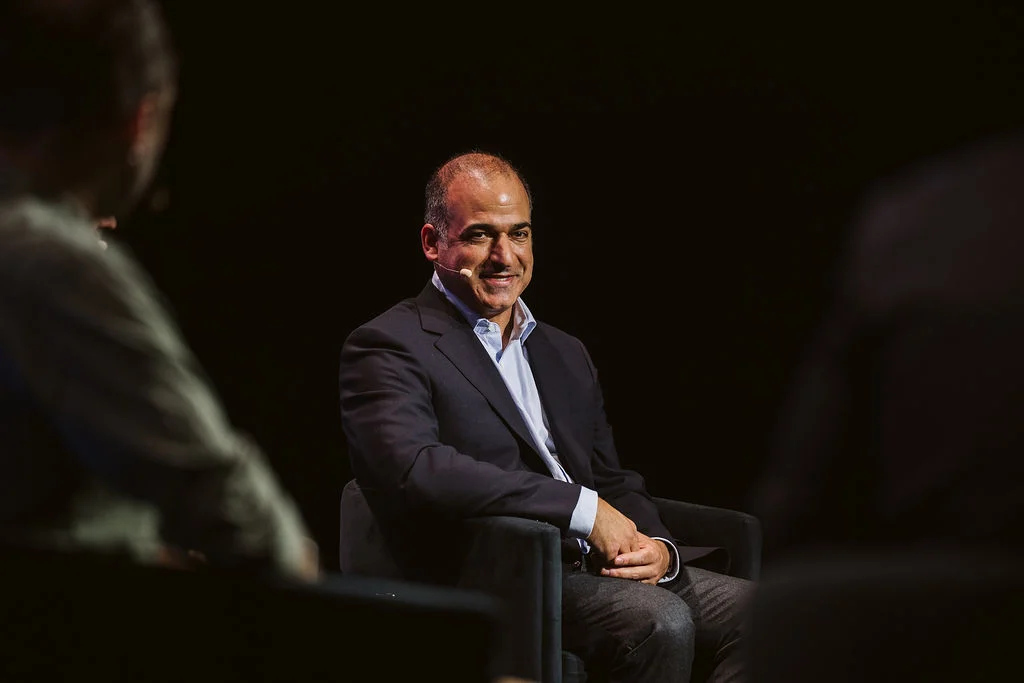
SAN FRANCISCO — In the high-stakes theater of Silicon Valley’s artificial intelligence boom, the loudest voices often belong to those with the least to hide. But at the recent All In conference, a different atmosphere prevailed—one of calculated silence and strategic ambiguity. As the industry pivots from Large Language Models (LLMs) that "talk" to Large World Models (LWMs) that "understand" the physical world, the leading pioneers are retreating into a defensive crouch.
The pursuit of "world models"—AI systems capable of internalizing the laws of physics, spatial relationships, and cause-and-effect—has become the most mysterious corner of the technology sector. Led by titans like Yann LeCun of AMI Labs and Fei-Fei Li of World Labs, the field is flush with venture capital but remains conspicuously absent from the commercial market.
This is not merely a delay in product development; it is a strategic maneuver. In a landscape where competition is predatory and capital is a weapon, the brightest stars in AI are choosing to operate in a "dark forest," fearing that to announce their destination is to invite their own destruction.
Main Facts: The Architecture of Reality
At its most fundamental level, a world model is an AI architecture designed to move beyond the statistical gymnastics of text generation. While an LLM like GPT-4 can describe a glass falling off a table, it does not "know" what gravity is or how glass shatters. A world model, by contrast, seeks to automate "spatial intelligence." It is designed to navigate, predict, and manipulate the three-dimensional world.
The primary players in this space are:
- AMI Labs: Co-founded by Meta’s Chief AI Scientist Yann LeCun and led by researchers like Michael Rabbat. Their focus is on "Joint Embedding Predictive Architecture" (JEPA), a method that allows AI to learn by watching video and predicting missing or future parts of a scene without needing human-labeled data.
- World Labs: Founded by Fei-Fei Li, often called the "Godmother of AI" for her work on ImageNet. World Labs focuses on the "spatial" component of intelligence, aiming to give machines a human-like understanding of 3D environments.
- The Suppliers: A secondary economy of data providers, such as Physicl, which specializes in providing the massive datasets of physical interactions required to train these models.
Despite having valuations in the billions, both AMI and World Labs rank remarkably low on what analysts call the "trying-to-make-money scale." They are currently research-heavy entities with no public-facing API, no enterprise subscription tiers, and no clear timeline for a general release.
Chronology: From Pixels to Physicality (2022–2026)
The trajectory of world models can be traced through a series of technical and economic shifts over the last four years:
- Late 2022 – Mid 2023: The "LLM Summer." OpenAI’s ChatGPT dominates the conversation. However, researchers like Yann LeCun begin publicly critiquing LLMs as "dead ends" for achieving Artificial General Intelligence (AGI), arguing that language is too shallow a medium to understand reality.
- Early 2024: The birth of the "Spatial Intelligence" movement. Fei-Fei Li begins articulating a vision where AI must understand the 3D world to be truly useful. World Labs is formed shortly thereafter, quickly achieving "unicorn" status.
- 2025: AMI Labs (Autonomous Machine Intelligence) is spun out or solidified as a primary vehicle for LeCun’s vision of non-generative, predictive AI. The company begins forming quiet partnerships, such as the Nabia project, exploring AI software for medical professionals.
- September 2026: The current "All In" conference marks a turning point. While the technology has matured—as evidenced by World Labs’ "Marble" demos—the companies have become significantly more guarded about their commercial roadmaps.
Supporting Data: The High Cost of Knowing Everything
The "world model" sector is defined by a massive imbalance between capital input and commercial output.
Investment and Valuation:
Industry estimates suggest that AMI Labs and World Labs have collectively raised upwards of $1.5 billion in 2025 and 2026 alone. This funding comes from a mix of traditional VC (Andreessen Horowitz, Sequoia) and strategic investors who view world models as the "operating system" for the next century of robotics.
The Versatility Problem:
The data suggests that world models are perhaps too useful, leading to a lack of focus. A single high-quality world model could theoretically power:
- Autonomous Vehicles: Moving beyond simple sensor-fusion to actual "intuition" about traffic flow.
- Humanoid Robotics: Allowing robots to perform "OpenClaw" tasks—manipulating objects they have never seen before in environments they have never visited.
- Digital Twins: Creating explorable, physics-compliant 3D environments for Hollywood (CGI) or gaming.
- Biomedicine: Simulating the physical movement of proteins or the mechanical stresses on surgical implants.
According to Alex de Vigan, CEO of Physicl, the demand for "physicality data" has increased by 400% year-over-year. Yet, de Vigan notes that his clients—the very labs building these models—refuse to specify which of the above categories they are prioritizing.
Official Responses: The Wall of Silence
The prevailing mood among world model executives is one of polite stonewalling. During a panel at the All In conference, Michael Rabbat, VP of World Models at AMI Labs, was repeatedly pressed on the company’s commercial trajectory.
"We’ll talk about it when we’re ready to talk about it," Rabbat stated, a phrase that has become a mantra within the company. In subsequent correspondence, Rabbat doubled down on this stance, noting, "We’re still in a research and building phase, so we’re not talking publicly about any product plans or timeline."
This caginess is mirrored at World Labs. While their "Marble" platform has produced impressive demos—turning short video clips into navigable, interactive 3D scenes—the company has been careful to frame these as "capabilities demonstrations" rather than a finished product.
Even the vendors who make the technology possible are kept at arm’s length. "I wish they would tell us more," said de Vigan of Physicl. "We could build more useful data if we knew what they were working on. We are essentially selling bricks to people who won’t tell us if they’re building a cathedral or a fortress."
Implications: The Dark Forest and the Competitor’s Shadow
The secrecy surrounding AMI and World Labs is not merely a result of being "early stage." It is a calculated response to the current state of the AI market—a phenomenon that observers are increasingly comparing to Cixin Liu’s "Dark Forest" hypothesis.
In the Dark Forest, the universe is a hostile place where any civilization that reveals its location is immediately targeted for destruction by others. In the AI world of 2026, the "civilizations" are startups, and the "predators" are incumbents like OpenAI, Google, and Anthropic.
1. The Threat of the Incumbents
If AMI Labs were to announce a breakthrough in humanoid robot control, it would provide a "proof of concept" that would immediately trigger a massive reallocation of resources at OpenAI. By remaining vague, AMI and World Labs prevent the giants from knowing exactly where to aim their massive compute clusters and engineering talent.
2. The Fundraising Paradox
The same "easy money" that allows these labs to operate without revenue is also available to their rivals. If a clear path to a multi-billion dollar market—such as AI-driven CGI for Hollywood—is identified, venture capital will immediately fund half a dozen "neolabs" to chase the same goal. Secrecy is the only way to maintain a head start.
3. The Shift from "Words" to "Action"
The transition to world models signals the end of the "chatbot era." The next generation of AI will not just talk; it will act. Whether that action takes place in a virtual world (gaming/CGI) or the physical world (robotics/driving), the stakes are higher. A hallucinating chatbot is an embarrassment; a hallucinating world model in a self-driving car is a catastrophe. This higher bar for safety and reliability provides a convenient—and valid—excuse for the labs to stay in "research mode" indefinitely.
Conclusion: The Quiet Before the Breakthrough
As of late 2026, the world model sector remains a black box. We know the ingredients—massive compute, spatial intelligence research, and physical data—and we know the chefs—LeCun, Li, and Rabbat. But the menu remains hidden.
While the "Dark Forest" strategy may protect these companies from immediate competition, it also creates a vacuum of accountability. Until AMI Labs or World Labs moves beyond "cagey" panel appearances and starts shipping products, the true value of spatial intelligence remains a theoretical triumph. For now, the industry watches the woods, waiting for the first player to step into the light and reveal exactly what kind of world they have modeled.