The Democratization of Augmented Reality: Xreal Unveils $299 ‘xbx a01+’ to Disrupt the Portable Display Market
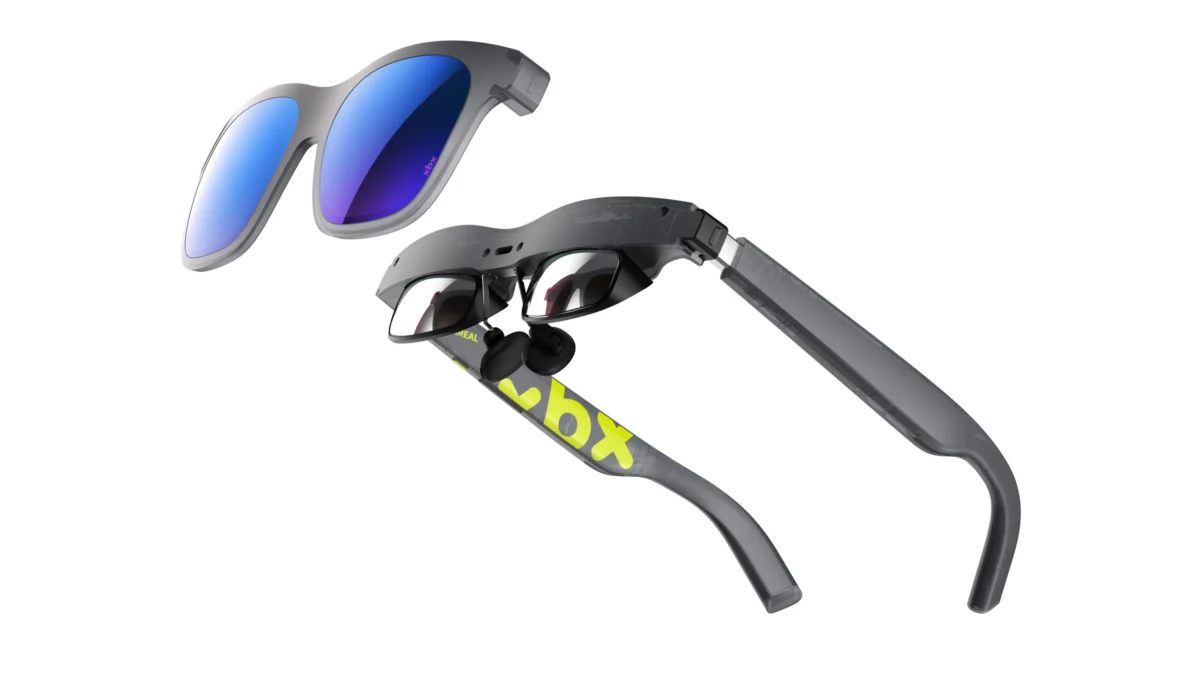
The landscape of wearable technology is undergoing a seismic shift as the industry moves away from bulky, high-cost headsets toward sleek, affordable, and purpose-driven augmented reality (AR) eyewear. Leading this charge is Xreal, a pioneer in the spatial computing space, which has officially announced the launch of its new sub-brand, X By Xreal (xbx). The debut product, the xbx a01+, enters the market at a disruptive $299 price point, signaling a strategic pivot toward mass-market accessibility and entertainment-centric utility.
By decoupling high-end spatial computing features from the core "big-screen" experience, Xreal aims to capture a demographic that values portability and visual fidelity over complex mixed-reality interactions. The a01+ is not merely a budget alternative; it is a calculated entry into the "display glasses" category, designed to turn smartphones, gaming consoles, and laptops into pocketable IMAX theaters.
Main Facts: A New Benchmark for Entry-Level AR
The xbx a01+ represents Xreal’s most aggressive pricing strategy to date. While the company’s flagship "One" and "One Pro" series cater to early adopters and professionals interested in 6DoF (six degrees of freedom) tracking and native spatial computing, the a01+ is built for the "plug-and-play" consumer.
Key Specifications and Availability
- Price: $299 USD.
- Display Tech: Dual-layer Micro-OLED with a dedicated image-enhancement chip co-engineered with Pixelworks.
- Visual Output: Simulates a 147-inch virtual screen from a distance of four meters.
- Performance: 120Hz refresh rate and a 50-degree Field of View (FoV).
- Brightness and Color: 1,600 nits peak brightness, 145% sRGB coverage, and HDR10 support.
- Weight: An ultralight 62 grams.
- Distribution: Available immediately via Xreal’s official website, Amazon, Best Buy, B&H, and Micro Center.
The a01+ is designed as a "media first" device. It leverages a translucent aesthetic—a nod to retro-tech trends—and features a hidden fluorescent logo, signaling its positioning as a lifestyle and gaming accessory rather than a piece of enterprise hardware.
Chronology: The Evolution of Xreal’s Product Ecosystem
To understand the significance of the xbx a01+, one must look at the rapid evolution of Xreal (formerly Nreal) over the past three years. The company has transitioned from a niche hardware startup into a dominant player in the AR glasses market, consistently iterating on its hardware based on user feedback.
The Road to 120Hz
Earlier in 2026, Xreal set a new standard for the industry by pushing a major firmware update to its Xreal One series. This update introduced 120Hz support, which drastically improved the fluidity of motion—a critical requirement for competitive gaming and high-action cinema. This technological breakthrough laid the groundwork for the a01+. By integrating high-refresh-rate capabilities into a $299 device, Xreal is effectively trickling down premium tech to the entry-level tier at an unprecedented pace.
The Birth of the xbx Sub-Brand
The decision to launch "X By Xreal" marks a maturity in the company’s brand architecture. In 2024 and 2025, Xreal focused heavily on "spatial computing," attempting to compete with the likes of Apple’s Vision Pro by emphasizing 3DoF and 6DoF tracking. However, market data suggested a significant portion of the user base was primarily using the glasses for "screen mirroring"—simply watching Netflix or playing Steam Deck games on a larger screen. The a01+ is the direct result of this data, providing a streamlined device that removes the expensive X1 spatial processing chips to hit a more attractive price point.

Supporting Data: Technical Excellence in a Lightweight Frame
While the price is low, the technical specifications of the a01+ suggest a high-performance experience. Xreal has focused on three core pillars: visual fidelity, ergonomic comfort, and customizability.
Visual Engineering and Pixelworks Collaboration
The a01+ utilizes dual-layer Micro-OLED panels, which provide the deep blacks and high contrast ratios necessary for a cinematic experience. A standout feature is the inclusion of a dedicated image-enhancement chip developed in partnership with Pixelworks. This hardware allows for:
- Real-time SDR-to-HDR conversion: Enhancing standard content to take advantage of the 1,600-nit display.
- Color Accuracy: Supporting 1.07 billion colors, ensuring that professional creators can use the glasses for mobile editing.
- Viewing Profiles: Users can toggle between "Cinema" (high contrast), "Eye Care" (low blue light), and "Standard" modes.
Ergonomics and Facial Data
One of the primary barriers to AR adoption has been physical comfort during long-term use. Xreal claims to have tuned the a01+ nose pad system using data from over 2,000 unique facial profiles. The device includes:
- Three distinct nose bridge fits.
- Adjustable arms and flexible hinges to accommodate various head shapes.
- TÜV Rheinland Certification: The glasses have earned 5-star ratings for Eye Comfort, Low Blue Light, and Flicker-Free performance, addressing the "eye strain" concerns common in head-mounted displays.
The "Maker" Connection
In a move to foster community engagement, Xreal has embraced the "Maker" movement. The a01+ supports snap-on front frames. While Xreal sells its own designs, it has also released 3D-printable files on MakerWorld, allowing users to customize their glasses’ aesthetic or functional shrouds at home.
Official Responses and Strategic Positioning
Xreal executives have positioned the a01+ as a bridge between traditional screens and the future of spatial computing. In recent statements, the company emphasized that the a01+ is intended to be "immediate and practical."
"The goal with xbx is to remove the friction of AR," a company spokesperson noted during the launch. "We want people to stop thinking about ‘spatial computing’ as a complex hurdle and start seeing it as a way to take a 150-inch TV with them on a plane, a train, or in their bedroom."
Ecosystem Synergy
The company also clarified that the a01+ is fully compatible with the Xreal Beam Pro. The Beam Pro is a dedicated Android-based controller that acts as the "brain" for the glasses, offering a dual-window spatial multitasking environment. This allows the a01+ to punch above its weight class; while the glasses themselves lack native 3DoF tracking, the Beam Pro can provide a stable, "pinned" virtual screen experience, effectively giving the user a spatial computing setup for a fraction of the cost of a standalone headset.

Implications: What This Means for the AR Industry
The launch of the xbx a01+ at $299 has far-reaching implications for both competitors and the broader consumer electronics market.
1. Pressure on the "Big Tech" Giants
For years, companies like Meta and Apple have focused on high-end, feature-rich headsets (Quest 3, Vision Pro). Xreal is attacking the market from the bottom up. By proving that consumers are hungry for "simple" AR—essentially a wearable monitor—Xreal is capturing the "utility" segment of the market. This may force competitors to accelerate their own "Lite" versions of AR hardware.
2. The Decline of the Physical Monitor?
As display tech becomes more portable and higher in resolution, the a01+ poses a legitimate threat to traditional portable monitors. For digital nomads and gamers, a 62-gram pair of glasses that provides a 147-inch screen is far more compelling than a 15-inch flat-panel monitor that requires a stand and a large carrying case.
3. The Google Partnership (Project Aura)
While the a01+ targets the budget sector, Xreal remains committed to the high end. The company’s ongoing collaboration with Google on Project Aura—an Android XR-powered device—suggests that Xreal is building a "Good, Better, Best" product ladder. The a01+ serves as the "Good" entry point, introducing users to the brand before they eventually graduate to more complex XR devices.
4. Gaming Handhelds’ Best Friend
The rise of the Steam Deck, ASUS ROG Ally, and Lenovo Legion Go has created a massive secondary market for wearable displays. Handheld gamers are often limited by small 7-inch screens. The a01+, with its 120Hz refresh rate and USB-C connectivity, is perfectly positioned to become the "must-have" accessory for the handheld gaming community.
Conclusion: A Pragmatic Leap Forward
The X By Xreal a01+ is a testament to the maturation of the AR industry. It acknowledges that not every user needs to interact with digital twins or perform complex 3D modeling in their living room. Some people just want to play Elden Ring or watch Dune on a massive, crystal-clear screen while lying on their couch.
By focusing on the "big-screen experience" and stripping away the cost and weight of unnecessary sensors, Xreal has created a product that is both technologically impressive and financially accessible. At $299, the a01+ isn’t just a new pair of glasses; it is an invitation for the general public to finally see what the AR hype is all about. As the line between physical and virtual displays continues to blur, Xreal’s "display-first" philosophy may well be the strategy that finally brings augmented reality into the mainstream.