Screenbound: A Deep Dive into the Ambitious "5D" Indie Gem Redefining Player Perspective
The landscape of independent video game development is often a fertile ground for innovation, where ambitious concepts can flourish unbound by the constraints of blockbuster budgets. Among the rising stars is "Screenbound," an indie title that has captivated audiences with its audacious "5D" premise. This groundbreaking game challenges players to navigate a vibrant 3D world while simultaneously engaging with a perfectly mirrored 2D representation of that same environment on a handheld device. This article explores the genesis of Screenbound, the intricate development process undertaken by Radical Forge, the unique artistic and technical challenges overcome, and the profound implications of its dual-perspective gameplay for the future of interactive entertainment.
The Genesis of a "5D" Vision: From Concept to Reality
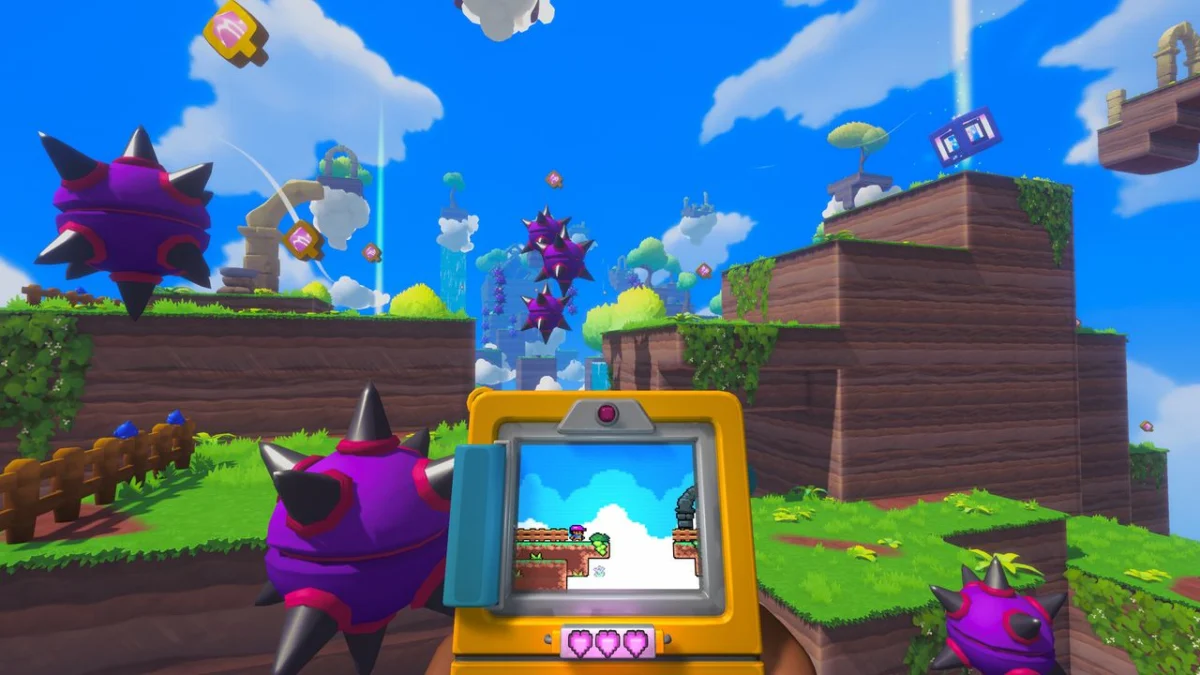
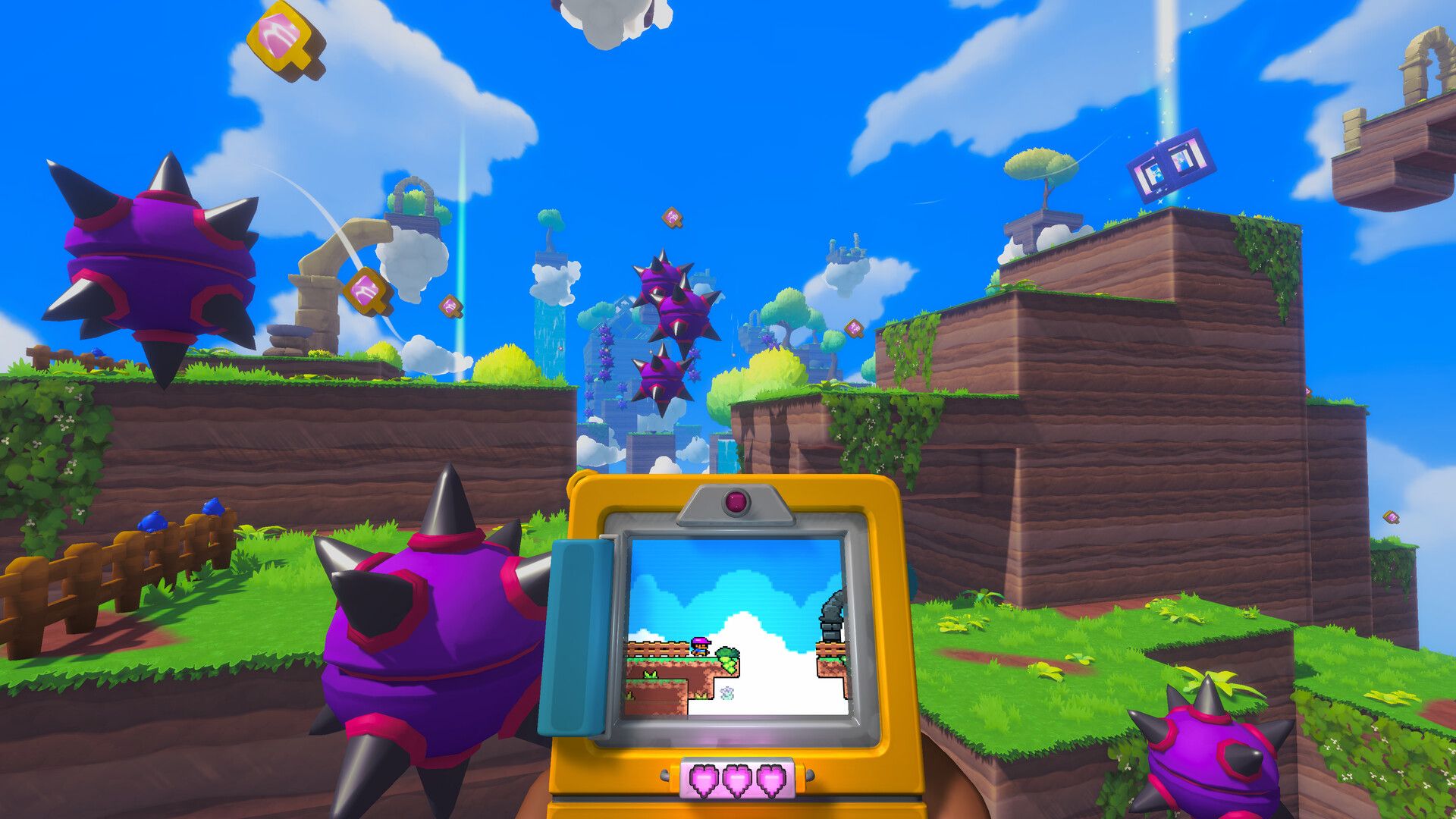
The initial unveiling of Screenbound in 2024, through a remarkably concise 28-second trailer, immediately ignited the imaginations of gamers and industry observers alike. The core concept was deceptively simple yet profoundly revolutionary: players would experience a first-person perspective within a fully realized 3D environment, while simultaneously interacting with a Game Boy-esque handheld displaying a precise 2D rendition of their immediate surroundings. This audacious blend of retro charm and modern technological prowess, dubbed "5D" gameplay, promised a truly unique and immersive experience.
However, the initial trailer, while a potent proof of concept, was a far cry from a playable game. It represented the nascent stages of an idea, a foundational sketch rather than a fully rendered masterpiece. This is where the often-underappreciated realm of co-development within the indie scene proved instrumental. While co-development is frequently associated with larger AAA studios, it plays a crucial role in empowering smaller teams to bring their ambitious visions to life.
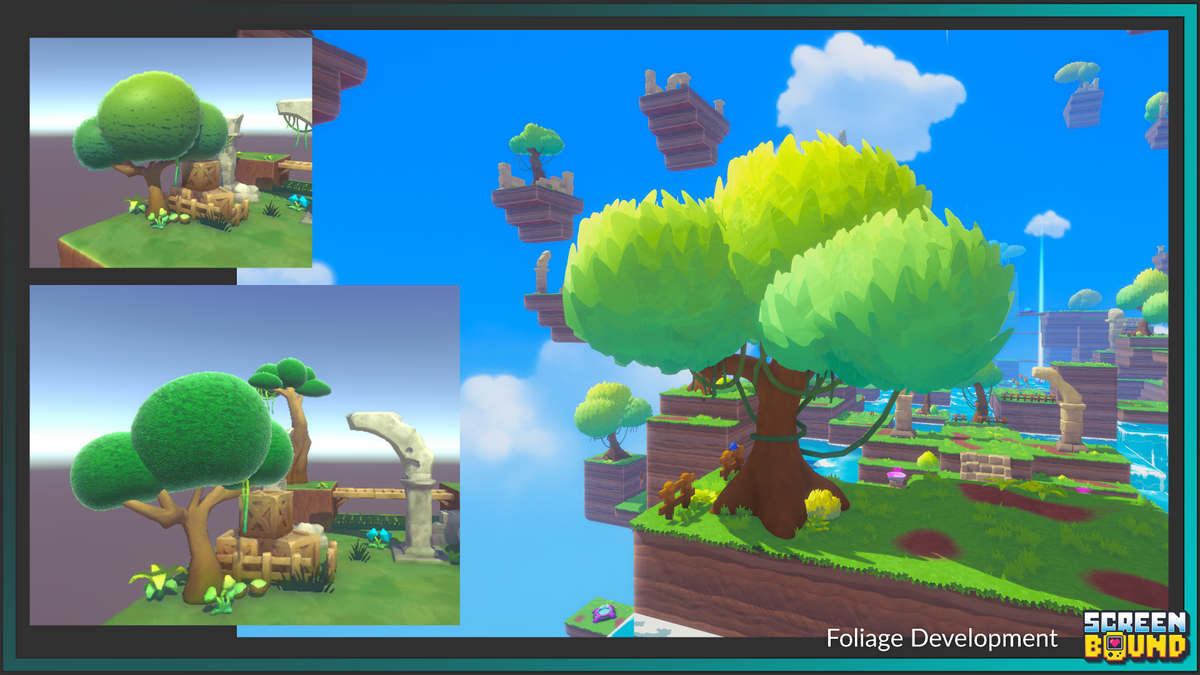
Enter Radical Forge, a studio with a proven track record in collaborative indie development, having contributed to titles such as the chaotic multiplayer hit Gang Beasts and various spin-offs of the wildly popular Vampire Survivors. It was Radical Forge that took the "bare bones" concept of Screenbound and began the arduous task of transforming it into a tangible, playable reality. Lyra Owen, the lead tech artist at Radical Forge, candidly described the initial state of the project as "very much just mockups with very basic artwork that used a lot of asset packs." This admission underscores the immense undertaking involved in building Screenbound from the ground up, particularly on the 3D front, where the studio had to completely redevelop the terrain system and meticulously remake all the foliage. The early iterations were characterized by a "blocky and smooth" aesthetic, a stark contrast to the visually rich world players will soon explore.
The "5D" Design Philosophy: Bridging Two Worlds
The ambition of Screenbound lies not just in its dual-screen presentation but in the intricate interplay between its 2D and 3D elements. The initial blocky aesthetic of the 2D elements was a conscious departure from the blocky, voxel-based worlds reminiscent of Minecraft. Instead, the development team drew inspiration from more contemporary takes on 3D platforming, citing the evolution of the Mario franchise as a guiding star. Specifically, the 3D terrain generation techniques employed in games like Mario + Rabbids served as a key influence, aiming to create a world that felt both expansive and navigable.
For the 2D component, played out on the in-game "Qboy" handheld, the team delved deep into the aesthetics of ’80s and ’90s 2D gaming. The responsibility for crafting the pixel art largely fell to the talented hands of Daniel Cossaboon, a dedicated pixel artist who infused the handheld’s visuals with authentic retro charm. This careful curation of artistic styles was crucial in evoking a sense of nostalgia while simultaneously complementing the modern 3D presentation.
The technical execution of synchronizing these two distinct visual paradigms presented a formidable challenge. Owen elaborated on the process of assembling the game’s assets, likening the construction of the 2D levels to a "primitive" version of the level editor found in Super Mario Maker. This approach allowed for intuitive level design within the 2D plane. Simultaneously, the 3D world was brought to life through procedural generation, a technique that enables the creation of vast and varied landscapes. This dual approach was deemed the most effective method to achieve "parity between the two worlds," ensuring that the player’s experience in both dimensions felt cohesive. As Owen explained, "a lot of the procedural systems had to be redone and restarted" to accommodate this intricate synchronization.
Navigating the Z-Axis: The Art of 2D Representation in 3D
One of the most perplexing technical hurdles in Screenbound’s development was how to accurately represent a 3D world within the confines of a 2D plane, a dimension that naturally possesses a third axis of depth. The ingenious solution devised by the developers was to implement a system of multiple 2D planes. These planes dynamically shift and adjust based on the player’s position within the 3D environment, effectively creating a layered representation of the game world.
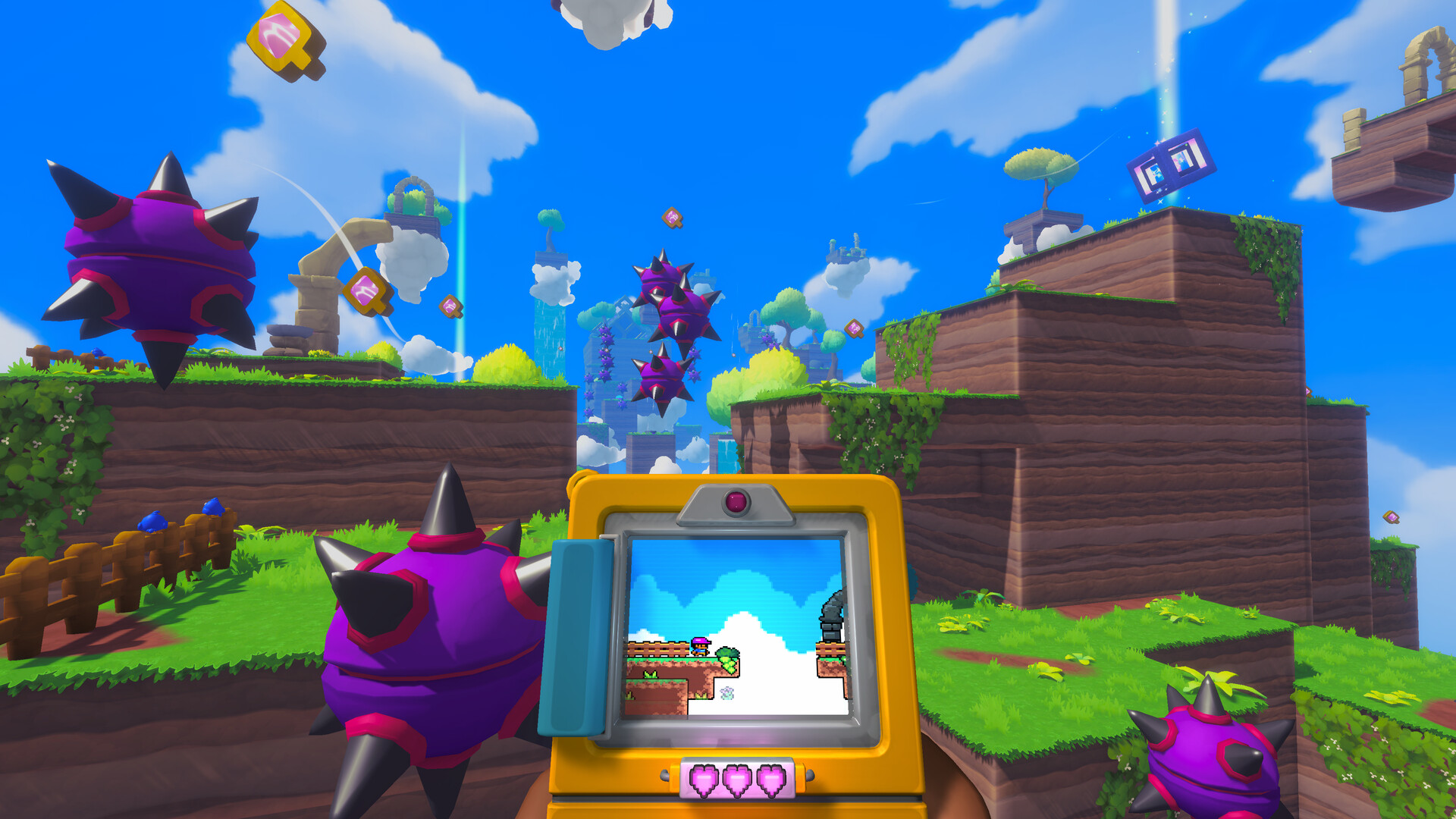
"Essentially it’s 2D, but it’s got layers, and then each layer represents a track in the 3D world," Owen explained. "So in the editor we can scroll in and out through the z-depth of the scene, and we basically build the level in z-layers from left, and then all the levels go from left to right like a classic Mario game." This innovative approach allowed the developers to maintain a strong sense of spatial awareness for the player, even within the seemingly flat 2D view. The 2D levels are constructed with a deliberate layering system, allowing elements to appear in the foreground or background, mimicking the depth perception of the 3D world.
However, translating visual elements between these two dimensions was not without its complexities. Owen highlighted the challenge of accurately depicting the height of trees in 2D compared to their 3D counterparts. "You’ve only got so much screen, so many pixels, and it’s entirely different trying to convert that into a 3D perspective and get the composition right." This constant balancing act between fidelity and artistic representation was a recurring theme throughout the development cycle.
The Twist and Turn: Dynamic Gameplay and Player Focus
A core element of Screenbound’s unique gameplay is its dynamic interplay between the 2D and 3D perspectives, a feature that actively shapes the player’s experience and focus. The game deliberately avoids the pitfalls of systems like the Nintendo DS, where one screen might display a map while the other presents the main gameplay, or vice versa. Instead, Screenbound is designed to keep the player engaged with both dimensions, preventing either from becoming an afterthought.
"What we don’t want is to be like a DS, where you have a map on one screen, and you’re playing a 3D game, or the other way around where you could just play it in 2D and never look at the environment," Owen emphasized. To achieve this, certain elements are strategically visible only in one dimension or the other, forcing the player to consciously switch their attention. This creates a fascinating cognitive challenge, requiring players to process information from two distinct visual streams.
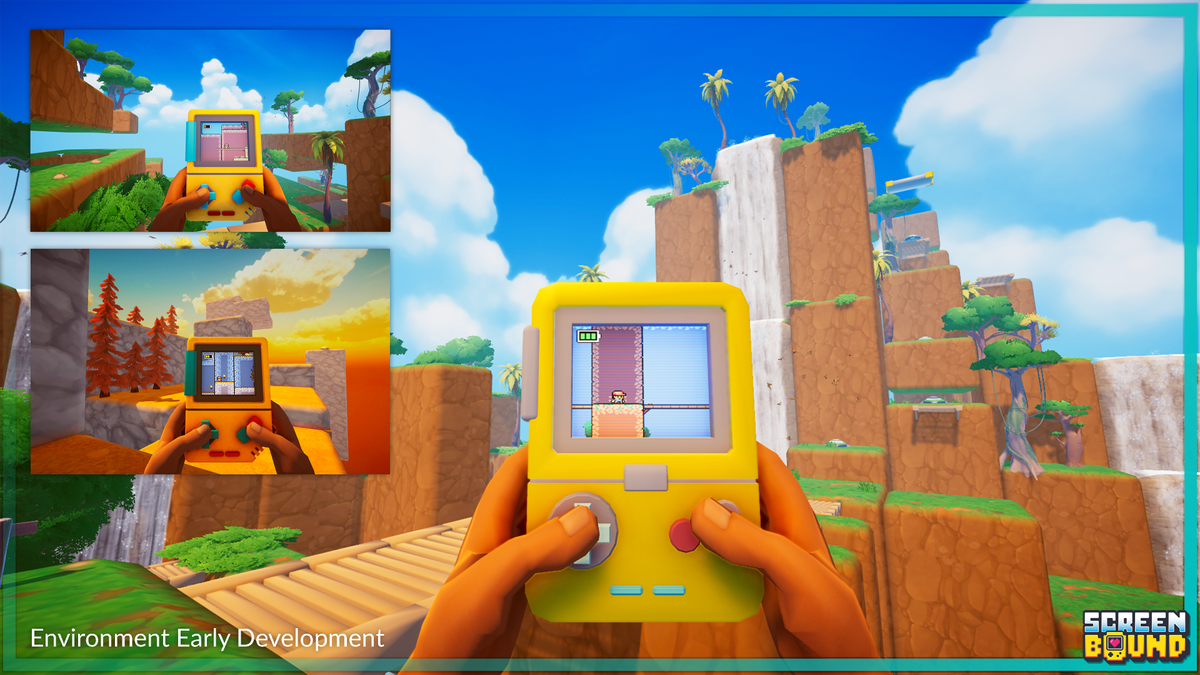
This dynamic also extends to the in-game entities. Enemies, for instance, can seamlessly transition between the 2D and 3D worlds, disappearing from one to reappear in the other. This mechanic adds an element of surprise and unpredictability, demanding constant vigilance from the player. Furthermore, the Qboy handheld, while primarily a 2D display, isn’t strictly limited to that function. It can also be used as a tool to reveal hidden elements within the 3D environment or even as a targeting reticle for ranged attacks. This strategic integration ensures that the Qboy is more than just a visual gimmick; it’s an integral part of the gameplay loop.
The Road to Release: Refining the "5D" Experience
The ambitious nature of Screenbound’s "5D" concept has necessitated a meticulous approach to development, even leading to a delay from its initial September release date. Crescent Moon Games’ priority is to ensure that the core "5D" vision remains intact and comprehensible to players, rather than sacrificing the unique premise for a timely launch. This commitment to quality over expediency speaks volumes about the team’s dedication to their artistic intent.
The fundamental challenge, as Owen eloquently put it, is that "it’s two games running on top of each other, and that was one of the challenges. There are no separate things happening; when you are running through the 3D world, you are actually also running through the 2D world. That’s kind of the magic of it." This inherent synchronization is the cornerstone of Screenbound’s innovation. It’s not simply about displaying two different views; it’s about creating a unified experience where actions in one dimension have direct and immediate consequences in the other.
The game’s Steam page reveals that Screenbound is slated for a PC release, and a playable demo is currently available, allowing eager players to sample this revolutionary gameplay firsthand. This provides an invaluable opportunity for the developers to gather crucial player feedback as they continue to refine the delicate balance of their dual-perspective masterpiece.
Implications for the Future of Gaming
Screenbound’s daring exploration of dual-perspective gameplay has far-reaching implications for the future of interactive entertainment. By pushing the boundaries of player perception and demanding a new kind of cognitive engagement, the game offers a compelling glimpse into novel forms of interactive storytelling and gameplay mechanics.
The success of Screenbound could inspire a new wave of games that leverage innovative display technologies or clever in-game design to create similarly layered experiences. Developers may be encouraged to think beyond the traditional single-screen paradigm, exploring ways to integrate multiple viewpoints or auxiliary displays to enhance immersion and complexity. Furthermore, the game’s success could underscore the value of co-development in the indie space, highlighting how collaboration can empower smaller studios to tackle ambitious and technically demanding projects.
Ultimately, Screenbound is more than just a game; it’s a testament to the boundless creativity and technical ingenuity that defines the indie game development scene. Its ambitious "5D" concept, born from a simple yet profound idea, has been meticulously brought to life through dedication, innovation, and a deep understanding of what makes games truly captivating. As players prepare to dive into its unique world, they can anticipate an experience that not only entertains but also redefines their understanding of what is possible within the realm of video games.