The Digital Brushstroke: Exploring the Painterly AI Aesthetics of Jacob Holster
In the contemporary art world, the rise of generative artificial intelligence has often been met with a mixture of awe and apprehension. To many, AI art is synonymous with hyper-realistic renders, clinical precision, and a certain "uncanny valley" gloss that feels detached from the human hand. However, a new movement of creators is emerging—artists who view the algorithm not as a replacement for the artist’s soul, but as a complex, textured medium capable of evoking the tactile warmth of traditional fine art. At the forefront of this movement is Jacob Holster, known in digital circles as @bandyquantguy.
Holster, an Assistant Teaching Professor of Music Education at Penn State University, has carved out a unique niche that bridges the gap between scholarly inquiry and avant-garde visual experimentation. His work, characterized by what critics call a "painterly" aesthetic, suggests that the future of AI art may not lie in perfecting reality, but in rediscovering the beauty of the impressionistic and the humanistic.
The Convergence of Pedagogy and Practice: A Chronology of Innovation
Jacob Holster’s journey into the world of AI filmmaking and digital art is rooted in his academic background. As a professor at Penn State, Holster’s primary focus has long been the intersection of music education, technology, and creative practice. His transition into visual AI was not a departure from his academic roots but rather an expansion of them.

From Sound to Sight
Holster’s early career was defined by the structural and emotional nuances of music. Music education requires a deep understanding of rhythm, harmony, and the pedagogical methods used to transmit these concepts to others. When generative AI tools began to proliferate in the early 2020s, Holster recognized a parallel between the "latent space" of a neural network and the improvisational space of a jazz musician or a composer.
The Academic Foundation
By integrating his research into AI and pedagogy, Holster began to treat the prompt-engineering process as a form of curriculum design. He wasn’t just "generating" images; he was teaching the machine to see through a specific, humanistic lens. This academic rigor distinguishes his work from the casual hobbyist. Every frame in his films, such as Le Voyage or Recipe for Consciousness, is the result of a deliberate inquiry into how technology can mirror human cognitive processes.
Establishing @bandyquantguy
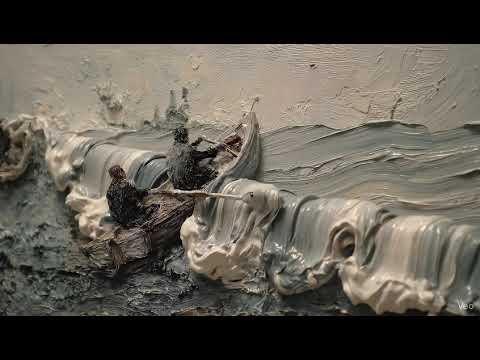
As he began sharing his work on Instagram and YouTube under the handle @bandyquantguy, Holster quickly gained a following for his refusal to adhere to the "slick" aesthetic typical of AI platforms like Midjourney or Sora. Instead, he leaned into the artifacts, the textures, and the "mistakes" of the AI, using them to simulate the heavy impasto of oil painting or the soft bleed of watercolors.
Defining the Painterly Aesthetic: Supporting Data and Visual Analysis
What makes Holster’s work "painterly"? In art history, the term refers to a style where the brushstrokes are visible, and the application of paint is emphasized over the literal depiction of the subject. In the digital realm, this is notoriously difficult to achieve, as algorithms are generally trained to minimize noise and maximize clarity.
Texture and Tactility
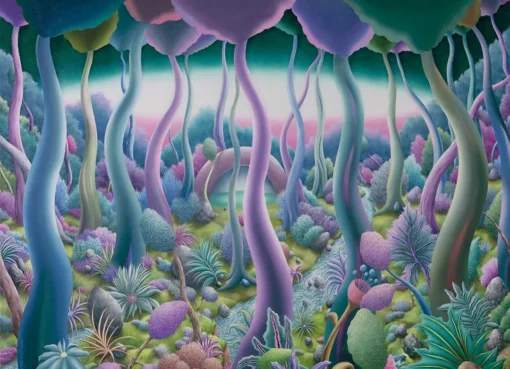
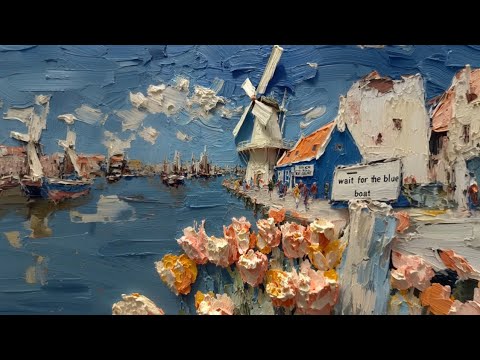
In works like Paint World 18: Wait for the Blue Boat, Holster employs a visual language that feels thick with material. The colors do not just sit on the screen; they appear to have weight and depth. By manipulating the "noise" in the generative process, Holster creates a sense of grain that mimics canvas or aged paper. This tactile quality grounds the digital imagery in a physical history, making the viewer feel as though they are looking at a physical artifact rather than a sequence of code.
Light and Atmosphere
Holster’s use of light is reminiscent of the Impressionists—Claude Monet or Camille Pissarro. Rather than the harsh, directional lighting of 3D renders, his films feature a diffused, atmospheric glow. In Paint World 28: Le Voyage, the light seems to emanate from within the colors themselves, creating a dreamlike state that aligns with the Surrealist tradition. This choice prioritizes emotional resonance over photographic accuracy.
The Rejection of Hyper-Realism
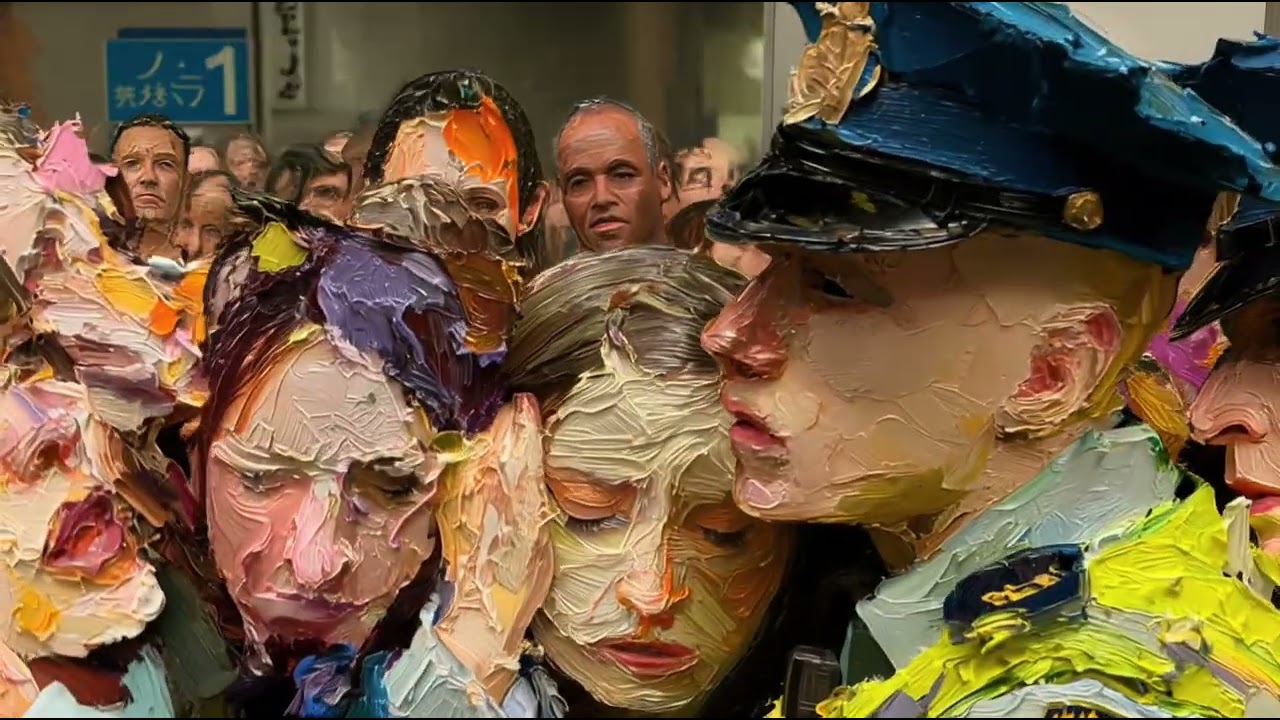
Data suggests that while hyper-realism was the initial "hook" for AI art, audiences are increasingly suffering from "AI fatigue." A 2023 survey of digital art consumers indicated a growing preference for works that show "the hand of the artist." Holster taps into this shift by deliberately avoiding the clinical perfection of modern AI. His characters and landscapes are often blurred or abstracted, leaving room for the viewer’s imagination—a key tenet of human-centric art.
Bridging Theory and Practice: The Academic Response
As an Assistant Teaching Professor, Holster’s work serves as a living case study for his students and peers. His dual role allows him to provide an "official" perspective on the ethical and creative implications of AI in education.
AI as a Pedagogical Tool
Holster argues that AI should not be viewed as a shortcut, but as a "scaffolding" tool for creativity. In his research at Penn State, he examines how generative tools can help students overcome the "blank page" syndrome and explore complex narrative structures. By treating AI as a collaborator, Holster shifts the conversation from "Will AI replace the artist?" to "How can AI enhance the human capacity for expression?"
The Concept of "Human Terrain"
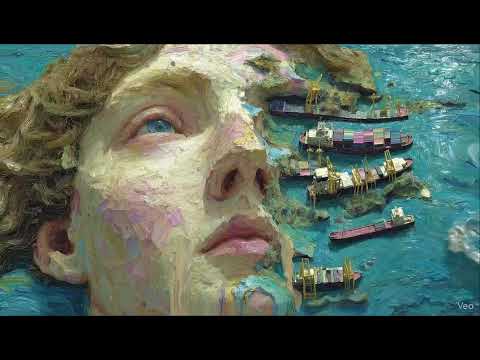
His short film, Art Is Human Terrain (Paint World 33), acts as a manifesto for this philosophy. The title itself suggests that art is not a product of the machine, but a landscape (terrain) shaped by human experience, history, and emotion. In this framework, the AI is merely the weather or the geology—the environment in which the human artist operates. This conceptual depth provides a counter-narrative to the idea of "soulless" machine art.
Narrative and Sound: The Multi-Sensory Experience
Given Holster’s background in music education, it is no surprise that sound plays a critical role in his AI films. Unlike many AI creators who use stock music or generic AI-generated soundtracks, Holster’s audio-visual relationship is deeply integrated.
Rhythmic Editing
In Recipe for Consciousness (Paint World 38), the pacing of the visual transformations is tied to the underlying sonic landscape. There is a cadence to the way textures shift and colors bleed, creating a multi-sensory experience that feels more like a symphony than a standard video. This "musicality" of the image is a hallmark of his style.
Narrative Ambiguity
Holster’s films rarely follow a traditional linear plot. Instead, they offer "narrative vignettes"—short, evocative moments that suggest a larger world. This approach aligns with the Surrealist movement, where the goal is to tap into the subconscious. By providing just enough visual information to spark a thought, Holster engages the viewer as an active participant in the creation of meaning.
Implications for the Future of Art and Education
The work of Jacob Holster has broader implications for how we define "creativity" in the 21st century. As AI tools become more accessible, the value of an artist will shift from their technical ability to render a subject to their ability to curate an aesthetic and a philosophy.
The Democratization of the Fine Art Aesthetic
For centuries, the "painterly" style required years of physical training and expensive materials. Holster’s work demonstrates that the essence of this style—the focus on light, texture, and emotion—can be translated into the digital age. This democratizes the "fine art" look, allowing creators from diverse backgrounds to experiment with aesthetics that were previously gated by traditional institutions.

Ethical AI Integration
Holster’s academic position allows him to lead by example in the ethical use of AI. By emphasizing the "human terrain" of his work, he underscores the importance of the artist’s intent. His process involves significant "human-in-the-loop" intervention, from the initial prompt to the final color grading and sound design. This model provides a roadmap for how AI can be integrated into the humanities without devaluing human labor.
A New Chapter in Surrealism
Finally, Holster’s work represents a new chapter in Surrealism. The original Surrealists sought to bridge the gap between the dream world and reality using paint and film. Holster uses neural networks—which are, in a sense, a collective "dream" of human data—to achieve the same goal. He is not just making AI art; he is using AI to explore the very nature of human consciousness and memory.
Conclusion: The Human in the Machine
Jacob Holster (@bandyquantguy) stands as a vital figure in the evolution of digital media. By rejecting the cold, plastic aesthetics of standard AI and embracing a warm, textured, and "painterly" approach, he reminds us that technology is only as clinical as the person using it.
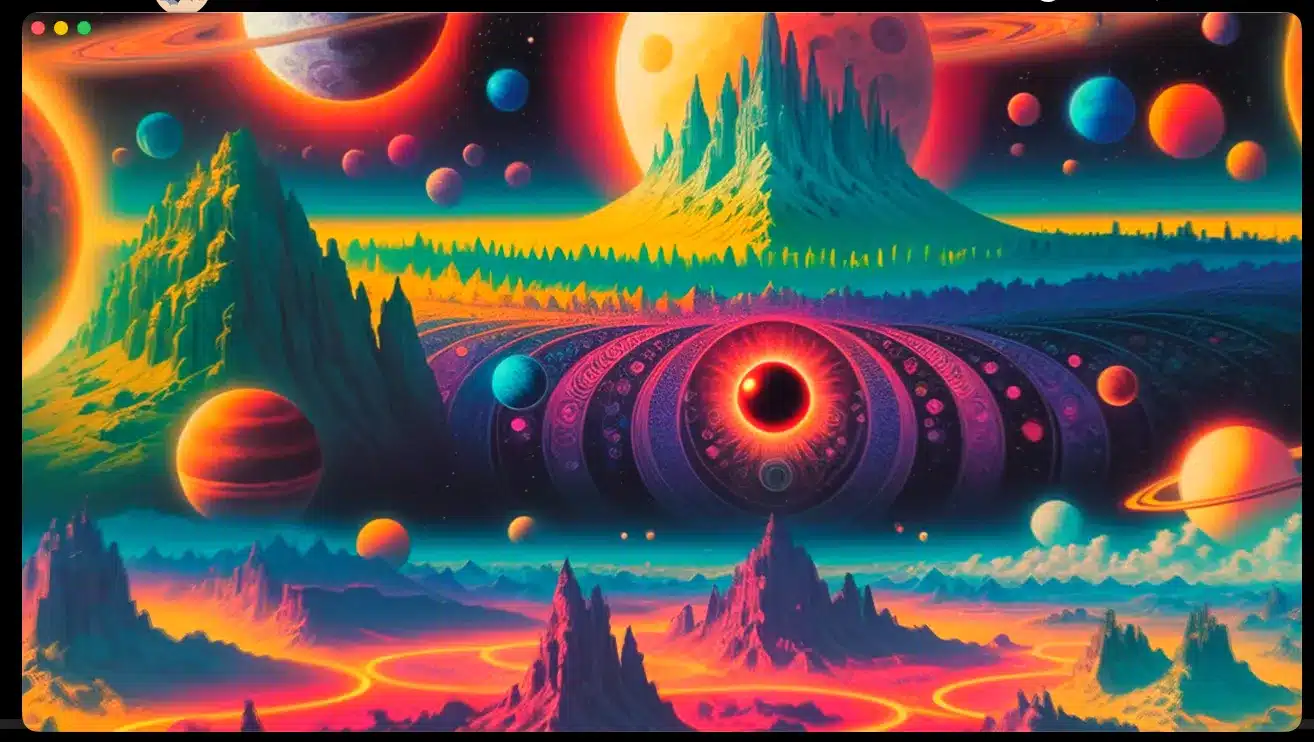
Through his roles as a Penn State professor, a researcher, and a filmmaker, Holster proves that the most exciting thing about artificial intelligence isn’t what the machine can do on its own, but what it can do when guided by a human with a deep understanding of history, music, and art. His work—exemplified by the moving textures of Art Is Human Terrain—is a testament to the fact that even in an age of algorithms, the most important terrain will always be the human one.
Where to Explore Jacob Holster’s Work:
- Instagram: @bandyquantguy
- YouTube: @bandyquantguy
- Academic Profile: Penn State University, Department of Music Education