The Digital Canvas: Jacob Holster and the Rise of Painterly AI Aesthetics
In an era where generative artificial intelligence is often synonymous with hyper-realistic "uncanny valley" renders and glossy, clinical digital imagery, a new movement is emerging that seeks to reclaim the "soul" of the medium. At the forefront of this movement is Jacob Holster, known to the digital art community as @bandyquantguy. A scholar, educator, and filmmaker, Holster is redefining the boundaries of AI-assisted creativity by prioritizing texture, warmth, and a humanistic touch over the cold precision of traditional machine outputs.
By bridging the gap between high-level academic research and avant-garde visual experimentation, Holster has cultivated a style that feels less like a computer program and more like a living, breathing oil painting. This article explores the depth of his work, his role in the academic community, and the broader implications of his "painterly" approach to the future of surrealist media.
Main Facts: The Dual Identity of @bandyquantguy
Jacob Holster occupies a unique position in the contemporary art world. He is not merely a hobbyist experimenting with new software; he is an Assistant Teaching Professor of Music Education at Penn State University. This dual identity—academic researcher and digital artist—is central to understanding his output.

The Academic Anchor
At Penn State, Holster’s research focuses on the intersection of artificial intelligence, pedagogy, and creative practice. Unlike many who view AI as a threat to traditional education or artistic integrity, Holster treats it as a pedagogical tool—a way to expand the human capacity for expression. His work in music education provides a rhythmic and structural foundation for his visual art, often resulting in films where the soundscape and the visual grain are inextricably linked.
The Visual Signature
Operating under the Instagram handle @bandyquantguy, Holster has gained a significant following for his "Paint World" series. His work is characterized by:
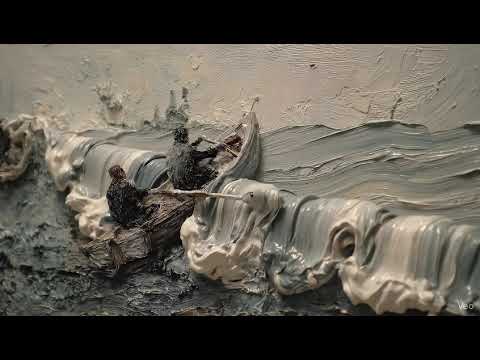
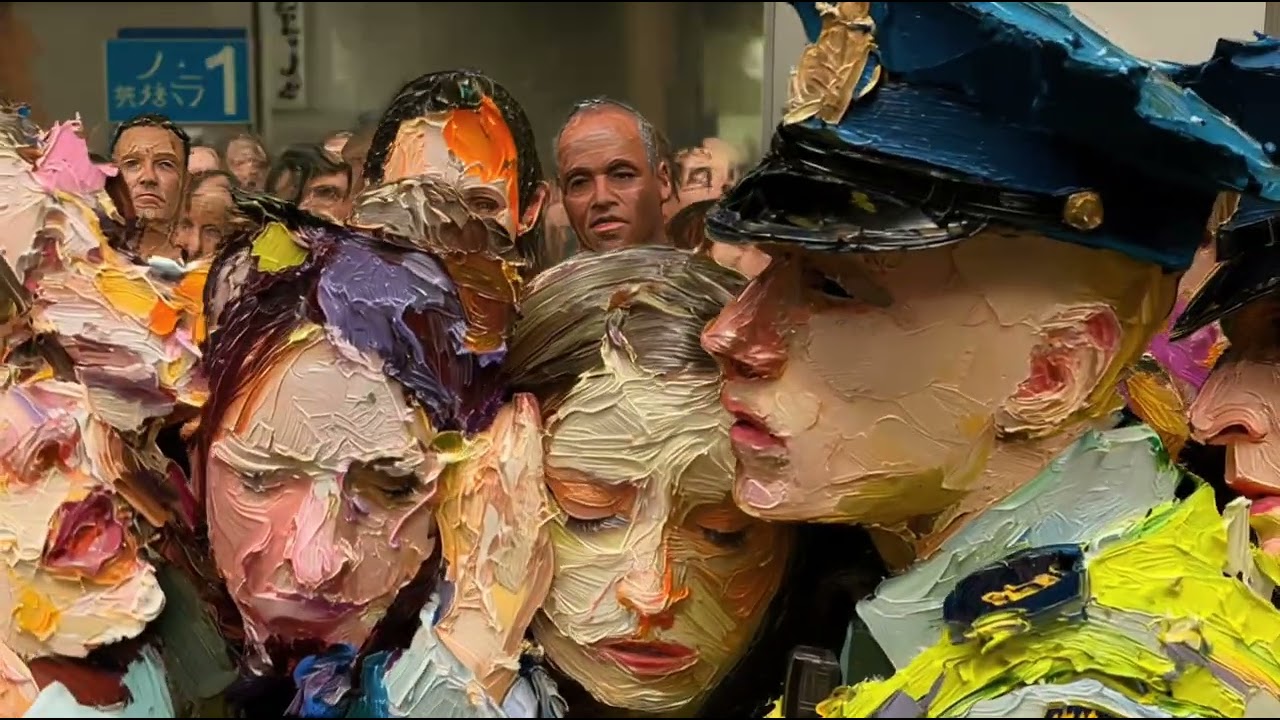
- Tactile Textures: Eschewing the smooth surfaces of standard AI, Holster’s videos feature visible brushstrokes, canvas grain, and "impasto" effects.
- Warmth and Atmosphere: His color palettes often lean toward earth tones, deep ambers, and soft blues, evoking a sense of nostalgia and comfort.
- Human-Centric Narrative: Even when depicting surreal or abstract concepts, his work maintains a grounded, emotional core that resonates with the human experience.
Chronology: The Evolution of "Paint World"
The trajectory of Jacob Holster’s work can be traced through the numbered installments of his "Paint World" series, which serve as a public diary of his technical and conceptual growth.
The Early Experiments: Finding the Grain
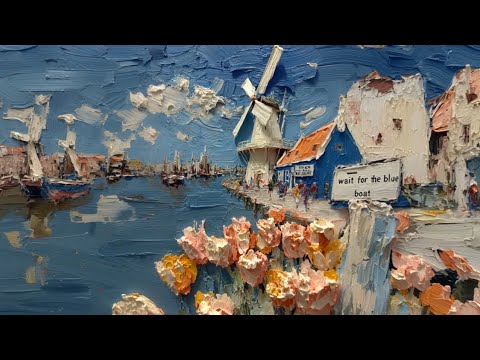
In the early stages of his public-facing work (exemplified by projects like Wait for the Blue Boat [Paint World 18]), Holster began experimenting with the limitations of generative video. While the industry was pushing for higher resolution and smoother frame rates, Holster went in the opposite direction. He sought to introduce "noise" and "friction" into the digital signal, mimicking the way light hits physical pigment.
The Narrative Shift: Art as Human Terrain
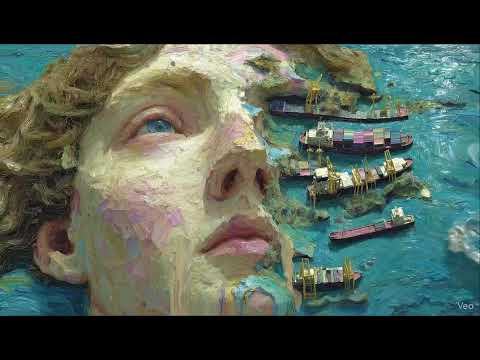
By the time he reached Paint World 33, titled Art Is Human Terrain, Holster’s philosophy had fully crystallized. This short film represents a pivotal moment in his chronology, where the AI is no longer the "subject" of the work but rather the "terrain" through which human emotion travels. This period marked a shift from technical experimentation to sophisticated storytelling, using AI to explore the depths of consciousness and memory.
The Recent Mastery: Le Voyage and Beyond
Holster’s recent works, such as Le Voyage [Paint World 28] and Recipe for Consciousness [Paint World 38], demonstrate a masterly control over the medium. In these pieces, the transitions between frames are fluid yet textured, creating a dreamlike state that feels like a moving museum piece. He has moved beyond the "gimmick" of AI, utilizing it as a mature medium comparable to celluloid film or traditional animation.
Supporting Data: Deconstructing the Aesthetic
To understand why Holster’s work stands out in a crowded field of AI creators, one must look at the specific aesthetic choices that differentiate his "painterly" style from the "algorithmic" style.
The Rejection of Hyper-Realism
Data from social media engagement and art criticism suggests a growing "AI fatigue" regarding hyper-realistic imagery. Users are increasingly wary of images that look too perfect. Holster’s data-driven success lies in his subversion of this trend. By intentionally introducing "imperfections"—the digital equivalent of a stray brush hair—he creates a psychological bridge for the viewer, making the surreal feel tangible.
The Sound-Image Synthesis
As a Professor of Music Education, Holster’s use of audio is not incidental. In his films, the auditory texture often mirrors the visual texture. If a scene looks "scratchy" or "etched," the sound design follows suit with lo-fi hums, crackles, or soft acoustic arrangements. This multisensory approach provides a level of immersion that purely visual AI artists often lack.
Technical Frameworks
While Holster keeps his specific "recipes" close to the vest, his work appears to utilize advanced diffusion models layered with custom post-processing techniques. This involves "training" the AI on specific art historical movements—such as Impressionism or Fauvism—and then manually "painting" over the digital output to ensure the human hand remains visible in the final product.
Official Responses and Philosophical Positioning
Within the hallowed halls of Penn State University and the broader academic community, Holster’s work is viewed as a vital case study in the future of pedagogy.
The Institutional Perspective
Penn State’s support of Holster’s work reflects a broader institutional shift toward embracing "Human-AI Collaboration." Rather than seeing AI as a replacement for the artist, the university’s music and arts programs are exploring how these tools can democratize high-level creative expression for students who may not have traditional technical training but possess profound conceptual visions.
Holster on "The Human Terrain"
In his own academic writings and public statements, Holster often posits that AI is a mirror. If the output feels cold and mechanical, it is because the input and the intent were cold and mechanical. By approaching the prompt-engineering process with the soul of a painter and the ear of a musician, Holster argues that the "human terrain" can be mapped onto the digital landscape. His "official" stance is one of cautious optimism: technology is a medium, and like oil paint or a violin, it requires a disciplined human spirit to produce beauty.
Implications: The Future of Surrealism and AI Art
Jacob Holster’s work has implications that reach far beyond his Instagram feed. He is a harbinger of a new era in digital art that may well define the next decade of surrealism.
1. The Democratization of the "Painterly" Look
Historically, creating a high-quality animated film with a painterly aesthetic required hundreds of animators and millions of dollars (as seen in films like Loving Vincent). Holster’s work suggests that AI can allow individual creators to achieve this level of aesthetic complexity, shifting the power dynamic from large studios to the "solitary genius" or the academic researcher.

2. A New Chapter for Surrealism
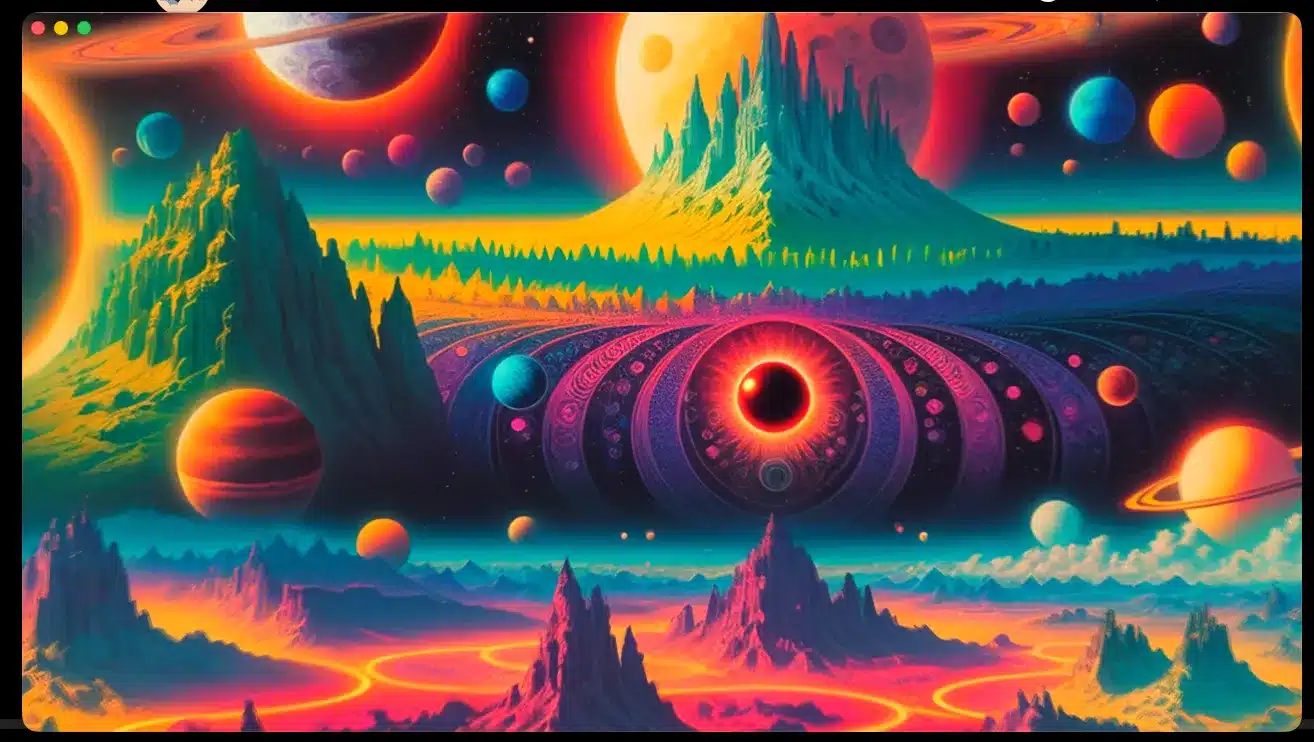
Surrealism has always been about the "automatic" or the "subconscious." AI is, in many ways, the ultimate tool for surrealism, as it can generate unexpected associations and dreamlike imagery with minimal conscious intervention. However, Holster adds a layer of "curated surrealism." By guiding the AI toward warmth and texture, he moves the movement away from the "nightmare" aesthetics of early DeepDream and toward a more contemplative, "lucid dream" aesthetic.
3. Impact on Education
As an Assistant Teaching Professor, Holster is at the forefront of defining how the next generation of artists will be trained. If his methods become standard, we may see a curriculum that prioritizes "curatorial taste" and "philosophical depth" over manual dexterity. The artist of the future may be less of a "maker" and more of a "conductor," orchestrating various AI models to achieve a specific emotional resonance.
4. The Ethics of the "Humanistic" Machine
Holster’s work also challenges the binary debate of "Human vs. AI." By creating work that feels so profoundly human, he forces the audience to reconsider what "humanity" in art actually means. Is it the physical movement of the hand, or is it the intent, the selection, and the emotional framing? Holster’s success suggests it is the latter.
Conclusion: The Warmth of the Digital Soul
Jacob Holster (@bandyquantguy) is more than just an AI artist; he is a digital alchemist. He takes the leaden, cold outputs of generative algorithms and transmutes them into the gold of painterly expression. Through his work at Penn State and his "Paint World" series, he is proving that the future of technology does not have to be a sterile, neon-lit dystopia. Instead, it can be as warm as a sun-drenched studio and as textured as a canvas that has been worked over for years.
As we move further into the 21st century, the "Human Terrain" of art will continue to shift. However, thanks to pioneers like Holster, we can be confident that the human spirit will not be lost in the machine—it will simply find a new, more expansive way to paint its dreams. For those looking to explore the cutting edge of where technology meets the soul, the work of Jacob Holster is the essential starting point.