The Digital Canvas: How Infinidream.ai is Reimagining the "Dead Screen" Problem
In the modern workspace, the computer monitor is the undisputed centerpiece. For eight to twelve hours a day, it is a window into productivity, communication, and entertainment. However, for the remaining hours, that same high-resolution display often becomes a "black mirror"—a literal dark void or a utilitarian display of giant, white numerals against a black background. To Scott Draves, a pioneer in the world of generative art, these moments represent a tragic waste of aesthetic potential.
With the launch of Infinidream.ai, Draves and his team are attempting to solve the "dead screen" problem. By transforming idle displays into living, breathing AI paintings, the app seeks to change the way we inhabit our digital environments. Available for both Mac and Windows, Infinidream.ai represents a convergence of twenty-five years of algorithmic art history and the cutting-edge capabilities of modern generative artificial intelligence.
Main Facts: A New Paradigm for Ambient Displays
Infinidream.ai is not a screensaver in the traditional sense. While it functions as one—activating when the user steps away—it is more accurately described as a "generative ambient art engine." Unlike standard screensavers that rely on looping video files or randomized photo galleries, Infinidream utilizes AI-generated art that evolves in real-time.
Key Features of the Platform:
- Generative Evolution: The art is not static. Using sophisticated AI models, the images slowly morph, drift, and shift. The software ensures that the display is never exactly the same twice, creating a sense of "duration" rather than "repetition."
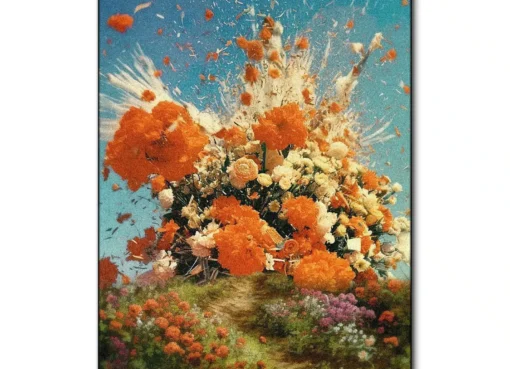
- Curated Artist Network: The platform is not just a raw AI output. It features a curated selection of works from dozens of AI artists, spanning styles from the moody and abstract to the hypnotic and surreal.
- Customizable Tempo: Users can adjust the "energy" of the display. It can move at a glacial pace, shifting so slowly that the change is only noticeable over several minutes, or it can be accelerated to a "burning fire" tempo to provide a more dynamic energy to a room.
- Cross-Platform Accessibility: Built for the modern professional and creative, the app is optimized for both macOS and Windows environments.
- Ambient Philosophy: The app is designed to be "ignorable." Much like ambient music, it is intended to enhance the atmosphere of a room without demanding the user’s direct attention or interrupting their workflow with notifications.
Chronology: From Distributed Supercomputers to AI Dreams
To understand the significance of Infinidream.ai, one must look at the lineage of its creator, Scott Draves. Draves has been at the forefront of the intersection between code and canvas for over a quarter of a century.
1999: The Birth of Electric Sheep
In 1999, Draves launched Electric Sheep, one of the most ambitious digital art projects in history. Named after Philip K. Dick’s novel Do Androids Dream of Electric Sheep?, the project was a distributed screensaver that turned the idle processing power of its users’ computers into a collective supercomputer. At its peak, over 450,000 computers worldwide were linked, each rendering pieces of evolving fractal animations.
2000s – 2010s: Museum Recognition
The "Sheep" evolved based on a genetic algorithm—users could vote on the animations they liked, and those "sheep" would "reproduce," passing their mathematical traits to the next generation. This democratic, biological approach to digital art earned Draves international acclaim. His work was exhibited at the Museum of Modern Art (MoMA) in New York and the Los Angeles County Museum of Art (LACMA), proving that code-based art could hold its own in the highest echelons of the fine art world.
2023 – 2024: The AI Pivot
As Large Language Models (LLMs) and Diffusion Models (like Midjourney and Stable Diffusion) began to dominate the cultural conversation, Draves saw an opportunity to evolve his original vision. While Electric Sheep was based on fractals and mathematical equations, the new frontier was neural networks.
2025: The Launch of Infinidream.ai
Infinidream.ai was conceived as the spiritual successor to Electric Sheep. It took the core philosophy of "living art" and married it to the vast, imaginative power of modern AI. The project moved from the abstract world of fractals into the diverse world of representational and surrealist AI art, curated by human hands but powered by machine intelligence.
Supporting Data: The Technical and Aesthetic Foundation
The success of an ambient art platform relies on its ability to run efficiently without compromising the system’s performance. Infinidream.ai is built to utilize the GPU (Graphics Processing Unit) in a way that provides high-fidelity visuals while maintaining a low thermal footprint.
The "Calder Mobile" Analogy
The development team describes the app’s behavior as a "digital Calder mobile." Alexander Calder, the American sculptor, was famous for his kinetic sculptures that moved with the air currents of a room. Infinidream applies this to the digital realm. The "currents" here are the underlying AI parameters that cause the art to drift between different latent states.
Data on User Interaction
Early testing of the platform suggests that the "ambient" nature of the app leads to longer "screen-on" times in domestic and professional settings. By turning a monitor into a light source and a piece of decor, users are less likely to turn off their displays entirely, opting instead to leave the "living painting" running.
The curation aspect is also data-driven. By bringing together dozens of artists, the platform offers a "style diversity" that prevents the visual fatigue often associated with AI art generators that rely on a single model or prompt style.

Official Responses: The Artist’s Vision
Scott Draves, speaking on the release of the platform, emphasizes that Infinidream is about reclaiming the physical space that technology occupies. "There’s a moment every few hours when your computer just sits there," Draves notes. "Screen dark, or worse: showing the time in giant white numerals against a black void, quietly announcing that nothing interesting is happening. That moment is wasted."
Draves’ goal with Infinidream was to create something that felt "alive" but not "distracting." This balance is difficult to achieve in an era of the "attention economy," where most apps are designed to harvest as much user engagement as possible.
"Most art asks you to stop and look," says the Infinidream team in their release statement. "Infinidream does the opposite: it runs quietly in the background, shifting so slowly you almost don’t notice until you glance over and realize the whole mood of the room has changed."
Independent AI artists featured on the platform have also praised the move. For many, AI art has been confined to social media feeds—static images that are scrolled past in seconds. Infinidream provides these artists with a "permanent" home, where their work can be lived with over hours and days, rather than seconds.
Implications: The Future of Digital Living Spaces
The emergence of Infinidream.ai points toward several broader trends in technology and interior design.
1. The Screen as Furniture
As displays become thinner and larger, they are increasingly being treated as part of a room’s architecture. We have already seen this with "Frame" televisions that display art when off. Infinidream brings this concept to the desktop and the laptop, suggesting that our work tools should also serve an aesthetic function when we are not actively typing or clicking.
2. Ambient Intelligence vs. Active Use
The tech industry is shifting from "Active Use" (where the user is the operator) to "Ambient Intelligence" (where the technology enhances the environment without interaction). Infinidream is a prime example of this. It represents a move away from the "tool" and toward the "atmosphere."
3. The Ethical Curation of AI
In a world flooded with "low-effort" AI content, Infinidream’s model of curated artist contributions offers a potential path forward for the medium. By selecting specific artists and styles, the platform adds a layer of human intentionality to machine-generated outputs, addressing one of the primary criticisms of AI art: its lack of "soul" or "direction."
4. Psychological Impact of the Workspace
Research into environmental psychology suggests that "micro-restorative" environments—spaces that provide small, non-demanding visual interests—can reduce stress and increase cognitive function. By replacing a "dead" screen with a "living" one, Infinidream may offer more than just a visual upgrade; it may provide a subtle mental health benefit for those who spend long hours in front of a computer.
Conclusion: A More Beautiful Digital Future
Infinidream.ai is a testament to the idea that technology does not have to be cold, utilitarian, or demanding. By leveraging the history of generative art and the future of AI, Scott Draves has created a tool that allows our screens to "dream" when we are not using them.
As the boundaries between our physical and digital lives continue to blur, the way we treat our idle hardware will become increasingly important. Infinidream.ai offers a simple, elegant solution: if the screen is going to be on anyway, it might as well be beautiful. The app is currently available for a free trial at infinidream.ai, inviting users to stop staring at the void and start looking at the dream.