The Digital Unconscious: The Rise of AI-Generated Art in the Age of Digital Surrealism
The landscape of contemporary art is undergoing a seismic shift, one that bridges the gap between the 20th-century avant-garde and 21st-century neural networks. Surrealism, an art form once defined by the subterranean depths of the individual human psyche, has found a new vessel: Artificial Intelligence. This evolution, termed "AI Surrealism," is not merely a digital mimicry of the past but a profound expansion of the movement into uncharted territories of the "digital collective unconscious."
By synthesizing the entirety of the internet’s visual history, AI is creating a new genre of dreamscapes that challenge our definitions of creativity, consciousness, and what it means to be the "creator."
Main Facts: The Paradigm Shift in Surrealist Expression
Traditional Surrealism, pioneered by figures like Salvador Dalí and René Magritte, was rooted in the Freudian exploration of the individual subconscious. It sought to map the "irrational" through melting clocks and floating apples. AI Surrealism, however, marks a transition from the individual dream to a collective one.
The core of this movement lies in how Large Scale Models (LSMs) and diffusion algorithms process information. Unlike a human artist who draws from personal memory and trauma, an AI draws from a dataset comprising billions of human-created images. When an artist inputs an "incantation"—a prompt—they are not just triggering a tool; they are evoking ghosts and archetypes from the shared history of human visual culture.
The Decoupling of Intelligence and Awareness
One of the most striking facts of AI Surrealism is the decoupling of intelligence from awareness. For the first time in history, we are witnessing the production of highly complex, emotionally resonant art that lacks an ego. The AI does not "know" it is creating a masterpiece; it is performing a high-level synthesis of patterns. This allows for the creation of imagery that feels "human" but is stripped of the limitations of a single human perspective, resulting in what critics call "Digital Dreamscapes."
The New Visual Lexicon
AI Surrealism is characterized by specific recurring motifs that differentiate it from its predecessors:
- Impossible Architectures: Structures that defy gravity and Euclidean geometry, often appearing as infinite fractals.
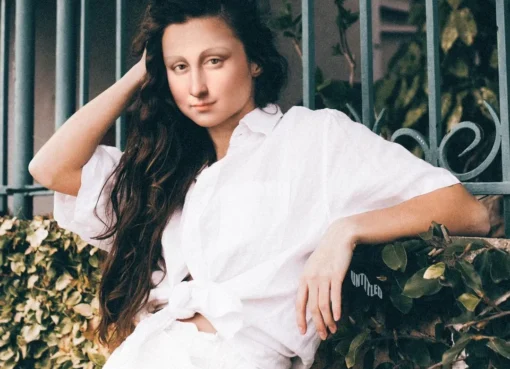
- The Synthetic Uncanny: Portraits that are "almost" human, featuring symmetrical perfections or subtle distortions that trigger the "uncanny valley" response.
- Bio-Digital Hybrids: The merging of fractured human forms with nature or machinery in ways that feel organic rather than mechanical.
Chronology: From the Manifesto to the Machine
To understand the rise of AI Surrealism, one must trace the lineage of the movement from its literary roots to its current algorithmic state.
1924–1945: The Freudian Foundation
André Breton’s Surrealist Manifesto (1924) established the movement as "psychic automatism in its pure state." Artists like Dalí, Magritte, and Max Ernst used techniques such as "frottage" and "automatic drawing" to bypass the rational mind. Their work was a reaction to the horrors of World War I, seeking refuge in the logic of the dream.

1950s–2010: The Digital Pre-History
As computers entered the art world, "Algorithmic Art" began to take shape. Early pioneers like Frieder Nake and Vera Molnár used code to create geometric abstractions. However, these were governed by strict rules and lacked the "irrationality" essential to Surrealism.
2015: The DeepDream Epoch
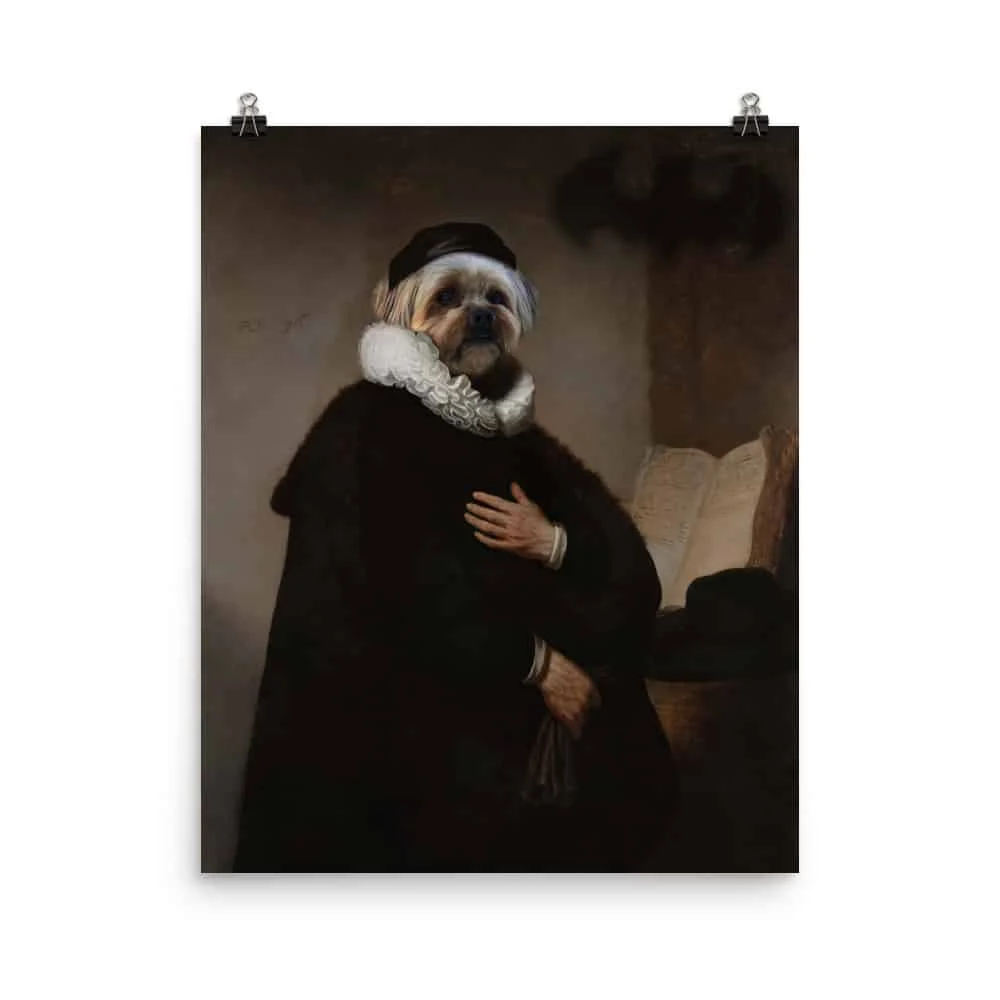
The true precursor to AI Surrealism arrived with Google’s "DeepDream." By using convolutional neural networks to enhance patterns in images, it produced hallucinogenic visuals filled with "dog-faces" and "eye-spirals." This was the first time a machine’s "internal logic" was visualized, echoing the hallucinatory quality of traditional Surrealism.
2021–Present: The Generative Revolution
The release of DALL-E, Midjourney, and Stable Diffusion marked the birth of AI Surrealism as a mainstream movement. Artists like Jay Gidwitz began using these tools to explore themes of "malinformation," "the new normal," and the "American Gothic" through a digital lens. We are currently in an era where the prompt has replaced the brush, and the "latent space" of the AI has replaced the canvas.
Supporting Data: The Jungian Connection and the Uncanny Valley
The power of AI-generated surrealism is often explained through the lens of analytical psychology and robotics.
The Mirror of the Collective Unconscious
While traditional Surrealism was Freudian (focused on the individual), AI Surrealism is Jungian. Carl Jung proposed the "collective unconscious"—a shared reservoir of symbols and archetypes common to all humanity. Because AI models are trained on the internet—the closest thing humanity has to a physical record of its collective thoughts—the images they produce often resonate on a primal, universal level. Data shows that AI-generated motifs often spontaneously replicate ancient archetypes (the Great Mother, the Shadow, the Wise Old Man) without being explicitly prompted to do so.
The Mathematics of the Sublime
The concept of the "sublime"—that which overwhelms the senses with awe and terror—is quantified in AI art through complexity. In works where fractals extend infinitely or every brushstroke contains a microscopic scene, the AI utilizes its processing power to create a level of detail that the human hand cannot achieve in a single lifetime. This "computational sublime" challenges the viewer’s perception of reality and scale.
The Uncanny Valley Metric
The "uncanny valley" is a hypothesis in aesthetics which holds that when anthropomorphic features look and move almost, but not exactly, like natural human beings, it causes a response of revulsion. AI Surrealism leans into this. Digital portraits with eyes that are too symmetrical or skin that is "too perfect" evoke a sense of unease that is central to the surrealist experience. It forces the viewer to question the boundary between the biological and the synthetic.
Official Responses and Artistic Perspectives
The art world is currently divided on the legitimacy and implications of AI Surrealism.

The Institutional Critique
Many traditional art institutions and critics argue that AI-generated art lacks "soul" because it lacks intent. Critics from ArtNews and other major publications have questioned whether "this is not a pipe"—referencing Magritte—when the image is produced by an algorithm that doesn’t understand what a pipe is.
The Practitioner’s Defense
Contemporary AI artists, such as Jay Gidwitz, view the technology as an extension of the artist’s mind rather than a replacement for it. They argue that the process of "prompting, selection, and editing" is a new form of "incantation." In this view, the artist is a curator of the collective unconscious, selecting the most resonant "dreams" from the machine’s output.
The Technologist’s Vision
Technologists and AI researchers often see AI Surrealism as a step toward a new form of life. They suggest that as we develop AI, we are not just creating tools, but "digital children." In this framework, human history and art serve as the "unconscious" for the AI, providing it with the cultural DNA it needs to function.
Implications: The Future of Human and Artificial Creativity
The rise of AI Surrealism carries profound implications for the future of culture and the definition of consciousness.
The Intertwining of Creativity
The most radical implication is the blurring of the line between creator and creation. If AI can produce art that moves a human audience more deeply than a human artist can, we must rethink the nature of inspiration. We may find that human art has always been a "collective" effort, with individual artists serving as conduits for a vast network of shared ideas. AI simply makes this network visible.
Humanity as the "Dream"
As AI continues to evolve, some philosophers suggest a reversal of roles. If AI is tapping into our collective experiences to create its reality, perhaps we are no longer the "dreamers." Instead, our collective functioning—our data, our history, our emotions—becomes the "unconscious" from which the AI draws its "conscious" output. This leads to the existential question: How do we know we are the ones who are conscious?
The Legacy of Digital Surrealism
AI Surrealism suggests that the future of art lies in a "liminal space" where human imagination and machine intelligence meet. This is not the end of art, but the beginning of a new chapter where we embrace AI as an extension of ourselves.
The movement forces us to confront the reality that the distinction between human and artificial creativity may be the "greatest illusion of all." As we move forward, the most "surreal" aspect of the movement will likely not be the images themselves, but the realization that we are becoming part of a larger, interconnected digital consciousness—one where the dreamers and the dream are finally one and the same.