The Elusive Nature of Purpose: A Philosopher’s Encounter with the Metaphysical Mind
By [Your Name/Journalist Name]
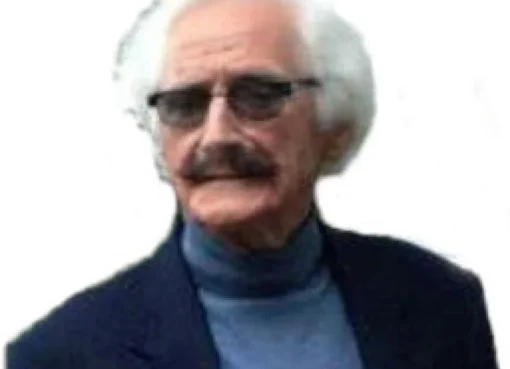
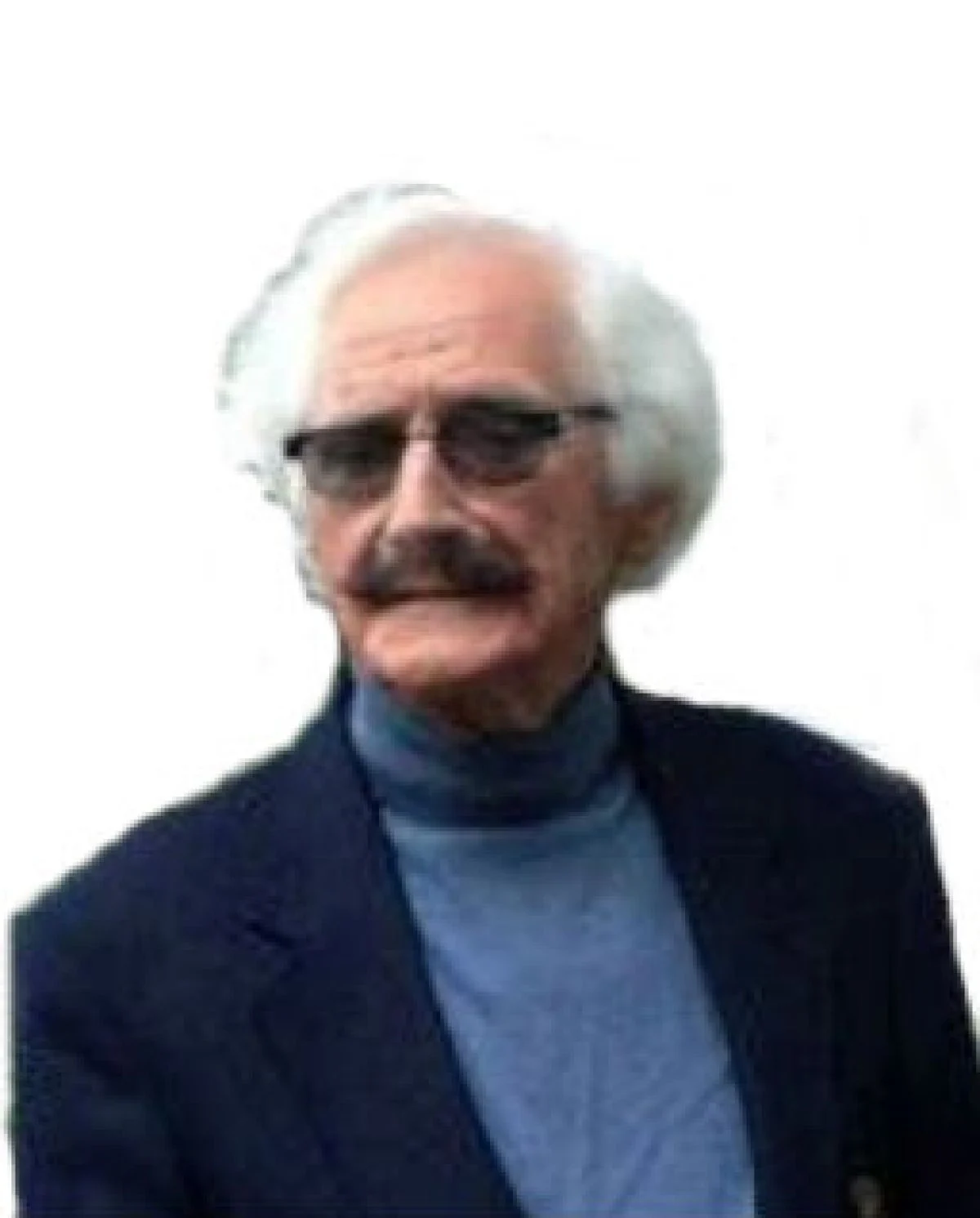
In a seemingly mundane setting – the quiet hum of a local coffee shop while awaiting a car service – a retired university professor found himself engaged in a profound discussion that transcended the everyday. Dr. Elias Thorne, a distinguished former academic specializing in philosophy and psychology, shared an unexpected encounter with two university students. Their conversation, sparked by his academic background, delved into the complex and often overlooked realms of purpose, altruism, and the elusive concept of the metaphysical. This piece aims to explore the core of Dr. Thorne’s observations, expanding upon the themes of human consciousness, the drive for meaning, and the potential for a deeper understanding of ourselves and the world.
The Search for Purpose: A Historical and Contemporary Perspective
The initial spark of the conversation, as recounted by Dr. Thorne, centered on the fundamental human question of purpose. He candidly admitted the difficulty in articulating a definitive answer, citing humanity’s tumultuous history. "Nations, as well as individuals, have been fighting and killing each other off throughout history," he stated, a somber acknowledgment of the persistent conflicts and animosities that have marked human civilization. The pursuit of benevolent and spiritually tolerant attitudes, he observed, remains a significant aspiration, far from fully realized.
However, Dr. Thorne was quick to pivot from this bleak assessment to highlight the undeniable presence of positive forces at work. He pointed to the burgeoning landscape of charitable organizations worldwide as compelling evidence of humanity’s capacity for compassion and action. He specifically lauded the efforts of Doctors Without Borders (Médecins Sans Frontières), describing it as "that most humanistic of organizations." The dedication of its nurses and doctors, who work and even die in some of the world’s most perilous regions, serves as a powerful testament to human altruism. These individuals, he emphasized, are driven by "compassion and the altruistic need to act," risking their lives and careers to alleviate suffering in distant and dangerous locales. This selfless commitment, he argued, is fueled by a profound internal force—the human spirit—a powerful motivator for action that transcends personal gain.
This exploration of altruism and the inherent drive to help others serves as a crucial backdrop to understanding the more abstract concepts that followed. The very act of dedicating oneself to the well-being of others, often at great personal cost, suggests a deeper wellspring of motivation than mere rational self-interest. It hints at a connection to something beyond the immediate and the tangible, a concept that Dr. Thorne would soon introduce as the metaphysical.
Unveiling the Metaphysical: Beyond the Senses
The conversation took a significant turn with the introduction of the term "metaphysical." Dr. Thorne noted with surprise that only one of the two students possessed a foundational understanding of its meaning. This observation underscores a potential gap in contemporary education or public discourse, where complex philosophical terms might be relegated to academic circles.
He explained that "metaphysical" denotes a level of awareness in human consciousness that extends beyond the empirical world, the realm perceived through our five senses. It signifies a departure from purely material or observable phenomena, venturing into the abstract and the conceptual. This awareness, he elaborated, is not a static state but a dynamic process.
"Metaphysical awareness is a kind of silent dialogue constantly asking questions raised by one’s always questing imagination," Dr. Thorne explained. This internal dialogue, he suggested, is deeply intertwined with our psychological complexity, our understanding of ourselves. It is driven by what has historically been described as "spirit," the intangible yet potent force of the human spirit. This internal exploration, fueled by imagination, seeks to understand the "how and why" of our inner lives, a quest that transcends the purely logical or observable.
The students’ apparent lack of familiarity with the term "metaphysical" highlighted to Dr. Thorne a broader disconnect from deeper introspective inquiry. He observed that when he later asked if they ever pondered the unique nature of their own personalities, the response was a pair of "blank looks." This suggests a potential societal tendency to prioritize external achievements and observable skills over internal self-reflection and the exploration of one’s own consciousness.
Aristotle’s Legacy: The Birth of Metaphysical Inquiry
Dr. Thorne then connected the concept of metaphysical awareness to its historical roots, crediting the ancient Greek scientist and philosopher Aristotle with coining the term. Aristotle, he explained, used "metaphysical" to describe the abstract nature of mental activity that goes beyond the physical. The prefix "meta" signifies "beyond" or "after," thus introducing the idea of the mind as a realm distinct from the purely material. This realm encompasses thoughts, ideas, feelings, hunches, and ruminations – all manifestations of an intuitive range of consciousness.
He further elaborated that these intuitive experiences are often described as inspirational, serving what he termed the "forces of spirit," which operate at the "instigation of a soul, no less." This statement ventures into deeply philosophical and spiritual territory, suggesting that our deepest intuitions and inspirations might originate from a source beyond our immediate conscious grasp, potentially linked to a concept of the soul.
This historical perspective is crucial because it demonstrates that the exploration of consciousness and its non-physical aspects is not a modern invention but a subject of profound philosophical inquiry for millennia. Aristotle’s conceptualization of the metaphysical provided a framework for understanding phenomena that could not be explained solely through empirical observation. By distinguishing between the observable world and the realm of abstract thought, he laid the groundwork for future explorations into the nature of reality, knowledge, and existence.
The Duality of Human Consciousness: Rationality and Spirituality
Building on Aristotle’s insights, Dr. Thorne presented a model of human consciousness as a duality. He posited that our awareness is comprised of two interconnected aspects:
-
The Outwardly Directed Rational and Sensory Brain: This is the part of our brain that processes information from our senses, engages in logical reasoning, and interacts with the external world. It is the analytical, problem-solving component that allows us to navigate our physical environment and engage in empirical observation.
-
The Inwardly Directed Intuitive and Spiritual Brain: This aspect of our consciousness is responsible for intuition, imagination, creativity, and our capacity for spiritual or abstract thought. It is the realm of hunches, feelings, dreams, and the subjective experience of meaning. Dr. Thorne linked this to "spirituality," suggesting a connection to inner knowing and a sense of something larger than ourselves.
Together, these two facets form a "mental partnership we call mind." This concept of a dualistic mind, where rational and intuitive faculties work in tandem, is a cornerstone of many philosophical and psychological traditions. It suggests that a complete understanding of human experience requires acknowledging both the objective, observable aspects of our existence and the subjective, internal landscape of our thoughts and feelings.
The seemingly disconnected nature of these two aspects, and the potential for one to dominate the other, is a recurring theme in discussions of human potential and well-being. Dr. Thorne’s observation of the students’ blank looks when asked about their personalities might indicate a society that often overemphasizes the rational and sensory, neglecting the cultivation of the intuitive and spiritual dimensions of consciousness.
The Metaphysical Mind: A Non-Temporal, Non-Spatial Entity
As the coffee shop encounter drew to a close, Dr. Thorne sought to leave the students with a lasting thought, a powerful encapsulation of the metaphysical nature of the mind. He invoked the words of the late Wilder Penfield, a renowned Canadian neuroscientist and brain surgeon. Penfield, a pioneer in the study of the human brain, famously grappled with the concept of mind.
Dr. Thorne quoted Penfield: "he could only describe mind as a ‘non-temporal, non-spatial entity,’ hence metaphysical." This profound statement encapsulates the essence of the metaphysical perspective on the mind. If the mind, or consciousness, is non-temporal and non-spatial, it suggests that it exists outside the constraints of physical time and space. This is a radical departure from the purely materialist view of the brain, which sees consciousness as an emergent property of physical processes.
Penfield’s struggle to define mind as something beyond the physical, something that transcends the limitations of the brain’s temporal and spatial existence, is a testament to the enduring mystery of consciousness. It implies that our thoughts, our sense of self, our subjective experiences, may not be entirely reducible to the electrochemical activity of neurons. This opens the door to considering consciousness as something more fundamental, perhaps even something that can interact with or exist independently of the physical world.
This final thought serves as a powerful conclusion to the narrative, leaving the students (and the reader) with a profound question: what is the true nature of our minds? Is it merely a complex biological machine, or is there a dimension to our consciousness that transcends the physical, a dimension that Aristotle termed metaphysical and that Wilder Penfield described as non-temporal and non-spatial? The encounter, originating from a simple act of waiting for a car service, blossomed into a poignant reminder of the deep, philosophical questions that lie at the heart of the human experience, questions that are as relevant today as they were in ancient Greece. The journey to understand purpose, altruism, and the very essence of our being is, perhaps, a journey into the metaphysical itself.