The End of an Era: Reflections on the Sunset of ‘Hockey Night in Canada’ and the Changing Fabric of Cultural Identity
MONTREAL — For over seven decades, the Saturday night ritual for millions of North Americans did not involve a trip to the cinema or a reservation at a restaurant. Instead, it centered on the blue-white glow of a television screen and the iconic fanfare of Hockey Night in Canada (HNiC). However, as the Canadian Broadcasting Corporation (CBC) announces the conclusion of this 74-year institution, the news has sent ripples far beyond the sports world, sparking a profound reflection on the nature of tradition, the evolution of media, and the personal milestones—like Father’s Day—that anchor our lives.
The dissolution of Hockey Night in Canada marks more than just a programming change; it signifies the end of a shared cultural language that bridged generations. As the broadcast fades into the annals of history, it leaves behind a legacy of iconic figures, from the flamboyant Don Cherry to the smooth-toned Robert Goulet, and a vacuum that modern, fragmented sports media may never truly fill.
Main Facts: The Dissolution of a National Monument
The announcement that the CBC is replacing Hockey Night in Canada with a rotation of Olympic-style sports programming represents a seismic shift in the Canadian media landscape. For 74 years, the program was the most-watched weekly sporting event in the country, serving as a cornerstone of the CBC’s identity.
Key facts regarding the transition include:
- The 74-Year Run: HNiC began as a radio broadcast in 1931 before transitioning to television in 1952. Its termination ends the longest-running sports program in television history.
- The Content Pivot: The CBC has indicated that the time slot will be repurposed to highlight a broader range of athletic endeavors, specifically focusing on amateur and Olympic sports, in an effort to diversify its viewership base.
- Cultural Impact: At its peak, HNiC was not merely a sports show but a social gathering point. In both Canada and American border states, the game was a fixture in households and local taverns alike, predating the modern "sports bar" era.
Chronology: From the "Original Six" to the Digital Age
To understand the weight of this loss, one must look at the chronological evolution of hockey as a televised product. In the early days of the broadcast, the National Hockey League (NHL) consisted of only six teams: the Montreal Canadiens, Toronto Maple Leafs, Detroit Red Wings, Chicago Blackhawks, Boston Bruins, and New York Rangers.
The Era of the "Original Six"
During this period, the rosters were static and the players were household names. Viewers knew every line combination and every defensive pair. As the article’s author, Mike Peterson, notes, the game was "easier" to follow because the stars remained on the ice longer and the tribalism of the six cities created a concentrated, intense fan experience.
The Rise of the Personalities (1960s–1980s)
As the league expanded, HNiC evolved by leaning into personality-driven content. This era saw the rise of Robert Goulet, who became a Canadian icon singing about DuMaurier cigarettes in commercials long before his Broadway fame. It also saw the introduction of Juliette, a musical variety show hosted by Juliette Cavazzi that followed the games. Known as "our pet, Juliette," the show was designed to soothe the household after the high-tension shouting of the hockey match—a relic of a more gender-segregated era of domestic entertainment.
The Don Cherry Years and Modern Expansion
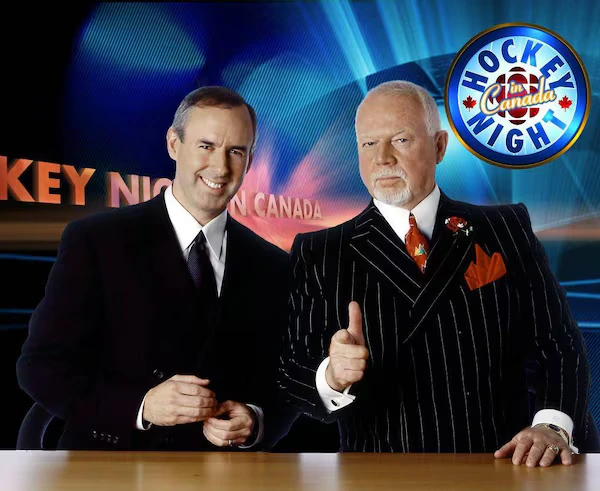
In the latter half of the 20th century, the broadcast became synonymous with "Coach’s Corner" and Don Cherry. Cherry’s flamboyant suits and "loudmouth" commentary proved that sports analysis could be as much about entertainment and controversy as it was about the technicalities of a power play. However, as the game grew more complex with rapid line changes and a massive influx of international talent, the "intimacy" of the Original Six era began to wane, eventually leading to the current fragmented media environment.
Supporting Data: The 1980 Denver Bears and the Minor League Connection
While HNiC represents the macro-level of sports culture, the personal significance of sports is often found in the micro-level—the minor leagues and the family outings. A poignant example of this is the 1980 Denver Bears, the Triple-A affiliate of the Montreal Expos.
In 1980, the Bears boasted a lineup that remains legendary in minor league circles. The roster included future MLB stars and managers like Jerry Manuel, Tim Wallach, and Terry Francona. For fans like Peterson, memories of Father’s Day 1980 are inextricably linked to this team. The anecdote of a father-in-law returning from a long concession line only to find the same player at bat—not because of a long count, but because the lineup had cycled through so quickly—highlights a golden era of offensive baseball that mirrored the high-scoring excitement of 1980s hockey.
This data point serves to illustrate that the value of sports media is often tied to the "where were you" moments: a Father’s Day at the ballpark, a Saturday night in front of the CBC, or a shared beer at a border-town bar.
Official Responses: A Divided Public
The reaction to the end of Hockey Night in Canada has been a mixture of corporate pragmatism and public mourning.

The CBC Statement:
In an official release, CBC executives defended the move, stating, "While we honor the incredible legacy of HNiC, the landscape of sports rights and viewer demographics has changed. Our mission is to provide a platform for all Canadian athletes, and our new Olympic-focused programming will reflect the diversity of the modern Canadian sporting experience."
Sports Historians’ Perspective:
Dr. Aris Thompson, a historian of Canadian media, offered a more critical view: "HNiC was the ‘hearth’ of the Canadian home. By removing it, the CBC is losing its most potent tool for national cohesion. You cannot replace 74 years of Saturday night ritual with a rotating schedule of amateur sports and expect the same emotional investment."
The Public Sentiment:
Social media and op-ed columns have been flooded with nostalgia. Many older viewers express a sense of alienation, not just from the loss of the show, but from the modern style of hockey itself—which some describe as a "blur" of line changes and anonymous players compared to the personality-driven era of the 20th century.
Implications: Tradition, Gender, and the "Finish Line"
The cancellation of Hockey Night in Canada and the reflections on Father’s Day point toward several broader societal implications.
The Evolution of Gendered Spaces
The mention of the Juliette show and the Sipress cartoon regarding fashion choices (the "baggy cargo pants vs. short-shorts" debate) highlights a shifting conversation around gender. Historically, sports were a male-dominated sanctuary, with shows like Juliette acting as a "peace offering" to women in the household. Today, those lines are blurred. The anecdote of women at a party being "riveted" to Olympic figure skating while men talked in the kitchen suggests that the "traditional" interests of the sexes are far more fluid than mid-century television producers assumed.
The Psychological Toll of Aging
The article moves from the death of a television show to the personal reality of aging. Peterson’s reflection on his "Student Dream"—the anxiety of forgotten lockers and unlearned combinations—mirrors the collective anxiety of a generation seeing its cultural landmarks disappear. The physical realities of aging, such as hip replacements and the need for orthopedic support (the Skechers vs. Asics debate), serve as a metaphor for the "clubhouse turn" of life.
The Loss of Shared Experience
Perhaps the most significant implication is the loss of a shared timeline. When HNiC was "three years old" and a fan was five, the world felt permanent. Now, as the finish line approaches for both the program and its lifelong viewers, there is a realization that the "Live Fast, Love Hard, Die Young" mantra of Faron Young’s 1955 hit is a young man’s game.
For those who have "passed their father’s age" and are looking toward the century mark of their mothers, the end of Hockey Night in Canada is a reminder that while the players and the programs eventually leave the ice, the memories of the "Again" at-bats and the 28-0-28 locker combinations remain the true anchors of the human experience.
About the Author: This report draws upon the long-running insights of Mike Peterson, whose "Comic Strip of the Day" has provided daily cultural commentary since 2010. His reflections on the intersection of sports, media, and personal history offer a unique window into the changing American and Canadian zeitgeist.