
The Pen and the Swastika: The Third Reich’s Relentless War on the Caricature
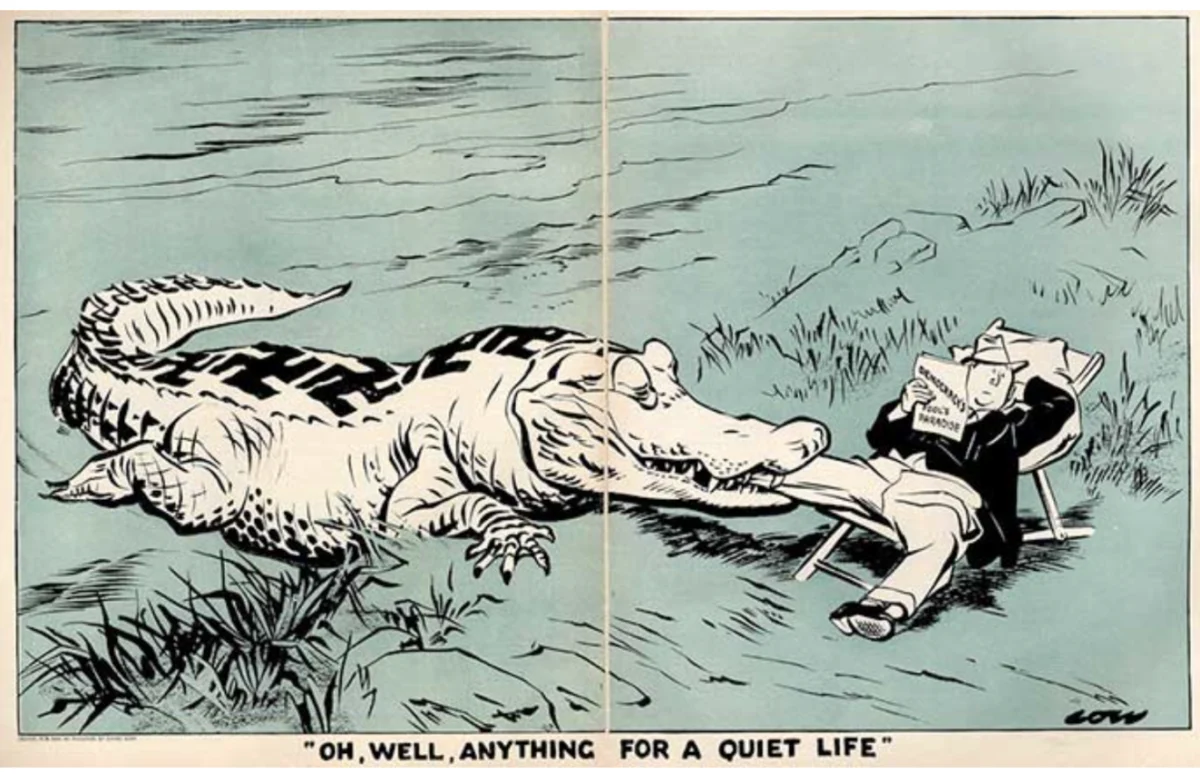
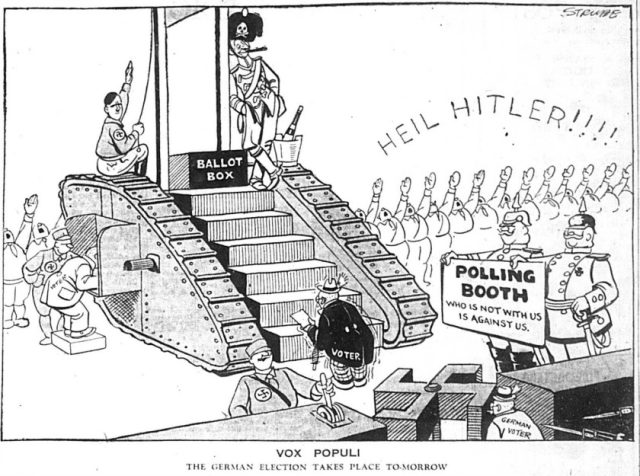
“No dictator is displeased by cartoons showing his terrible person stalking through blood and mud… What he does not want to get around is the idea he is an ass, which is really damaging.” These words, spoken by the legendary British cartoonist David Low, encapsulate a fundamental truth about authoritarianism: while a tyrant can tolerate being feared, he cannot survive being laughed at.
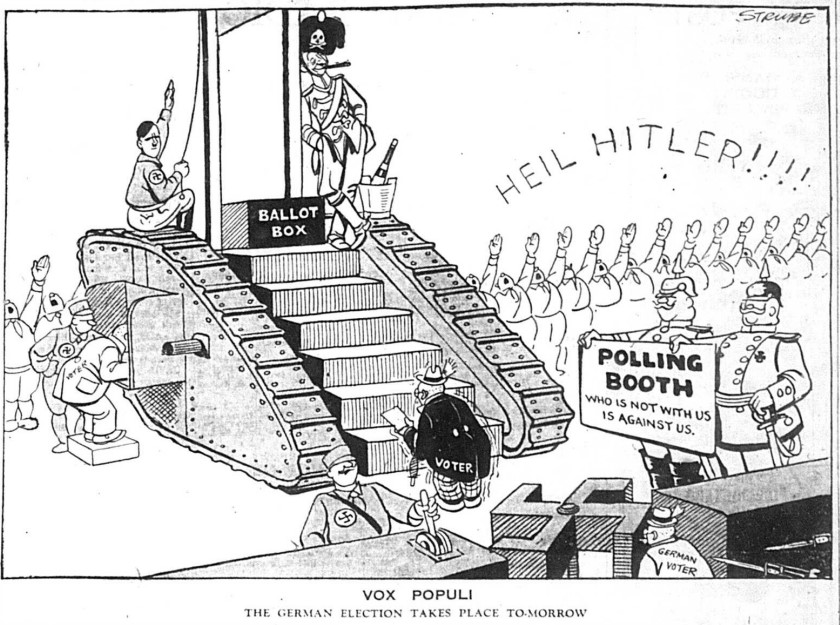
The Third Reich is rarely associated with humor, yet the Nazi regime’s relationship with the cartoon was one of obsessive duality. On one hand, they weaponized the medium to disseminate the most virulent forms of antisemitism and state propaganda; on the other, they exhibited a pathological sensitivity to mockery, launching a systematic campaign to silence caricaturists both within Germany’s borders and across the globe. From the grotesque sketches of Der Stürmer to the clandestine escapes of photomontage artists, the history of the Third Reich’s war on cartoons reveals a regime that understood the existential threat of a well-placed ink stroke.
Main Facts: The Weaponization and Suppression of the Visual Word
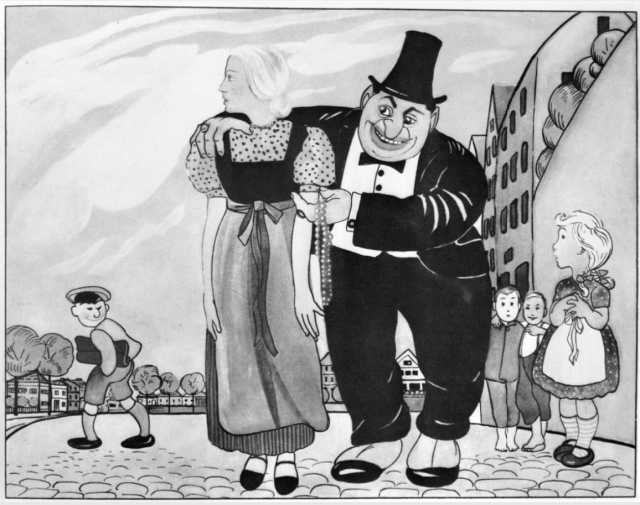
The Nazi approach to cartooning was defined by two distinct tracks: the promotion of "Aryan" satire and the total eradication of "degenerate" critique. The regime’s primary tool for visual indoctrination was Der Stürmer, the tabloid edited by Julius Streicher. The paper’s primary artist, Philipp “Fipps” Rupprecht, created a visual shorthand for Nazi ideology. His drawings did not require literacy; they transformed complex political and economic grievances into base, biological horror. By depicting Jewish people as spiders, snakes, or parasitic monsters, Fipps provided a "laughable" veneer to dehumanization.
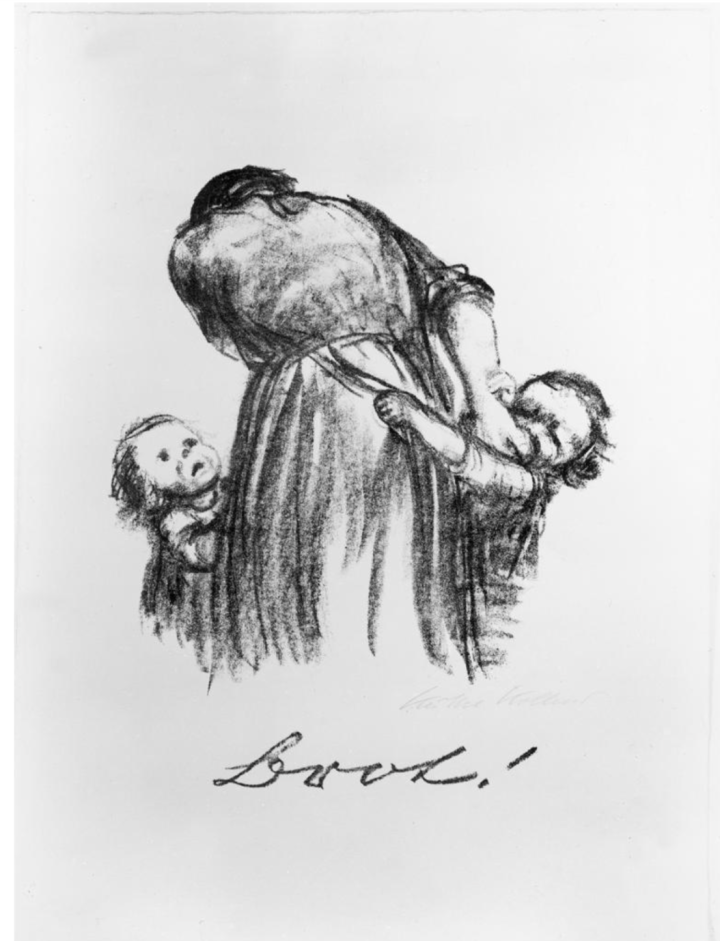
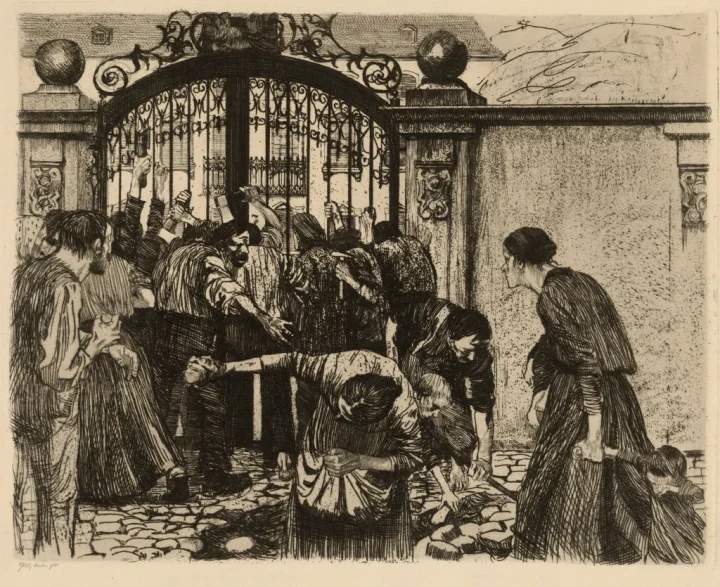
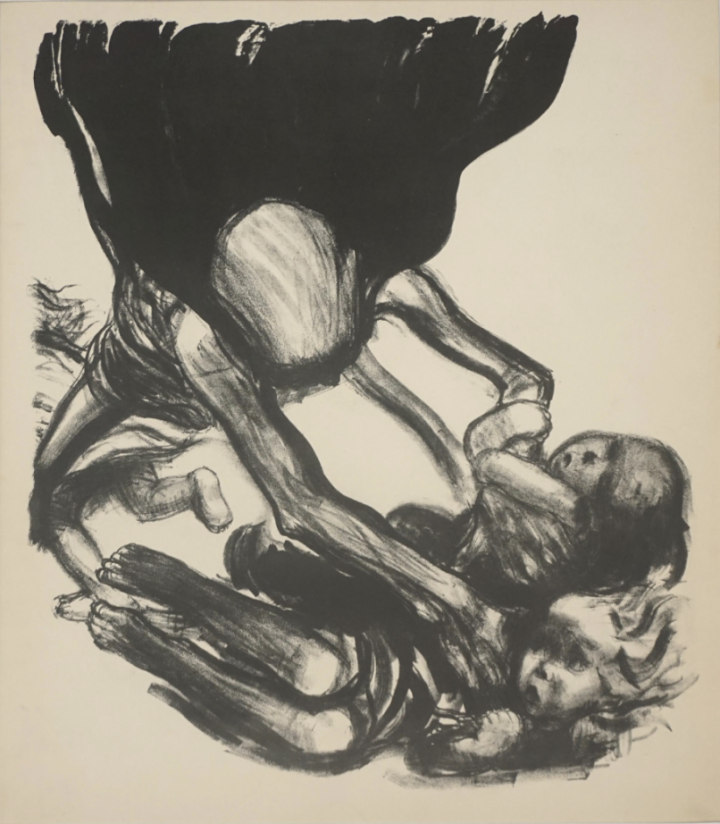
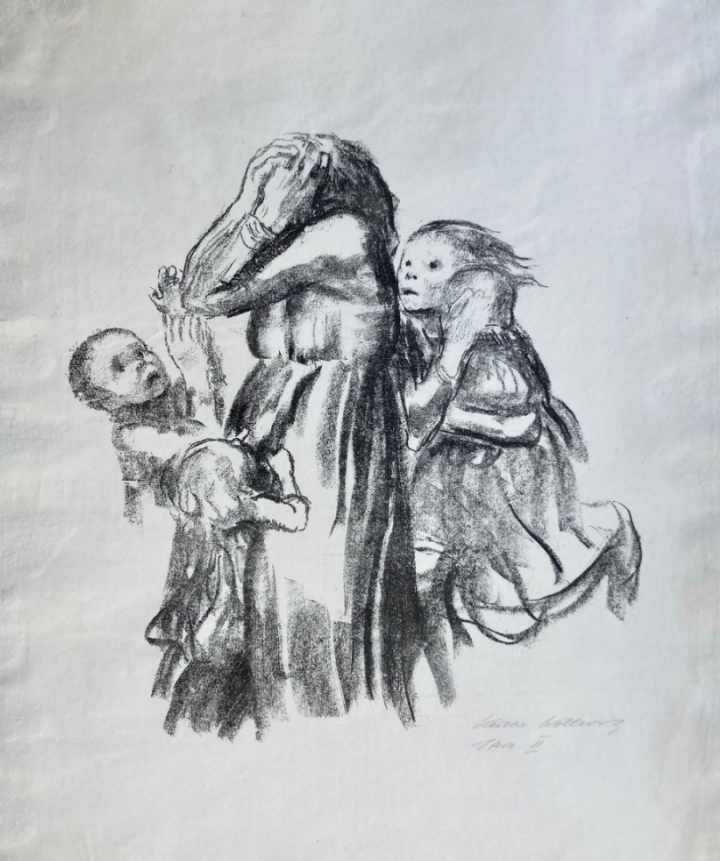
Conversely, the regime viewed independent satire as a form of high treason. The Ministry of Public Enlightenment and Propaganda, led by Joseph Goebbels, meticulously monitored foreign press. When domestic artists like Käthe Kollwitz, John Heartfield, and George Grosz used their talents to critique the state, the response was not debate, but the Gestapo. The regime’s sensitivity was so acute that it even attempted to "reclaim" its image through official publications that sought to debunk foreign cartoons—a project that famously backfired.
Chronology of Conflict: From Weimar Satire to Exile
The war on cartoons did not begin in 1933; it was the culmination of a decade of legal and physical skirmishes during the Weimar Republic.
- 1924–1928: The Early Legal Battles. Even before the Nazi seizure of power, right-wing elements used "blasphemy" and "insult" laws to target satirists. George Grosz, a prominent member of the Berlin Dada movement, was prosecuted in 1928 for a cartoon depicting the clergy as war-mongers. This period established the precedent that art was a punishable offense.
- 1933: The Great Purge. Upon Hitler’s appointment as Chancellor, the suppression became state policy. Within a week, George Grosz fled to the United States. Käthe Kollwitz was forced to resign from the Prussian Academy of Arts. The SS raided the home of John Heartfield, who famously escaped by leaping from his balcony into a garbage bin to avoid arrest.
- 1934: The Hanfstaengl Experiment. Ernst “Putzi” Hanfstaengl, a Harvard-educated confidant of Hitler, published Hitler in der Karikatur der Welt (Hitler in the Caricature of the World). This was a bizarre attempt to print anti-Nazi cartoons alongside "factual" rebuttals to prove that the world misunderstood the Führer.
- 1937: The Degenerate Art Exhibition. The Nazis staged the Entartete Kunst exhibition in Munich, displaying works by Kollwitz, Grosz, and others to incite public derision against modernism and political satire.
- 1938–1940: International Escalation. As the world moved toward war, the Nazis pressured the British government to silence David Low. By 1940, with Operation Sea Lion (the planned invasion of the UK) in development, the Nazis compiled the "Black Book"—a list of individuals to be immediately arrested and executed. Low’s name was prominently featured.
Supporting Data: The Impact of Visual Propaganda
The effectiveness of the Nazi cartoon war can be measured by the regime’s investment in it. Der Stürmer reached a peak circulation of nearly 500,000 by 1937, largely due to Fipps’ illustrations, which were posted on "Stürmerkasten" (display cases) in public squares across Germany.
In terms of suppression, the data is equally stark. By 1939, virtually every prominent satirical voice of the Weimar era had been silenced, imprisoned, or driven into exile. The "Degenerate Art" exhibition featured over 650 works confiscated from 32 German museums. The regime didn’t just want to stop the production of new cartoons; they wanted to erase the history of the medium’s independence.
The sensitivity of the Nazi leadership to foreign cartoons was not merely anecdotal. Diplomatic cables from the 1930s show that German ambassadors in London and Washington frequently lodged formal complaints regarding specific caricatures. The regime viewed a cartoon in the London Evening Standard as a diplomatic incident equivalent to a military provocation.
Official Responses: "Facts vs. Ink" and Diplomatic Pressure
One of the most fascinating chapters in this history is the regime’s attempt to fight back using the same medium that tormented them. Ernst Hanfstaengl’s Hitler in der Karikatur der Welt was subtitled "Facts versus Ink." It was an official effort to use "reason" to defeat satire.
For instance, when a cartoon in The Nation depicted Hitler as a Grim Reaper with a swastika-shaped scythe, Hanfstaengl’s book countered by citing the 1933 Four Powers Pact as "proof" of Hitler’s peaceful intentions. When the New York Times showed Hitler leading Germany back to the Dark Ages, the Nazi response was to quote Lord Rothermere of the Daily Mail praising Hitler’s "youthful spirit."
However, when "logic" failed, the regime turned to coercion. Lord Halifax, the British Foreign Secretary, notoriously pressured the publisher of the Evening Standard to rein in David Low. Halifax argued that Low’s depictions of Hitler as a petulant child were "factors going against peace." This revealed a chilling reality: the Nazi regime’s thin skin was actually influencing the foreign policy of democratic nations, leading to a form of "pre-emptive obedience" among publishers.
Implications: The Enduring Power of the Thorns
The Third Reich’s war on cartoons provides a timeless blueprint for how autocracies handle dissent. The transition from the 1930s to the modern era shows that while technology has changed, the fear of the caricature remains a constant in the halls of power.
The Modern Parallels
Today, the spirit of the "Black Book" lives on in various global contexts.
- Egypt: Cartoonist Ashraf Omar remains imprisoned under terrorism charges, a modern echo of the "cultural Bolshevism" labels used by the Nazis to criminalize art.
- Turkey: The imprisonment of the cartoonist Pehlevan for "insulting" President Erdogan mirrors the Weimar-era blasphemy laws that the Nazis later perfected.
- Israel/Palestine: Mohammad Sabaaneh’s detention in 2013 highlights how states continue to use "security" as a pretext to silence uncomfortable visual narratives.
The Rise of Corporate Censorship
Perhaps most concerning is the shift toward "soft" censorship in established democracies. The recent departures of KAL from the Baltimore Sun (after its acquisition by Sinclair) and Ann Telnaes from the Washington Post (following the spiking of a cartoon critical of Jeff Bezos and Donald Trump) suggest that the pressure David Low faced from Lord Halifax is now being exerted by corporate owners.
When a publisher instructs a cartoonist to "focus on local issues" to avoid offending national political figures, they are engaging in the same "political cowardice" that the American Association of Editorial Cartoonists condemned in the 1930s.
Conclusion
The Third Reich’s obsession with cartoons was not a side-effect of their ideology; it was central to it. They understood that the caricature is the ultimate equalizer. It strips away the pomp of the uniform, the echo of the rally, and the terror of the secret police, reducing a "Superman" to a "swallower of gold and spouter of junk," as John Heartfield famously did.
As we look at the state of media today, the history of the Nazi war on cartoons serves as a reminder that the health of a democracy can be measured by the freedom of its cartoonists. If the powerful are still trying to break the pens of the satirists, it is only because those pens still have the power to draw blood. The world was not amused by Dr. Hanfstaengl’s "Facts" in 1934, and it remains unamused by the censors of 2024. The thorn in the side of the dictator remains as sharp as ever.


Leave a Comment