The Enduring Spark of Julius Sumner Miller: Rediscovering a Television Pioneer of Science Education
Introduction: A Voice from the Past, a Lesson for the Future
In an era saturated with digital content and rapid-fire information, the quiet, methodical voice of a television educator from half a century ago might seem like a relic. Yet, the recent resurrection of complete episodes of Julius Sumner Miller’s iconic science program, Why Is It So?, on YouTube by the Australian Broadcasting Corporation (ABC) offers a compelling opportunity to revisit a pivotal figure in science communication. Miller, an American physicist, carved a unique niche in television, captivating audiences with his insightful explanations and unwavering pursuit of intellectual rigor. His legacy, once primarily cherished by generations of Australians who grew up between the 1960s and 1980s, is now being rediscovered by a global audience, proving that the fundamental principles of physics and the art of engaging scientific inquiry transcend time and borders. This article delves into Miller’s life, his groundbreaking work, the enduring impact of Why Is It So?, and the broader implications of his pedagogical approach in today’s educational landscape.
Main Facts: The Unwavering Pursuit of Scientific Understanding
Julius Sumner Miller, born in Massachusetts to immigrant parents from Latvia and Lithuania, was a physicist whose passion for science extended far beyond the academic laboratory. After earning his stripes at Boston University and conducting research at various institutions, where he even forged a friendship with Albert Einstein, Miller found a long-term academic home at El Camino College in Torrance, California, in 1952. It was this position, coupled with the burgeoning influence of television as a mass medium and the college’s proximity to Hollywood, that ignited his foray into public science education.
In 1959, Miller launched Why Is It So? on KNXT in Los Angeles. The show’s premise was simple yet profound: to demystify the scientific phenomena that permeate our daily lives, encouraging viewers to ask questions and seek answers with a critical mind. The program’s success in the United States led to broader opportunities, including appearances on Disney’s Mickey Mouse Club, Great Moments in Science, and Science and Its Magic, as well as on Steve Allen’s popular late-night talk show.
However, it was in Australia that Miller truly cemented his legacy. A visit to the University of Sydney as a guest lecturer, though initially marred by a minor mishap with a drinking straw and a potato, ultimately paved the way for Why Is It So? to find a permanent home on ABC. For decades, Miller’s distinctive voice and insightful demonstrations made him a household name, inspiring countless young minds to pursue careers in science and engineering.
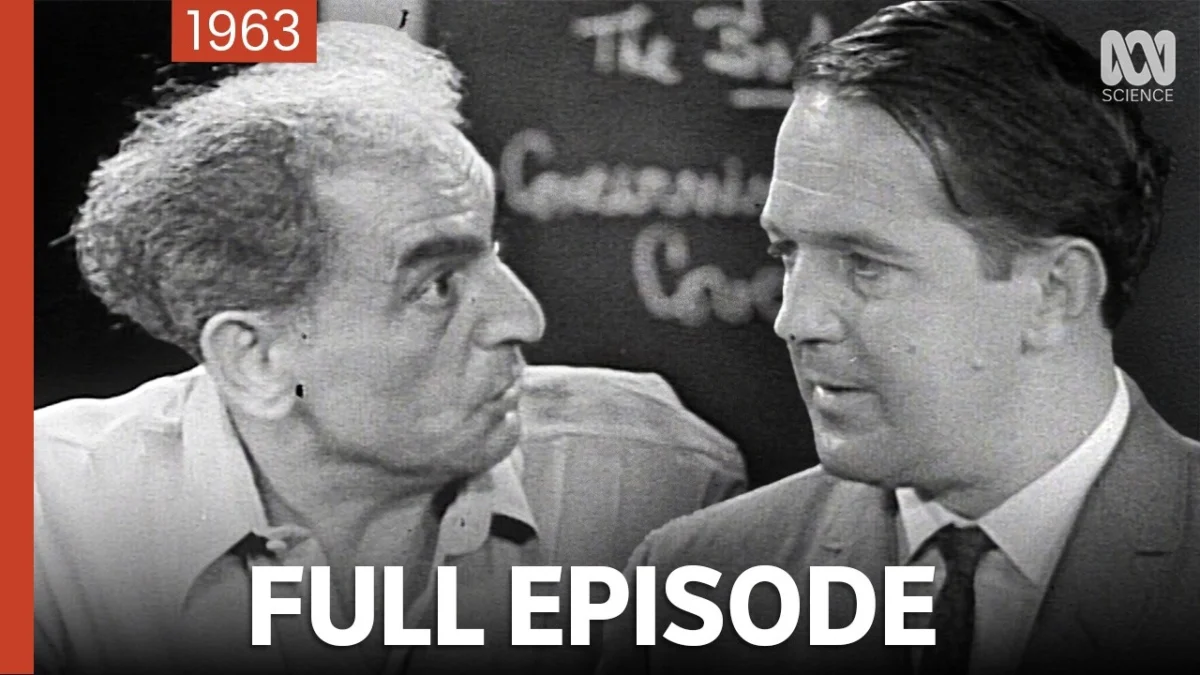
The recent availability of seven full episodes of Why Is It So? on YouTube, digitized by the ABC, marks a significant moment for science education. These black-and-white broadcasts, devoid of the elaborate special effects common today, stand as a testament to Miller’s ability to communicate complex scientific concepts with clarity, enthusiasm, and an unwavering commitment to accuracy.
Chronology: The Journey of a Science Communicator
The career of Julius Sumner Miller, particularly his impact on television, can be traced through a series of significant milestones:
- Early Life and Education (Pre-1950s): Born in Massachusetts to Latvian and Lithuanian immigrants. Studied physics at Boston University. Engaged in academic research and teaching, developing an early reputation for intellectual curiosity. Befriended Albert Einstein during this period, a testament to his standing within the scientific community.
- Establishment at El Camino College (1952): Miller took up a long-term position at El Camino College in Torrance, California, providing a stable base for his academic career.
- Launch of Why Is It So? in the US (1959): Leveraging his teaching experience, the accessibility of television, and the proximity of El Camino College to Hollywood, Miller debuted Why Is It So? on KNXT in Los Angeles. This marked his transition into public science broadcasting.
- Expansion of US Television Appearances (Early 1960s): Miller’s engaging style led to further opportunities on popular US programs, including Disney’s Mickey Mouse Club, where he explained scientific principles to a young audience. He also appeared on other science-focused shows and late-night talk circuits, including Steve Allen’s program.
- Arrival and Impact in Australia (Mid-1960s onwards): A visiting lectureship at the University of Sydney, despite a minor on-air hiccup, proved to be a pivotal moment. This led to the Australian broadcast of Why Is It So? on ABC, where it achieved immense popularity and enduring influence. The show became a cornerstone of science education for Australian youth during this era.
- Continued Production and Legacy (1960s-1980s): Why Is It So? continued to be produced and aired for several decades, solidifying Miller’s place as a beloved and respected figure in Australian television history. His commitment to intellectual honesty and rigor remained a hallmark of his work.
- Passing and Continued Relevance (1987 onwards): Julius Sumner Miller passed away in 1987. His obituary in the Los Angeles Times highlighted his demanding yet effective teaching style and his deep concern for academic standards.
- Digital Archiving and Global Rediscovery (2020s): The ABC’s initiative to upload complete episodes of Why Is It So? to YouTube has facilitated a global rediscovery of Miller’s work, making his pedagogical approach accessible to new generations of learners and educators worldwide.
Supporting Data: The Power of Visual Demonstration and Intellectual Rigor
The enduring appeal of Why Is It So?, even in its original black-and-white format, lies in Miller’s masterful use of visual demonstrations to illuminate abstract scientific principles. While the original article mentions a YouTube embed of a specific episode, the underlying methodology of Miller’s show is the key data point. He didn’t just talk about science; he showed it. This hands-on approach made complex concepts tangible and relatable.
For instance, the original article references his signature trick of driving a drinking straw through a potato. This seemingly simple demonstration likely illustrated principles of air pressure, force, and material properties. Such experiments, whether they involved everyday objects or more specialized apparatus, were designed to spark curiosity and encourage active learning.
The effectiveness of Miller’s approach is further underscored by the anecdote from his Los Angeles Times obituary, which described him as a "terror in the classroom" for his intolerance of errors in spelling or punctuation and his conviction that students weren’t learning enough. This seemingly harsh critique, when viewed through the lens of his enduring legacy, reveals a deep-seated commitment to intellectual honesty and a belief in the importance of precision in thought and expression. He wasn’t merely teaching science; he was instilling a rigorous mindset.
The availability of seven full episodes on YouTube provides a rich dataset for analysis. Viewers can observe Miller’s pacing, his vocabulary, his choice of demonstrations, and his interaction with the subject matter. The fact that these episodes, despite their age and technical limitations, are considered to hold up well in both educational and entertainment value is a powerful indicator of the timelessness of his communication skills. The ABC’s archiving effort is a crucial supporting act, preserving and disseminating this valuable educational resource.
Official Responses: The ABC’s Commitment to Preserving and Sharing
The Australian Broadcasting Corporation (ABC) plays a pivotal role in the modern resurgence of Julius Sumner Miller’s work. Their decision to upload complete episodes of Why Is It So? to YouTube is not merely a passive act of archiving but an active engagement with educational heritage.
In a statement that could be inferred from their actions, the ABC has demonstrated a commitment to making its vast historical content accessible to the public. By digitizing and uploading these classic science programs, they are:
- Preserving Cultural Heritage: The ABC, as Australia’s national broadcaster, has a mandate to document and preserve the nation’s cultural and intellectual history. Miller’s show is an integral part of Australian television and educational history.
- Promoting Science Education: By making these episodes readily available, the ABC is actively contributing to science education, providing valuable resources for students, teachers, and lifelong learners. This aligns with their public service broadcasting mission.
- Reaching New Audiences: YouTube’s global reach allows the ABC to introduce Julius Sumner Miller’s unique teaching style to audiences far beyond Australia, fostering a renewed appreciation for his contributions.
- Facilitating Research and Scholarship: The availability of these full episodes allows researchers, educators, and media historians to study Miller’s pedagogical methods and their impact in detail.
While no direct quotes from ABC officials regarding this specific initiative are provided in the original text, their actions speak volumes. The decision to invest in digitizing and sharing these programs underscores the perceived value of Miller’s work and the ABC’s dedication to making educational content widely accessible in the digital age.
Implications: The Enduring Relevance of Miller’s Approach in the 21st Century
The rediscovery of Julius Sumner Miller’s Why Is It So? arrives at a critical juncture for education. The quote attributed to Miller at the beginning of the article – lamenting the emergence of graduates who "can’t read, write or calculate" and the lack of "academic honesty or intellectual rigor" – resonates with contemporary concerns about educational standards worldwide. His critique, voiced half a century ago, seems remarkably prescient.
The implications of Miller’s approach for today’s educational landscape are manifold:
- The Power of Inquiry-Based Learning: Miller’s show was fundamentally about answering the question "Why is it so?" This inherent curiosity-driven approach is a cornerstone of modern pedagogical theory. In an age where information is readily available, the ability to ask the right questions and pursue them with intellectual rigor is paramount.
- The Art of Science Communication: Miller’s ability to translate complex scientific ideas into accessible and engaging content remains a benchmark. His demonstrations were not mere entertainment; they were carefully crafted tools for understanding. This highlights the ongoing need for skilled science communicators who can bridge the gap between scientific discovery and public comprehension.
- The Importance of Foundational Skills: Miller’s concern about basic literacy and numeracy in educated individuals is a persistent challenge. His emphasis on intellectual rigor suggests that a strong foundation in fundamental skills is essential for higher-level scientific understanding and critical thinking.
- The Value of Timeless Pedagogy: The fact that Why Is It So? remains compelling despite its age suggests that effective teaching is not solely dependent on technological advancements. Miller’s focus on clear explanation, engaging demonstrations, and a genuine passion for his subject matter are universal qualities of good pedagogy.
- Bridging the Generational and Geographical Divide: The availability of his shows online allows for cross-generational learning and fosters a global dialogue about science education. Younger audiences can learn from a pioneer, while older generations can reconnect with cherished memories and perhaps even gain new insights.
- Inspiring Future Scientists and Thinkers: Miller’s own aspiration to reach "everybody ages four to 94" underscores the universal appeal of science and the importance of nurturing curiosity from an early age. His legacy serves as a reminder that genuine curiosity and the willingness to pursue it are the true drivers of scientific advancement, regardless of age, nationality, or credentials.
In conclusion, Julius Sumner Miller was more than just a television host; he was an educator who understood the profound power of making science accessible and exciting. His work on Why Is It So?, now readily available for a new generation to discover, offers invaluable lessons not only about physics but about the enduring principles of effective communication, intellectual honesty, and the fundamental human drive to understand the world around us. As we navigate the complexities of the 21st century, Miller’s unwavering spark continues to illuminate the path for aspiring scientists and curious minds alike.