World History Encyclopedia Rallies for Server Costs Amidst Acclaim for Goldsworthy’s "Rome and Persia"
FOR IMMEDIATE RELEASE
Oxford, UK – [Current Date] – The World History Encyclopedia (WHE), a leading non-profit organization dedicated to providing free, meticulously researched historical content, is facing a critical juncture in its annual fundraising efforts. With just two days remaining in its "Server Costs Fundraiser 2026," the organization has garnered $15,123 of its $20,000 annual goal, underscoring the vital community support required to sustain its global reach and educational mission. This urgent appeal coincides with the platform’s recent publication of a compelling review of Adrian Goldsworthy’s acclaimed new book, Rome and Persia: The Seven Hundred Year Rivalry, highlighting the caliber of content that relies on the Encyclopedia’s operational stability.
Main Facts: Sustaining a Legacy of Accessible History
The World History Encyclopedia operates as a digital beacon for historical knowledge, offering a vast repository of articles, images, and educational resources to millions worldwide, all free of charge. This ambitious undertaking, however, is not without significant operational costs, primarily driven by the necessity of robust and reliable server infrastructure. The annual $20,000 required to maintain these servers is fundamental to keeping the website online and accessible 24/7.
Currently, the fundraiser has achieved 75.6% of its target, with a shortfall of $4,877 to be covered in the next 48 hours. This immediate need highlights the precarious balance non-profit digital initiatives face in a landscape increasingly dominated by paywalls and commercial interests. The WHE’s commitment to open access relies heavily on the generosity of its global readership and benefactors.
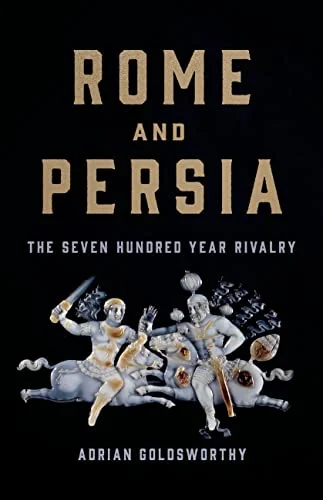
In parallel with this crucial fundraising push, the World History Encyclopedia continues its mandate of scholarly dissemination, recently featuring a highly positive review of Adrian Goldsworthy’s latest masterpiece, Rome and Persia: The Seven Hundred Year Rivalry. The book, published by Basic Books in 2023, has been lauded with a 4.5-star rating by reviewer Tommy Sandford, an independent historian. Goldsworthy’s work offers a panoramic view of the protracted and complex interactions between two of antiquity’s most formidable empires, challenging conventional narratives and providing fresh insights into a millennium of geopolitical struggle. The review not only praises the book’s depth and impartiality but also subtly reinforces the value proposition of platforms like WHE in bringing such scholarship to a wider audience.
Chronology: A Race Against Time and a Millennium of Rivalry
The current fundraising campaign for the World History Encyclopedia represents an ongoing, annual effort to secure the financial backbone of its operations. Each year, the organization transparently outlines its server costs, appealing to its community for support. The dwindling two-day window signifies the immediate urgency of this particular phase, a critical period that will determine the financial security of the Encyclopedia’s online presence for the coming year. For a non-profit reliant on public donations, these annual campaigns are a testament to the community’s collective commitment to preserving and sharing historical knowledge freely.
Goldsworthy’s Rome and Persia, in contrast, delves into a far more expansive timeline, meticulously charting nearly a thousand years of intermittent contact and conflict. The narrative commences with the nascent interactions between the late Roman Republic (c. 509 – 27 BCE) and the twilight years of the Seleucid Empire (312 – 63 BCE), a Hellenistic successor state to Alexander the Great’s Macedonian Empire in West Asia. From these foundational encounters, Goldsworthy systematically transitions to the titanic clashes between the burgeoning Roman Empire and the successive great Persian powers: the Parthians (247 BCE – 224 CE) and later the Sasanians (224 – 651 CE).
This vast chronological scope, spanning from roughly 100 BCE to 700 CE, allows Goldsworthy to meticulously trace the evolving nature of the rivalry, showcasing both its enduring themes and its adaptive characteristics across different imperial dynasties and geopolitical shifts. The book concludes just prior to the Islamic conquests, which would fundamentally redraw the map of the ancient world and bring an end to the Sasanian Empire, thus offering a comprehensive examination of this prolonged geopolitical dance between two colossal civilizations. Adrian Goldsworthy himself is a highly respected figure in classical antiquity, having earned his DPhil in ancient history from Oxford. His prolific career over the past three decades has seen him consistently produce high-quality publications in both history and historical fiction, making him a trusted voice in the field.
Supporting Data: The Pillars of Digital Education and Scholarly Insight
The financial data surrounding the World History Encyclopedia’s fundraiser is stark: an annual expenditure of $20,000 solely for server maintenance, with $15,123 currently secured and $4,877 still needed. These figures are not mere abstractions but represent the tangible costs of providing a robust, reliable, and secure online platform. Servers require constant power, cooling, hardware maintenance, and security updates – essential investments for any website handling millions of visitors monthly and hosting a vast, continually updated database of content. The transparency of this appeal underscores the WHE’s commitment to its mission and its accountability to its supporters.
The review of Rome and Persia: The Seven Hundred Year Rivalry itself provides rich supporting data for the quality of content the World History Encyclopedia champions. Written by Tommy Sandford, an independent historian with a B.A. (Hons) in History and English, and minors in Classics, Medieval Studies, Near Eastern Studies, and Global Asian Studies from Cornell University, the review is itself a testament to rigorous scholarship.
Goldsworthy’s Scholarly Acumen and the Book’s Core Arguments
The book’s specifics – 592 pages, published by Basic Books in 2023, aimed at a "General Public" audience with "Medium" difficulty – position it as an accessible yet authoritative work. Sandford’s 4.5-star rating is a strong endorsement. The reviewer highlights Goldsworthy’s central thesis: the "duality between constancy and change" that characterized the Roman-Persian rivalry. Despite shifts in leadership and dynastic power on both sides, the underlying conflict remained remarkably consistent, with neither empire ever achieving a definitive, lasting victory. This long-term stalemate is a key takeaway, challenging any simplistic notions of imperial dominance.

Sandford meticulously details Goldsworthy’s methodology, particularly his adept handling of disparate source materials. The review notes the inherent challenge of historical research in this period: a wealth of primary sources for the Roman side (e.g., Tacitus, Suetonius, Dio, Velleius Paterculus) contrasted with a relative scarcity for the Persian empires, often necessitating reliance on secondary sources like Parvaneh Pourshariati’s The Decline and Fall of the Sasanian Empire (2008). Goldsworthy’s brilliance, according to Sandford, lies in his ability to integrate these diverse materials, utilizing maps to illustrate shifting borders, and critically, explicitly identifying when his analysis is directly source-based versus when he is extrapolating due to evidentiary gaps. This transparency is crucial for maintaining academic integrity and impartiality.
Comparative Analysis and Challenging Historical Determinism
The review further contextualizes Rome and Persia by comparing it to other significant works. While books like Mary Beard’s Emperor of Rome (2023) and Tom Holland’s In the Shadow of the Sword (2012) offer profound insights into individual empires, Goldsworthy’s comparative approach is singled out as its distinguishing feature. Sandford draws an apt parallel to Eric H. Cline’s "Late Bronze Age" duology, 1177 B.C. (2014), for its similar multi-civilizational perspective, despite the vastly different historical eras. This comparative lens allows Goldsworthy to illuminate the intricate interplay and mutual influence between Rome and Persia, rather than treating them as isolated entities.
Perhaps one of the most profound "supporting data" points comes directly from Goldsworthy himself, quoted by Sandford: "Meagre though our sources are, there is little sense that what happened was inevitable, still less that it could have been predicted by anyone. Human beings-and empires-tend to live in the here and now. They assume that things are as they should be, and perhaps always will be, in spite of the lessons of history" (p. 225). This powerful statement underscores the benefit of hindsight in historical analysis and cautions against deterministic interpretations of the past. It highlights Goldsworthy’s commitment to presenting history as a series of contingent events, shaped by human agency and unforeseen circumstances, rather than an inevitable march towards a predetermined outcome.
Ultimately, Goldsworthy concludes that the protracted rivalry neither significantly weakened nor particularly benefited either empire. Sandford finds this conclusion well-reasoned and convincingly argued, praising the book’s "well-established reasoning and clearly articulated prose." The book is highly recommended for its "teachability and pleasurability," making it an invaluable resource for anyone interested in Roman or Persian imperial history, from casual enthusiasts to serious students.
Official Responses: An Appeal for Preservation and Scholarly Discourse
The World History Encyclopedia’s "official response" to its financial needs is an urgent appeal for community support. As a non-profit, its very existence is predicated on the collective belief in the power of free and accessible historical education. The message is clear: "World History Encyclopedia is a non-profit organization publishing free history content that has been carefully researched and reviewed. If you liked this content, please consider donating at www.worldhistory.org/donate/. To remove this message from printouts, you can become a supporting member at www.worldhistory.org/membership/. Thank you for supporting our work!" This direct plea emphasizes the symbiotic relationship between the organization and its users, highlighting that donations directly translate into continued operations and content creation. Furthermore, the option to become a supporting member not only aids the fundraiser but also offers an ad-free experience, demonstrating WHE’s commitment to enhancing user experience while securing its future. The organization also transparently states its status as an Amazon Associate, earning commissions on qualifying book purchases made through its site, providing another avenue of support.
While Adrian Goldsworthy himself does not provide an "official response" within the review, his authorial intent, as interpreted by Tommy Sandford, serves as an implicit statement. Goldsworthy’s dedication to drawing on diverse sources, his efforts to maintain impartiality, and his nuanced conclusions about the Roman-Persian rivalry speak volumes about his scholarly integrity and his goal of enriching historical understanding. His work, by challenging simplistic narratives and emphasizing contingency, contributes significantly to a more sophisticated global historical discourse.
Tommy Sandford’s official response, as the reviewer, is one of enthusiastic endorsement. His concluding remarks attest to the book’s quality and impact: "This book demonstrates a high level of teachability and pleasurability and is recommended to anyone with an interest in Roman or Persian empirical history." This professional assessment not only validates Goldsworthy’s scholarship but also reinforces the World History Encyclopedia’s role in curating and promoting such valuable historical resources.
Implications: The Future of Free Knowledge and Nuanced History
The implications of the World History Encyclopedia reaching its fundraising goal are profound. Success means the continuation of its mission: providing free, high-quality, peer-reviewed historical content to a global audience. It implies the sustained operation of a platform that millions rely on for education, research, and general interest. Failure, conversely, could lead to operational constraints, potential disruptions in service, or even the eventual compromise of its free access model, a significant loss for the public good. In an era where information access is increasingly commodified, the existence of robust non-profit resources like WHE is more critical than ever for fostering informed global citizens and supporting educational institutions.
Goldsworthy’s Rome and Persia carries significant implications for historical scholarship. By presenting a balanced, comparative analysis of two colossal empires over a vast span of time, it challenges traditional Eurocentric narratives and encourages a more interconnected view of ancient history. His emphasis on the indecisive nature of the rivalry, and the lack of clear long-term benefit for either side, compels historians to reconsider the strategic value and consequences of protracted geopolitical conflicts. Furthermore, his caution against interpreting history with the benefit of hindsight serves as an important methodological lesson, promoting intellectual humility and a deeper appreciation for the complexities of past decision-making. Such scholarship contributes to a richer, more nuanced understanding of human civilization, moving beyond simplistic narratives of rise and fall.
For the general public, the implications are equally significant. The World History Encyclopedia, by hosting reviews like Sandford’s, acts as a vital bridge between academic scholarship and public engagement. It introduces readers to important new historical works, fostering a deeper appreciation for the past and encouraging critical thinking about historical events. In an age rife with misinformation, platforms that meticulously research and review their content, and openly discuss the nuances of historical interpretation, are indispensable. The ongoing existence and flourishing of WHE ensures that such intellectual rigor remains accessible to all, empowering individuals to engage with history not as a static collection of facts, but as a dynamic and evolving narrative that offers crucial lessons for the present and future. Supporting the World History Encyclopedia is not merely about paying for servers; it is an investment in the global dissemination of knowledge and the cultivation of an informed citizenry.