The Epic Reimagined: Nolan’s ‘Odyssey,’ Musk’s AI Ambitions, and the Evolving Landscape of 2026 Culture
By [Journalist Name]
Published July 23, 2026
The summer of 2026 has become a crossroads for classical antiquity and futuristic technology. As audiences flock to theaters for Christopher Nolan’s sprawling adaptation of The Odyssey, a parallel debate has ignited over the nature of adaptation, the role of artificial intelligence in art, and the shifting standards of sportsmanship following the 2026 World Cup. What began as a cinematic event has transformed into a broader cultural audit of how we preserve, interpret, and occasionally "spoil" the foundational stories of Western civilization.
Main Facts: The Cinematic Voyage of Christopher Nolan
Christopher Nolan’s The Odyssey has arrived with the weight of a three-hour runtime and the burden of adapting one of the most significant works in the Western canon. While the film has received critical acclaim for its visual scale, it has also sparked a flurry of discourse regarding its fidelity to Homer’s original text.
A central point of contention, as highlighted in a recent Guardian analysis, involves the creative liberties taken by Nolan to condense the massive epic into a theatrical experience. For many scholars and fans of the "Big Three"—the Iliad, the Odyssey, and the Aeneid—the concept of "spoilers" is irrelevant; the narrative beats are etched into history. Instead, the focus has shifted to how the "saga itself was spoiled" or enhanced by modern interpretation.
The film’s casting has also become a lightning rod for social commentary. The decision to cast Academy Award winner Lupita Nyong’o as Helen of Troy has reignited debates over racial representation in historical and mythological narratives. While some political commentators have used the casting to critique modern military and social sensibilities—notably Pete Hegseth’s public skepticism regarding diversity in traditional roles—cultural critics argue that the mythological nature of Helen allows for such fluidity. Unlike Hans Christian Andersen’s The Little Mermaid, which is deeply tied to Danish national identity, Helen of Troy’s origins are steeped in divinity, being the daughter of Zeus and Leda.
Chronology: A History of Adaptation and Discovery
The tension between "historical accuracy" and "artistic license" is not a new phenomenon. To understand the current debate, one must look back at the timeline of how these epics have been treated:
- The 1870s: Heinrich Schliemann, a pioneer in archaeology, discovers what is widely believed to be the site of Troy. This shifted the Trojan War from the realm of pure myth into the territory of "very likely real," complicating how future storytellers would approach the material.
- 1966-1967: Sergey Bondarchuk releases his eight-hour epic War and Peace. While lauded for its absolute fidelity to Tolstoy’s prose, it serves as a cautionary tale for modern directors; its loyalty to the source material was so rigid that some viewers found it more akin to an audiobook than a cinematic reimagining.
- The 2010s-2020s: A wave of "color-blind" and "color-conscious" casting begins to reshape Hollywood’s approach to Greek mythology, leading to the current discourse surrounding Nyong’o’s Helen.
- July 2026: Christopher Nolan releases The Odyssey, opting for a middle ground between Bondarchuk’s literalism and Hollywood’s penchant for invention.
- Present Day: Elon Musk announces that his AI, Grok, will attempt to settle the debate by producing a "historically accurate" version of the epic.
Supporting Data: The Authenticity Paradox
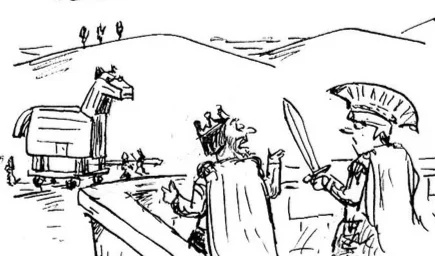
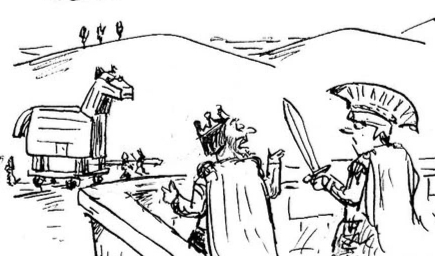
The quest for "accuracy" in The Odyssey is fraught with logical fallacies. Critics point out that the Trojan Horse, perhaps the most famous element of the saga, is only briefly mentioned in the Odyssey and is detailed primarily in Virgil’s Aeneid—a Roman sequel written centuries later.
Furthermore, historical data regarding the geography of the era suggests that the "whiteness" often attributed to these characters is a product of Renaissance art rather than historical fact. For instance, the myth of Perseus and Andromeda clearly places Andromeda in Ethiopia. While the boundaries of ancient Ethiopia differ from the modern nation-state, she would almost certainly have been of North African or East African descent.
Illustrator Chris Baldwin and author Mike Peterson have previously noted that when depicting these figures, sticking to "Greek features" often satisfies a modern audience’s expectation of the "Irene Papas look," while deviating toward a "Hayley Mills" aesthetic feels out of place. The data suggests that audiences are generally more tolerant of racial diversity in these roles than they are of changes to the "spirit" of the story, such as removing the nudity that has characterized classical art for millennia.
Official Responses and Technological Disruptions
The most provocative response to Nolan’s film came from tech mogul Elon Musk. Taking to his platform, Musk announced that his AI, Grok, is slated to create a full-length movie of The Odyssey that is "historically accurate and true to the art of Homer."
This claim has been met with derision from literary scholars. "You can’t have both," says Mike Peterson, a veteran commentator on the intersection of literature and media. "If you are true to the art of Homer, you are embracing a world of gods, monsters, and divine intervention. If you are ‘historically accurate,’ you are making a gritty Bronze Age war drama where Helen’s father isn’t a swan-Zeus, but a local chieftain."
The academic community has also weighed in on the broader implications of how we consume these stories. Author and educator Kate Messner has long advocated for "summer reading freedom," criticizing the rigid, often ill-conceived reading lists that force students to engage with classics in a vacuum. Messner argues that the current "Nolan-v-Musk" debate is a symptom of a culture that praises books they haven’t actually read, leading to a "classic case of boredom" that stifles genuine interest in the humanities.
Implications: From the Screen to the Stadium
The cultural shifts of 2026 are not limited to the silver screen. The themes of "honesty" and "fidelity" have bled into the world of sports, specifically the 2026 World Cup. In a move that mirrors the demand for "authenticity" in film, FIFA implemented strict crackdowns on "flopping"—the practice of feigning injury to gain a tactical advantage.
The New Standards of 2026
- Discipline: Referees in the 2026 tournament aggressively issued yellow cards for simulation, a move that significantly reduced the theatricality of the sport.
- Atmosphere: A ban on whistles, air horns, and vuvuzelas forced fans to engage more directly with the game, moving away from the manufactured noise of previous decades.
- Commercialism vs. Welfare: The introduction of three-minute hydration breaks was officially framed as a player safety measure, though critics noted they served as convenient windows for high-priced advertising.
These changes in soccer reflect a broader societal trend: a desire for a "cleaner" experience, whether it’s a sport free of deception or a movie that cuts through the "filler" of an ancient text.
Conclusion: The Persistence of the Myth
As we move toward the 2027 Women’s World Cup in Brazil and the inevitable release of Musk’s AI-generated Odyssey, the central question remains: What do we owe the original story?
Nolan’s Odyssey may be imperfect, and Grok’s version may be a "historically accurate" impossibility, but the enduring nature of the conversation proves that Homer’s work remains the ultimate "open source" project. Whether through the lens of a 4K camera, an AI algorithm, or a comic strip, the voyage of Odysseus continues to be a mirror in which we view our own technological and social anxieties.
The message of 2026 seems to be that while "cute girls like comics" and audiences like spectacles, the human element—the ability to interpret, to fail, and to reimagine—cannot yet be replaced by a "historically accurate" machine. In the end, as the saying goes, Helen will always have Paris—or she would have, if only the world had listened to Cassandra.
Sidebars and Further Reading
- The "Take On Me" Effect: How 80s nostalgia and the "Official Video" aesthetic continue to influence the visual language of 2026.
- The Schliemann Legacy: Why the 1870s discovery of Troy remains the most controversial moment in the history of archaeology.
- Summer Reading Freedom: Why Kate Messner and Dylan Meconis believe the next generation of readers needs fewer lists and more choices.