The Evolution of Spatial Cinema: A Comprehensive Guide to Immersive Storytelling on Apple Vision Pro and Meta Quest
The transition from traditional flat-screen entertainment to spatial computing has redefined the boundary between the audience and the screen. For many early adopters of headsets like the Apple Vision Pro or the Meta Quest 3, the initial "wow factor" often stems from gaming. However, a more profound transformation is occurring in the realm of cinematic storytelling. As hardware capabilities reach a critical mass of resolution and comfort, a new genre of "spatial cinema" is emerging—one that prioritizes presence, depth, and interactivity over passive observation.
This guide explores the current landscape of immersive media, categorizing the essential experiences that prove VR is the future of narrative entertainment.
1. The Main Facts: Defining the Immersive Medium
Watching a movie in a VR headset is often misunderstood as simply strapping a giant virtual TV to one’s face. While "Personal Cinema" modes are a significant feature, the true power of the medium lies in three distinct categories:
- Apple Immersive Video / 180-degree 3D: High-fidelity, stereoscopic video that covers the user’s forward field of view, typically shot in 8K resolution with spatial audio.
- Interactive VR Films: Experiences rendered in real-time (like a video game) that allow the viewer to move within the scene or interact with characters.
- 3D Cinematic Conversions: Traditional Hollywood blockbusters that find their definitive form in a headset, free from the dimming effects of theater glasses.
The market is currently bifurcated: Meta Quest remains the accessible leader for interactive narratives and social viewing, while the Apple Vision Pro has set a new high-water mark for premium, high-bitrate immersive documentaries and scripted content.
2. Scripted Immersive Cinema: A New Narrative Language
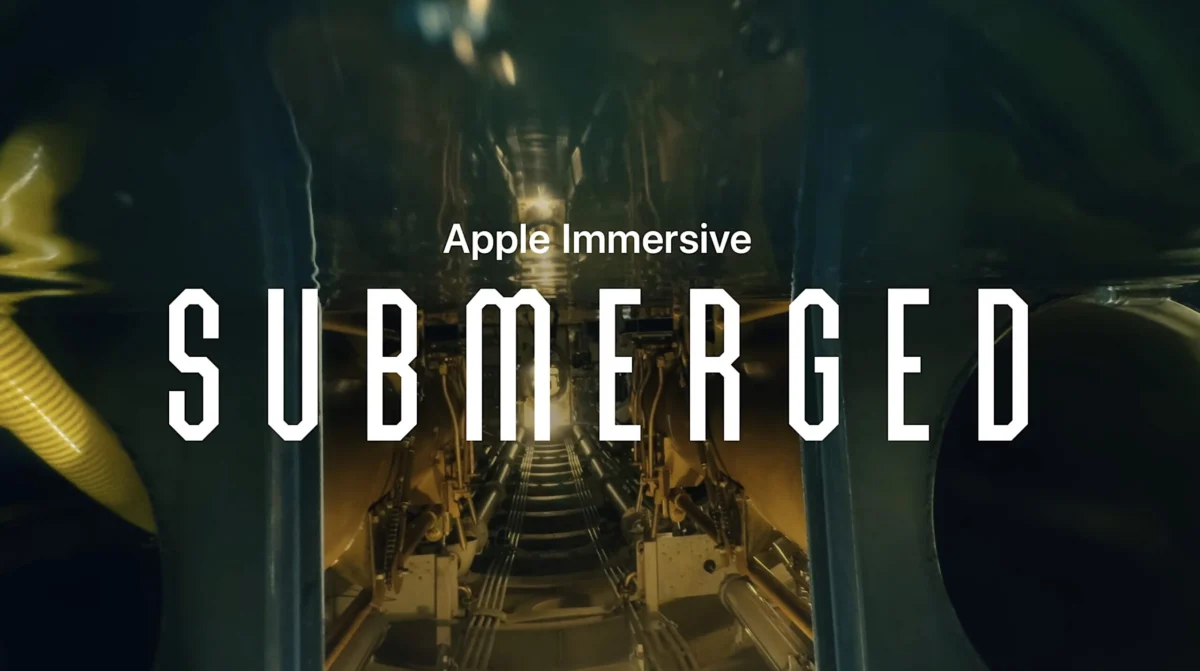
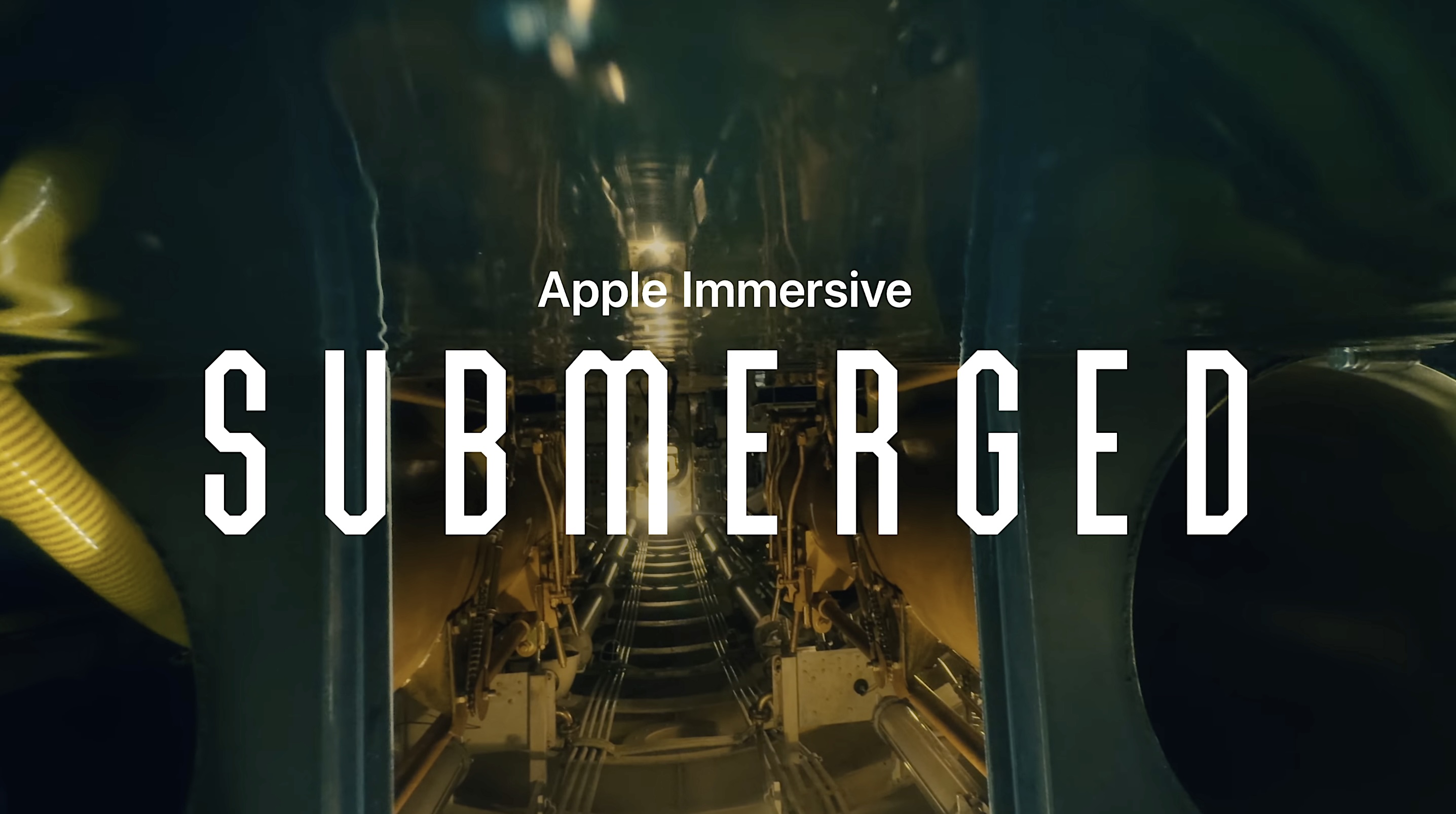
The release of Submerged on the Apple TV app marks a pivotal moment for scripted VR. Directed by Academy Award winner Edward Berger, it is the first scripted film shot specifically for Apple Immersive Video.
Submerged (Apple Vision Pro)
Set inside a WWII submarine, Submerged leverages the inherent constraints of the setting to enhance immersion. The cramped quarters of the vessel mean that the "walls" of the video align with the perceived scale of the room, reducing the "uncanny valley" effect of virtual environments. When water begins to leak or sparks fly from a console, the 180-degree 3D format creates a visceral sense of claustrophobia that a flat screen cannot replicate.
Madrid Noir (Meta Quest, SteamVR)
In contrast to the photorealistic approach of Apple, Madrid Noir uses a stylized, animated aesthetic to tell a 1930s mystery. It functions as an "immersive stage play." Rather than cutting between shots, the environment transforms around the viewer. This 45-minute production demonstrates how VR can use lighting and sound to guide the viewer’s attention without the need for traditional cinematic editing.
3. The Documentary Frontier: Presence as a Tool for Empathy
Documentaries have arguably seen the most success in VR, as the medium’s ability to transport a viewer to a specific location—be it the depths of the ocean or the vacuum of space—is unmatched.
Space Explorers: The ISS Experience (Meta Quest)
Widely considered the gold standard of VR documentaries, this series was filmed over several years aboard the International Space Station. The production involved custom-built 3D 360-degree cameras. The result is a profound sense of "The Overview Effect," allowing viewers to float alongside astronauts and look down at the Earth. It remains the most compelling argument for VR as an educational tool.
Notes on Blindness VR (Meta Quest, PC VR)
Based on the audio diaries of John Hull, who documented his descent into total blindness, this experience uses abstract visuals and binaural audio to represent a world perceived through sound. It is a landmark piece of "empathy engineering," using the sensory deprivation of the headset to help users understand a non-visual existence.
Traveling While Black (Meta Quest)
Directed by Academy Award winner Roger Ross Williams, this documentary places the viewer in Ben’s Chili Bowl, a historic sanctuary for Black travelers. By sitting the viewer at the booth during intimate conversations about race and safety in America, the film uses "presence" to make the history of the Green Book feel immediate and personal.
4. Supporting Data: The Current Content Landscape
For consumers navigating these platforms, the following table summarizes the best entry points by category:
| Title | Format | Primary Platform | Key Strength |
|---|---|---|---|
| Submerged | 180° 3D Video | Apple Vision Pro | High-fidelity scripted tension |
| Space Explorers | 360° 3D Video | Meta Quest | Unparalleled sense of scale |
| Wolves in the Walls | Interactive 6DOF | Meta Quest | Character AI and interactivity |
| The Line | Interactive 6DOF | Meta Quest | Miniature-scale storytelling |
| Invasion! | 360° Animation | YouTube / Quest | Family-friendly accessibility |
| Prehistoric Planet | 180° 3D Video | Apple Vision Pro | Photorealistic creature effects |
5. The Animation Revolution: From Dioramas to Dreams
Animation thrives in VR because it avoids the "uncanny valley" issues often found in live-action 3D.
- Gloomy Eyes: Narrated by Colin Farrell, this film utilizes a "diorama" effect. The story unfolds in a miniature world at the viewer’s chest level, allowing them to lean in and inspect details like a living dollhouse.
- Wolves in the Walls: Based on the work of Neil Gaiman, this experience features a protagonist, Lucy, who actually "sees" the viewer. She might hand you a camera or ask you to help her find clues, blurring the line between a movie and a role-playing game.
- Namoo: Produced by Baobab Studios, Namoo (Korean for "tree") is a poetic narrative that follows a man’s life from birth to death through the metaphor of a growing tree. Its hand-crafted art style is particularly effective in VR, where the brushstrokes gain physical volume.
6. Official Ecosystems: Apple vs. Meta
The industry is currently divided by two distinct philosophies of content distribution.
Apple’s Curated Excellence
Apple has focused on a "quality over quantity" approach. Their Apple Immersive Video format utilizes a proprietary pipeline that delivers 8K resolution and spatial audio.
- Music: Experiences like Alicia Keys: Rehearsal Room and The Weeknd: Open Hearts offer intimate, front-row access that feels more like a private performance than a concert film.
- Nature: Wild Life and Adventure push the limits of outdoor cinematography, featuring high-lining over canyons and close encounters with rhinoceroses.
Meta’s Open Library
Meta’s Horizon TV and YouTube VR integration provide a massive, though inconsistent, library of content. While much of YouTube VR is low-resolution, Meta has funded high-quality originals like The Soloist VR, which follows free-climber Alex Honnold. Meta’s hardware also supports Bigscreen, a social app that allows users to sit in a virtual cinema with friends from around the world to watch their own local movie files.
7. The 3D Movie Revival
While 3D televisions have vanished from living rooms, VR has become the ultimate sanctuary for the format. In a headset, each eye receives a dedicated image without the "ghosting" or brightness loss associated with theater projectors.
- The Disney+ Partnership: On the Apple Vision Pro, Disney+ offers a "Disney+ Theater" environment, allowing users to watch Avatar: The Way of Water or Avengers: Endgame on a screen that appears 100 feet wide, with 4K 3D resolution.
- The Library: Titles like Gravity, Dune, and Star Wars: The Force Awakens benefit immensely from the headset’s ability to convey scale, making the vastness of space feel genuinely infinite.
8. Implications and Technical Challenges
Despite the creative successes, the path to mainstream spatial cinema faces several hurdles:
- Resolution Requirements: For a 360-degree video to look as sharp as a 1080p TV, the total file would need to be roughly 12K. We are currently in the 4K-to-8K transition, meaning some older content looks "soft" on newer headsets.
- The "Nausea" Factor: High-action shots—such as drone racing or roller coasters—can cause vestibular mismatch (motion sickness). Directors are still learning the "rules" of VR, such as keeping the horizon steady and avoiding sudden camera accelerations.
- Hardware Comfort: The weight of the Vision Pro and Quest 3 remains a barrier for three-hour epics like Oppenheimer. Most successful VR-native content currently caps at 20–45 minutes.
9. Conclusion: A New Way to See
The "magical experience" promised by spatial computing is no longer a theoretical concept. With the launch of Apple’s immersive slate and Meta’s maturing library of interactive shorts, the headset has moved beyond the "toy" phase.
For the first-time user, the recommendation is clear: Start with Submerged on the Vision Pro for a glimpse of high-end production, or Space Explorers on the Quest for a perspective-shifting look at our planet. These are not just movies; they are digital memories that feel as though they actually happened to the viewer, marking the beginning of a new era in the history of the moving image.