The Fellowship’s New Call: "Lord of the Rings: Fate of the Fellowship" Unites Middle-earth with the Pandemic System
FOR IMMEDIATE RELEASE
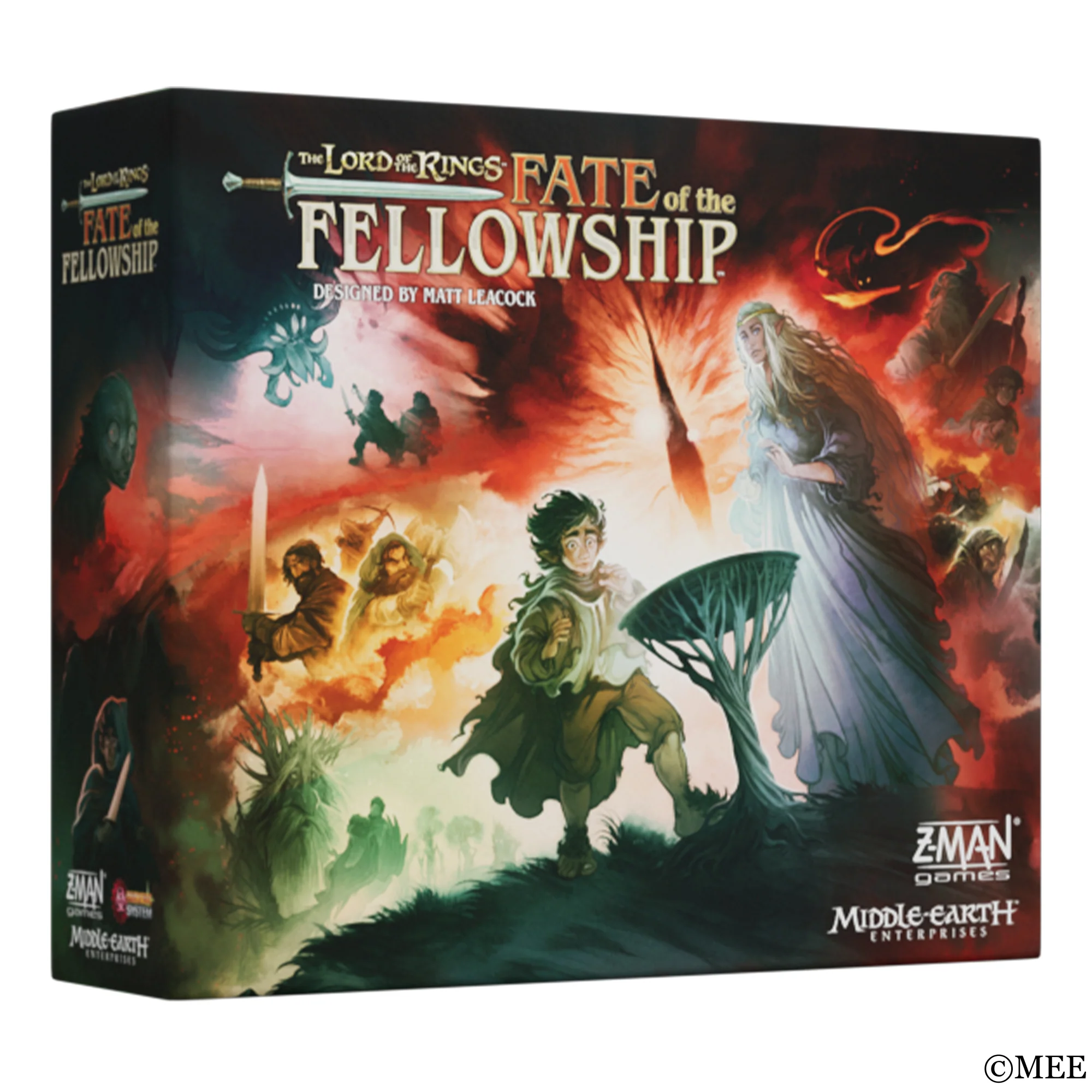
[City, State] – [Date of Article Generation] – The timeless epic of J.R.R. Tolkien’s The Lord of the Rings has once again captivated enthusiasts, this time through the highly anticipated board game, Lord of the Rings: Fate of the Fellowship. Developed by Z-Man Games and ingeniously integrating the beloved Pandemic system, this cooperative strategy game thrusts players into the heart of Middle-earth’s most perilous journey, challenging them to save the world from the encroaching Shadow. Since its release, the game has swiftly become a sensation, frequently selling out and garnering widespread acclaim from both Lord of the Rings aficionados and board game connoisseurs alike.
This ambitious title invites 1 to 5 players, aged 14 and up, to embark on a high-stakes quest that promises to make them feel truly responsible for the destiny of Middle-earth. With gameplay sessions ranging from 60 to 150 minutes, players will navigate iconic landscapes, make critical choices, and work collaboratively as the Fellowship to ensure the One Ring is cast into the fiery chasm of Mount Doom. The world hangs in the balance, relying not just on strategic prowess but on the unbreakable bonds of friendship and cooperation. The pressure is immense, the odds are stacked, and the fate of all free peoples rests firmly in the players’ hands.
The Genesis of a Grand Adventure: Development & Anticipation
The announcement of Lord of the Rings: Fate of the Fellowship sent ripples of excitement through the board gaming community and the vast fandom of J.R.R. Tolkien. Z-Man Games, a publisher renowned for its innovative and engaging titles, particularly the groundbreaking Pandemic series, took on the formidable task of translating one of literature’s most cherished narratives into an interactive experience. The decision to fuse the Pandemic system—known for its intense cooperative gameplay and escalating challenges—with the rich lore of Middle-earth was met with both anticipation and a healthy dose of skepticism. Could such a beloved, yet distinct, intellectual property truly thrive within the structured mechanics of a disease-fighting game?
The development process, while not publicly detailed, was clearly a meticulous one, aimed at ensuring thematic fidelity alongside robust gameplay. Designers faced the challenge of adapting the spread of diseases to the spread of Sauron’s forces, and the eradication of pathogens to the completion of vital objectives and the ultimate destruction of the One Ring. Early teasers and previews hinted at stunning artwork, thematic components, and a deep understanding of Tolkien’s world. This careful cultivation of anticipation, coupled with the proven track record of the Pandemic system, built a significant pre-release buzz.
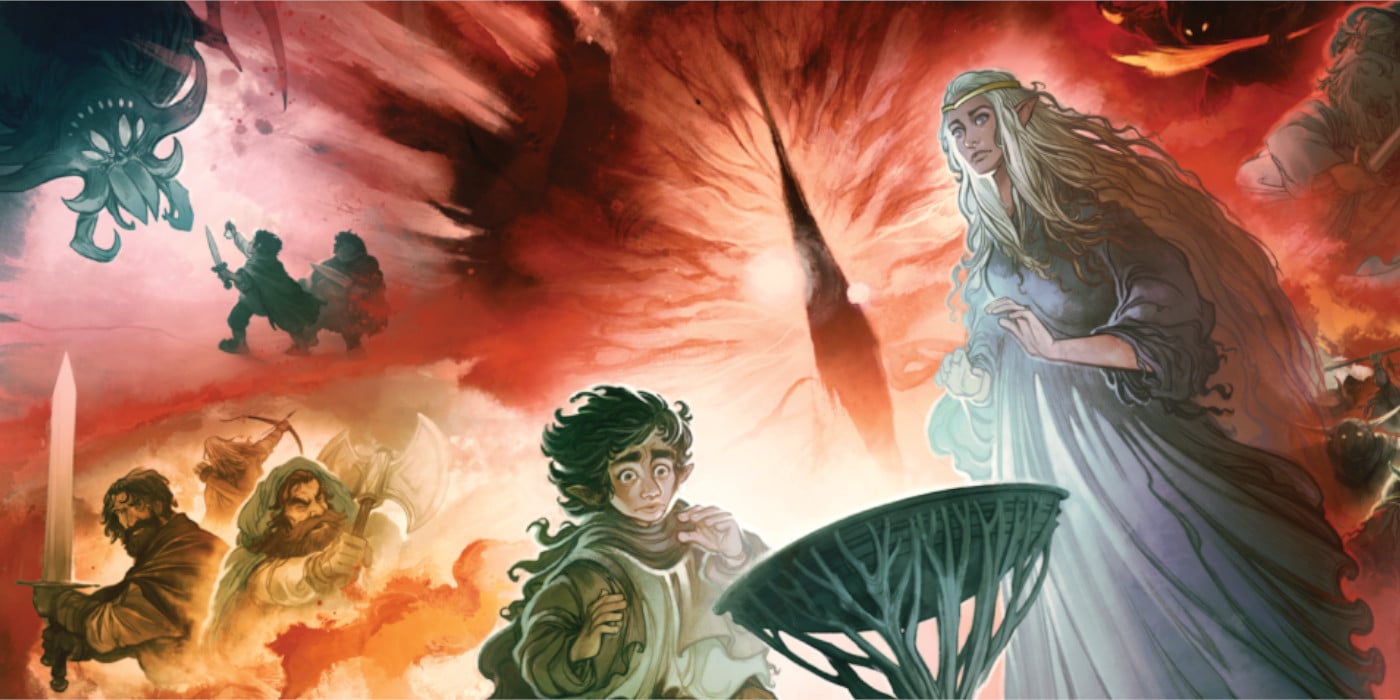
Upon its official release, the game quickly validated the publisher’s vision. Initial stock sold out rapidly on platforms like Asmodee’s official site, a clear indicator of its immediate commercial success and the pent-up demand. This swift market absorption underscored the powerful combination of a beloved narrative with a well-established and engaging game system, proving that the synergy between Lord of the Rings and Pandemic was not just conceptually appealing but practically triumphant. The game’s journey from concept to market success exemplifies a carefully executed strategy to leverage strong IPs and proven mechanics.
Embarking on the Quest: Core Gameplay Mechanics
At its heart, Lord of the Rings: Fate of the Fellowship is a cooperative strategy game that places players directly into the shoes of Middle-earth’s heroes. The experience is designed to be challenging, evoking the constant struggle and looming despair faced by the Fellowship in Tolkien’s saga. Players must work in concert, making difficult decisions under pressure, to achieve their shared goal.
The Pandemic System Reimagined
For those familiar with Pandemic, the core structure of Fate of the Fellowship will feel comfortably familiar, yet distinctly fresh due to its thematic overlay. The game board is divided into distinct regions of Middle-earth, mirroring the geographical spread of a pandemic. Instead of diseases, however, players contend with "shadow troops" and the menacing Nazgul, which relentlessly spread across the land, threatening key locations and objectives. The game itself acts as the primary antagonist, constantly escalating the threat and presenting new dangers, ensuring that no two games ever feel quite the same. This inherent difficulty and dynamic challenge are what make cooperative Pandemic-style games so engaging, transforming potential frustration into thrilling moments of collaborative problem-solving.
Heroes of Middle-earth: Characters and Abilities
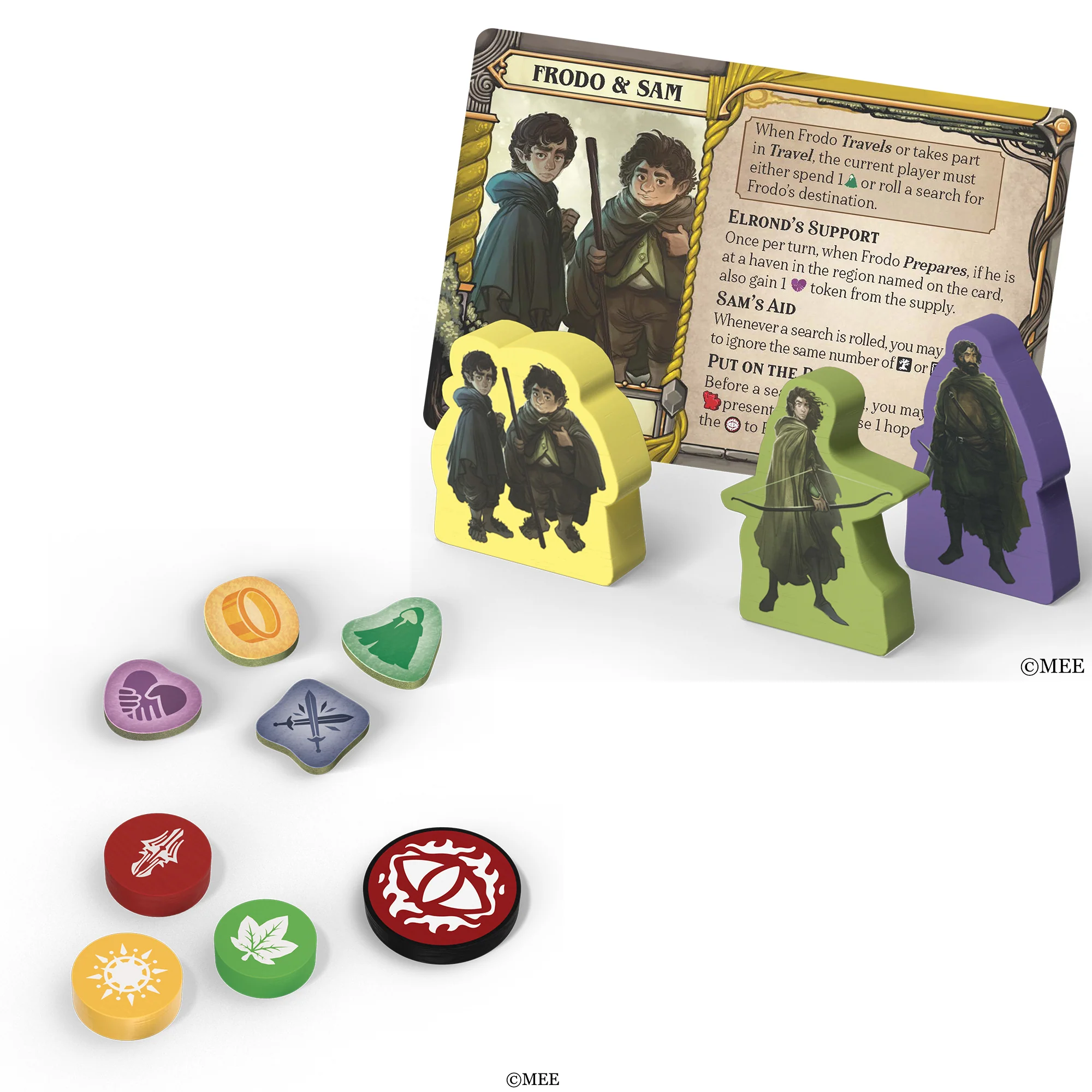
One of the game’s most compelling features is the opportunity for players to control two distinct characters from a roster of thirteen iconic figures, each possessing unique special abilities. This dual-character control adds a layer of strategic depth, allowing players to synergize abilities and manage different aspects of the crisis more effectively. Imagine controlling Aragorn, a formidable warrior, alongside Gandalf, a powerful wizard, combining their strengths to overcome seemingly insurmountable obstacles. This diversity of characters, combined with twenty-four different objective cards, ensures immense replayability, encouraging players to explore new strategies and combinations in each playthrough.
The Shadow Spreads: Managing Threat and Hope
Central to the gameplay is the delicate balance between a "hope meter" and a "threat meter." As Sauron’s forces advance and objectives become more difficult, the threat meter rises, signaling increasing peril and potentially triggering dire events. Conversely, successfully completing objectives and making progress can boost the hope meter, providing crucial breathing room and empowering the Fellowship. This push-and-pull dynamic perfectly encapsulates the narrative tension of The Lord of the Rings, where moments of despair are often followed by unexpected sparks of hope. Keeping hope alive while staving off the shadow is a constant strategic imperative.
A Turn in Middle-earth: Actions and Decisions
Each player’s turn is a critical sequence of actions and reactions. Players can take up to four actions with one of their controlled characters and one action with the other. This allocation of actions is a key strategic decision, often requiring players to prioritize immediate threats versus long-term objectives.
The six standard character actions are:
- Travel: Moving characters between regions, essential for positioning and responding to new threats.
- Fellowship: Allowing characters to share knowledge (cards) or resources, mimicking the collaborative spirit of the Fellowship.
- Prepare: Setting up defenses or special abilities, often in anticipation of an enemy surge.
- Muster: Recruiting new forces or bolstering existing ones in threatened regions.
- Attack: Directly engaging shadow troops to clear regions and reduce threat.
- Capture: Securing key locations or individuals, often tied to specific objectives.
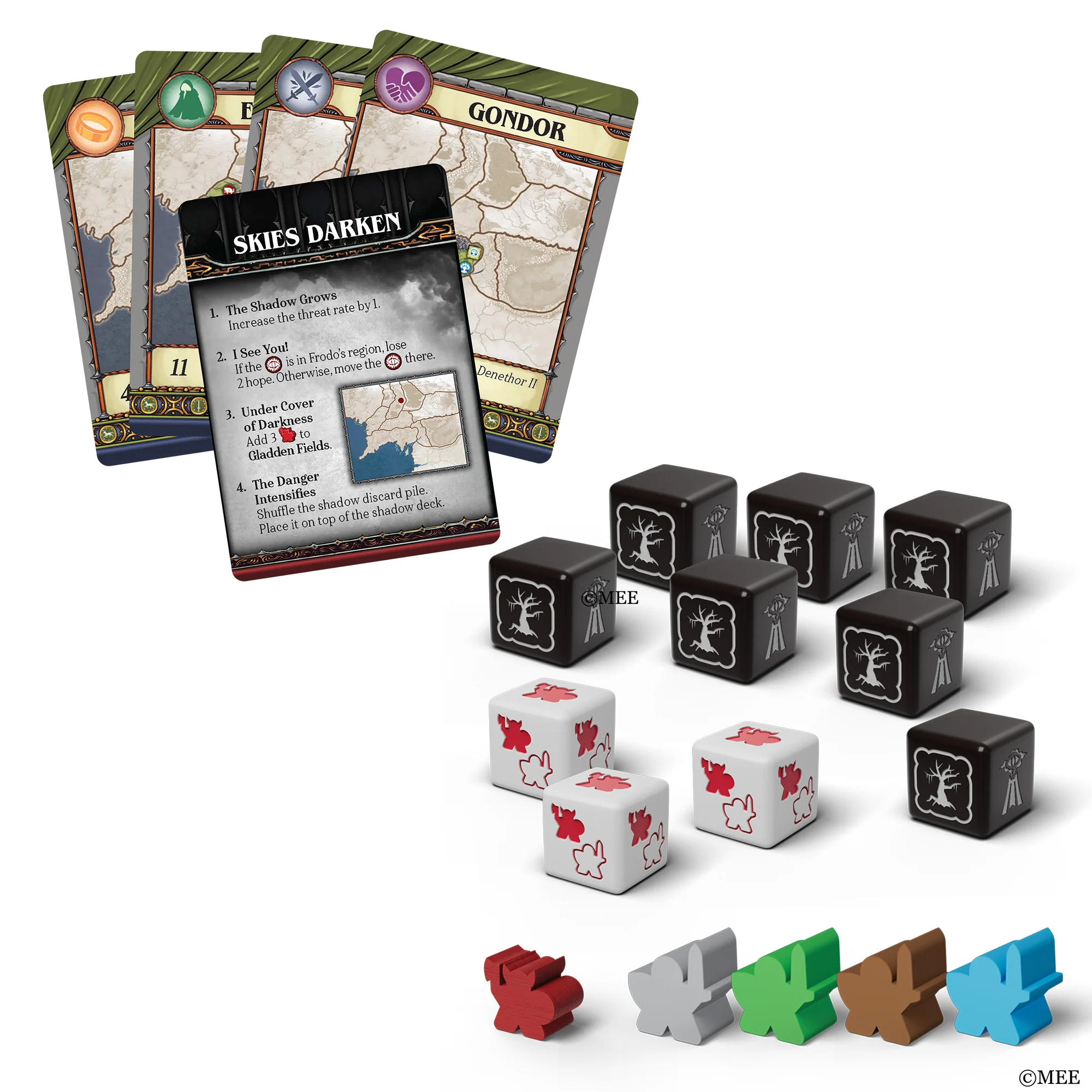
Following character actions, players draw both "player cards" (which might include resources, event cards, or character-specific abilities) and "shadow cards." The shadow cards are the game’s primary mechanism for simulating the enemy’s moves. They dictate where new shadow troops appear, where Nazgul advance, and introduce unforeseen complications, ensuring that the game consistently presents new challenges and keeps players on their toes.
Objectives and the Path to Mount Doom
Winning Fate of the Fellowship is a multi-stage process. Players must first complete a set of objectives specified at the beginning of the game. These objectives might range from defending critical locations like Minas Tirith, rescuing allies, or gathering vital intelligence. Each objective presents unique challenges, requiring coordinated effort and tactical planning.
However, completing these initial objectives is only part of the journey. The ultimate victory condition hinges on Frodo Baggins’ perilous quest. Players must ensure that the character controlling Frodo has amassed enough "Ring cards" to fuel the final leg of his journey. Then, both Frodo and Samwise Gamgee must reach Mount Doom. Finally, the One Ring must be successfully cast into the fires, fulfilling the prophecy and saving Middle-earth. This multi-layered victory condition adds significant thematic weight and ensures a climactic finale to every game. The constant threat of Nazgul hunting Frodo adds a palpable sense of urgency and danger to this crucial aspect of the game.
Replayability and Thematic Immersion
Beyond the diverse characters and objectives, Fate of the Fellowship excels in its thematic integration. The game components are meticulously designed, from the detailed board depicting Middle-earth to the various tokens representing heroes, enemies, and resources. A particular highlight mentioned by players is the inclusion of a miniature Barad-dûr tower, serving as a constant visual reminder that "the Eye of Sauron is always watching." This attention to detail significantly enhances the immersive experience, drawing players deeper into Tolkien’s world. The variable setup, randomized objectives, and diverse character abilities ensure that each playthrough offers a fresh strategic puzzle, making it a game that will grace tables for years to come.
The Vision from Z-Man Games: Official Stance & Design Philosophy
While Z-Man Games has not released extensive public statements regarding the specific design philosophy behind Lord of the Rings: Fate of the Fellowship, the game’s quality and reception speak volumes. It is evident that the publisher aimed to achieve a delicate balance: honoring the revered Lord of the Rings narrative while leveraging the proven mechanics of the Pandemic system. This wasn’t merely a reskin; it was an ambitious reimagining.
The success of Fate of the Fellowship suggests that Z-Man Games’ vision centered on creating an experience that felt authentically Tolkienian in its narrative arc of struggle, despair, and eventual triumph through fellowship. The inherent cooperative nature of Pandemic aligns perfectly with the core theme of The Lord of the Rings – that even the smallest individuals, united in purpose, can overcome the greatest evils. The game’s escalating difficulty, the constant pressure from shadow cards, and the ultimate, high-stakes objective of destroying the Ring resonate deeply with the original source material’s tone.
Furthermore, the game’s meticulous component design, including the iconic Barad-dûr tower and detailed character representations, indicates a commitment to delivering a premium, immersive product. This attention to aesthetic and thematic detail suggests a design philosophy rooted in a genuine love for both the Lord of the Rings universe and the art of board game creation. The goal appears to have been to create a game that not only plays well but also feels like a journey through Middle-earth, engaging players on both strategic and emotional levels. The immediate sell-out status and high ratings confirm that this vision was successfully realized, resonating strongly with the target audience.
The Fate of the Market: Impact and Future Prospects
Lord of the Rings: Fate of the Fellowship has made an undeniable splash in the crowded board game market. Its rapid sell-out across major retailers and sustained demand underscore its status as one of the year’s most anticipated and successful releases. This commercial triumph is a testament to the enduring appeal of the Lord of the Rings saga and the robust, adaptable design of the Pandemic system.

Commercial Triumph and Critical Acclaim
The game’s high ratings and enthusiastic reviews from critics and players alike highlight its success in delivering a compelling and satisfying experience. It has managed to bridge the gap between fans of thematic games and those who appreciate strategic depth, drawing in a broad audience. The game’s ability to create a palpable sense of tension and triumph, mirroring the epic scale of Tolkien’s work, has been a consistent point of praise. Its immediate market performance also positions it as a significant title for Z-Man Games, potentially setting a new benchmark for licensed adaptations within their portfolio.
A Definitive Cooperative Experience?
For many, Fate of the Fellowship has quickly become a contender for one of the definitive cooperative board game experiences. It captures the essence of working together against overwhelming odds, a hallmark of both the Pandemic system and the Lord of the Rings narrative. The game’s capacity to generate emergent storytelling through its dynamic challenges and character interactions adds another layer to its appeal, making each play session memorable.
Who Should Answer the Call?
The recommendation for Lord of the Rings: Fate of the Fellowship is unequivocally strong for specific demographics. If you are a devoted fan of The Lord of the Rings – someone who cherishes its characters, lore, and epic narrative – this game offers an unparalleled opportunity to immerse yourself in that world. Similarly, if you are an enthusiast of the Pandemic system or cooperative strategy games in general, you will find a familiar yet refreshingly new challenge awaiting you. The game expertly blends thematic richness with engaging mechanics, making it a must-have for those who appreciate both. For individuals who tick both boxes, owning a copy is almost a foregone conclusion, once stock becomes readily available again. Hitting that "Notify Me When Available" button on retailer sites like Asmodee is highly advisable.
The Road Ahead: What’s Next for Middle-earth?
The immediate success of Lord of the Rings: Fate of the Fellowship naturally raises questions about its future. Given the vastness of Tolkien’s world and the modular nature of the Pandemic system, the potential for expansions is immense. Players could anticipate new characters, additional objective sets, new enemy types, or even campaigns exploring different eras or regions of Middle-earth. Such expansions would further enhance the game’s already impressive replayability and continue to engage its growing player base. The game’s strong reception may also influence Z-Man Games’ strategy for future licensed titles, potentially paving the way for more narrative-rich adaptations using their established game systems.
Conclusion
Lord of the Rings: Fate of the Fellowship is more than just a board game; it’s an experience. It’s a meticulously crafted homage to one of fantasy’s greatest tales, brought to life through the engaging and challenging mechanics of the Pandemic system. It invites players to step into the boots of heroes, to feel the weight of Middle-earth’s fate on their shoulders, and to discover the power of fellowship. Its immediate success, critical acclaim, and undeniable charm solidify its place as a standout title in the cooperative board game genre and a must-have for fans of Tolkien’s enduring legacy. The call to adventure has been sounded, and Middle-earth awaits its saviors.

About the Author:

Meaghan is a writer, former cosplayer, tabletop RPGer, mom, ASL student, and coffee addict. To find Meaghan elsewhere on the internet, check out her LinkTree at https://linktr.ee/habie_cosplays. Any emails regarding articles or potential game or accessory spotlights can be sent to the author’s contact email.