
The Fertile Crescent: A Legacy Under Threat in the Cradle of Civilization
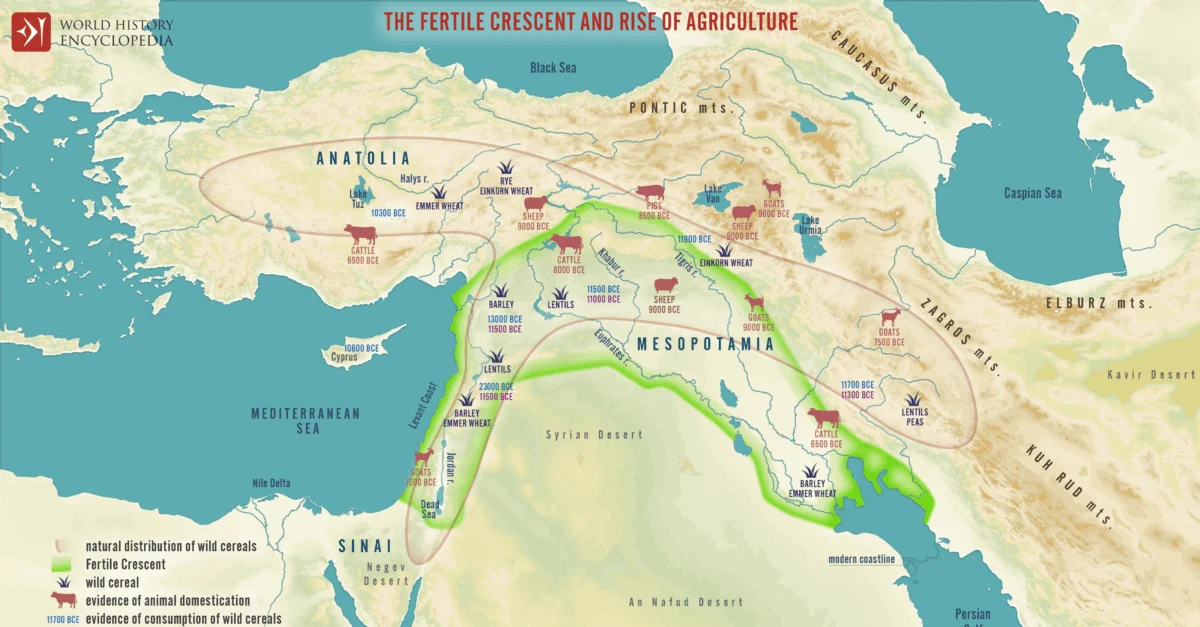
Beirut, Lebanon – The Fertile Crescent, a crescent-shaped region stretching across the Middle East, has long been revered as the "cradle of civilization." Its rich soils, fed by the life-giving waters of the Tigris, Euphrates, and Nile rivers, nurtured the earliest human societies, giving birth to agriculture, cities, writing, and organized religion. However, this historic heartland of innovation now faces an existential crisis, as climate change, extensive damming, and unsustainable water management practices threaten to turn its verdant plains into barren desert. The transformation underscores a pressing global concern: the delicate balance between human development and environmental sustainability, particularly in regions of immense historical and cultural significance.
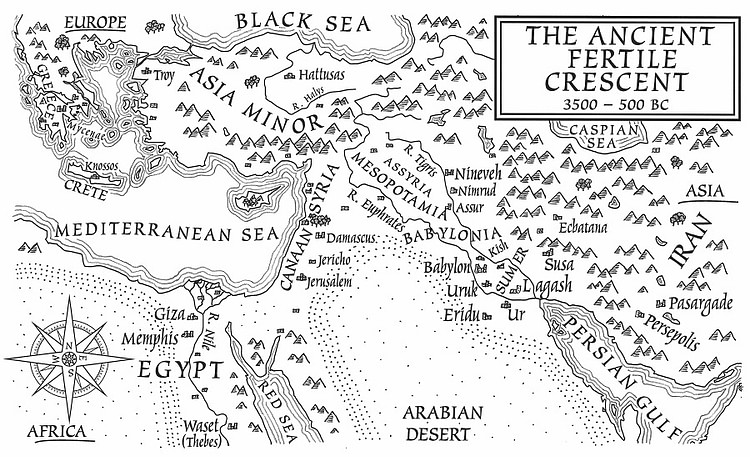
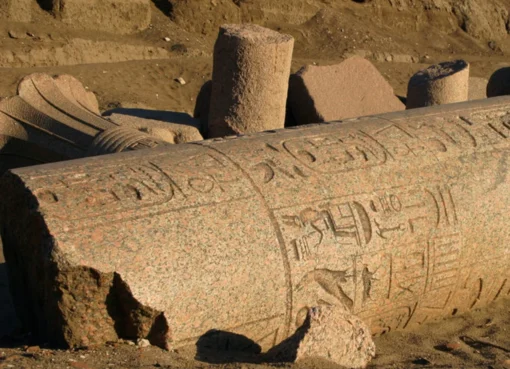
Geographically, the Fertile Crescent arcs like a quarter-moon from the Persian Gulf, sweeping through modern-day southern Iraq, Syria, Lebanon, Jordan, Israel, and northern Egypt. This vast expanse, defined by its unparalleled fertility in an otherwise arid region, fostered an environment where hunter-gatherer societies could transition to settled agricultural communities, laying the groundwork for complex civilizations. From the Sumerians and Babylonians of Mesopotamia to the Egyptians along the Nile and the Phoenicians of the Levant, these ancient peoples advanced virtually every area of human knowledge, leaving an indelible mark on world culture.
The term "Fertile Crescent" itself was coined in 1916 by the renowned Egyptologist James Henry Breasted in his seminal work, Ancient Times: A History of the Early World. He described it as: "This fertile crescent is approximately a semi-circle, with the open side toward the south, having the west end at the south-east corner of the Mediterranean, the centre directly north of Arabia, and the east end at the north end of the Persian Gulf." Breasted’s eloquent phrase quickly gained widespread acceptance, becoming the enduring designation for this pivotal region. Beyond its historical and archaeological importance, the Fertile Crescent holds profound religious significance, traditionally associated in Jewish, Christian, and Muslim faiths with the earthly location of the Garden of Eden, and featuring prominently in narratives from the Bible and the Quran.
A Journey Through Time: The Cradle’s Evolution
The story of the Fertile Crescent is a chronicle of humanity’s most transformative advancements, a timeline etched in the mud bricks of ancient cities and the cuneiform tablets of forgotten empires.

The Dawn of Agriculture and Sedentary Life (circa 10,000 – 5,000 BCE)
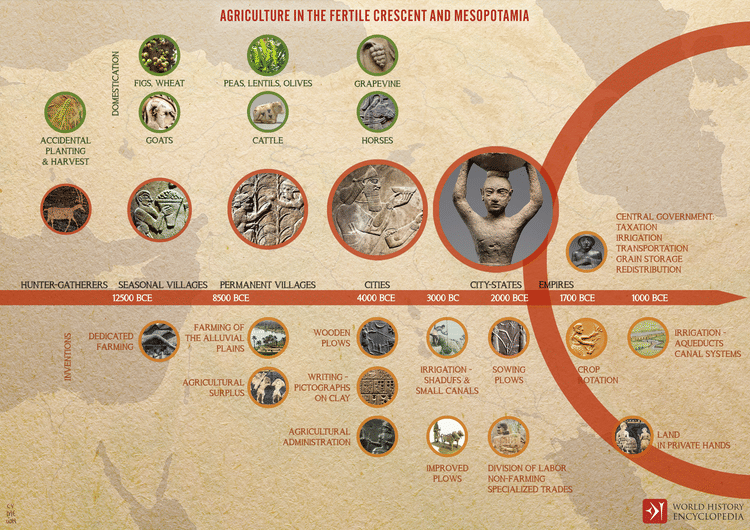
The earliest chapters of the Fertile Crescent’s history are written in the agricultural revolution. Around 10,000 BCE, as the last Ice Age receded, the region’s mild climate and abundant wild grains made it an ideal incubator for agriculture and the domestication of animals. Hunter-gatherer communities, observing the natural cycles of plants and animals, began to actively cultivate wild cereals like wheat and barley, and domesticate species such as goats, sheep, and cattle. By 9,000 BCE, the cultivation of wild grains was widespread, leading to a profound shift from nomadic lifestyles to sedentary village life. This transition was revolutionary, enabling the production of food surpluses, which in turn supported larger populations and specialized labor. By 5000 BCE, sophisticated irrigation systems, harnessing the waters of the Tigris and Euphrates, were fully developed, further enhancing agricultural productivity and transforming the landscape. The cultivation of wool-bearing sheep became widespread by 4500 BCE, providing not only food but also valuable textiles.
The Rise of City-States and Early Innovations (circa 5,000 – 2,300 BCE)
The agricultural surplus and settled populations paved the way for the world’s first cities. Mesopotamia, the land between the rivers, witnessed the emergence of urban centers in Sumer. Eridu, considered by the Sumerians to be the first city on Earth, arose around 5400 BCE, followed by Uruk, Ur, and others. These city-states were complex societies with organized governments, specialized crafts, and monumental architecture. Around 3500 BCE, the invention of writing – cuneiform – in Sumer marked a watershed moment, enabling detailed record-keeping, legal codes, and the dissemination of knowledge. The wheel, the plow, and advancements in metallurgy also originated here, fundamentally altering human capabilities.
Beer, a product of fermented barley and wheat, was a significant part of daily life. Brewed under the auspices of deities like Ninkasi, the goddess of beer, it was not merely an intoxicant but a source of nutrition, a form of payment, and a staple in celebrations. Early Mesopotamian beer, thick and consumed with a straw, speaks to the ingenuity of these ancient brewers, with the earliest evidence of brewing found at the Sumerian outpost of Godin Tepe in modern-day Iran. Temple complexes became central to economic life, managing vast food supplies and overseeing trade from around 3400 BCE.
The Age of Empires (circa 2,300 – 539 BCE)
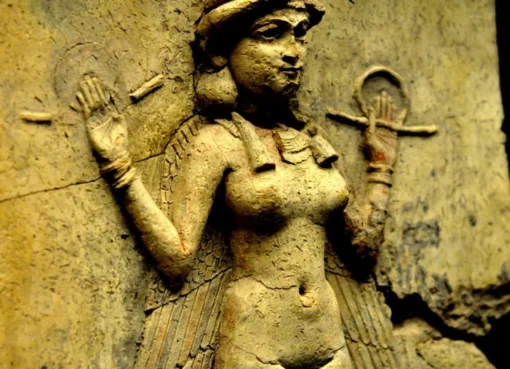
The isolated city-states eventually gave way to the rise of powerful empires, beginning with Akkad. From 2334 to 2279 BCE, Sargon of Akkad (Sargon the Great) forged the world’s first multicultural empire, unifying Mesopotamia and fostering advancements in art, architecture, and religious literature. His daughter, Enheduanna, a high priestess, became the first author in history known by name, her hymns to the goddess Inanna revealing profound poetic skill.
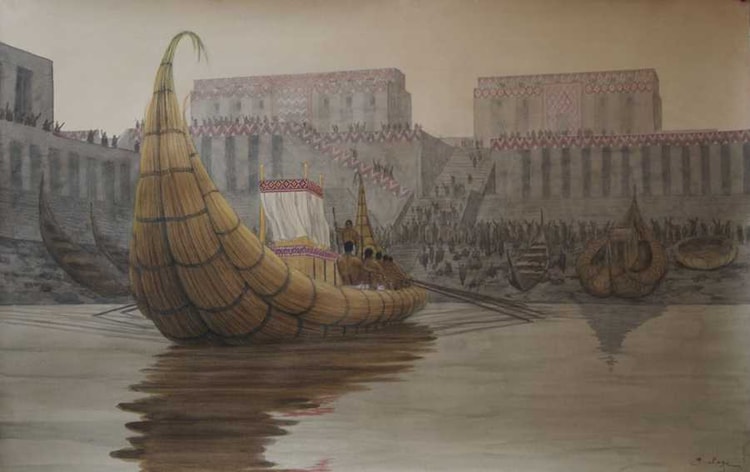
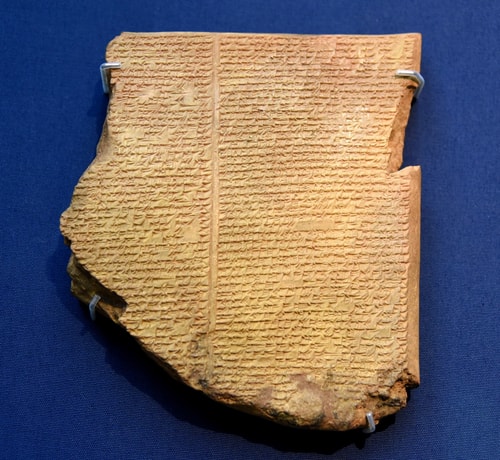
By 2000 BCE, Babylon rose to prominence, controlling much of the Fertile Crescent. Under rulers like Hammurabi, the region saw the codification of law, with Hammurabi’s Code setting precedents for justice and governance that would influence legal systems for millennia. Babylonian literature flourished, exemplified by The Epic of Gilgamesh, one of the earliest surviving works of literature. Astronomical observations, mathematical innovations (including the sexagesimal system), and a rich pantheon of gods further defined this era.
Trade networks expanded dramatically between 1900 and 1400 BCE, connecting the Fertile Crescent with Europe, Egypt, Phoenicia, and the Indian subcontinent. These routes, later known as the Incense Routes, facilitated not just the exchange of goods but also the diffusion of literacy, culture, and religious ideas. Mesopotamian deities, along with goods like beer and luxury items, traveled far and wide. Personal hygiene also gained importance, with the production of soap from tallow and ash by 2300 BCE, reflecting a societal value placed on cleanliness for social standing and religious reverence. Mirrors, cosmetic jars, combs, and toothbrushes found in archaeological sites attest to these practices.
The Assyrian Empire, which controlled the Fertile Crescent by 912 BCE, built a vast and formidable realm under kings such as Tiglath Pileser III, Sargon II, Sennacherib, Esarhaddon, and Ashurbanipal. Ashurbanipal, a patron of knowledge, established the famous Library of Ashurbanipal in Nineveh, housing thousands of clay tablets preserving the literary and scientific heritage of Mesopotamia. When the Neo-Assyrian Empire fell in 612 BCE, the invading forces inadvertently preserved these clay tablets by baking them harder in the fires that consumed the cities.
The Neo-Babylonian Chaldean Empire, under Nebuchadnezzar II (605-562 BCE), saw Babylon reach its zenith, renowned for its architectural marvels like the Hanging Gardens. However, Babylon fell to Cyrus the Great of the Achaemenid Persian Empire in 539 BCE, ushering in another era of imperial rule.
Hellenistic, Roman, and Islamic Influence (334 BCE – 7th Century CE)
Alexander the Great’s invasion in 334 BCE brought Hellenistic influence to the region, followed by periods of rule by the Seleucids, Parthians, and Romans (briefly in 116 CE). The Sassanid Persians reasserted control around 224-226 CE, until the Arab Muslims conquered the region in the 7th century CE, integrating it into the burgeoning Islamic Caliphate. Throughout these shifts in power, the Fertile Crescent remained a crossroads of cultures, ideas, and trade.
Enduring Legacies and Fading Landscapes
The Fertile Crescent’s contributions to humanity are unparalleled, forming the bedrock of subsequent civilizations worldwide.
Pillars of Human Progress
- Writing: The invention of cuneiform around 3500 BCE was revolutionary. Initially pictographic, it evolved into a sophisticated phonetic system, used for administrative records, legal codes, epic poetry like Gilgamesh, and scientific treatises. Its influence spread across the Near East, enabling complex governance and the preservation of knowledge.
- Law: Hammurabi’s Code (circa 1754 BCE) is a landmark achievement, providing one of the earliest and most complete legal codes. Its principles of justice, retribution, and societal order influenced later legal traditions, including aspects found in biblical law.
- Science & Mathematics: Mesopotamians developed advanced astronomy, tracking celestial bodies to create calendars and predict agricultural cycles. Their sexagesimal (base-60) number system gave us the 60-minute hour, the 360-degree circle, and informed later mathematical developments. Medical texts detail surgical procedures and pharmacological remedies.
- Architecture & Engineering: From monumental ziggurats that reached for the heavens to intricate irrigation canals that transformed arid lands into agricultural powerhouses, the engineering prowess of these civilizations was astounding. Urban planning, with defensive walls and intricate drainage systems, also originated here.
- Trade & Diplomacy: The extensive trade networks fostered not only economic prosperity but also cultural exchange. Merchants carried not only goods but also ideas, technologies, and religious beliefs, leading to cross-cultural fertilization that enriched all participating societies.
- Religion & Mythology: The rich tapestry of Mesopotamian myths and legends, including narratives of a great flood (Atrahasis) and the creation of humanity (Myth of Adapa), profoundly influenced later Abrahamic traditions. The parallels between these ancient stories and biblical narratives like Noah’s Flood and the Fall of Man are striking, highlighting the deep cultural roots of the region. Prior to archaeological discoveries in the 19th century, the Bible was considered the oldest book, its stories original; subsequent finds revealed the Mesopotamian antecedents, demonstrating how these foundational myths traveled and transformed.
The Weight of History and Environment
Despite these monumental achievements, the great cities of the Fertile Crescent eventually succumbed to a combination of factors. Military conquests and constant warfare frequently devastated urban centers, leading to their decline and abandonment. Political instability often fragmented empires, disrupting infrastructure and trade.
However, environmental degradation also played a significant role. Rampant urbanization and unsustainable agricultural practices, such as excessive irrigation without proper drainage, led to the salinization of fertile soils, rendering them barren over centuries. Deforestation, driven by the need for timber for construction and fuel, exacerbated erosion and altered local climates. Natural disasters like earthquakes and fires also contributed to the destruction. By the 7th century CE, many once-great cities were ruins: Eridu, the supposed first city, abandoned by 600 BCE; Uruk, Gilgamesh’s city, by 700 CE; and Babylon, once the greatest city on Earth, a vacant ruin. Though later Hebrew scribes would link Babylon’s name to sin and corruption, in its prime, it was a beacon of learning and civilization.
A Modern Crisis: Unheeded Warnings
Today, the very name "Fertile Crescent" is becoming a cruel irony. A 2001 report by National Geographic News highlighted the alarming transformation of the region. Due to a combination of climate change, extensive damming projects on the Tigris and Euphrates by Turkey, Syria, and Iraq, and a massive drainage program initiated in southern Iraq from the 1970s, the fertile marshlands—once spanning 5,800 to 7,700 square miles (15,000-20,000 km²)—had shrunk to a mere 580 to 770 square miles (1,500-2,000 km²).
This dramatic loss of wetlands, a vital ecosystem for biodiversity and local livelihoods, has continued unabated. The marshlands, historically home to unique wildlife and the Marsh Arabs, have been severely degraded, displacing communities and destroying traditional ways of life. The construction of major dams like the Atatürk Dam in Turkey and the Ilısu Dam, among others, has drastically reduced downstream water flow to Syria and Iraq, causing water scarcity, increased salinization, and desertification.
Official Responses
Despite urgent pleas from environmental groups, regional farmers, and international organizations, the governments of Iraq, Syria, and Turkey have largely ignored warnings and continued with damming and drainage projects. The primary focus on national water security and hydropower generation has often overshadowed the transboundary ecological and humanitarian impacts. While some efforts have been made to restore parts of the Iraqi marshlands following the fall of Saddam Hussein, these have been insufficient to reverse the extensive damage. The ongoing political instability and conflicts in parts of Syria and Iraq further hinder any comprehensive, coordinated environmental rehabilitation efforts. Climate change, with its associated rise in temperatures and altered precipitation patterns, has only exacerbated the human-induced degradation, turning once lush areas into dry, cracked plains of sun-baked clay.
The Future of the Past: Lessons from the Fertile Crescent
The current state of the Fertile Crescent presents a stark warning and carries profound implications.
Environmental Catastrophe
The environmental crisis in the Fertile Crescent is a localized manifestation of global climate change and unsustainable resource management. The transformation of fertile lands into desert impacts food security, displaces populations, and fuels regional tensions over dwindling water resources. The loss of unique ecosystems, like the Iraqi marshlands, represents an irreversible blow to global biodiversity. The very conditions that allowed civilization to flourish are now being systematically dismantled, threatening a region already vulnerable to conflict and instability.
Loss of Cultural Heritage
Beyond the environmental catastrophe, the degradation of the Fertile Crescent poses an immense threat to its irreplaceable archaeological sites. Ancient cities, once buried and protected by layers of earth, are now exposed to erosion, looting, and destruction as the landscape changes. The very cradle of civilization is literally eroding, taking with it untold secrets and further insights into humanity’s past. The ongoing conflicts in Iraq and Syria have already led to the destruction and looting of numerous historical sites, compounding the environmental damage.
A Universal Warning
The story of the Fertile Crescent serves as a powerful parable for humanity. The philosopher George Santayana famously noted that "those who cannot remember the past are condemned to repeat it." The present environmental degradation in this historically vital region, largely a result of human actions and inaction, echoes the environmental factors that contributed to the decline of its ancient cities. It underscores a persistent human failure to learn from history, to balance immediate needs with long-term ecological sustainability, and to recognize the interconnectedness of our planet.
The rapid desertification of the Fertile Crescent is not just a regional issue; it is a global one, demanding international attention and cooperative solutions. Preserving what remains of this historical landscape and addressing the environmental challenges it faces is crucial not only for the communities living there but for all of humanity, as a testament to our shared heritage and a stark reminder of our responsibilities towards the planet. The future of the past, in the Fertile Crescent, hangs precariously in the balance.

Leave a Comment