The Autonomy Trap: How the ‘Achievement Society’ is Fueling a Global Burnout Epidemic
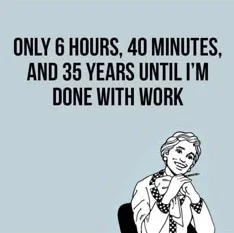
By Digital Features Desk
In the modern era, the sensation of exhaustion has become a ubiquitous status symbol. On any given Saturday afternoon, millions of individuals find themselves haunted by a persistent internal monologue: “You should be accomplishing something.” Even in the absence of deadlines or professional obligations, the drive toward productivity remains relentless. While traditional psychology often frames this as a personal struggle with time management or stress, a growing body of philosophical and sociological thought suggests a more systemic cause.
According to the influential South Korean-born German philosopher Byung-Chul Han, we have transitioned from a society of prohibition to a society of "potentiality." This shift, detailed in his seminal work The Burnout Society, posits that the modern individual is no longer oppressed by external authorities, but rather by a self-imposed mandate to achieve. This "invisible boss" has transformed burnout from a workplace hazard into a defining characteristic of 21st-century life.
The Chronology of Modern Exhaustion: From Discipline to Achievement
To understand the current crisis, Han traces the evolution of societal structures over the last century. Historically, the Western world operated as what Michel Foucault termed a "disciplinary society." This era was defined by "no"—by walls, prohibitions, and external regulators like the factory owner, the warden, or the headmaster. In this environment, individuals were "subjects of obedience." Failure was measured against a set of external rules: one was either compliant or disobedient.
However, the late 20th and early 21st centuries saw a radical transformation. The disciplinary society has largely been replaced by the "achievement society." In this new paradigm, the walls of the factory have dissolved into the fluid boundaries of the home office and the digital landscape. The mantra has shifted from "Thou shalt" to "I can."
This transition represents a move from the "negativity" of prohibition to the "positivity" of limitless potential. While "I can" sounds like an anthem of liberation, Han argues it is far more coercive than "Thou shalt." Under the old system, once an individual obeyed the rule, their duty was fulfilled. In an achievement society, potential is infinite, meaning there is no logical stopping point. The accusation of the modern era is no longer "You were disobedient," but "You were inadequate; you did not live up to your potential."
The Invisible Boss: The Internalization of Self-Exploitation
The primary driver of modern burnout is the collapse of the distinction between the "exploiter" and the "exploited." In the industrial age, a worker could theoretically revolt against a boss or a state. Today, the individual is both the master and the slave.
This internal duality creates what Han calls "self-exploitation," which is significantly more efficient than external exploitation because it is accompanied by a feeling of freedom. Because we believe we are choosing to work longer hours, optimize our sleep, and monetize our hobbies, we do not recognize the systemic pressure driving these choices.
Psychologically, this manifests as an "internal audit"—a voice that demands justification for every moment of rest. Clinical experts refer to the management of this voice as "cognitive defusion," a technique from Acceptance and Commitment Therapy (ACT). Instead of obeying the internal boss, individuals are encouraged to "name" the thought as a symptom of the achievement society’s ventriloquism. By disrupting the reflex of obedience, one can begin to reclaim choice over their actions, transforming work from a frantic reflex into a deliberate decision.
Supporting Data: The Biological and Psychological Cost of Hyperactivity
The achievement society demands a state of "hyperactivity," characterized by an unbroken chain of reactions to external stimuli—emails, pings, and notifications. However, research suggests that this constant state of "doing" is actually a form of passivity.
The Paradox of Choice and the "Default Mode Network"
Data from neurological studies, including research published in PubMed and other clinical journals, indicates that the brain requires "idle" time to function at peak capacity. When the brain is not focused on a specific task, it enters the "Default Mode Network" (DMN). This network is responsible for:
- Creative Synthesis: Connecting disparate ideas to form novel solutions.
- Self-Reflection: Processing emotions and personal history to create meaning.
- Future Simulation: Planning and anticipating complex social scenarios.
When we fill every gap in our day—waiting for coffee, commuting, or even showering—with digital consumption, we effectively "execute" the DMN. The result is a society that is highly productive in the short term but suffers from a profound lack of creativity and deep reflection.
The Commodification of Rest
Furthermore, the achievement society has successfully rebranded rest as "recovery." In this context, leisure is only tolerated if it serves a future productive purpose. Sleep is "performance enhancement"; a walk is "hitting a step goal"; meditation is "increasing focus." Han argues that this "in order to" logic prevents true rest. If rest requires a return on investment, it remains a component of the supply chain rather than a reprieve from it.
Official Responses and Philosophical Implications
The academic and philosophical response to Han’s theories has been significant, sparking a broader conversation about the "violence of positivity." Unlike the "violence of negativity" (war, physical oppression), the violence of positivity is systemic and internal. It leads to "neuronal" illnesses such as depression, Attention Deficit Hyperactivity Disorder (ADHD), and Chronic Fatigue Syndrome.
Critics and supporters alike agree that the digital age has exacerbated these trends by removing "conclusive forms"—the satisfying "thunk" of an ending. Historically, events had clear boundaries: a meal ended, a shift finished, a broadcast concluded. In the era of the infinite scroll and the 24-hour news cycle, nothing ever truly ends.
Philosophers suggest that the only way to combat this is the deliberate creation of "endings." This involves:
- Establishing "Sovereignty of Delay": Reclaiming the right to not respond immediately. Delay is a form of power that asserts the individual’s brain is not a public help desk.
- The Secular Sabbath: Designating time that has no "in order to" justification. This is rest for the sake of existence, not for the sake of future labor.
- The Reclamation of Boredom: Recognizing boredom not as an emergency to be solved by a screen, but as a necessary biological state for mental processing.
Implications: A Future Beyond the Burnout Society
The implications of the achievement society are far-reaching, affecting labor laws, mental health policy, and the very structure of human relationships. As burnout becomes a global crisis, there is a growing movement toward "de-growth" and "slow living," which seek to reintroduce the "negativity" of "no" and "enough" into the cultural lexicon.
However, the challenge remains deeply personal. The "invisible boss" is a resilient entity, often disguised as ambition or conscientiousness. While productivity tools and "hacks" can be useful, experts warn against "sleeping in the toolbox"—becoming so efficient at administering life that one forgets to actually live it.
The transition away from a burnout society requires a fundamental shift in how we value ourselves. It requires the realization that "potential" is not a debt that must be paid back through endless labor. In the words of Byung-Chul Han, we must learn again how to "end" things. We must find the courage to be "unproductive" and to view rest not as a earned privilege, but as a fundamental right of existence.
As the lines between work and life continue to blur in an increasingly digital world, the ability to say "no" to the internal drive for achievement may be the most radical—and necessary—act of the 21st century. The post-burnout world is one where the Saturday afternoon silence is no longer a source of guilt, but a space for the soul to breathe.