
The Fertile Crescent: A Legacy Under Threat in the Cradle of Civilization
Main Facts
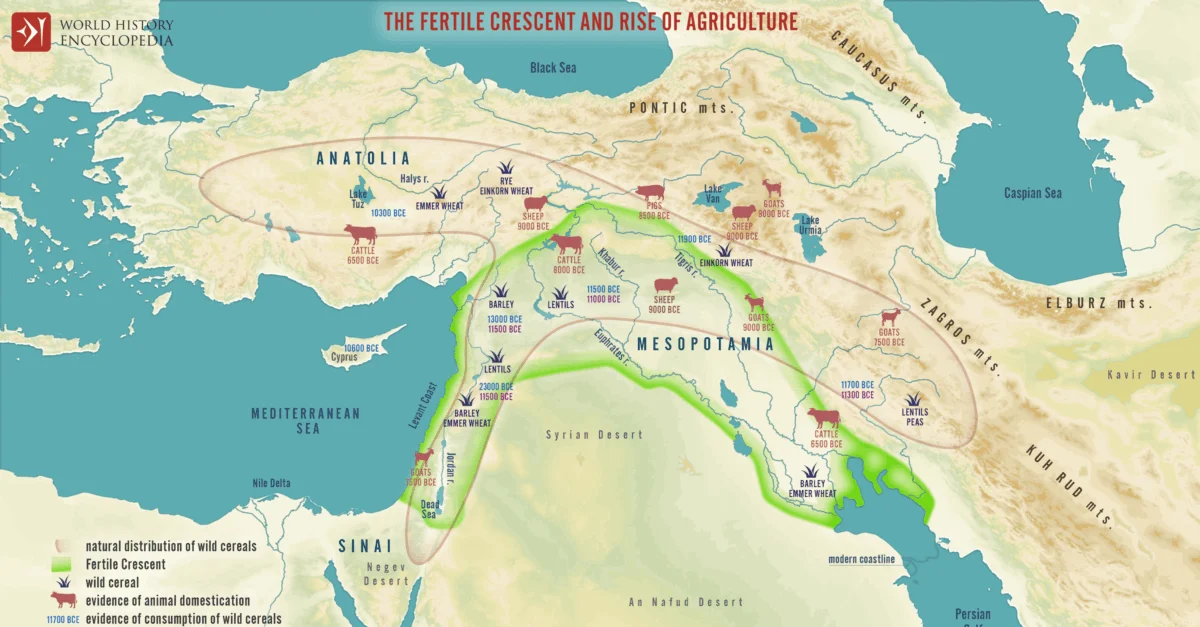
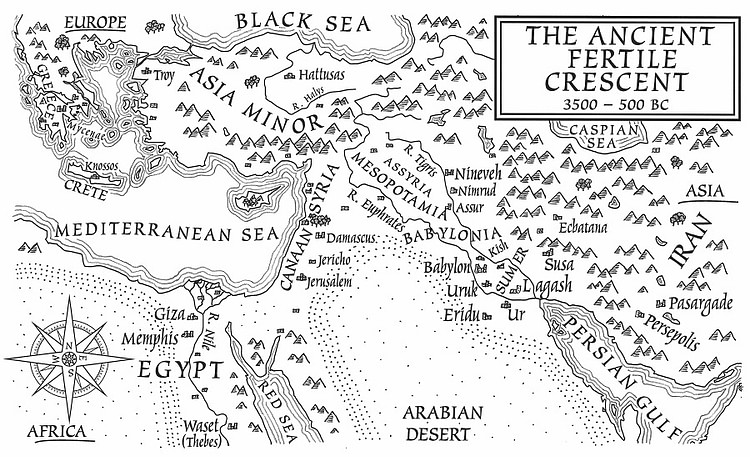
The Fertile Crescent, an arc of land spanning the Middle East, stands as a monumental testament to humanity’s earliest advancements. Often hailed as the "cradle of civilization," this crescent-shaped region stretches from the Persian Gulf, sweeping through modern-day southern Iraq, Syria, Lebanon, Jordan, Israel, and extending into northern Egypt. Its name perfectly encapsulates its historical significance: a fertile oasis amidst arid landscapes, nourished by the life-giving waters of the Tigris, Euphrates, and Nile Rivers. This unique geography fostered an environment ripe for innovation, giving birth to foundational human endeavors such as agriculture, urban living, organized religion, writing, and complex societal structures.
For millennia, the Fertile Crescent was home to some of the most influential ancient civilizations, including the Sumerians, Babylonians, Assyrians, Egyptians, and Phoenicians. These societies were not merely inhabitants but architects of human progress, laying the groundwork for virtually every subsequent area of human knowledge. From the intricate cuneiform script of Mesopotamia to the monumental pyramids of Egypt, and the advanced maritime trade networks of the Phoenicians, the region propelled humanity from nomadic hunter-gatherer existences to sophisticated urban cultures. The very concept of civilization, as we understand it today, owes an immeasurable debt to the intellectual and technological leaps made within this pivotal geographical expanse.
The term "Fertile Crescent" itself was coined relatively recently in 1916 by the renowned Egyptologist James Henry Breasted. In his seminal work, Ancient Times: A History of the Early World, Breasted eloquently described the region as "approximately a semi-circle, with the open side toward the south, having the west end at the south-east corner of the Mediterranean, the centre directly north of Arabia, and the east end at the north end of the Persian Gulf." His precise and evocative description quickly resonated, becoming the widely accepted designation for this historically rich area. Beyond its historical and archaeological significance, the Fertile Crescent also holds profound spiritual weight, traditionally associated in Jewish, Christian, and Muslim faiths with the earthly location of the Garden of Eden, and featuring prominently in the narratives of the Bible and the Quran. Numerous sites within its bounds are revered as backdrops to sacred stories, embedding the region deeply within the collective spiritual consciousness of billions worldwide.
However, despite its glorious past, the Fertile Crescent today faces an existential crisis. Decades of environmental neglect, exacerbated by rapid climate change, extensive damming projects, and unsustainable agricultural practices, have transformed vast swathes of this once-verdant land into barren, cracked plains. The very fertility that gave the region its name is diminishing, threatening not only its unique biodiversity but also the livelihoods of its current inhabitants and the preservation of its irreplaceable historical heritage. The stark contrast between its ancient prosperity and its modern fragility serves as a sobering reminder of humanity’s impact on its environment and the urgent need for intervention.
Chronology: A Timeline of Innovation and Empire

The history of the Fertile Crescent is a sprawling tapestry woven with threads of innovation, conflict, and cultural exchange, spanning millennia.
The Dawn of Agriculture and Urbanization (Circa 10,000 BCE – 3,000 BCE)
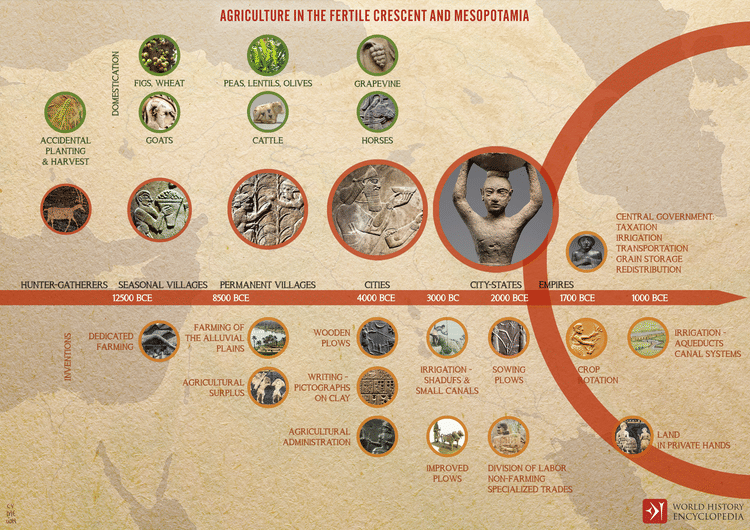
Human habitation in the Fertile Crescent predates the agricultural revolution, with early hunter-gatherer societies thriving on its abundant resources. However, the true transformation began around 10,000 BCE with the advent of agriculture and the domestication of animals. This period marked a fundamental shift from nomadic lifestyles to settled communities, as people learned to cultivate wild grains and cereals. By 9,000 BCE, the systematic cultivation of crops like emmer wheat and barley was widespread. This agricultural revolution intensified, leading to the full development of irrigation systems by 5,000 BCE, a technological leap that allowed for greater control over food production and supported larger populations. The domestication of animals followed suit, with wool-bearing sheep widely practiced by 4,500 BCE, providing not only food but also valuable materials.
The stability afforded by agriculture paved the way for the rise of the world’s first cities. In the Mesopotamian region of Sumer, urban centers began to emerge, with Eridu, considered the earliest city by the Sumerians, established around 5,400 BCE. Soon after, Uruk and other city-states flourished, becoming hubs of economic, political, and cultural activity. By 3,500 BCE, the sophisticated cultivation of various grains, legumes, and even the brewing of beer – considered a divine gift and a dietary staple – was well-established. The famed Hymn to Ninkasi, the Sumerian goddess of beer, celebrates its ability to "make one’s heart feel light," highlighting its cultural importance. Evidence from sites like Godin Tepe in modern-day Iran points to the early origins of this craft. This period also saw advancements in specialized labor, with temple priests assuming responsibility for food distribution and managing agricultural surpluses for trade by 3,400 BCE, marking the beginnings of complex economic systems.
The Age of Empires and Cultural Zenith (Circa 2,334 BCE – 334 BCE)
The third millennium BCE ushered in an era of unprecedented political organization and cultural output. From 2334 to 2279 BCE, Sargon of Akkad, also known as Sargon the Great, forged the world’s first multicultural empire, unifying much of Mesopotamia under Akkadian rule. This period fostered grand building projects, sophisticated artworks, and the emergence of literature, including the hymns to the goddess Inanna penned by Sargon’s daughter, Enheduanna, who is recognized as the world’s first author known by name. This era also saw early advancements in personal hygiene, with soap produced from tallow and ash in wide use by 2300 BCE, reflecting a societal value placed on cleanliness.
By 2000 BCE, Babylon had risen to prominence, establishing control over much of the Fertile Crescent. Under rulers like Hammurabi (reign 1792-1750 BCE), the region experienced a golden age of intellectual and legal development. Hammurabi’s Code, one of the earliest and most complete written legal codes, set precedents for justice and governance. Literature flourished with works like The Epic of Gilgamesh, exploring themes of heroism, mortality, and the human condition. Babylonian scholars made significant strides in science, particularly in astronomical measurements and mathematics, including the development of the sexagesimal (base-60) number system, which still influences our measurement of time and angles today.
Trade became a powerful engine of cross-cultural exchange. From 1900 to 1400 BCE, robust trade routes connected the Fertile Crescent with Europe, Egypt, Phoenicia, and the Indian subcontinent. Merchants carried not only goods but also ideas, facilitating the spread of literacy, religious concepts, and technological innovations. The Mesopotamian goddess Nisaba, patroness of writing and wisdom, became known and worshipped in distant lands, illustrating the profound cultural diffusion originating from the region. It is also speculated that around 1900 BCE or 1750 BCE, the biblical patriarch Abraham journeyed from Ur to Canaan, carrying with him oral traditions and legends from Mesopotamia that would later be adapted into biblical narratives, highlighting the deep connections between Mesopotamian mythology and later Abrahamic faiths.
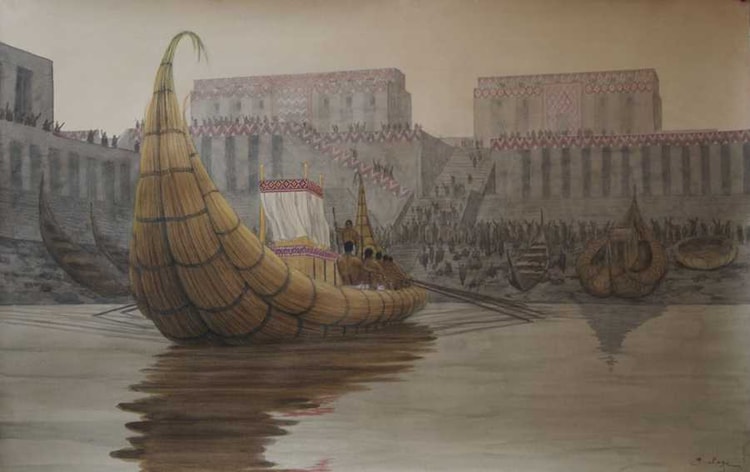
Successive empires continued to shape the region. From 912 BCE, the Neo-Assyrian Empire, led by formidable kings such as Tiglath Pileser III, Sargon II, Sennacherib, Esarhaddon, and Ashurbanipal, exerted vast influence. Ashurbanipal, a king renowned for his intellectual pursuits, established the magnificent Library of Ashurbanipal in Nineveh, meticulously collecting and copying all known literary works of the region. This monumental effort inadvertently preserved invaluable ancient texts when, after the fall of the Neo-Assyrian Empire in 612 BCE, invading forces burned the libraries; the clay tablets, instead of being destroyed, were merely baked harder, ensuring their survival for future generations.
The Neo-Babylonian Chaldean Empire, under Nebuchadnezzar II (reign 605-562 BCE), briefly restored Babylon to its former glory, reportedly commissioning the legendary Hanging Gardens. However, its reign was short-lived, falling to Cyrus the Great and the Achaemenid (First Persian) Empire in 539 BCE. Alexander the Great conquered the area in 334 BCE, followed by a succession of Hellenistic, Parthian, and Roman rulers, until the Sassanid Persians took control around 224-226 CE. The final major shift came with the Arab Muslim conquests in the 7th century CE, which fundamentally reshaped the cultural and religious landscape of the region.
Decline and Modern Challenges (7th Century CE – Present)
By the time of the Arab Muslim conquests, many of the ancient cities that had once been vibrant centers of civilization were already in decline or abandoned. Eridu, the Sumerian "first city," had been deserted since 600 BCE. Uruk, the city of Gilgamesh, followed around 700 CE. Even Babylon, once the largest and most influential city on Earth, lay largely in ruins by the 7th century CE. This decline was a culmination of factors: relentless military conquests, devastating earthquakes, fires, and the long-term environmental consequences of rampant urbanization and unsustainable land use. While later Hebrew scribes would link Babylon’s name to sin and corruption, in its heyday, it was universally revered as a beacon of learning, law, and culture.
Supporting Data
The historical narrative of the Fertile Crescent is robustly supported by a wealth of archaeological findings, ancient texts, and scientific analyses. The very existence of the region’s defining rivers – the Tigris, Euphrates, and Nile – provides the primary geographical foundation for its fertility. Geological studies confirm the historical presence of extensive marshlands and fertile alluvial plains, particularly in southern Iraq, which provided the ideal conditions for early agriculture.
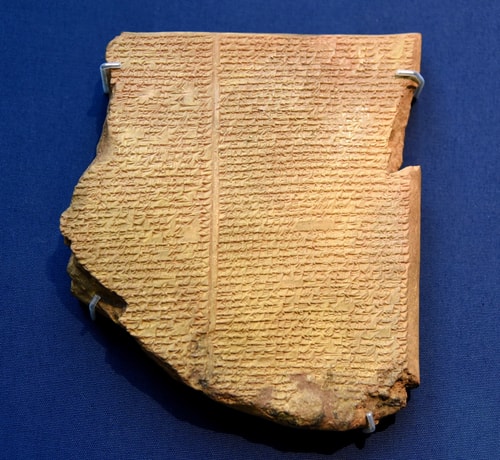
Key archaeological sites like Eridu and Uruk in Sumer offer tangible evidence of early urban planning, monumental architecture (such as ziggurats), and sophisticated social organization dating back to the Ubaid period (circa 6500-3800 BCE) and the Uruk period (circa 4000-3100 BCE). The discovery of thousands of cuneiform tablets, like those from the Library of Ashurbanipal in Nineveh, provides direct textual evidence of ancient laws (e.g., Hammurabi’s Code), literature (e.g., The Epic of Gilgamesh), religious hymns (e.g., Enheduanna’s hymns to Inanna), administrative records, and astronomical observations. These texts have been crucial in reconstructing the political, economic, religious, and daily life of these ancient societies.
Furthermore, comparative mythological studies have highlighted striking parallels between Mesopotamian narratives and later religious texts. The Akkadian Atrahasis Epic, detailing a great flood sent by the gods to destroy humanity, bears undeniable resemblances to the biblical story of Noah’s Ark. Similarly, the Myth of Adapa, which tells of a mortal who nearly gains immortality but loses it due to misunderstanding, echoes themes found in the Book of Genesis regarding the Fall of Man. These connections, unearthed through meticulous archaeological digs in the mid-19th century, profoundly shifted scholarly understanding of biblical origins, demonstrating their deep roots in earlier Mesopotamian traditions.
Scientific analysis of ancient agricultural residues, tools, and irrigation channels confirms the cultivation of specific crops like wheat, barley, rye, chickpeas, and lentils, and the development of advanced farming techniques. Chemical analysis of pottery from sites like Godin Tepe has revealed residues consistent with early beer brewing, pushing back the known history of this beverage significantly. Depictions of domesticated animals, including specific dog breeds like the Saluki, on ancient pottery and wall paintings provide further insights into animal husbandry and the role of animals in daily life.
The decline of the ancient cities is also supported by archaeological and environmental data. Evidence of severe salinization in agricultural lands, changes in river courses, and periods of prolonged drought, combined with the archaeological record of widespread destruction layers and subsequent abandonment, collectively paint a picture of environmental and anthropogenic pressures leading to urban collapse. The shift in climate patterns over millennia, alongside human-induced changes to the landscape, played a significant role in the eventual demise of many once-flourishing centers.
Official Responses
The contemporary environmental crisis engulfing the Fertile Crescent, particularly the rapidly vanishing Mesopotamian marshlands, has elicited a concerning lack of substantive action from regional governments. As reported by National Geographic News in 2001, the marshlands, once sprawling across 15,000-20,000 square kilometers, had shrunk to a mere 1,500-2,000 square kilometers. This drastic reduction was primarily attributed to extensive damming projects on the Tigris and Euphrates rivers by Turkey, Syria, and Iraq, coupled with massive drainage works initiated in southern Iraq from the 1970s onwards, often for political motives such as suppressing local populations.
Despite urgent pleas from international environmental groups, local farmers, and indigenous communities – particularly the Marsh Arabs whose traditional way of life is intrinsically linked to these wetlands – the governments of Iraq, Syria, and Turkey largely ignored calls to halt or reverse these destructive projects. The construction of mega-dams like the Ilisu Dam in Turkey and the continued diversion of water for agricultural expansion and urban consumption in upstream nations have drastically reduced the water flow into the lower reaches of the Mesopotamian basin. Within Iraq, the post-Saddam era saw some efforts at marshland restoration, particularly after the US-led invasion in 2003, when local communities took initiative to dismantle some of the drainage infrastructure. However, these efforts have been piecemeal and often undermined by ongoing regional instability, corruption, and the sheer scale of the environmental damage.
Critically, the official responses from these nations have frequently prioritized national development and water security for their own populations over regional ecological balance and the historical legacy of the Fertile Crescent. There has been a notable absence of comprehensive, coordinated regional strategies for sustainable water management. Bilateral agreements have often failed to address the full scope of the problem, leading to accusations of hydro-hegemony, where upstream nations control and exploit water resources at the expense of downstream countries. Furthermore, while climate change is acknowledged globally, the specific impact on this vulnerable region, amplified by fossil fuel emissions, has not prompted the robust policy shifts required to mitigate its effects locally. The lack of collective political will and the persistence of nationalistic water policies continue to impede any meaningful, large-scale preservation or restoration efforts, leaving this ancient landscape increasingly parched and desolate.
Implications
The ongoing degradation of the Fertile Crescent carries profound and multi-faceted implications, threatening not only the region’s environment but also its human populations, cultural heritage, and geopolitical stability.
Environmental and Humanitarian Crisis
The most immediate implication is a deepening environmental and humanitarian crisis. The desiccation of the marshlands and the desertification of once-arable lands lead to the loss of vital ecosystems, threatening a unique biodiversity that includes endemic species of flora and fauna. This ecological collapse directly impacts local livelihoods, especially for agricultural communities and the Marsh Arabs, whose traditional fishing and farming practices are no longer viable. Forced displacement, increased poverty, and food insecurity become inevitable consequences, potentially exacerbating internal migration and regional refugee crises. The reduction in water quality due to increased salinity and pollution further compounds health issues and limits access to potable water for millions.
Threat to Cultural Heritage
As the "cradle of civilization," the Fertile Crescent is dotted with thousands of invaluable archaeological sites, many of which remain unexcavated. The drying out of wetlands and the exposure of ancient structures to extreme weather conditions accelerate erosion and decay. Furthermore, increased dust storms, a direct result of desertification, physically damage exposed artifacts and historical structures. The displacement of populations and regional instability also make these sites vulnerable to looting and illicit trafficking of antiquities, irrevocably destroying segments of humanity’s shared past. The loss of these sites is not merely an archaeological concern; it is a loss of collective memory and a tangible link to the origins of human civilization.
Geopolitical Instability and Future Conflicts
Water scarcity in the Fertile Crescent is a potent source of geopolitical tension. The unilateral damming projects and water diversion schemes by upstream nations like Turkey and Syria have historically strained relations with downstream Iraq. As climate change intensifies and water resources become even scarcer, the potential for "water wars" or increased conflict over diminishing supplies becomes a grave concern. The competition for dwindling resources can fuel existing ethnic and sectarian divisions, leading to internal strife and regional instability. This environmental degradation acts as a threat multiplier, exacerbating the already complex political landscape of the Middle East.
A Lesson Unheeded
The ultimate implication of the Fertile Crescent’s plight lies in its reflection of a broader human failure to learn from history. The region’s decline is partly attributed to ancient practices of unsustainable land use and the environmental consequences of rapid, unchecked urbanization, mirroring patterns seen today on a global scale. The famous admonition by philosopher George Santayana, "those who cannot remember the past are condemned to repeat it," rings particularly true here. Despite centuries of evidence, and even millennia of recorded history from this very region about the delicate balance between human activity and environmental sustainability, modern societies continue to prioritize short-term economic gains and nationalistic interests over long-term ecological health and international cooperation.
The Fertile Crescent, which once taught humanity how to build cities, write laws, and cultivate land, now serves as a stark warning. Its transformation from a lush paradise to a struggling landscape underscores the urgent need for global cooperation on climate change, sustainable resource management, and a renewed commitment to valuing and protecting our planet’s most historically significant and ecologically fragile regions. Failure to act will not only erase a vital part of our shared heritage but also condemn future generations to face similar, if not more severe, environmental and humanitarian crises.


Leave a Comment