
Re-Enchanting Reality: Ioan P. Couliano’s Revolutionary Look at Eros, Magic, and the Birth of the Modern World
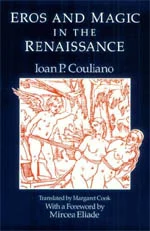
Chicago, IL – In an era dominated by scientific rationalism and a steadfast belief in the purely subjective nature of human imagination and desire, a profound work from the late historian of religions, Ioan P. Couliano, continues to challenge foundational assumptions about the origins of our modern worldview. Eros and Magic in the Renaissance, a seminal text, argues that the prevailing mechanistic understanding of reality is not the inevitable triumph of reason, but rather a historically contingent outcome, shaped by profound cultural and theological shifts that systematically stripped the world of its enchantment. This meticulously researched and brilliantly argued book offers a startling re-evaluation of the Renaissance, the Protestant Reformation, and the very bedrock upon which contemporary science and thought are built.
Couliano’s work, which has gained renewed relevance in an age grappling with the limits of purely materialistic explanations, posits that for a significant period in the Renaissance, the human imagination (vis phantastica) and desire (eros) were considered powerful, objective forces capable of influencing and shaping reality itself. This perspective stands in stark contrast to our current understanding, where these faculties are relegated to the internal, private sphere of the individual, divorced from any tangible impact on the external world. The book serves as both a compelling historical narrative detailing this dramatic intellectual transition and a profound philosophical exploration of magic as a coherent, if now forgotten, worldview.
Main Facts: A Paradigm Shift Unveiled
At its core, Eros and Magic in the Renaissance presents a revisionist history of how the Western world transitioned from an enchanted cosmos to a desacralized, mechanistic universe. Couliano argues that the modern separation of subjective experience from objective reality is a relatively recent "aberration," not an inherent truth. He meticulously traces the vibrant intellectual landscape of the Renaissance, where figures like Marsilio Ficino, Pico della Mirandola, and Giordano Bruno actively explored and articulated sophisticated theories of magic. For these thinkers, magic was not mere superstition but a legitimate science of interconnectedness, a means to harness cosmic sympathies through the disciplined application of imagination and desire.
Couliano, a scholar trained by the renowned Mircea Eliade and possessing a unique perspective informed by both academic rigor and a personal understanding of magical traditions, asserts that the decline of this magical worldview was not due to its inherent irrationality or a lack of empirical validity. Instead, he contends that the mechanistic paradigm emerged victorious largely because it aligned more congruously with the puritanical and ultraconservative sentiments ushered in by the Protestant Reformation. Far from being a liberalizing force, the Reformation, according to Couliano, sought to expunge the last vestiges of animism and "superstition" that had quietly coexisted within the comparatively lax framework of the medieval Catholic Church. This ideological shift cast a pall of suspicion over any worldview that posited an active, enchanted cosmos or potent human psychic faculties outside of divine will.
The book highlights the crucial intellectual schism of the period: on one side, the "natural magicians" like Paracelsus, who saw the world as a living, animated entity filled with hidden forces and sympathies; on the other, the nascent "proto-mechanists," who envisioned the universe as a grand machine devoid of will or spirit, with consciousness confined solely to the human mind and a remote Christian spiritual realm. Couliano convincingly demonstrates that the triumph of the mechanistic view was not a victory of "reason" over "unreason" as often portrayed, but rather a clash between two fundamentally different "mythologies"—two distinct ways of perceiving, experiencing, and interacting with the world.
Furthermore, Couliano provocatively suggests that magic did not disappear entirely. Instead, once marginalized and driven underground, its core principles resurfaced and adapted, taking on new, secularized forms in modern disciplines. He identifies areas such as psychology, marketing, advertising, and personal development as contemporary heirs to the Renaissance understanding of how imagination and desire can be harnessed to influence perception, behavior, and even reality itself. This daring claim invites readers to critically re-examine the hidden magical undercurrents shaping our ostensibly rational modern world.
Chronology of a Paradigm Shift: From Enchantment to Disenchantment
The historical trajectory outlined by Couliano charts a profound transformation in Western thought, moving from a worldview steeped in cosmic interconnectedness to one characterized by radical separation and material reductionism.
The Renaissance Flourishing (Circa 14th – 16th Centuries)
The Renaissance witnessed a vibrant intellectual rebirth, drawing heavily from rediscovered classical texts, Neoplatonism, Hermeticism, and Kabbalah. This period fostered a belief in a living, animated cosmos, where all parts were interconnected through sympathies and correspondences. Human beings were seen as microcosms, possessing latent powers that could interact with the macrocosm.
- Marsilio Ficino (1433–1499): A central figure in the Florentine Academy, Ficino revived Platonic and Neoplatonic thought. He articulated a system of "natural magic" based on the concept of spiritus, a subtle ethereal substance mediating between soul and body, and between the human and cosmic realms. Through music, talismans, and celestial influences, Ficino believed one could draw down cosmic forces to influence health, mood, and fate. His work emphasized the interconnectedness of all things and the human capacity to align with these cosmic energies.
- Pico della Mirandola (1463–1494): Ficino’s younger contemporary, Pico, famously penned Oration on the Dignity of Man, a manifesto celebrating human free will and the capacity for self-transformation. Pico viewed magic as the "perfect flowering of natural philosophy," asserting that humans, created in God’s image, possessed the power to manipulate the hidden forces of the universe. He synthesized diverse traditions, including Cabala, to construct a universal system of knowledge that integrated magic with philosophy and theology.
- Giordano Bruno (1548–1600): Perhaps the most radical of these thinkers, Bruno expanded upon the idea of an infinite, animated universe. His philosophy was a grand cosmic animism, where everything, from the smallest particle to the largest star, possessed spirit and life. Crucially, Bruno’s concept of vis phantastica (imaginative power) and eros (desire or bonding) were not mere internal states but active, formative forces. In works like On Bonding in a General Sense, which Couliano considers a cornerstone of his analysis, Bruno explored how these psychic powers could create bonds, manipulate perceptions, and influence reality. For Bruno, the magician was a master of these psychic bonds, capable of shaping the world through an understanding of its inherent sympathies and antipathies.
The Protestant Reformation and Counter-Revolution (Circa 16th Century Onwards)
Contrary to popular narratives of progress and liberalization, Couliano portrays the Protestant Reformation as a profoundly conservative and even reactionary movement in its impact on the enchanted worldview. Its emphasis on sola scriptura (scripture alone) and divine omnipotence led to a radical desacralization of the material world.
- Stripping Away Animism: The Reformation systematically rejected many Catholic practices that carried vestiges of animism: the veneration of saints and relics, the perceived magical efficacy of sacraments (beyond symbolic meaning), and the sanctity of specific places. This rejection was fueled by a desire to purify Christianity, eliminating anything that smacked of idolatry or challenged God’s sole authority.
- Demonization of Magic: While the Catholic Church had its own history of persecuting witchcraft, the Protestant emphasis on individual piety and direct communion with God, coupled with a heightened sense of cosmic dualism (God vs. Satan), often led to an intensified fear and condemnation of magic, branding it unequivocally as demonic. This created an environment where any belief in human capacity to manipulate natural or spiritual forces outside of prayer was viewed with extreme suspicion.
The Rise of Proto-Mechanism (Circa 16th – 17th Centuries)
Concurrently with the Reformation, new approaches to understanding nature began to emerge, laying the groundwork for the Scientific Revolution. This period saw a growing divergence between two distinct scientific methodologies:
- Natural Magicians: Figures like Paracelsus (1493–1541) continued to view the world as an interconnected organism. Their "magic" involved understanding the hidden virtues and sympathies within nature, using alchemy, astrology, and herbal medicine to tap into these forces. They believed in a living cosmos, where matter was imbued with spirit.
- Proto-Mechanists: Thinkers such as René Descartes (1596–1650) and Francis Bacon (1561–1626) began to advocate for a worldview that depicted the universe as a giant machine. This perspective emphasized quantifiable laws, material causes, and the separation of mind from matter (Cartesian dualism). The world became a passive object to be analyzed, dissected, and controlled, rather than an animated entity to be understood through sympathy.
The Scientific Revolution and Enlightenment (Circa 17th – 18th Centuries)
The mechanistic worldview consolidated its dominance during this period. The successes of Newtonian physics, the emphasis on empirical observation, and the power of mathematical models seemed to provide irrefutable evidence for a clockwork universe. The earlier magical and animistic views were increasingly dismissed as "superstition" and "irrationality."
Modernity (19th – 21st Centuries)
The mechanistic paradigm became the default operating system for most scientific and philosophical inquiry. However, Couliano argues that the underlying principles of magic—the belief in the power of intention, imagination, and connection—did not vanish but simply transformed, resurfacing in secular guises.
Supporting Data and Philosophical Underpinnings: The Mechanics of Enchantment and Disenchantment
Couliano’s strength lies in his detailed exposition of Renaissance thought and his incisive analysis of the forces that dismantled it.
The Sophistication of Renaissance Magic
The book delves deeply into the intellectual traditions that sustained Renaissance magic. It wasn’t a crude belief in spells and incantations, but a complex philosophical system.
- Vis Phantastica (Imaginative Power): Far from being a mere internal daydream, the Renaissance concept of vis phantastica was understood as an active, formative faculty. It was believed that a strong, focused imagination could impress forms upon matter, influence others, and even draw down celestial influences. This was not unlike modern concepts of visualization or the placebo effect, but with a much grander cosmological scope.
- Eros (Desire/Bonding): Renaissance thinkers, particularly Bruno, saw eros not just as sexual desire, but as a universal cosmic force of attraction and unification. It was the glue that held the universe together, creating sympathies and antipathies between all things. The magician, by understanding and manipulating eros, could create powerful bonds—between individuals, between humans and nature, or even between earthly objects and celestial bodies. This was the foundation of influence and persuasion.
- Cosmic Sympathy: A key concept was the idea that everything in the cosmos was interconnected. Like strings on a harp, if one part vibrated, others would resonate. Magic was the art of understanding and utilizing these hidden sympathies to achieve desired effects.
The Reformation’s Ideological Hammer
Couliano highlights how the Protestant Reformation’s theological tenets created an inhospitable environment for these ideas.
- Divine Sovereignty: The absolute sovereignty of God, a cornerstone of Protestant theology, left little room for human agency in manipulating cosmic forces. Any such claims were seen as infringing on God’s omnipotence or as demonic pacts.
- Iconoclasm and Material Desacralization: The destruction of religious images and the rejection of the sacredness of objects, places, and rituals stripped the material world of its spiritual vibrancy. This paved the way for a purely materialist understanding of nature, ripe for mechanistic interpretation.
- The Rise of Dualism: By emphasizing a transcendent God and a fallen humanity, the Reformation reinforced a sharp dualism between spirit and matter, mind and body. This made it easier for early scientists to compartmentalize the world, viewing matter as inert and spirit as separate and remote.
The Battle of the Sciences: A Clash of Mythologies
The intellectual struggle between "natural magicians" and "proto-mechanists" was not simply a debate about facts, but about fundamental worldviews.
- Natural Magic’s Holistic View: Practitioners like Paracelsus operated within a holistic framework, seeing the human body, the earth, and the cosmos as intimately linked. Illness was an imbalance, and healing involved restoring harmony through understanding natural correspondences.
- Mechanistic Science’s Reductionist View: The proto-mechanists sought to break down phenomena into their constituent parts, understand their quantifiable relationships, and explain them through universal, impersonal laws. This approach, while incredibly powerful for prediction and control, came at the cost of stripping nature of its inherent life and meaning.
- The "Victory" of Congruence: Couliano’s most radical assertion is that the mechanistic worldview won not because it was inherently more "rational" or "true," but because it was more compatible with the dominant cultural and religious sentiments of the time. A desacralized, clockwork universe, governed by impersonal laws, fit neatly with a theology that emphasized God’s transcendent power and human impotence, removing the unsettling idea of human agency in an enchanted cosmos. It also offered a path to control and predictability, appealing to a burgeoning capitalist spirit.
Magic’s Enduring Legacy: The Underground Stream
Couliano’s argument that magic "went underground" into modern disciplines is perhaps his most thought-provoking contribution.
- Psychology: Modern psychology, particularly its more dynamic and depth-oriented branches, can be seen as a secularized heir to magical thinking. Concepts like the power of belief (placebo effect), visualization, subconscious influence, therapy as a form of "re-scripting" reality, and even the deliberate shaping of identity all echo the Renaissance understanding of vis phantastica and eros. Carl Jung’s exploration of archetypes and the collective unconscious, for instance, resonates deeply with older cosmologies of interconnected symbols and forces.
- Marketing and Advertising: These industries are explicitly dedicated to manipulating eros (desire) and vis phantastica (imagination) to create "bonds" between consumers and products. The art of persuasion, branding, narrative creation, and fostering aspirational lifestyles are direct descendants of the Renaissance magician’s understanding of how to shape perception and behavior through carefully crafted illusions and appeals to desire.
- Personal Development/Self-Help: Movements centered on "manifestation," "law of attraction," positive thinking, and mind-over-matter principles directly reflect the Renaissance belief in the power of the human mind to influence external reality. These practices, stripped of their overt occult trappings, offer a secularized path to personal transformation that mirrors the magician’s quest for mastery over self and environment.
Official Responses and Academic Discourse: Challenging the Triumphalist Narrative
Couliano’s Eros and Magic in the Renaissance stands as a significant intervention in intellectual history, challenging prevailing narratives that often present the Scientific Revolution as an unproblematic, linear progression of reason triumphing over superstition.
Traditionally, the history of science has been told as a story of enlightenment, where the "dark ages" of magical thinking were dispelled by the rigorous application of empirical observation and rational inquiry. This "triumphalist" narrative often divorces early scientific pioneers from their mystical or magical interests, or dismisses those interests as irrelevant personal quirks.
Couliano, building on the work of scholars like Frances Yates (who explored the Hermetic tradition and its influence on Renaissance thought) and D.P. Walker (who studied spiritual and demonic magic), offers a more nuanced and intertwined account. He asserts that magic and early science were not antithetical but deeply interwoven, sharing common goals and methodologies, particularly in their pursuit of understanding and manipulating nature. His work forces historians of science to acknowledge the complex intellectual milieu in which modern science emerged, recognizing that many figures considered "scientists" today were also deeply engaged with what we would now call magic.
The reception of Couliano’s work, particularly within the history of religions and intellectual history, has been largely appreciative for its depth, originality, and the unique perspective he brought as both a scholar and someone conversant with magical traditions. While not without its critics (some might argue that the mechanistic view offered superior predictive power and technological advancements, irrespective of its ideological fit), his central thesis—that the victory of mechanism was a contingent historical event driven by cultural forces as much as by "rationality"—has significantly enriched the discourse around the origins of modernity. By framing science itself as a "mythology" (a powerful explanatory framework, not necessarily an ultimate truth), Couliano aligns with his mentor Eliade’s broader project of understanding the enduring power of myth in human experience, even in ostensibly secular societies.
Profound Implications for the Modern World: Re-Enchanting Our Understanding
The implications of Couliano’s work extend far beyond the realm of academic history. By unsettling our understanding of the past, Eros and Magic in the Renaissance compels us to critically re-evaluate the present and envision alternative futures.
Re-evaluating Modernity’s Foundations
If our dominant scientific worldview is not the result of pure, unadulterated reason but rather a historical "choice" influenced by theological and cultural biases, then the certainty with which we hold many of our "objective" truths begins to waver. This doesn’t invalidate scientific findings but prompts a deeper inquiry into the underlying philosophical assumptions and "mythologies" that shape scientific inquiry itself. It forces us to question the absolute divorce between observer and observed, subject and object, that has characterized modern thought.
The Return of the Subjective
Couliano’s work encourages a reconsideration of the power of subjective experience. If imagination and desire were once seen as potent forces, capable of shaping reality, perhaps our modern relegation of them to mere internal states is a limitation, not an advancement. This resonates with contemporary discussions in quantum physics (observer effect), consciousness studies, and the burgeoning field of mind-body medicine, all of which hint at a deeper, more active role for consciousness in shaping reality than traditional mechanism allows. It suggests that neglecting vis phantastica and eros might be to ignore fundamental aspects of human existence and cosmic interaction.
Ethical and Environmental Consequences
A world stripped of enchantment and spirit, reduced to a collection of inert matter, is ripe for exploitation. The mechanistic worldview, by desacralizing nature, arguably paved the way for unchecked industrialization and environmental degradation. Couliano’s work implicitly calls for a re-enchantment of the world, a return to a sense of interconnectedness and reverence for life that could foster more ethical and sustainable relationships with our planet. If the world is a living organism, rather than a machine, our responsibilities towards it change profoundly.
Understanding Contemporary Spiritual and Cultural Trends
Couliano provides a powerful lens through which to understand the contemporary resurgence of interest in spirituality, mindfulness, holistic health, and even neo-paganism. These movements can be interpreted as a collective yearning for the re-enchantment that was lost, a desire to reconnect with a sense of cosmic meaning and purpose that the mechanistic worldview often fails to provide. The demand for personal development, authentic experience, and meaningful connection in a fragmented world speaks to the enduring human need for the "bonds" that eros once facilitated.
Towards a More Integrated Future
Ultimately, Eros and Magic in the Renaissance is an invitation to intellectual humility and radical open-mindedness. It challenges us to move beyond simplistic binaries of "reason vs. superstition" and embrace a more complex, integrated understanding of history, consciousness, and the cosmos. By exposing the contingent nature of our current worldview, Couliano liberates us to imagine new possibilities, encouraging a future where insights from philosophy, science, psychology, and even historical "magic" can converge to create a richer, more nuanced, and perhaps more enchanted understanding of what it means to be human in a living universe.
After engaging with Couliano’s profound analysis, it becomes genuinely difficult to view magic, science, or even the very fabric of our modern reality in the same way again. The book serves as a vital reminder that our present is always a product of our past, and understanding the forgotten pathways of thought can illuminate the hidden dimensions of our contemporary experience.


Leave a Comment